
Microsoft Document Recovery Guide for Word Files
Losing a Word document can interrupt work, delay deadlines, and create real stress. Fortunately, in many situations, microsoft document recovery is still possible. If you respond quickly, you may restore an unsaved draft, recover a deleted DOCX document file, or retrieve an earlier version of an overwritten file. However, the correct solution depends on how the document was lost. Word can recover some files on its own, while deeper storage-level loss often requires a dedicated recovery tool.
That is exactly why this guide matters. First, it explains the most effective built-in Word recovery methods. Next, it shows what to do when the file no longer appears inside Word at all. Finally, it explains why Magic Data Recovery becomes the practical recommendation when standard recovery methods stop working. As a result, this article helps users move from simple fixes to more advanced recovery without confusion or wasted time.
Supports Windows 7/8/10/11 and Windows Server
Wondering if your files can be recovered? Find out in seconds with our quick check below.
Data Recovery Assessment
Answer 3 quick questions to estimate your recovery chances
Table of Contents
Microsoft Document Recovery Basics: Understand the Loss Scenario First
Before trying random fixes, identify the type of document loss. This step matters because the best microsoft document recovery method changes depending on what happened.
In most real-world cases, Word file loss falls into four common categories:
- The document was never saved
- The file was overwritten
- The file was deleted
- The document became corrupted
For example, if Word crashes before you save your changes, AutoRecover may still hold a temporary version. In contrast, if you empty the Recycle Bin or lose files after a partition issue, Word often cannot help much because the document is no longer inside its normal recovery path. Therefore, the smartest approach is to begin with built-in Word tools, then move to version history, and finally use recovery software when the loss goes beyond Word itself.
In other words, effective microsoft document recovery is not about repeating the same menu actions. Instead, it is about choosing the right method in the right order.
Microsoft Document Recovery for Unsaved Word Files
When users search for document recovery microsoft word, they often mean an unsaved file. Fortunately, this is one of the easiest scenarios to fix.
Use Recover Unsaved Documents
Open Word and go to:
File > Info > Manage Document > Recover Unsaved Documents
If Word finds an unsaved version, open it immediately and save it with a new name. This simple action often restores recent work after an app crash, accidental closure, or an unexpected restart.
This method is especially useful when:
- Word closes suddenly
- The system restarts without warning
- You close the file by mistake
- You click “Don’t Save” too quickly
Check AutoRecover Locations
If the first recovery list is empty, do not stop there. Instead, check Word’s AutoRecover locations manually. In many cases, a temporary recovery copy still exists even when it does not appear in the initial list.
This step improves recovery chances because Word may save background copies separately from the main document path. Therefore, it is worth checking before moving on to more advanced fixes.
Review the Document Recovery Pane
After a crash, Word may open with a Document Recovery pane. If that panel appears, compare the available versions carefully. Then save the best copy right away. In practice, this step often solves the problem in minutes and avoids the need for deeper recovery.
Microsoft Word Document Recovery for Overwritten Files
An overwritten file creates a different problem. In this case, the document still exists, but the version you actually need may be gone. Because of that, you should look for an earlier version rather than an unsaved one.
Check Version History First
If the file was stored in OneDrive or another Microsoft-connected workspace, version history may be the fastest fix. This is especially helpful when you replace the wrong draft, save over an important report, or need yesterday’s version instead of today’s.
Moreover, this is one of the most overlooked recovery options for office users. Many people keep searching for local copies, while the correct version is still available in version history.
Restore a Backup Copy
If Windows File History or another backup solution was enabled, restore the older copy from there. This route is often more efficient because it lets you compare versions and avoid unnecessary risk.
For many users, this is the most practical microsoft word document recovery method after an accidental overwrite.
MS Word Document Recovery for Deleted Files
When a file is deleted, timing becomes more important. Even so, you still have several recovery options.
Restore the File From the Recycle Bin
First, check the Recycle Bin. Search by file name, file type, or deletion date. If the document is there, restore it to its original location.
This is the simplest ms word document recovery case. Also, it requires almost no technical knowledge.
Check Synced Cloud Recycle Bins
Next, review your cloud recycle bin if the file was saved in a synced folder. Sometimes the local document disappears, yet the cloud version remains available.
This step matters because users often assume the file is gone everywhere when only the local copy is missing.
Stop Using the Drive After Permanent Deletion
If you used Shift+Delete or emptied the Recycle Bin, stop writing new data to that drive. This is one of the most important recovery best practices. Otherwise, new data may overwrite the deleted Word document and reduce the chance of successful recovery.
At this stage, standard document recovery ms word methods often reach their limit. The issue is no longer just about Word settings. Instead, it becomes a storage-level recovery problem.
Microsoft Document Recovery Beyond Word: Why Magic Data Recovery Helps
Word works well for unsaved drafts, temporary files, and earlier document versions. However, Word does not scan a drive for deleted document data after permanent deletion, formatting, or partition-related loss. That is where a dedicated recovery solution becomes useful.
This is the point where Magic Data Recovery fits naturally into the workflow. Rather than replacing Word’s built-in recovery features, it extends the recovery process when Word can no longer find the file.
The Core Pain Point It Solves
The core problem is simple. Sometimes the file is gone from Word, gone from the Recycle Bin, and gone from the usual folder path. In that situation, users need a solution that scans the storage device directly instead of relying on Word’s own recovery folders.
As a result, Magic Data Recovery becomes useful when normal microsoft document recovery methods fail to locate the missing document.
Practical Advantages of Magic Data Recovery
From a practical standpoint, the tool helps because it addresses deeper file-loss scenarios. In particular, it is useful when:
- the Word file was permanently deleted
- the document disappeared after formatting
- the file was lost from a USB drive or memory card
- Word shows no usable recovery copy
- the original document path no longer exists
In addition, the scan-preview-recover workflow is easier for ordinary users than manual recovery attempts. That matters because most users want a direct and reliable path, not a complicated technical process.
Real Usage Scenarios
For example, you may need Magic Data Recovery if:
- you delete a DOCX contract before sending it
- you lose a report after formatting the wrong partition
- your thesis draft disappears after a device error
- Word opens without any AutoRecover copy even though the file existed earlier
In each of these situations, microsoft document recovery needs more than app-level troubleshooting. Instead, it requires actual file recovery.
How to Use Magic Data Recovery for Microsoft Document Recovery
Once Word’s built-in options no longer help, the next step is to recover the missing file from the storage device itself. At this stage, Magic Data Recovery offers a more direct path. The process is straightforward, and, more importantly, it helps reduce the risk of further data loss.
Step 1: Download and Install Magic Data Recovery
First, download Magic Data Recovery and install it on a different drive from the one where the Word file was lost. This detail is important because installing recovery software on the affected drive may overwrite recoverable data.
Supports Windows 7/8/10/11 and Windows Server
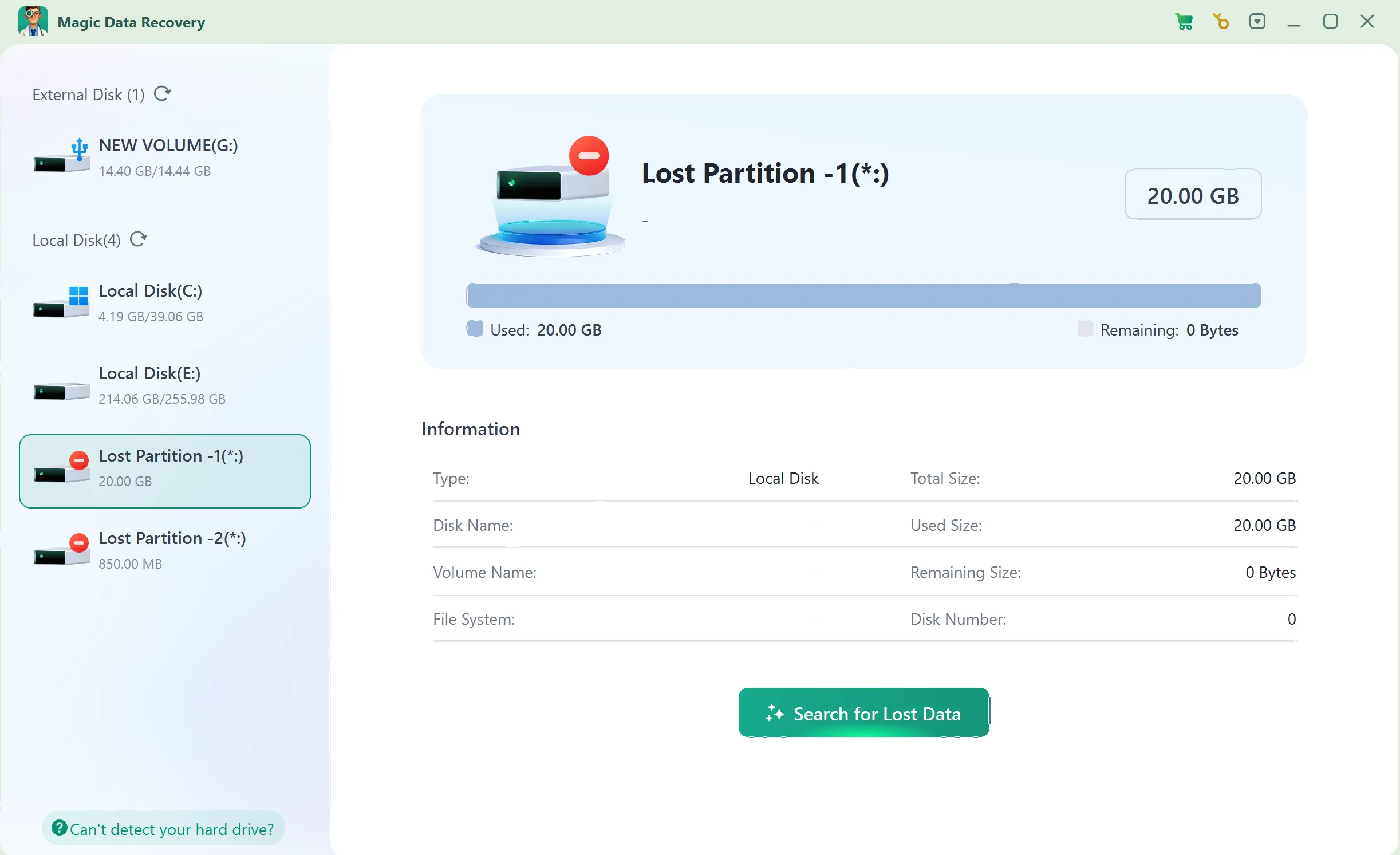
Step 2: Choose the Location That Contains the Lost Word File
Next, open the program and select the drive or partition where the missing Word document was stored. After that, begin the scan from the main interface.
Step 3: Scan the Drive for Recoverable Documents
Then let the software scan the selected location. It runs Advanced Scan automatically. During the process, recoverable items will appear gradually, which allows you to review results as the scan continues.
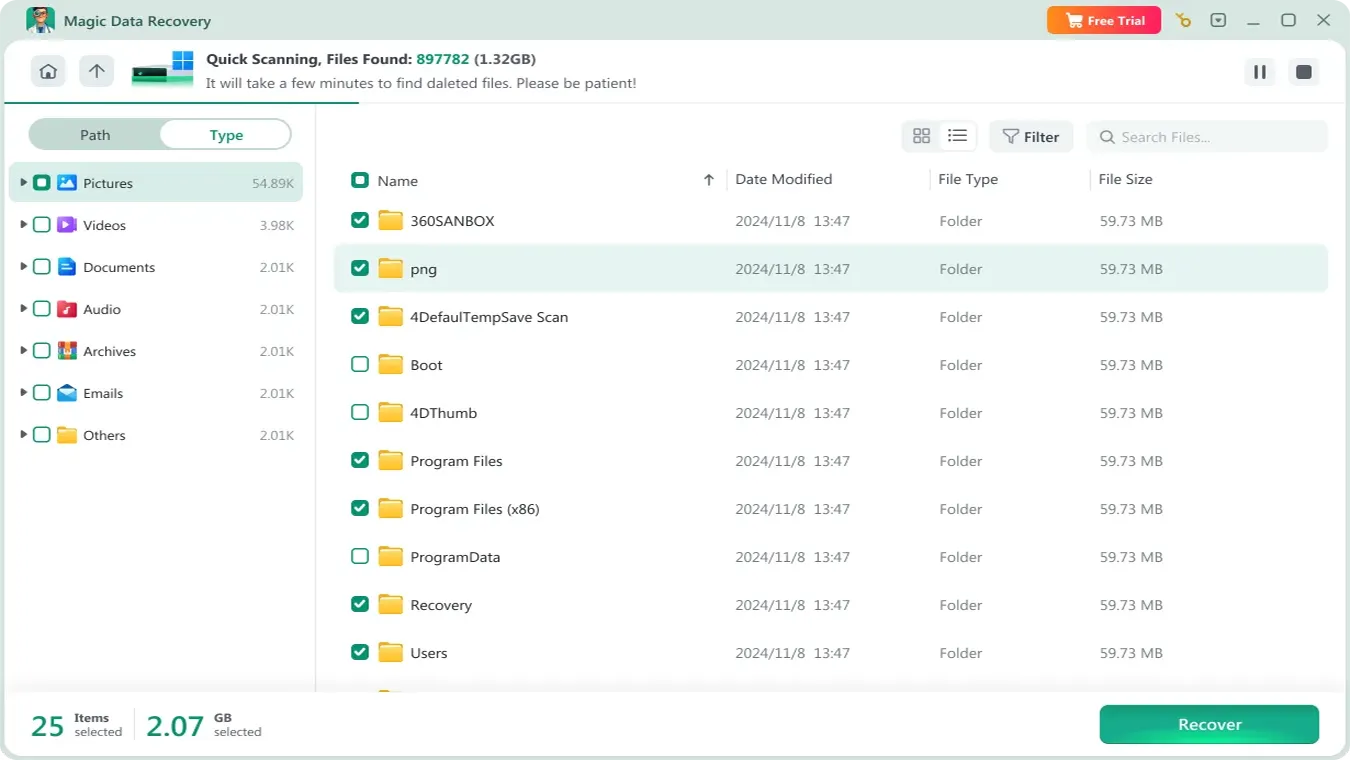
Step 4: Preview the Found Files Before Recovery
After the scan, preview the results to confirm which document you actually need. This step is especially useful when several Word files have similar names or when you want to avoid restoring unnecessary items.

Step 5: Recover the File to a Safe Location
Finally, choose the target file and save it to a different drive or storage location. Do not restore recovered data to the same drive because that can increase the risk of overwriting or file corruption.
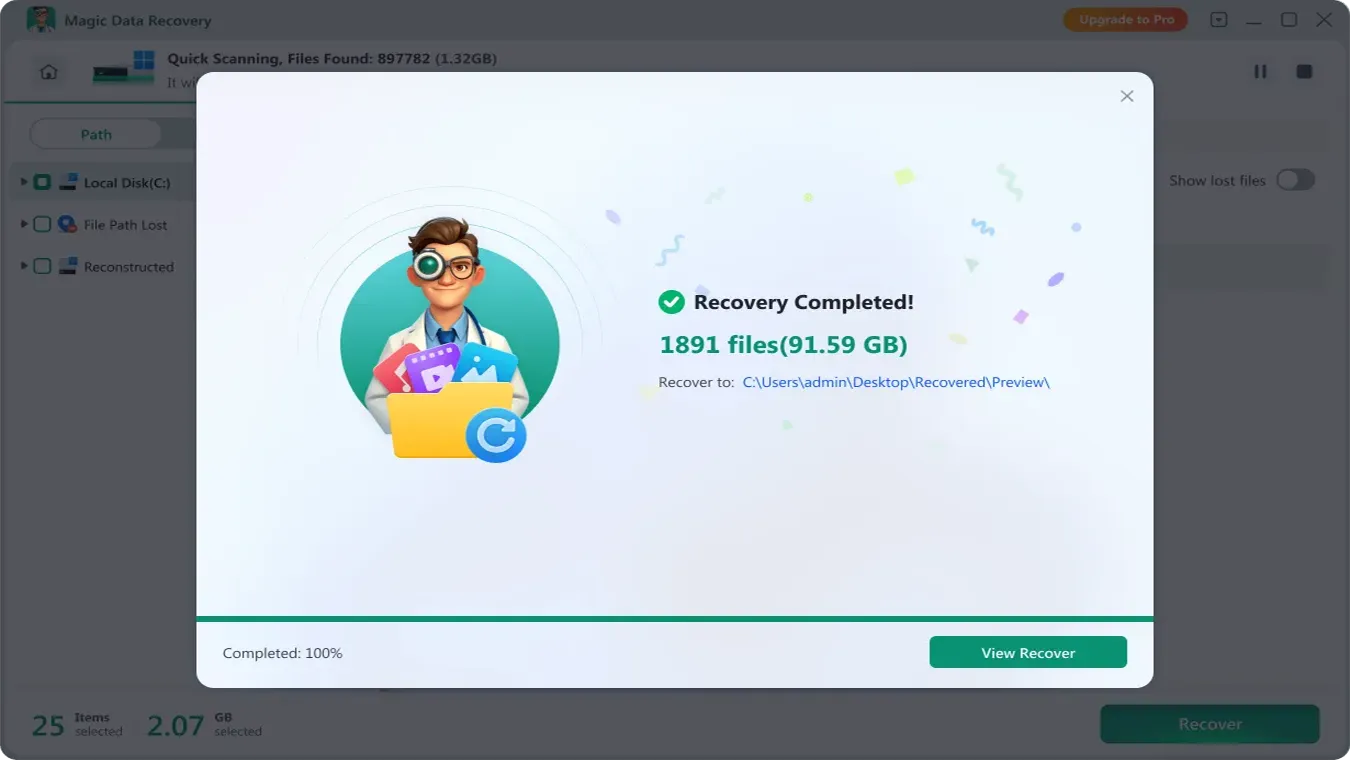
Overall, this workflow is much more effective than repeatedly checking Word menus after the file has already disappeared from the application. Therefore, if you need a practical recovery path, this method makes much more sense.
Microsoft Document Recovery Tips to Improve Your Success Rate
A few habits can improve future recovery results significantly.
First, enable AutoRecover and review the save interval regularly. That way, Word can create more recent recovery points.
Second, save important files to OneDrive when version history matters. This is especially useful for active work documents and collaborative files.
Third, stop using the drive immediately after accidental deletion. Otherwise, new data may overwrite the document you want to recover.
Finally, always save recovered files to a different location. This simple step protects other recoverable data and reduces unnecessary risk.
In short, the best microsoft document recovery results usually come from quick action, the correct method, and a recovery tool that matches the real cause of the loss.
Conclusion: Why Magic Data Recovery Is the Best Recommendation
The best microsoft document recovery method depends on the exact problem. If the file was unsaved, Word’s built-in recovery features may solve it quickly. If the file was overwritten, version history may restore the earlier draft. However, if the file was permanently deleted, lost after formatting, removed from a USB device, or trapped on a damaged partition, Word usually cannot do enough on its own.
That is why Magic Data Recovery deserves a clear recommendation. It addresses the recovery gap between Word-level troubleshooting and storage-level file loss. More importantly, it gives ordinary users a practical way to scan, preview, and restore missing Word documents without relying only on Word’s limited built-in options.
So, if you need a solution that goes beyond standard microsoft word document recovery steps, Magic Data Recovery is the more reliable and more efficient choice.
Supports Windows 7/8/10/11 and Windows Server
FAQs About Microsoft Document Recovery
Can microsoft document recovery restore an unsaved Word file?
Yes. In many cases, Word can restore an unsaved file through Recover Unsaved Documents, AutoRecover folders, or the Document Recovery pane. Therefore, users should always check these built-in options first.
What is the best document recovery microsoft word method after a crash?
Start with the Document Recovery pane if Word opens it automatically. After that, check Recover Unsaved Documents and AutoRecover locations. This order is usually the fastest and safest.
How does ms word document recovery work after I overwrite a file?
Usually, overwrite recovery depends on version history or backups rather than unsaved-file recovery. So, if the file was stored in OneDrive, check earlier versions first.
Can document recovery ms word help after I empty the Recycle Bin?
Not usually through Word alone. Once the file is permanently deleted, you often need recovery software that can scan the drive directly for deleted document data.
Why is microsoft word document recovery not enough for deeper data loss?
Because Word recovery tools focus on app-managed copies, temporary files, and earlier saved versions. They do not perform deep storage scans for deleted files after formatting or permanent deletion.
When should I use a recovery software instead of Word recovery?
Use it when the file no longer appears in Word, is missing from the Recycle Bin, or was lost after formatting, deletion, or partition-related problems. In those situations, a dedicated recovery software like Magic Data Recovery is usually the better option.
Is Magic Data Recovery a good fit for advanced microsoft document recovery needs?
Yes. It is especially useful when Word’s own recovery features cannot locate the missing file. In that case, scanning the storage device directly gives users a clearer path to recovery.

Vasilii is a data recovery specialist with around 10 years of hands-on experience in the field. Throughout his career, he has successfully solved thousands of complex cases involving deleted files, formatted drives, lost partitions, and RAW file systems. His expertise covers both manual recovery methods using professional tools like hex editors and advanced automated solutions with recovery software. Vasilii's mission is to make reliable data recovery knowledge accessible to both IT professionals and everyday users, helping them safeguard their valuable digital assets.