
How to Format USB Drive to NTFS Safely
Formatting a USB drive seems simple at first, yet the situation becomes stressful when the device turns unreadable, shows errors, or asks for formatting unexpectedly. If you are searching for how to format USB drive to NTFS, you are likely trying to fix a corrupted USB or improve compatibility. Before taking action, it is essential to understand why formatting may cause data loss and how to protect your files safely with format data recovery solution.
Users also look for how to format flash drive to NTFS or how to format a thumb drive to NTFS when facing similar issues.
Table of Contents
How to Format USB Drive to NTFS without Losing Data
When a USB drive turns RAW, fails to open, or reports file system errors, Windows often suggests formatting. However, formatting first may overwrite file structures and make recovery difficult. Therefore, always recover your files before performing any disk operations.
This article provides both the standard Windows formatting methods and a professional data-first workflow using Magic Data Recovery.
Supports Windows 7/8/10/11 and Windows Server
What Is NTFS and Why Format a USB Drive to It?
NTFS (New Technology File System) is Microsoft’s modern file system designed for better security, faster performance, and improved stability. Compared with FAT32 or exFAT, NTFS supports:
- Large files over 4GB
- Advanced permissions
- Better resistance to corruption
- More reliable performance on Windows devices
Consequently, many users need to learn how to format USB flash drive to NTFS for work, system compatibility, or error repair.
Important Precautions Before Formatting
Before you proceed, consider these essential points:
① Check if the USB drive contains important data
If the drive still opens, back it up manually.
② If the USB becomes unreadable, NEVER format directly
Formatting destroys directory structures, and although some data may remain recoverable, the risk increases.
③ Perform a full scan with professional recovery software first
Magic Data Recovery provides a read-only scan that keeps your data safe during recovery.
④ Confirm the target drive letter before formatting
Many users accidentally format the wrong drive, leading to severe data loss.
How to Format USB Drive to NTFS in Windows (Standard Methods)
Method 1: Format USB to NTFS via File Explorer
This is the simplest and fastest method.
① Connect your USB drive to the computer.
② Open File Explorer and right-click the USB drive.
③ Select Format.
④ Choose NTFS under File System.
⑤ Click Start → Confirm.
Tip: Use Quick Format only when the drive is healthy. If you suspect corruption, uncheck it for a deep format.
Method 2: Format USB to NTFS via Disk Management
This method provides better control.
① Press Win + X and choose Disk Management.
② Locate your USB drive.
③ Right-click the volume → Format.
④ Select NTFS → Set allocation unit size (default recommended).
⑤ Click OK to complete.
Method 3: Format USB to NTFS Using Command Prompt (CMD)
For advanced users or when Windows becomes unresponsive.
① Search cmd, right-click, choose Run as administrator.
② Type the following commands one by one:
					diskpart
list disk
select disk X
clean
create partition primary
format fs=ntfs quick
assign
exit
If the USB Cannot Be Read: Recover Data Before Formatting
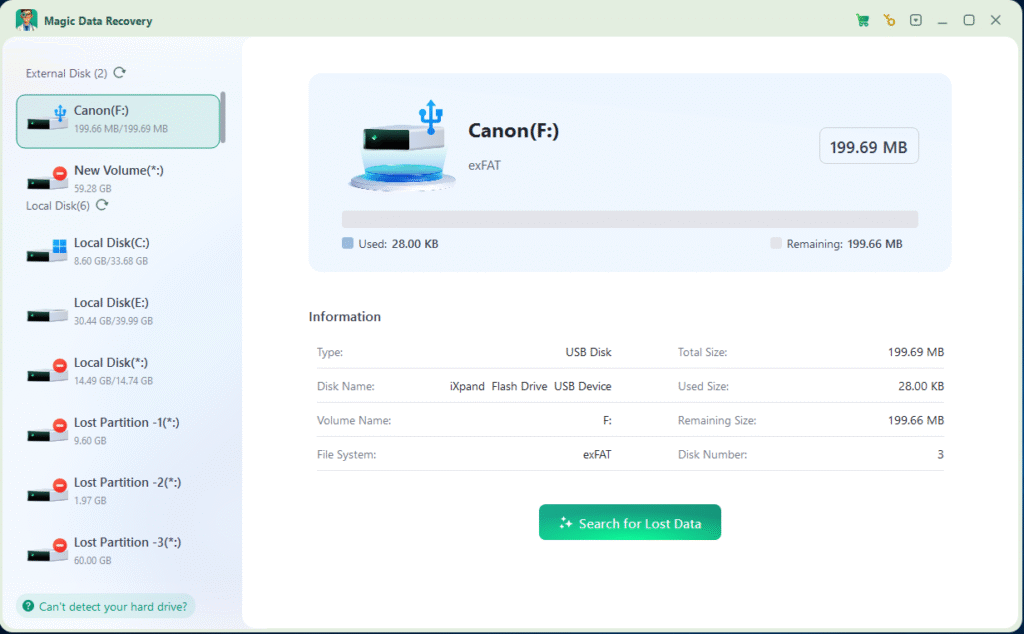
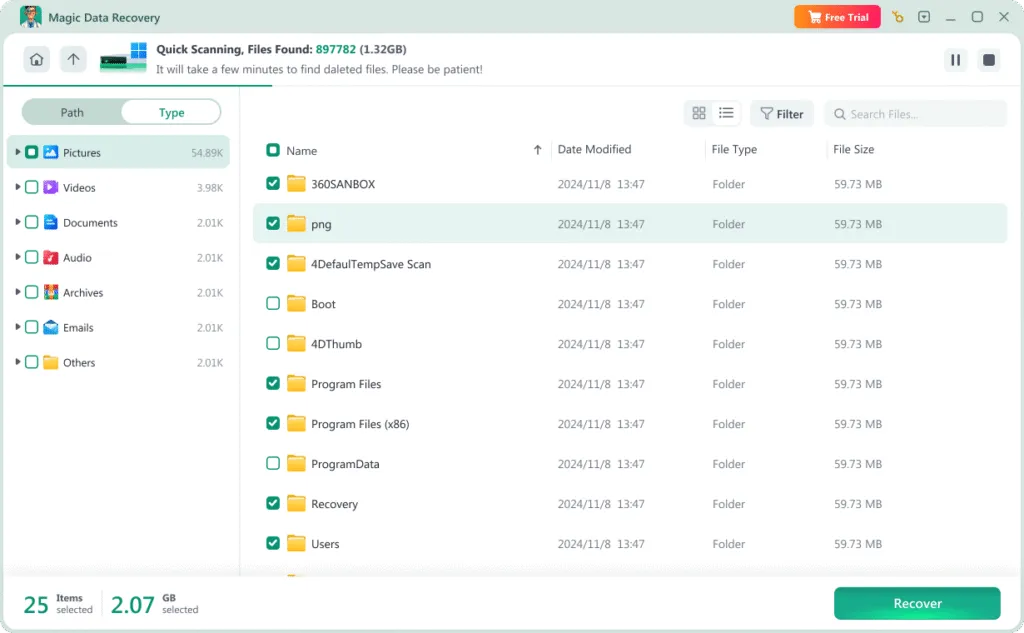
When the USB shows symptoms such as RAW status, 0 bytes, unreadable, or slow response, Windows will ask you to format. However, formatting first may damage recoverable files. To keep your data safe, recover the USB drive using Magic Data Recovery before doing any file system changes.
Below is the recommended workflow.
1. Download and Install: Get Magic Data Recovery from the official website and install it on your computer.
Supports Windows 7/8/10/11 and Windows Server


Final Thoughts
Formatting a USB drive is easy, but protecting your data requires careful preparation. If your drive becomes unreadable or Windows requests formatting, recovering your files first is the safest strategy. Magic Data Recovery provides an efficient and reliable way to extract data before you format the drive.
Whenever you need to learn how to format USB drive to NTFS, follow the steps above and confirm your data is secure. If you need to get your data back, please don’t forget to download Magic Data Recovery first and then try data recovery solution to get your lost data back.
Supports Windows 7/8/10/11 and Windows Server
FAQs About Format USB Drive to NTFS
Can I format USB to NTFS?
How do I format a RAW USB drive to NTFS?
How to change FAT32 to NTFS USB without formatting?
How to format USB FAT32 or NTFS?
Is NTFS or exFAT better for USB drives?
Is NTFS the same as FAT32?
Can exFAT be formatted to NTFS?
How do I make a USB drive bootable with NTFS?
What happens if I format my external hard drive to NTFS?

Erin Smith is recognized as one of the most professional writers at Amagicsoft. She has continually honed her writing skills over the past 10 years and helped millions of readers solve their tech problems.