
Unallocated Disk Recovery: Complete Data Recovery Guide

Losing access to important files because a drive suddenly shows up as unallocated is a situation many users find confusing and stressful. In reality, unallocated disk recovery is often possible, even when a disk appears empty or inaccessible.
In most cases, data loss happens after partition deletion, disk formatting, or file system errors rather than physical damage. That is why understanding how unallocated disk data recovery works is critical before taking any action that could overwrite lost files.
This guide explains the causes behind unallocated disks, the real chances of recovering unallocated disk recovery data, and how to safely restore files from unallocated space using a reliable solution like Magic Data Recovery that is designed for real-world recovery scenarios.
Supports Windows 7/8/10/11 and Windows Server
Table of Contents
What Is Unallocated Disk Space and Why Does It Happen?
Before attempting unallocated disk recovery data, it is essential to understand what “unallocated” actually means.
What Does “Unallocated” Mean?
An unallocated disk or partition refers to storage space that the operating system does not recognize as belonging to any file system. As a result, the disk appears empty, inaccessible, or prompts you to format it.
Importantly, unallocated space does not mean the data has been erased. In most cases, only the partition structure or file system metadata is missing.
Common Causes of Unallocated Disk Issues
Unallocated disks usually occur due to one or more of the following reasons:
- Accidental deletion of a disk partition
- Disk formatting mistakes
- File system errors (NTFS, FAT32, exFAT corruption)
- Power failures or improper shutdowns
- Malware or virus attacks
- Failed OS installation or disk cloning
Each of these scenarios affects how the operating system reads the disk, not necessarily the actual data stored on it.
Can You Recover Data from an Unallocated Disk?
Yes—unallocated disk recovery is often successful if the disk has not been overwritten.
Why Recovery Is Possible
When a disk becomes unallocated, the system loses track of how data is organized. However, the raw data blocks remain intact until new information overwrites them.
Professional unallocated disk data recovery tools work by:
- Scanning raw sectors on the disk
- Reconstructing lost file structures
- Identifying files based on signatures and metadata
As long as no new data has been written to the affected disk, unallocated partition data recovery success rates remain high.
Important Warning Before Recovery
To maximize recovery chances:
- Stop using the affected disk immediately
- Do not format the disk when prompted
- Avoid running disk repair tools that may overwrite metadata
Step-by-Step Unallocated Disk Recovery Using Magic Data Recovery
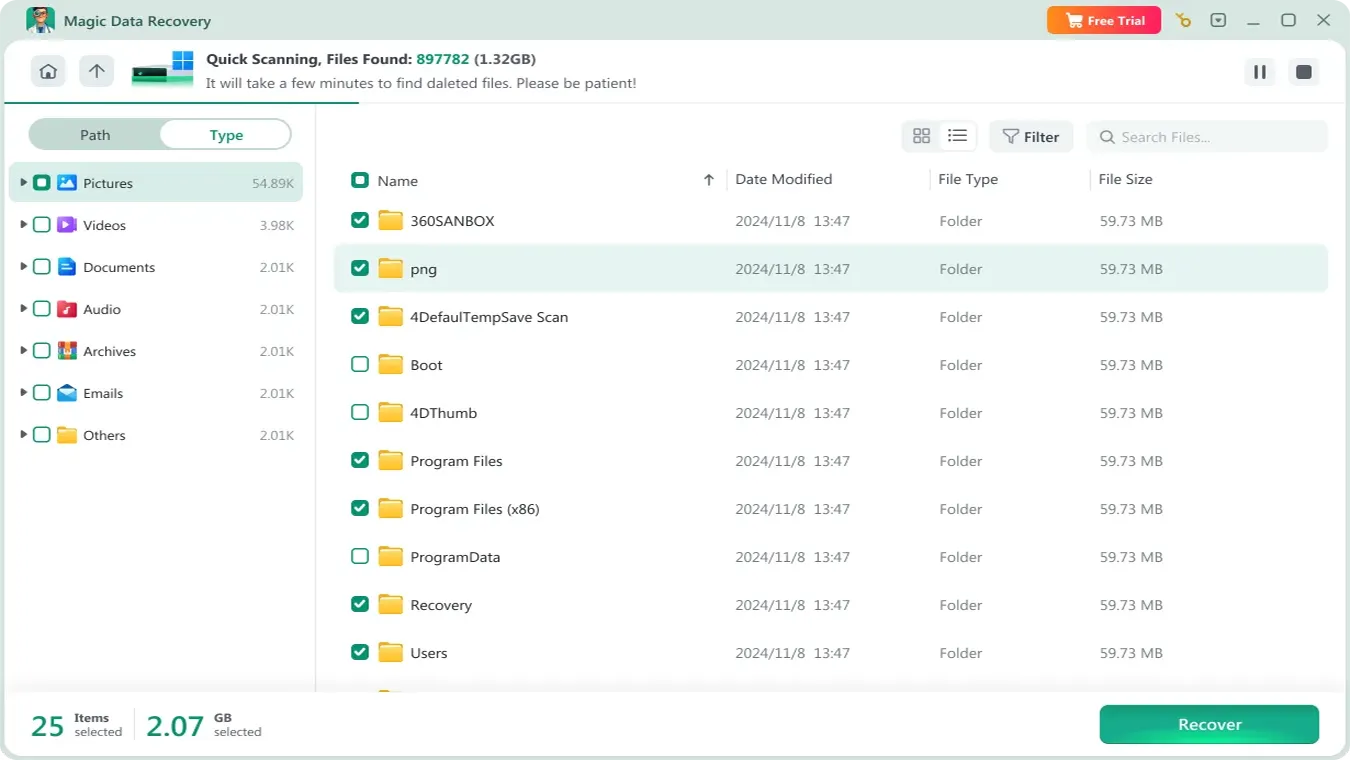
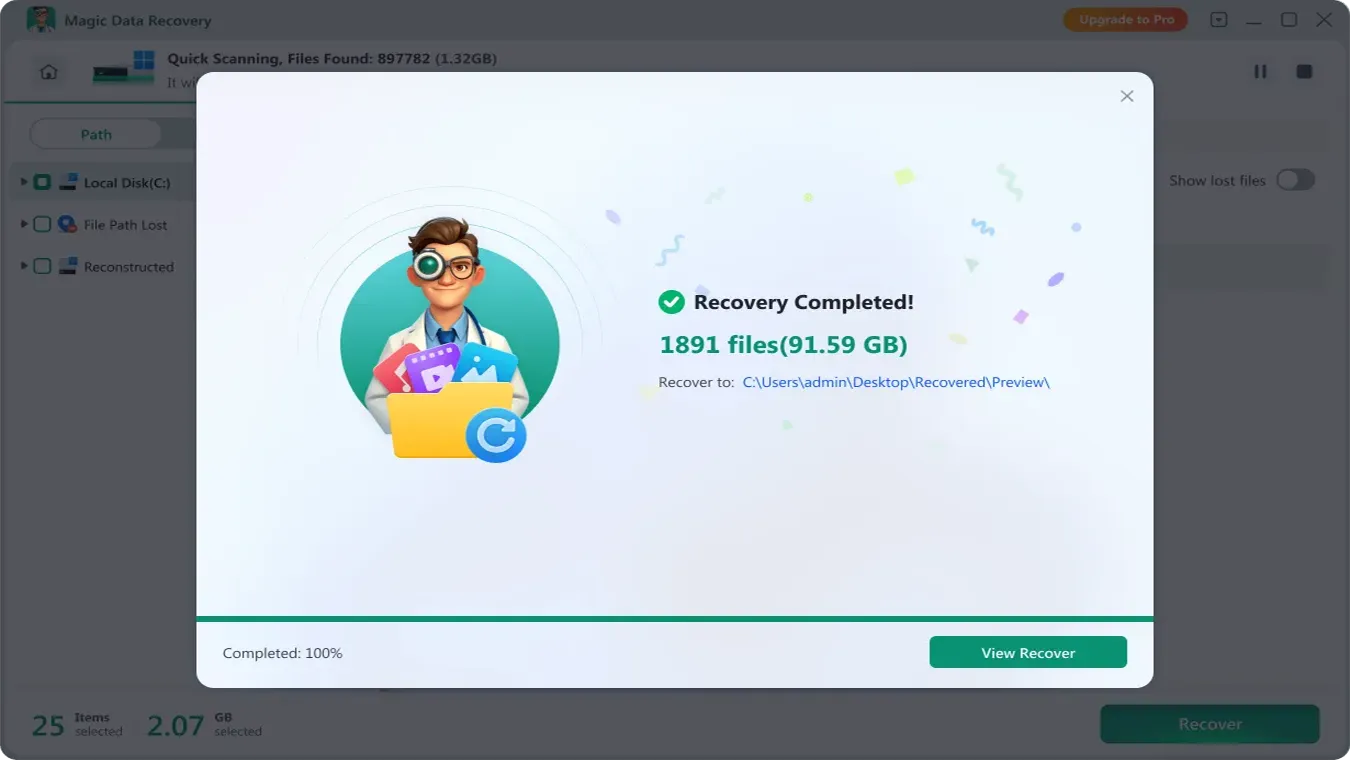
When facing unallocated space issues, using a specialized tool is the safest approach. Magic Data Recovery is designed to handle complex unallocated disk recovery data scenarios without requiring advanced technical knowledge.
Why Choose Magic Data Recovery?
Magic Data Recovery supports recovery from:
- Unallocated disks and partitions
- Deleted and formatted drives
- File system errors and RAW disks
- Internal and external hard drives, SSDs, and USB devices
It combines deep scanning technology with an intuitive interface, making recovery accessible for both professionals and everyday users.
Step-by-Step Recovery Process
Step 1: Install Magic Data Recovery: Download and Install the software on a healthy drive—not on the unallocated disk—to avoid overwriting lost data.
Supports Windows 7/8/10/11 and Windows Server


How Magic Data Recovery Compares to Other Solutions
Many recovery tools claim to support unallocated disks, but not all deliver consistent results.
Key Advantages of Magic Data Recovery
Compared to common alternatives, Magic Data Recovery offers:
- Advanced deep scanning for unallocated space
- Support for multiple file systems (NTFS, FAT32, exFAT)
- Reliable recovery after formatting or partition loss
- Clear file preview before recovery
- Stable performance with minimal system impact
Unlike basic partition repair tools, Magic Data Recovery focuses on data-first recovery, which reduces the risk of permanent loss.
Common Problems During Unallocated Disk Data Recovery
Even with the right tool, users may encounter challenges. Understanding them helps prevent mistakes.
Disk Appears Empty After Scan
This often indicates data overwriting or severe corruption. Wait until the softweare finish quick and deep scanning.
Recovered Files Have No Names
This happens when file system metadata is lost. The files themselves are still usable, even if original names are missing.
System Asks to Format the Disk
Never format the disk before recovery. Formatting rewrites metadata and reduces recovery success.
Tips to Prevent Unallocated Disk Data Loss
While unallocated disk recovery is effective, prevention remains the best strategy.
Best Practices
- Back up important data regularly
- Safely eject external drives
- Avoid forced shutdowns
- Monitor disk health periodically
- Use reliable partition management tools
These practices significantly reduce the risk of future unallocated disk issues.
Conclusion
Unallocated disk issues can occur unexpectedly, but they do not have to result in permanent data loss. With the right knowledge and tools, unallocated disk data recovery is both achievable and safe.
Magic Data Recovery stands out because it focuses on real recovery needs rather than risky repairs. Its ability to recover deleted, formatted, and file-system-damaged data makes it a dependable solution for both home users and professionals.
If you are dealing with unallocated space and need a practical, trustworthy solution, Magic Data Recovery offers a balanced approach between ease of use and professional-grade recovery capabilities.
If you are looking for a more efficient and safer way to recover files from lost partitions, Magic Data Recovery is worth considering.
Supports Windows 7/8/10/11 and Windows Server
FAQs
Does unallocated mean deleted?
What does it mean if my disk is unallocated?
How to recover not initialized and unallocated hard disk?
How to fix an unallocated SSD?
How to recover unallocated files?
What does it mean by unallocated?
How to activate an unallocated disk?
Why do Windows leave unallocated space?

Jason is a data recovery and technical support specialist with over 15 years of hands-on experience. He has worked extensively with frontline users, troubleshooting difficult data loss cases and providing practical recovery solutions for accidental deletion, formatted drives, damaged file systems, lost partitions, system failures, and other recovery emergencies. His expertise also includes backup and restoration, file repair, and disaster recovery, with a strong emphasis on safe, reliable, and technically accurate guidance.