
How to Run File Recovery From Formatted Hard Drive
It is one of the most stressful data loss situations when you accidentally formatted a hard drive. Important documents, work files, photos, or videos can disappear within seconds, leaving users wondering whether file recovery from formatted hard drive is still possible.
The good news is that formatting does not always mean permanent data loss. In many real-world cases, files can still be recovered—if the right steps are taken early and carefully. This guide explains how formatted hard drive recovery works, when recovery is possible, and how to recover files from formatted hard drive safely without causing further damage.
For users without backups, choosing a reliable recovery approach becomes critical. That is where a dedicated solution like Magic Data Recovery fits naturally into the process.
Supports Windows 7/8/10/11 and Windows Server
Wondering if your files can be recovered? Find out in seconds with our quick check below.
Data Recovery Assessment
Answer 3 quick questions to estimate your recovery chances
Table of Contents
What Happens to Files After a Hard Drive Is Formatted?
Understanding what formatting actually does is essential for successful file recovery from formatted hard drive.
When you format hard drive, the operating system removes file system references—such as directory structures and allocation tables—but the actual data blocks usually remain intact until they are overwritten.
Quick Format vs. Full Format
Deletes file system indexes but leaves data sectors untouched. Recovery chances are generally high.
Rebuilds the file system and may scan for bad sectors. Some data may still remain, but recovery becomes more difficult.
In practical experience, most accidental formatting events involve quick formatting, especially during system reinstallations or external drive initialization. This is why recover files from formatted hard drive remains achievable in many cases.
Can You Perform File Recovery From a Formatted Hard Drive?
Yes, it is often possible to recover data from a formatted hard drive—but recovery depends on several critical factors.
When Recovery Is Possible
- You ran a quick format
- You haven’t written new files to the drive after formatting
- The drive is still physically healthy
- It is a traditional HDD
When Recovery Becomes Difficult
- You ran a full format
- You have heavily reused the drive
- It is an SSD with TRIM enabled
- Severe physical damage exists
As a result, professional recovery experience consistently shows that time and user actions after formatting have the greatest impact on success.
Critical Actions to Take Immediately After Formatting
If you want to maximize the success rate of file recovery from formatted hard drive, take the following steps immediately:
- Stop using the drive to avoid overwriting data
- Do not reinstall the operating system or software on the same disk
- Avoid running repair or “fix” commands blindly
- Do not attempt to reformat again
These precautions are considered industry best practices and significantly improve recovery outcomes.
How to Run File Recovery From a Formatted Hard Drive (Step-by-Step)
This section focuses on realistic recovery paths, not ineffective methods.
Step 1: Check File History or Existing Backups
Before attempting any recovery software, verify whether a backup exists:
- Windows File History
- External backup drives
- Cloud backup services
If a backup is available, restoring files from it is always the safest option. However, most users didn’t realize they need a backup until data loss happens. At this stage, users need to rely on professional recovery software like Magic Data Recovery to scan the formatted drive and recover the data safely.
Step 2: Use a Dedicated Recovery Solution
This is where Magic Data Recovery becomes a practical and reliable option. Instead of modifying the disk, it performs a read-only scan, searching for recoverable file structures and lost data fragments. This approach aligns with best practices used by data recovery professionals for logical data loss. Here are the steps to recover the data.
1. Download and Install Magic Data Recovery Safely
Start by downloading Magic Data Recovery and installing it on a drive other than the formatted hard drive.
Supports Windows 7/8/10/11 and Windows Server
2. Choose the Formatted Hard Drive
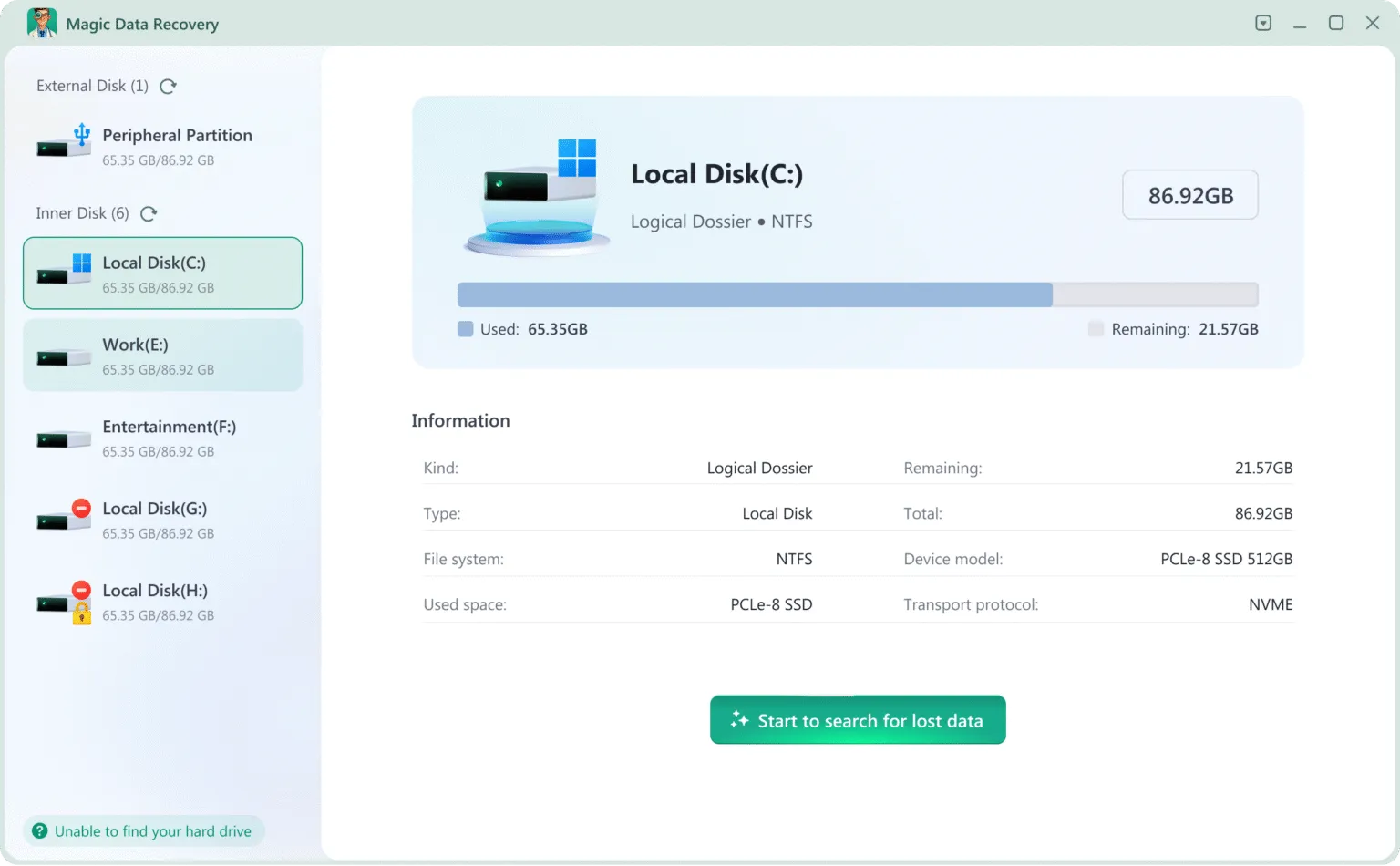
After launching the program, the main interface will display all detected storage devices. Select the formatted drive, then initiate the scan.
3. Scan the Drive for Recoverable Files
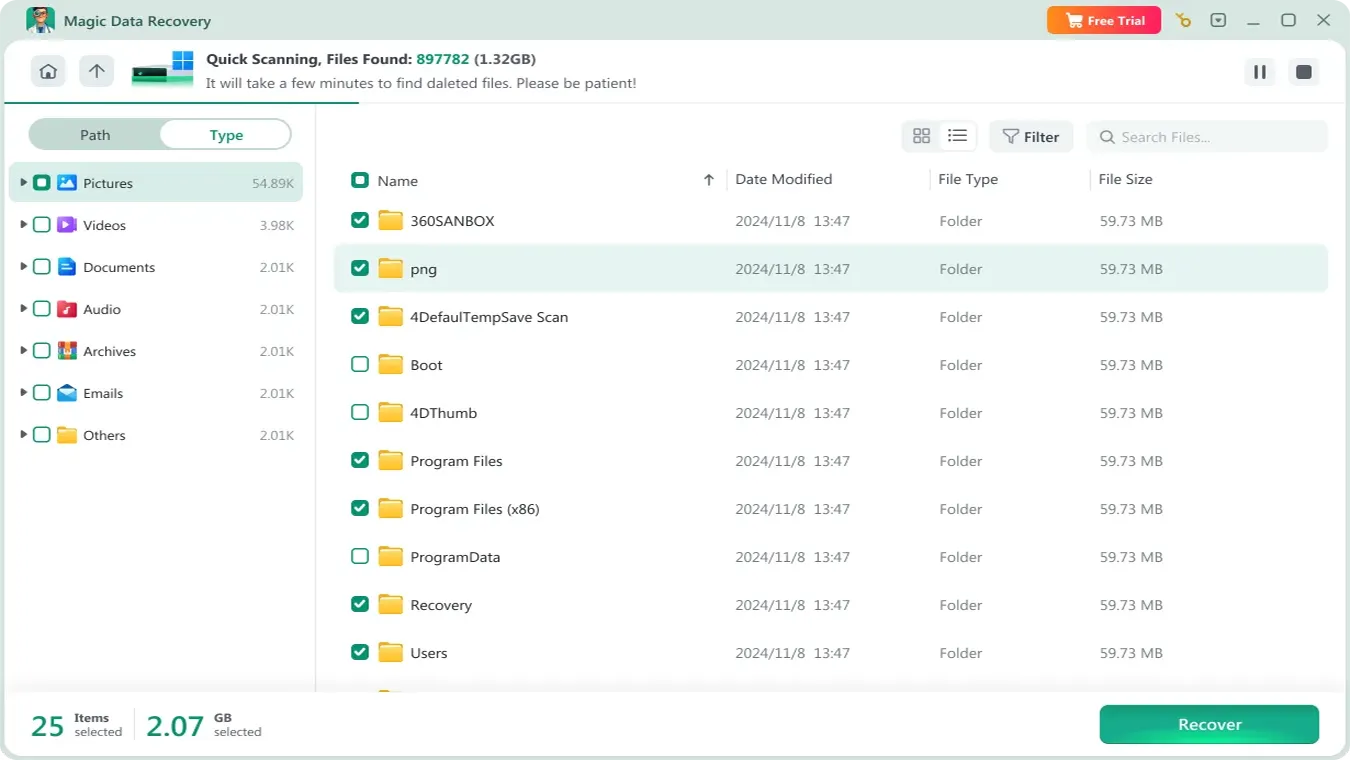
As the scan progresses, recoverable files appear in real time, allowing users to assess what can still be restored. At this stage, no data is modified. The software only reads existing disk sectors to locate recoverable file traces.
4. Preview Files Before Restoring Them
Before proceeding with recovery, use the preview feature to verify file content. This step helps confirm file integrity and ensures that only necessary data is selected for restoration.

5. Recover Files to a Secure Location
Finally, select the files you want to restore and save them to a different drive or storage device.
Avoid restoring files to the same formatted hard drive, as it may overwrite remaining recoverable data and compromise further recovery.
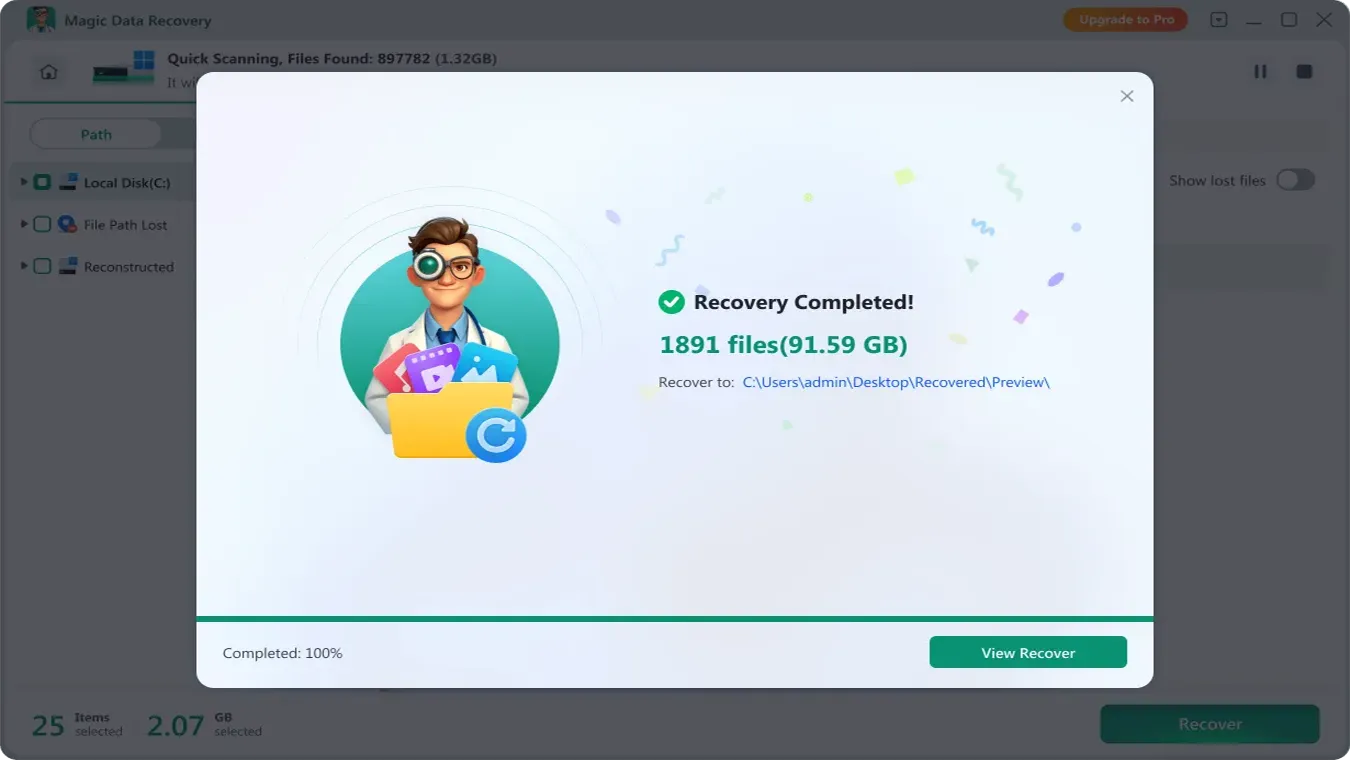
Perform Recovery From Formatted Hard Drive Using Magic Data Recovery
How It Solves the Core Problem
- Scans formatted disks without writing data
- Reconstructs lost file structures
- Allows file preview before recovery
Key Advantages
- Safe, non-destructive scanning process
- Supports common file systems such as NTFS, exFAT, and FAT32
- Suitable for internal drives, external hard drives, and removable storage
How Professionals Run File Recovery From a Formatted Hard Drive
Professional recovery services follow a structured workflow:
- Disk imaging to prevent further damage
- Logical analysis of file systems
- Sector-level scanning
- Controlled data extraction
Recovery software like Magic Data Recovery applies many of these principles at the consumer level, offering a practical alternative when physical damage is not involved.
How to Improve the Success Rate
Based on real recovery scenarios, the following tips matter most:
- Act quickly after formatting
- Avoid writing any new data
- Recover files to a different drive
- Prioritize important file types first
These steps significantly increase the likelihood of successful recover files from formatted hard drive operations.
Conclusion
File recovery from formatted hard drive is not about guessing—it is about using the right method at the right time. Without backups, manual recovery is not feasible, and incorrect actions can permanently destroy recoverable data.
Magic Data Recovery offers a safe, professional-grade approach that aligns with industry best practices while remaining accessible to everyday users. Its non-destructive scanning, practical recovery workflow, and focus on real recovery scenarios make it a reliable choice for users who need to recover files from formatted hard drive efficiently and responsibly.
If you are looking for a dependable formatted drive recovery solution, Magic Data Recovery is a tool worth considering.
Supports Windows 7/8/10/11 and Windows Server
File Recovery From a Formatted Hard Drive – FAQ
Can you recover data from a formatted hard drive?
Is it possible to recover data from a wiped hard drive?
How do professionals recover data from a hard drive?
Can you undo formatting a hard drive?
Can files still be recovered after formatting?
Will formatting a hard drive erase it?
Is data permanently stored in hard disk?
Can data from a dead hard drive be recovered?

Vasilii is a data recovery specialist with around 10 years of hands-on experience in the field. Throughout his career, he has successfully solved thousands of complex cases involving deleted files, formatted drives, lost partitions, and RAW file systems. His expertise covers both manual recovery methods using professional tools like hex editors and advanced automated solutions with recovery software. Vasilii's mission is to make reliable data recovery knowledge accessible to both IT professionals and everyday users, helping them safeguard their valuable digital assets.