
How to Recover Deleted Partition Data Safely
Losing access to an entire partition can feel alarming. One moment, a drive or volume appears normal; the next, it shows as unallocated, RAW, or disappears completely. In most cases, users immediately search for ways to recover deleted partition data before it is permanently lost.
This guide focuses on a realistic and safe approach to partition-related data loss. Instead of promising instant partition restoration, it explains how deleted partitions actually work, what can and cannot be recovered, and how to retrieve data from a deleted partition effectively. You will also learn why tools like Magic Data Recovery are often a safer choice for recovering files first and rebuilding the partition later.
Supports Windows 7/8/10/11 and Windows Server
Table of Contents
What Does “Deleted Partition” Mean?
Before attempting to recover deleted partition data, it is essential to understand what a deleted partition actually is.
A partition is a logical structure that organizes disk space and tells the operating system where data begins and ends. When a partition is deleted, the following usually happens:
- The partition table entry is removed
- File system metadata becomes inaccessible
- The actual data blocks often remain intact temporarily
In practical terms, the files are not erased immediately. However, the operating system can no longer locate them correctly.
Common Reasons a Partition Gets Deleted
Partitions may disappear for several reasons, including:
- Accidental deletion during disk management operations
- Disk formatting errors
- File system corruption
- Power failures or system crashes
- Virus or malware activity
- Improper use of partition tools
Each scenario affects recovery success differently, which is why understanding the cause matters.
Can You Really Recover a Deleted Partition?
This is where many articles create confusion. Strictly speaking, there are two different goals:
- Recovering the partition structure
- Recovering the data inside the deleted partition
While some tools attempt to rebuild partition tables, success is not guaranteed. Incorrect reconstruction can make data loss worse.
In contrast, recovering files from a deleted partition is often more reliable. By scanning the disk at a sector level, recovery software can locate existing file data and extract it safely.
For this reason, most data recovery professionals prioritize recovering data first, then recreating the partition afterward.
Why Recovering Data First Is the Safer Strategy
When users attempt to recover deleted partition structures directly, they risk:
- Overwriting file system metadata
- Making RAW areas unreadable
- Reducing the chance of successful file recovery
A safer workflow looks like this:
- Scan the affected disk
- Recover files from the deleted partition
- Save recovered data to another drive
- Recreate the partition and copy data back
This approach minimizes risk and preserves recoverable data.
How Magic Data Recovery Helps Recover Deleted Partition Data
When dealing with deleted or lost partitions, Magic Data Recovery focuses on what matters most: retrieving your files safely.
Instead of modifying partition tables directly, the software scans the disk surface to locate recoverable data from deleted, formatted, or corrupted partitions.
Key Problems It Solves
Magic Data Recovery is designed to help when:
- A partition has been deleted accidentally
- A drive shows as RAW or unallocated
- Files are lost after formatting
- File system errors prevent access
- Disk errors cause partitions to disappear
These are some of the most common situations users face when trying to recover deleted partition data.
Core Advantages of Magic Data Recovery
Several features make Magic Data Recovery a practical choice:
- Deep scanning of unallocated and RAW disk space
- Support for NTFS, FAT32, exFAT, and other file systems
- File preview before recovery
- Recovery from HDDs, SSDs, USB drives, and memory cards
- Read-only scanning to avoid further disk damage
By focusing on data extraction rather than risky structural changes, the tool improves recovery reliability.
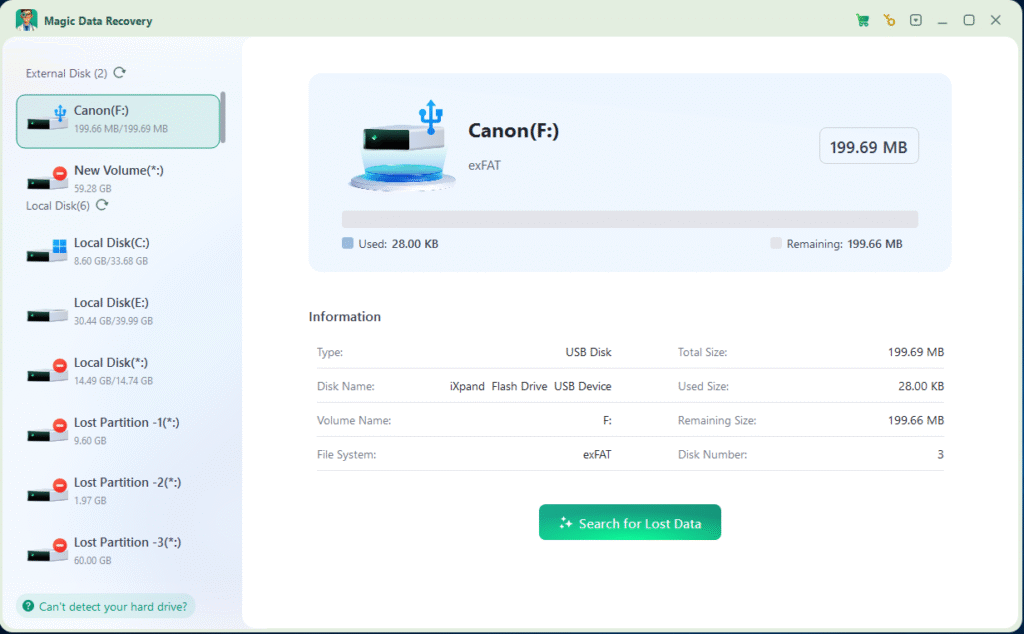
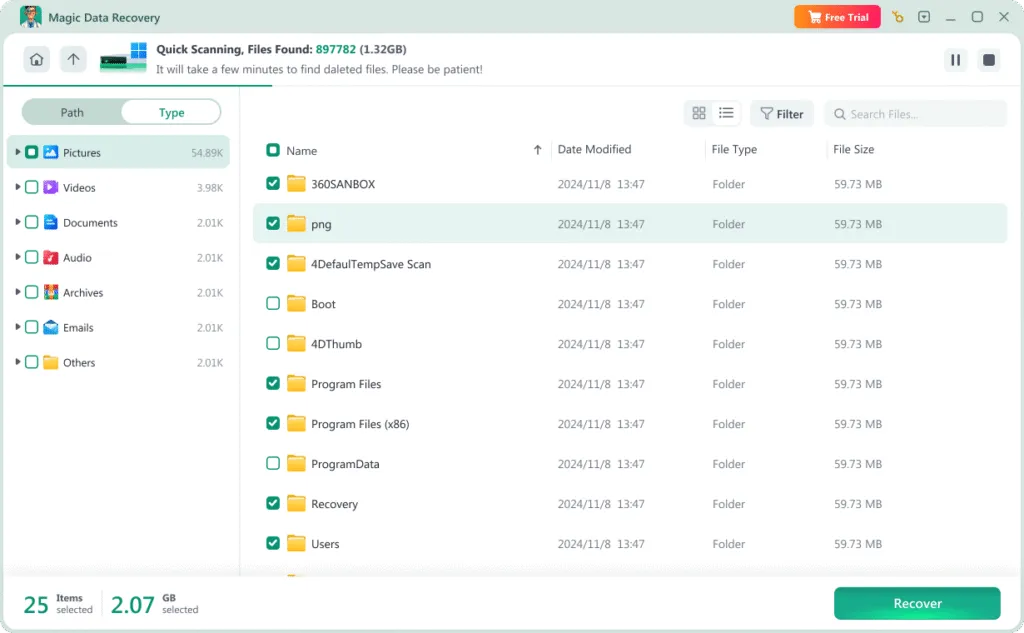
Step-by-Step Guide: Recover Deleted Partition Data Safely
Follow these steps carefully to recover deleted partition data without increasing the risk of permanent loss.
1. Install Magic Data Recovery on a different drive than the one you want to recover from.
Supports Windows 7/8/10/11 and Windows Server


Magic Data Recovery vs Other Recovery Methods
Method | Risk Level | Success Rate | Skill Required |
Partition table repair | High | Uncertain | Advanced |
Manual command-line tools | Medium | Variable | High |
Magic Data Recovery | Low | High for data | Beginner-friendly |
Compared to direct partition repair, file-based recovery offers more predictable results.
Best Practices to Improve Recovery Success
- Stop disk usage immediately
- Avoid repeated recovery attempts
- Do not reinstall the operating system on the affected drive
- Recover files before attempting partition repairs
These steps significantly improve the chances to recover deleted partition data.
Conclusion
Recovering from a deleted partition requires a careful balance between speed and safety. While rebuilding partition structures may seem appealing, it often carries unnecessary risks. Before trying advanced fixes, deleted file recovery solution is a solid starting point for typical recovery paths and avoid actions that may reduce recoverability.
Magic Data Recovery provides a safer, data-first approach. By focusing on file recovery from deleted, formatted, or corrupted partitions, it allows users to secure their data before rebuilding disk structures.
If you are searching for a practical and reliable way to recover deleted partition data without risking further loss, Magic Data Recovery is a partition recovery solution worth considering.
Supports Windows 7/8/10/11 and Windows Server
FAQs
Can you restore a deleted partition?
How to recover deleted partitions using Diskpart?
Can you recover your files if you delete the partition where it is saved?
How to recover deleted D drive?
What happens if I delete a partition?
Can you recover permanently deleted files?
Does Diskpart permanently delete files?
Is it possible to recover deleted data from a hard disk?
How to recover lost partitions for free?

Erin Smith is recognized as one of the most professional writers at Amagicsoft. She has continually honed her writing skills over the past 10 years and helped millions of readers solve their tech problems.