
Files Disappeared from External Hard Drive
You connect your portable drive expecting to open a project, photo archive, or backup, only to find that entire folders have vanished. When files suddenly disappeared from external hard drive storage, do not format the disk or copy anything new to it. The data may still exist but be hidden, inaccessible because of a file-system problem, or marked as deleted. This guide explains how to identify the cause, try the safest fixes first, and use deleted file recovery when the original file records are no longer visible.
Table of Contents
Quick Answer: Why Did My External Hard Drive Files Disappear?
In most cases, external hard drive files disappeared because Windows cannot display or locate them—not because every byte vanished at once. Common causes include hidden attributes, an unexpected drive letter, deletion, malware, corruption, or physical trouble.
Start by checking whether Windows detects the drive at its correct capacity. If the used-space figure remains high while folders look empty, the files may be hidden or their directory records may be damaged. If the drive clicks, disconnects repeatedly, or is absent from Disk Management, stop troubleshooting and consider a professional recovery service.
What you see | Likely cause | Safest first action |
Correct used space, but empty folders | Hidden attributes or damaged directory records | Show hidden items, then scan if needed |
Drive appears with a different letter | Drive-letter reassignment | Verify it in Disk Management |
Windows asks you to format the drive | RAW or corrupted file system | Cancel the prompt and recover data first |
Only shortcuts appear | Malware or altered file attributes | Isolate and scan the computer |
Files vanished after a delete or move | Accidental deletion or interrupted transfer | Stop using the drive and check backups |
Clicking, beeping, freezing, or repeated disconnects | Physical or electronic failure | Power it off and contact a recovery lab |
What to Do Immediately When Files Disappeared from External Hard Drive
The first few decisions matter. Deleting a file usually removes its file-system reference; it does not instantly erase every underlying sector. New writes can reuse that space, however, and then recovery becomes much harder.
Follow these precautions before trying a fix:
- Stop copying, downloading, editing, or reorganizing files on the affected drive.
- Reject any Windows prompt to format or initialize it.
- Do not install recovery software on the external drive.
- Avoid CHKDSK with repair switches until essential files have been recovered.
- Save every recovered file to a different physical disk.
- Disconnect the drive if it makes unusual mechanical noises.
A repair tool aims to make a file system usable, while a recovery tool aims to extract missing data. Those goals can conflict. Microsoft notes that CHKDSK with /f changes file-system data to correct logical errors, and FAT repairs may alter the allocation table. If your only copy is on the affected drive, recover it first. See Microsoft’s CHKDSK documentation for details.
Why Files Suddenly Disappeared from External Hard Drive Storage
Hidden files and changed attributes
Windows, malware, or software used on another device can assign Hidden or System attributes to folders. File Explorer then omits them even though they still occupy space. This is especially likely when files disappeared from external hard drive storage but Properties reports the expected used space.
Drive-letter or connection changes
Windows may assign a different letter after another removable device is connected. A damaged cable, weak hub, or insufficient power can also make a drive mount inconsistently.
Accidental deletion or an interrupted move
Files may vanish after Shift + Delete, cleanup software, a failed cut-and-paste operation, or an application saving elsewhere. Search the computer and backups before assuming the content was erased.
File-system corruption or a RAW partition
NTFS, exFAT, and FAT store directory records that tell Windows where files belong. Unsafe ejection, power loss, bad sectors, or a crashed transfer can damage those records. Content may remain even though filenames no longer appear. This external hard drive data recovery guide covers RAW volumes and format prompts.
Malware and physical failure
Some malware hides original folders and replaces them with shortcuts. Physical failure looks different: clicking, beeping, repeated disconnections, I/O errors, or a disk that no longer spins. Software cannot repair broken heads, motors, electronics, or platters.
How to Fix Files Disappeared from External Hard Drive Safely
Use these methods in order. Once your files return, copy them to a healthy location and verify several important items.
Method 1: Check the connection and Disk Management
Connect the drive directly instead of through a hub. Try another compatible cable and USB port, but do not repeatedly power-cycle a clicking HDD.
Press Windows + X and choose Disk Management. Confirm the disk by capacity. This built-in tool shows volumes and drive letters.
- If the partition is healthy but has no letter, right-click it and choose Change Drive Letter and Paths.
- If it already has a letter, confirm that File Explorer is opening the same volume.
- If it shows RAW or Unallocated, do not format or create a new volume. Move to recovery.
- If the disk does not appear, check Device Manager and another computer. Persistent absence may indicate hardware trouble.
You can also consult this guide to an unrecognized external drive before making changes.
Method 2: Show hidden files in File Explorer
If the drive opens and shows normal used space, reveal hidden content:
- Press Windows + E and open the external drive.
- Select View > Show > Hidden items in Windows 11.
- In Windows 10, select View and enable Hidden items.
- Search for a known filename or use a pattern such as *.docx, *.jpg, or *.mp4.
These steps follow Microsoft’s File Explorer guidance. If folders appear faded, copy them to a safe disk before changing attributes.
Method 3: Remove incorrect attributes with ATTRIB
When malware or another program marks a folder tree as hidden, File Explorer may reveal it without restoring normal attributes. Open Command Prompt as administrator and run:
- attrib -h -s -r /s /d E:\*.*
Replace E: with the verified drive letter. This removes Hidden, System, and Read-only attributes from its files and directories. Double-check the letter first.
ATTRIB does not undelete data, rebuild a corrupted partition, or decrypt ransomware. If external hard drive files disappeared because file records were deleted, proceed to a backup or recovery scan.
Method 4: Restore another copy from backup
A verified backup is the lowest-risk solution. Check File History, Windows Backup, cloud storage, a NAS, and any second external disk.
Restore to a healthy disk and open a sample from each important folder. If the backup is incomplete, leave the affected drive unchanged while recovering the rest.
Method 5: Recover missing files with Magic Data Recovery
When files suddenly disappeared from external hard drive storage after deletion, formatting, a RAW error, or file-system corruption, built-in visibility settings cannot restore missing records. Magic Data Recovery is designed for these logical data-loss cases on Windows. It can scan external HDDs and other storage devices for deleted, formatted, or inaccessible files, then let you preview supported items before saving them elsewhere.
Its advantage is a consistent scan-and-preview workflow across problems that manual fixes treat separately. For example, a designer whose folders vanished after unsafe ejection can scan the readable drive without formatting it. Someone who quick-formatted a backup disk can search for old records before new data overwrites them.
How to use Magic Data Recovery
1. Download and install Magic Data Recovery on the computer’s internal drive or another healthy disk.
Supports Windows 7/8/10/11 and Windows Server
2. Connect the affected external drive and select the correct disk or partition by capacity.
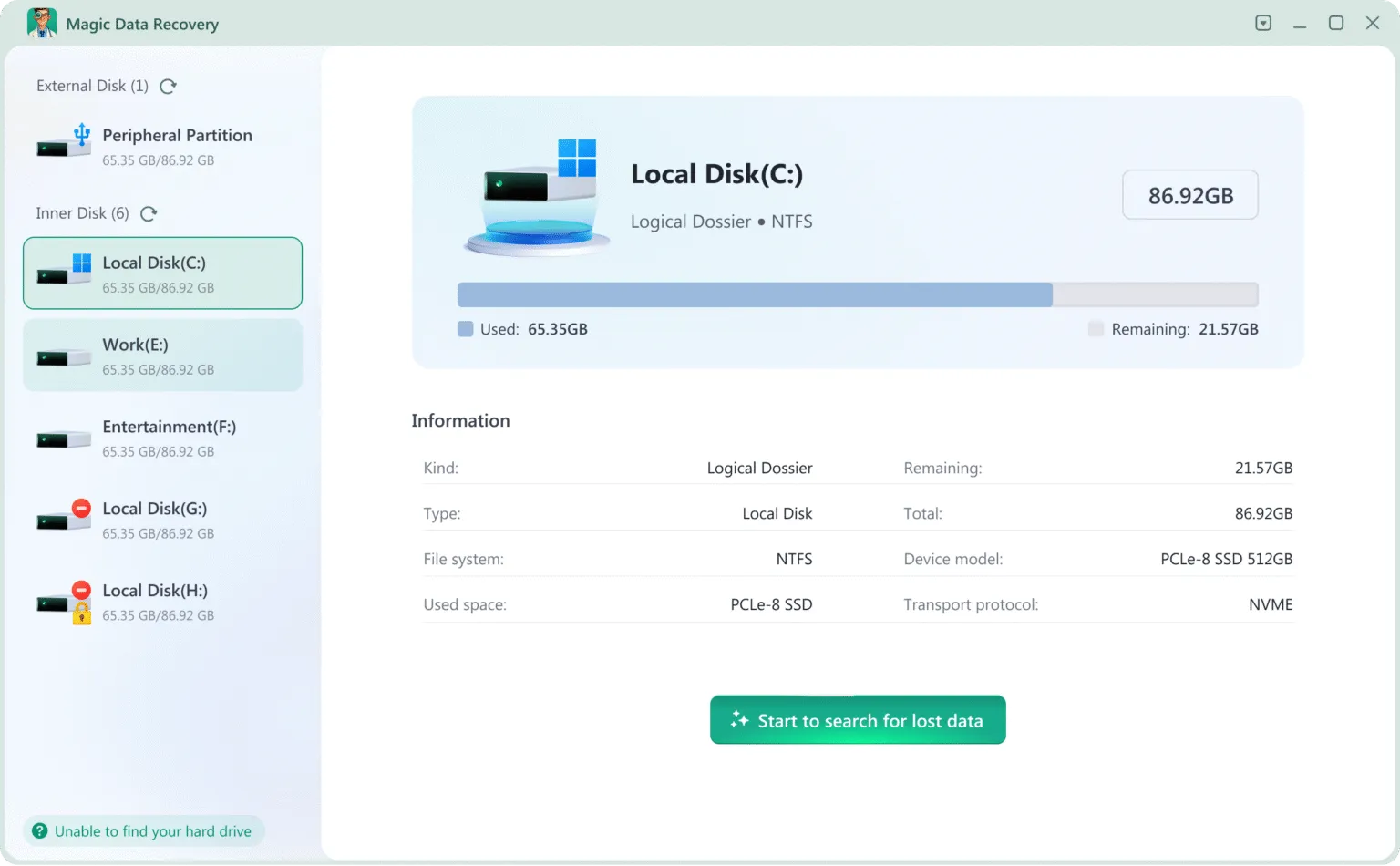
3. Start the scan. Allow it to continue if the first results do not include the missing folders.
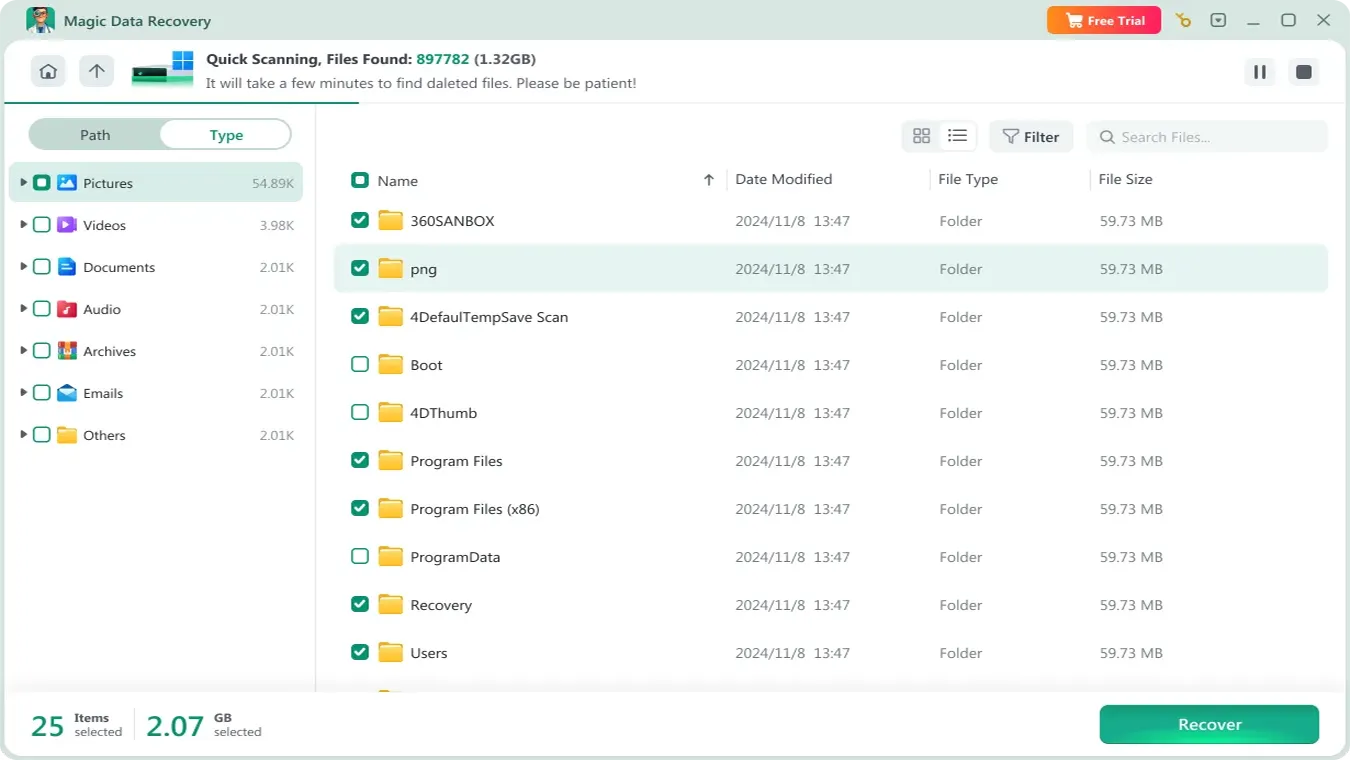
4. Filter or search the results, and preview important files when the format supports preview.

5. Select the required data and recover it to a different physical drive.
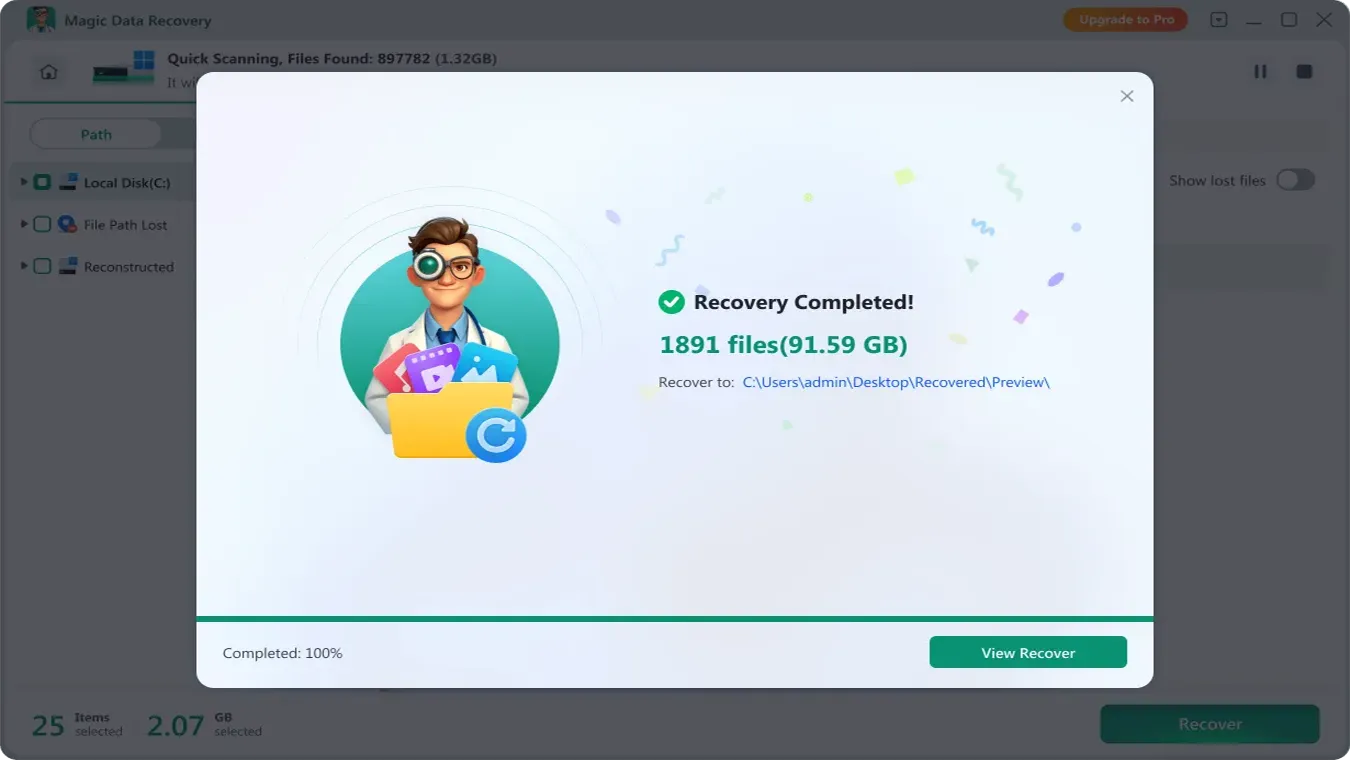
Magic Data Recovery fits when Windows detects the device and the loss is logical. It covers deletion, formatting, and file-system errors through one interface. ATTRIB only changes visibility; CHKDSK repairs structures; a lab handles mechanical failure. For a focused walkthrough, see how to recover deleted files from an external drive.
Method 6: Try Windows File Recovery
Windows File Recovery is Microsoft’s command-line option when files are deleted and no backup exists. It supports internal, external, and USB drives; source and destination must differ.
For example, this command searches external drive E: for JPG files and sends results to D::
- winfr E: D: /extensive /n *.jpg
Review Microsoft’s Windows File Recovery instructions before choosing a mode. Its syntax is less approachable than a graphical tool. Never reverse the source and destination letters.
Method 7: Scan for malware, then repair the drive
If you found suspicious shortcuts, isolate the disk and scan it and the computer with current security software. Copy important files before allowing quarantine actions.
Only after the data is safe should you consider repair. Begin with a read-only check:
- chkdsk E:
CHKDSK requires /f to correct logical errors, but that changes metadata. Therefore, chkdsk E: /f belongs after recovery. If errors return, replace or reformat the drive rather than trusting it.
When You Should Stop DIY Recovery
Contact a reputable recovery laboratory when the disk clicks, grinds, smells burnt, disappears during reads, or contains the only copy of irreplaceable data.
Do not open, freeze, tap, or casually swap parts on an HDD. Avoid long scans against an unstable device; each power-on can worsen damage. Physical recovery requires equipment that software cannot replace.
How to Prevent External Hard Drive Files from Disappearing Again
After recovery, do not use the rescued disk as the only home for important files.
- Keep at least three copies of important data.
- Store those copies on two different types of media.
- Keep one copy off-site or in a reputable cloud service.
- Eject removable drives safely before unplugging them.
- Use a powered connection for desktop external HDDs.
- Scan unfamiliar computers before connecting your backup disk.
- Monitor recurring errors, disconnects, slow transfers, and unusual sounds.
- Test backup restoration periodically instead of checking only that files exist.
A single external drive is storage, not a complete backup strategy.
Conclusion: Recover Files Before Repairing the Drive
When files disappeared from external hard drive storage, start with the symptom, not a random repair command. Verify the connection and drive letter, show hidden items, search for another copy, and protect the disk from new writes. If the drive remains readable but deletion, formatting, or file-system damage removed access to the files, Magic Data Recovery offers a clear way to scan, preview, and recover them to another disk. It is more suitable than a repair command for preserving data, while a professional lab remains the right choice for physical failure. For more safe recovery principles and related solutions, return to the deleted file recovery guide.
Supports Windows 7/8/10/11 and Windows Server
FAQs About Files Disappeared from External Hard Drive
Why did my files suddenly disappear from my external hard drive?
Files may disappear because Windows hid them, the drive letter changed, malware altered attributes, the file system became corrupted, or someone deleted or moved them. Check used space and Disk Management first. If the drive makes abnormal noises, stop using it and seek professional help.
Why is my external hard drive full but no files are showing?
The files may have Hidden or System attributes, or damaged directory records may prevent Windows from listing them. Enable Hidden items in File Explorer and search by file extension. If nothing appears, recover important data before running CHKDSK or formatting the volume.
Can I recover files that disappeared from an external hard drive?
Often, yes—if the data has not been overwritten and the device has no severe physical damage. Check backups first. For deletion, formatting, RAW volumes, or logical file-system errors, recovery software can scan for file records that File Explorer no longer displays.
Should I run CHKDSK when external hard drive files disappeared?
Not before recovering irreplaceable data. CHKDSK repairs file-system structures and can change metadata, so it is not an undelete tool. Scan or copy essential files to another disk first. Afterward, use CHKDSK to assess or repair the original drive if appropriate.
Will formatting fix an external hard drive with missing files?
Formatting may make the volume usable again, but it does not safely bring missing files back. It also writes new file-system information that can complicate recovery. Cancel the format prompt, recover important data to another disk, and format only after confirming the recovery.
Can ATTRIB recover deleted files from an external drive?
No. ATTRIB can reveal existing files whose Hidden or System attributes changed, which helps after some malware infections. It cannot restore deleted file records, reconstruct a formatted partition, decrypt ransomware, or repair physical disk damage. Use it only after verifying the correct drive letter.
Is Magic Data Recovery suitable for a physically damaged drive?
No software can repair broken drive heads, motors, platters, ports, or controller electronics. Magic Data Recovery is intended for logical loss when Windows still detects the storage device. Clicking, grinding, burning smells, or repeated disconnections call for a professional recovery laboratory.
Where should I save files recovered from an external hard drive?
Save them to a different physical device, such as the computer’s healthy internal drive or another external disk. Writing recovered data back to the affected drive can overwrite other recoverable sectors. Verify several restored files before repairing, erasing, or reusing the original disk.

Jason is a data recovery and technical support specialist with over 15 years of hands-on experience. He has worked extensively with frontline users, troubleshooting difficult data loss cases and providing practical recovery solutions for accidental deletion, formatted drives, damaged file systems, lost partitions, system failures, and other recovery emergencies. His expertise also includes backup and restoration, file repair, and disaster recovery, with a strong emphasis on safe, reliable, and technically accurate guidance.