
Quick Access Files Disappeared? 8 Fixes Methods
If your quick access files disappeared, do not assume Windows erased them. Quick Access is mainly a list of pinned and recently used locations; it is not where the original files live. A Windows update, changed privacy option, damaged history cache, disconnected OneDrive account, or moved folder can empty that list while leaving every file intact. This guide helps you distinguish a missing shortcut from genuine data loss, work through the safest fixes first, and use a deleted file recovery solution only when the original file is truly gone. Magic Data Recovery is also covered for cases involving permanent deletion, formatting, or file system errors—not as the first response to a display problem.
Supports Windows 7/8/10/11 and Windows Server
Table of Contents
Quick Answer: Did the File Disappear or Only Its Shortcut?
When quick access files disappeared, open the folder where one of those files was originally saved. If the file is still there, you only need to rebuild Quick Access. If it is missing from the original folder, Windows Search, Recycle Bin, and cloud storage, treat the case as possible data loss.
Use this quick diagnosis before changing any settings:
What you see | What it usually means | Best first action |
Home opens, but pinned folders are gone | Quick Access settings or cache changed | Check File Explorer Options and re-pin a folder |
A pinned folder remains, but a recent file is absent | Recent-items history was cleared or disabled | Enable recent files and reopen the file |
The shortcut produces “Location is not available” | The folder moved, was renamed, or its drive is offline | Search This PC and reconnect external or network storage |
The file is missing from its original folder too | It may be hidden, moved, synced elsewhere, or deleted | Follow the recovery checks in order |
Many folders vanished after sign-in or an update | Windows may have loaded another user profile | Check C:\Users and your account status |
That distinction matters. Resetting Quick Access cannot restore a deleted document, while scanning a healthy drive is unnecessary when only a pin has vanished.
Why Did My Quick Access Files Disappear?
People often ask, “why did my file disappear?” after seeing an empty Home page. In practice, several unrelated events can look identical in File Explorer.
Common causes fall into four groups:
- Layout or settings: Windows 11 shows Quick Access inside Home, the navigation pane may be hidden, or privacy options may suppress recent items.
- History damage: A cleanup utility or corrupted AutomaticDestinations cache can remove recent entries and pins without deleting source files.
- Location changes: OneDrive redirection, another user account, a renamed folder, changed drive letter, or offline network share can break an old path.
- Real data loss: If my files suddenly disappeared from the original folder too, deletion, failed sync, hidden attributes, malware, or file system corruption may be responsible.
Fix 1: Find Quick Access Under File Explorer Home
Press Windows + E. In Windows 11, select Home in the left pane and look for the Quick access section. In Windows 10, Quick access normally appears directly in the navigation pane.
If the entire left pane is absent:
- Select View in File Explorer.
- Choose Show > Navigation pane.
- Return to Home.
Microsoft’s File Explorer guide confirms that Windows 11 uses Home as the landing page and lets users pin any folder through Pin to Quick access. Pin a known folder, close File Explorer, and check whether it remains when you reopen it.
Fix 2: Restore the Recent and Frequent Items Settings
If folders remain but recent documents do not appear, check the privacy options:
- Open File Explorer and select the three-dot menu, then Options. In Windows 10, select View > Options.
- On the General tab, find the Privacy section.
- Enable Show recently used files and Show frequently used folders.
- Select Apply, then OK.
Open one or two documents again. They should return to Recent. This fix is appropriate when quick access files disappeared after a privacy change or system-cleaning session.
Fix 3: Search the Original Drive Before Resetting Anything
Do not clear the Quick Access cache until you know whether the source file exists. Instead:
- Select This PC in File Explorer.
- Type the full filename, part of the name, or an extension such as *.docx into the search box.
- Sort the results by Date modified.
- Right-click a result and choose Open file location.
If a full-drive search takes too long, check Desktop, Documents, Downloads, OneDrive, external drives, and network shares individually. Also inspect C:\Users\YourName for personal files.
Finding the document elsewhere answers “why did my file disappear?”: the saved location changed, but the data did not. Pin its current folder to Quick Access and remove the obsolete entry.
Fix 4: Show Hidden Files and Check the Active User Profile
A folder can look empty when its contents have the Hidden attribute. In Windows 11, select View > Show > Hidden items. In Windows 10, open View and select Hidden items. If a trusted file appears translucent, open Properties and clear Hidden.
Next, press Windows + R, enter %userprofile%, and confirm that the path belongs to your usual account. An update or sign-in problem can load another profile. Look under C:\Users for your normal folder, but do not move anything until you confirm the active account.
After a major upgrade, check C:\Windows.old\Users\YourName if it exists. Microsoft explains how to retrieve files from Windows.old, but this temporary folder is not a backup.
Fix 5: Check OneDrive and Other Synced Locations
If my files suddenly disappeared from Desktop or Documents, look at the OneDrive cloud icon near the taskbar clock. Confirm that you are signed in to the expected account and that syncing is not paused.
Then check these locations:
- The local OneDrive\Desktop and OneDrive\Documents folders
- OneDrive.com search
- The OneDrive Recycle Bin
- Version history for an overwritten file
- Any work or school OneDrive account you also use
A deletion on one synced device can propagate to others. Check Microsoft’s steps for finding missing OneDrive files and restore a cloud copy before attempting disk recovery.
Fix 6: Clear a Corrupted Quick Access History
Use this fix only when the original files still exist but pins or recent items behave incorrectly. Clearing history does not delete source files, but it can remove the current recent/frequent list.
- Open File Explorer Options.
- Under Privacy, select Clear beside “Clear File Explorer history.”
- Select OK, restart File Explorer, and pin your important folders again.
If quick access disappeared from file explorer and the basic reset fails, close File Explorer and press Windows + R. Open:
%AppData%\Microsoft\Windows\Recent\AutomaticDestinations
Move the contents to a temporary backup folder instead of permanently deleting them. Restart File Explorer and test a new pin. If the problem remains, restore the cache files. This reversible test is safer than an unreviewed registry script.
Fix 7: Restore the Actual Files from Recycle Bin or Backup
When quick access files disappeared together with the originals, check the Windows Recycle Bin. Sort by deletion date, select the needed items, right-click, and choose Restore. Windows returns them to their previous locations.
If the bin is empty, try File History:
- Go to the folder that previously held the missing file.
- Right-click the folder and select Restore previous versions.
- Open a dated version to verify its contents.
- Restore or copy the required item to a safe location.
This only works when File History or another compatible backup was configured before the loss. You can also use these Windows 11 deleted-file recovery methods to compare Recycle Bin, Previous Versions, and command-line recovery.
Fix 8: Recover Truly Missing Files with Magic Data Recovery
Suppose you searched the original drive, checked hidden items, verified your profile and OneDrive, and found no usable backup. At that point, my files suddenly disappeared may describe real data loss. Stop writing to the affected drive immediately. New downloads, updates, or saved documents can overwrite recoverable data.
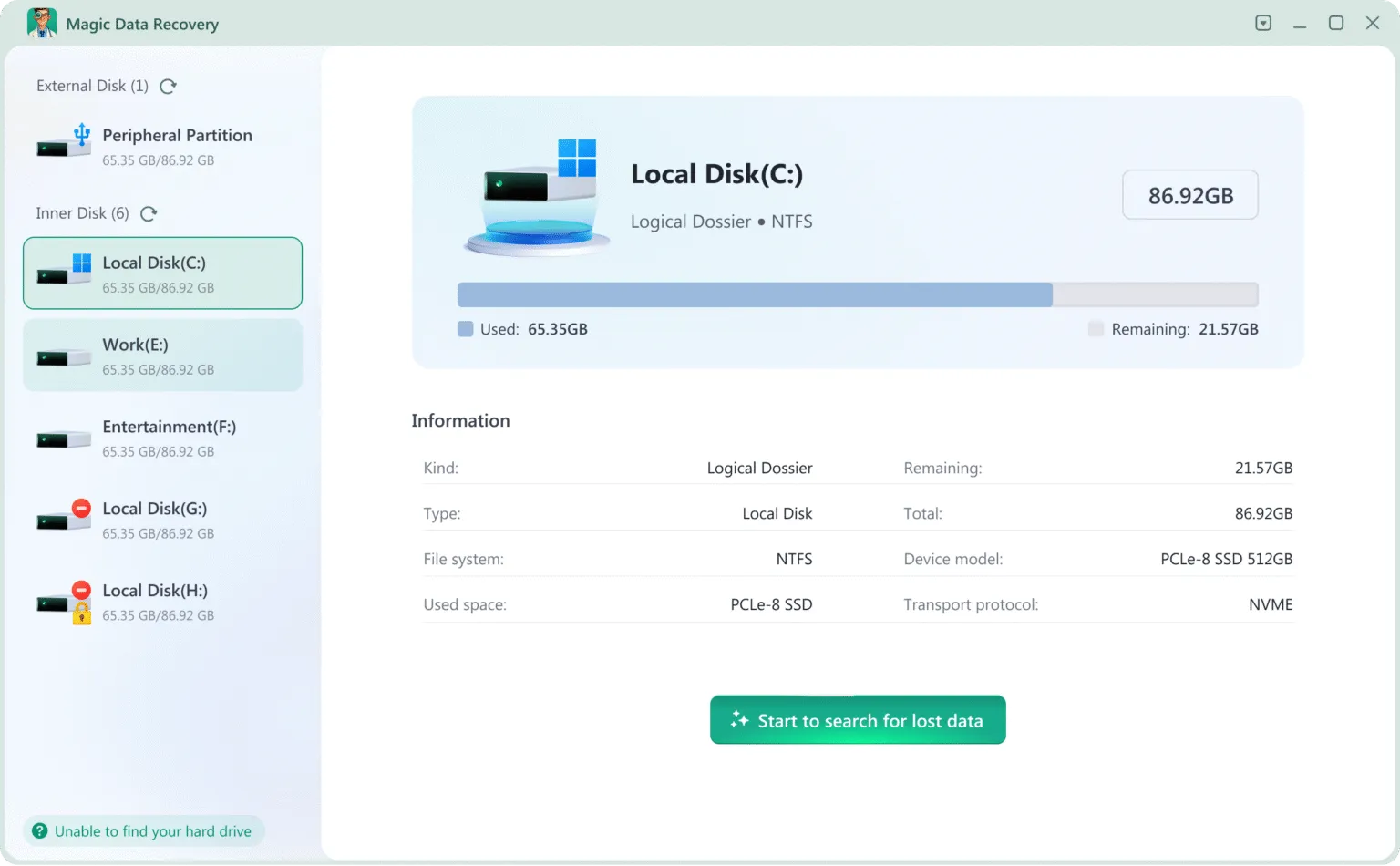
Magic Data Recovery is useful here because it scans storage rather than relying on Quick Access history. It supports files lost through deletion, formatting, inaccessible or erroneous file systems, and other common storage problems. It can scan internal drives, external disks, USB drives, and memory cards, recognize more than 5,000 file types, and preview supported files before recovery.
Recycle Bin helps only while an item remains there, and File History needs a pre-existing backup. Windows File Recovery is a capable command-line option for local storage, but it requires the correct source, destination, mode, and filters. Magic Data Recovery instead offers a visual scan-filter-preview workflow. Recovery still depends on drive condition and overwriting; no responsible tool can promise success.
Supports Windows 7/8/10/11 and Windows Server
How to Recover the Missing Files
1. Install Magic Data Recovery on a different drive from the one that lost the files.
2. Select the affected partition or storage device and start the scan.
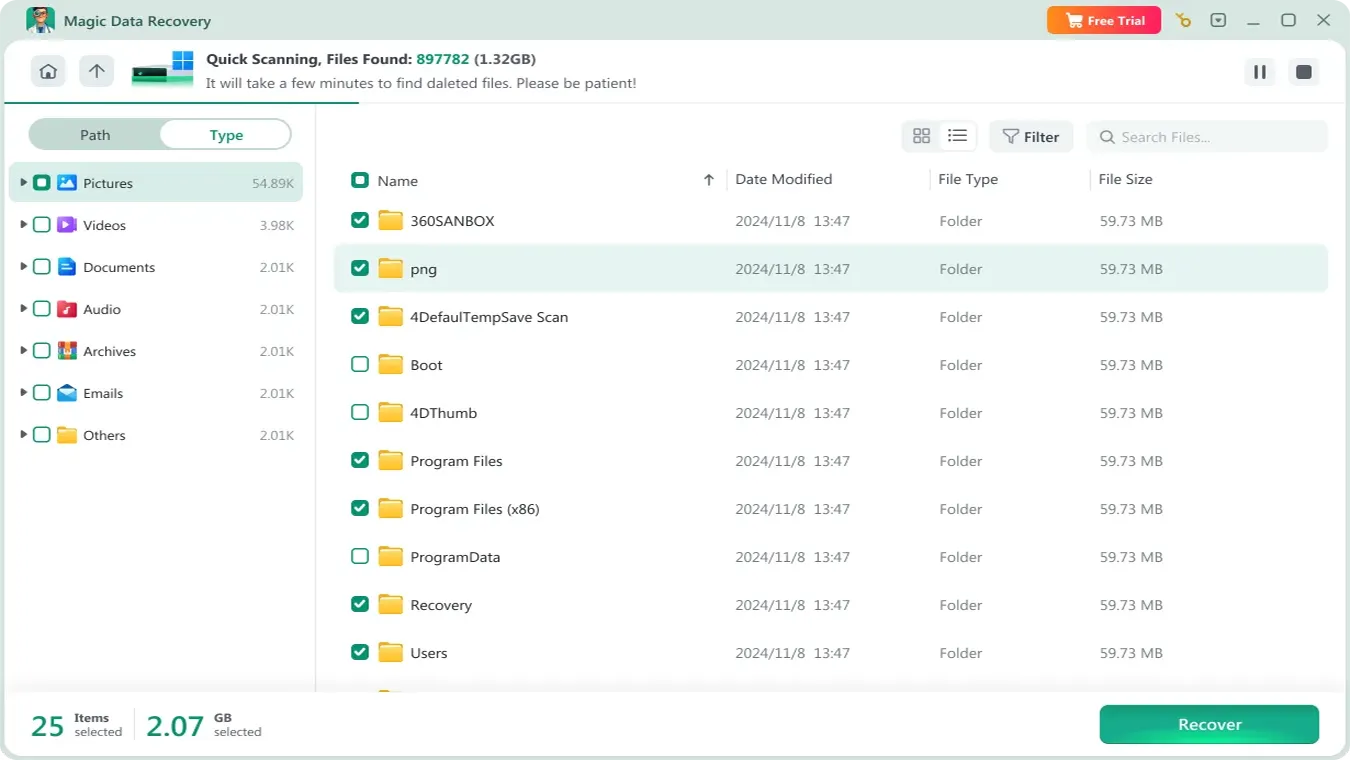
3. Filter by file type, path, name, size, or date, then preview the likely matches.
4. Recover selected files to another healthy drive—not to the source.
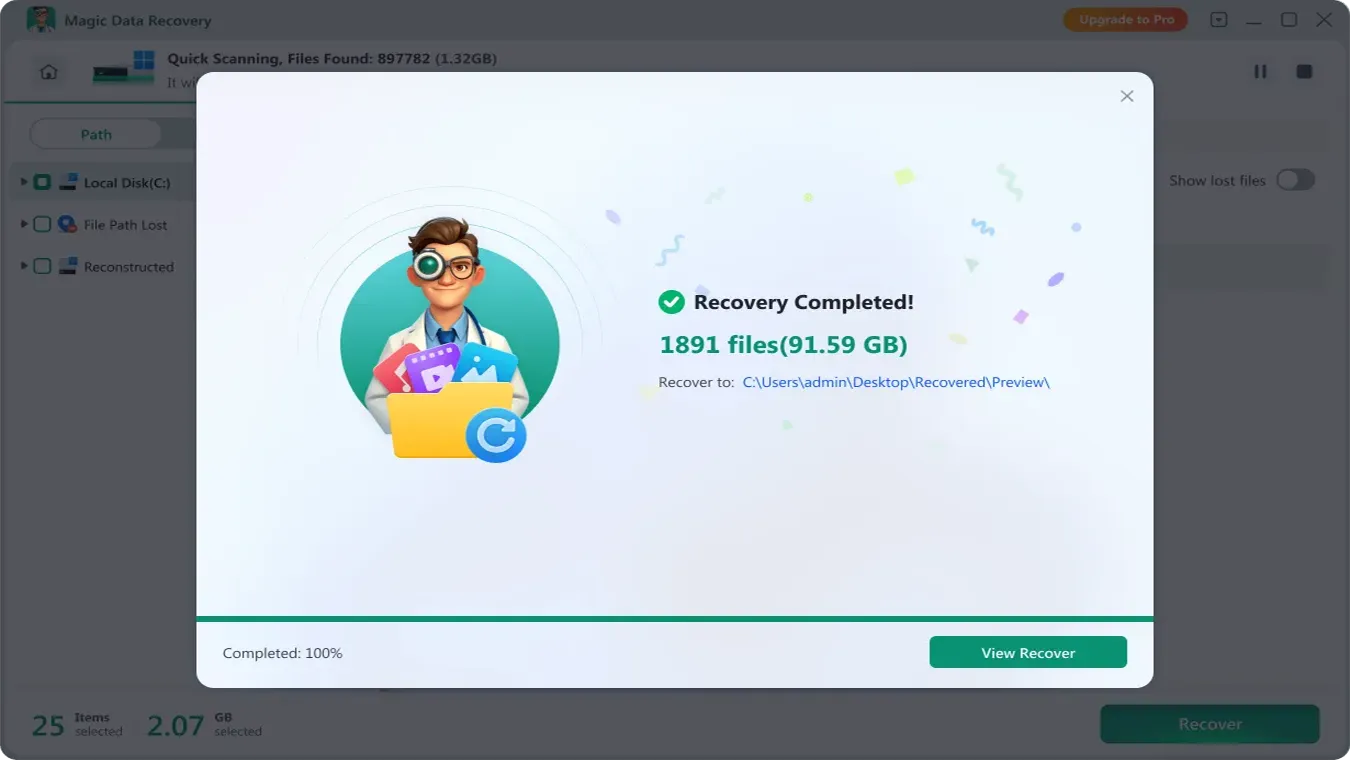
For example, if a project folder vanished from D:, scan D: but save recovered documents to an external drive. For loss on C:, minimize computer use and, where practical, scan the disk from another Windows computer.
Tips to Prevent Quick Access and File Loss
Once the files return, pin stable working folders instead of temporary locations. Do not use Recent as a filing system. Keep another copy of important data on independent storage or a versioned cloud service, verify which OneDrive account protects personal folders, and eject removable drives safely. If a drive clicks, repeatedly disconnects, or vanishes from Disk Management, stop DIY scans and consult a recovery professional.
Conclusion
When quick access files disappeared, first determine whether the original data or only File Explorer’s shortcut list is missing. Restore the navigation pane and privacy settings, search the actual storage locations, inspect hidden files and user profiles, check OneDrive, and reset the Quick Access cache only after confirming the originals are safe. Then use Recycle Bin or backups before scanning a drive.
Magic Data Recovery is recommended when the files are genuinely absent and basic Windows methods cannot retrieve them. Its support for deletion, formatting, file system errors, varied storage devices, preview, and targeted filtering makes it a practical next step without pretending every missing pin is data loss. For a fuller recovery checklist, revisit Amagicsoft’s deleted file recovery guide and recover results to a different drive.
Supports Windows 7/8/10/11 and Windows Server
FAQs
Why have my Quick Access files disappeared?
Your files may still exist. Quick Access can lose pins or recent history after a Windows update, privacy-setting change, cleanup, cache problem, or folder move. Search the original drive first. If the originals are missing too, check Recycle Bin, OneDrive, backups, and recovery options.
Does clearing Quick Access delete my files?
No. Clearing File Explorer history removes recent and frequent entries, not the files stored in their original folders. However, it may erase your current shortcut history and require you to pin folders again. Confirm the source files exist before resetting the cache.
How do I restore Quick Access in Windows 11?
Open File Explorer and select Home. If the left pane is missing, choose View > Show > Navigation pane. Open the desired folder, right-click it, and select Pin to Quick access. Also enable recent files and frequent folders in File Explorer Options.
Why did my file disappear from Quick Access but remain on my PC?
Quick Access stores references, not original data. The entry may vanish when history is cleared, a pin becomes corrupted, or Windows changes the Home layout. Locate the real file with Search, open its folder, and pin that folder again.
Can a Windows update make files appear to disappear?
Yes. An update may change the File Explorer layout, load another user profile, alter search indexing, or move older content into Windows.old. Search This PC and inspect your normal folder under C:\Users. Do not assume the update deleted data without checking these locations.
What should I do if my files suddenly disappeared from OneDrive folders?
Confirm that OneDrive uses the correct personal, work, or school account and that syncing is active. Search OneDrive.com, check its Recycle Bin, and review version history. Avoid unlinking or resetting OneDrive until you understand whether a deletion or account mismatch caused the issue.
Can Magic Data Recovery restore files missing from Quick Access?
It can help only if the underlying files were deleted, formatted, or lost because of a file system problem. It does not need to repair a missing shortcut. Scan the original storage device, preview matches, and save recovered files to a different drive.
When should I stop trying DIY file recovery?
Stop if the drive clicks, disconnects, overheats, disappears from Disk Management, or reports severe hardware errors. Software cannot repair physical damage, and repeated scans may worsen it. Power down the device and contact a reputable professional recovery laboratory for important data.

Jason is a data recovery and technical support specialist with over 15 years of hands-on experience. He has worked extensively with frontline users, troubleshooting difficult data loss cases and providing practical recovery solutions for accidental deletion, formatted drives, damaged file systems, lost partitions, system failures, and other recovery emergencies. His expertise also includes backup and restoration, file repair, and disaster recovery, with a strong emphasis on safe, reliable, and technically accurate guidance.