
Raise Data Recovery Review & Alternative
Losing important files can interrupt work, school projects, client delivery, and personal storage plans. In many cases, users search for Raise Data Recovery because they need a practical way to recover deleted files, restore a formatted drive, or access data after a file system error. Raise Data Recovery is a known recovery utility for accidental deletion, formatting, system crashes, and other common data loss cases.
However, choosing the right data recovery software is not only about whether a tool can scan a drive. Users also need a clean interface, clear recovery steps, useful preview options, broad device support, and reliable handling of common recovery scenarios. This guide reviews Raise Data Recovery, explains where it works well, and compares it with Magic Data Recovery, a simpler and more user-friendly alternative for everyday Windows users.
Supports Windows 7/8/10/11 and Windows Server
Table of Contents
What Is Raise Data Recovery?
Raise Data Recovery is a file recovery program designed to help users restore lost files from computers, external drives, USB flash drives, memory cards, and other storage media. Its official materials describe it as a cost-effective recovery utility with a clear interface, easy navigation, step-by-step guidance, and cross-platform installation.
For users who understand file systems or need recovery across different operating systems, Raise Data Recovery offers notable technical coverage. It supports file systems used by Windows, macOS, and Linux, including NTFS, FAT/FAT32, ExFAT, ReFS, HFS+, APFS, Ext2-Ext4, ReiserFS, UFS, JFS, and XFS. It also supports simple storage and RAID-based storage configurations.
That makes Raise Data Recovery a capable option in many logical data loss cases. Still, ordinary users often care more about how quickly they can scan, preview, and recover files without reading technical instructions. This is where Magic Data Recovery becomes a stronger everyday choice.
Common Reasons People Search for Raise Data Recovery
Most users do not look for Raise Data Recovery because they enjoy comparing technical recovery engines. They search for it because something has gone wrong. Common cases include:
- Files deleted from the Recycle Bin
- Shift + Delete mistakes
- Formatted USB drives or SD cards
- Inaccessible external hard drives
- Corrupted partitions
- Lost photos, documents, videos, or compressed files
- File system errors after unsafe drive removal
- Data loss after crashes or software problems
In these situations, the most important rule is simple: stop writing new data to the affected drive. Even Raise’s official download page warns users not to install recovery software on the same drive or partition where data was lost, because doing so can cause irreversible data loss.
Therefore, whether you use Raise Data Recovery or Magic Data Recovery, install the tool on a different drive whenever possible.
Raise Data Recovery: Strengths and Limitations
Strengths of Raise Data Recovery
Raise Data Recovery has several real strengths. First, it supports Windows, macOS, and Linux, which gives it broader operating system flexibility than many Windows-only tools. Its download page lists support for Windows XP SP3 through Windows 11, macOS 11 and above, and compatible Linux systems.
Second, Raise Data Recovery handles a wide range of file systems. This matters for users who work with mixed environments, NAS devices, Linux partitions, or external drives used across different systems.
Third, the software includes a wizard-style workflow. That design helps reduce complexity for beginners, especially compared with advanced forensic recovery tools that expose too many technical settings.
Limitations of Raise Data Recovery
Even though Raise Data Recovery is capable, it may not feel like the best fit for every user. Its broader technical coverage can make the product positioning more complex for users who simply want to recover photos, documents, videos, or office files from a Windows PC.
In addition, users who mainly need Windows data recovery may prefer a tool that focuses on faster onboarding, clearer visual recovery steps, and easier preview-based selection. For everyday deleted file recovery, formatted drive recovery, and corrupted device recovery, a simpler interface often saves time and reduces mistakes.
Magic Data Recovery: A Better Alternative for Everyday Users
Magic Data Recovery provides a more direct recovery experience for users who want a clean, simple, and practical file recovery tool. Its official page highlights support for documents, images, videos, audio, and more than 5000 file formats. It also lists support for hard drives, USB drives, SD cards, SSDs, and other common devices.
The biggest advantage is usability. Magic Data Recovery presents recovery as a simple three-step process: download and install the software, select the drive or device, scan it, then preview and recover the files you need. This structure works well for users who do not want to adjust file system settings or understand partition metadata.
If you are comparing Raise Data Recovery with Magic Data Recovery, the practical difference is clear. Raise Data Recovery offers strong technical coverage, especially for cross-platform and file system scenarios. Magic Data Recovery focuses more on a smoother Windows recovery experience, broader everyday file type coverage, and a cleaner path from scan to recovery.
Raise Data Recovery vs Magic Data Recovery
Comparison Point | Raise Data Recovery | Magic Data Recovery |
Best for | Cross-platform users, mixed file systems, some RAID/NAS cases | Everyday Windows users who want simple recovery |
Interface | Wizard-style and beginner-friendly | Cleaner, more direct, easier for non-technical users |
Recovery scenarios | Deletion, formatting, crashes, logical file system issues | Deleted, formatted, corrupted, and lost files |
Device support | Computers, USB media, memory cards, NAS/RAID scenarios | HDDs, SSDs, USB drives, SD cards, cameras, mobile-related devices |
File type coverage | Strong file system coverage | 5000+ file formats listed officially |
Learning curve | Moderate for users who need advanced scenarios | Lower; better for ordinary users |
Recommended for | Users with cross-platform or technical storage needs | Users who want a fast, clear, guided recovery solution |
How to Recover Lost Files with Magic Data Recovery
Magic Data Recovery suits users who want a more straightforward data recovery software workflow. Here is a typical process:
Step 1: Stop Using the Affected Drive
Before scanning, stop saving, downloading, or installing anything on the drive where data loss happened. This helps reduce the risk of overwriting lost files.
Step 2: Install Magic Data Recovery on Another Drive
Install the program on a safe drive, not the drive that contains the lost files. This rule applies to all recovery tools, including Raise Data Recovery.
Supports Windows 7/8/10/11 and Windows Server
Step 3: Select the Lost File Location
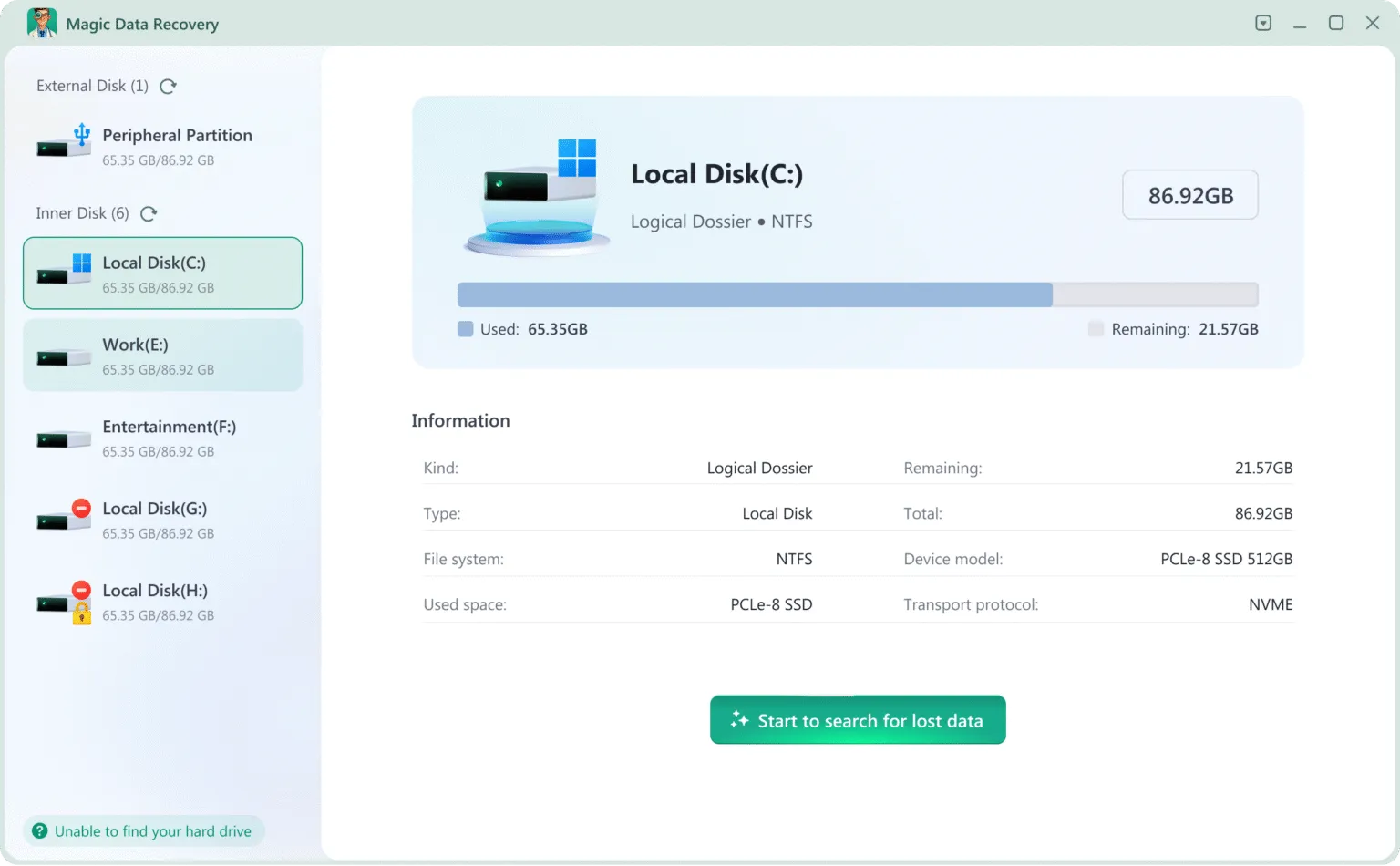
Open Magic Data Recovery and choose the disk, USB drive, SD card, or external device that lost data. The user guide explains that users can select a drive and start scanning directly.
Step 4: Scan and Preview Files
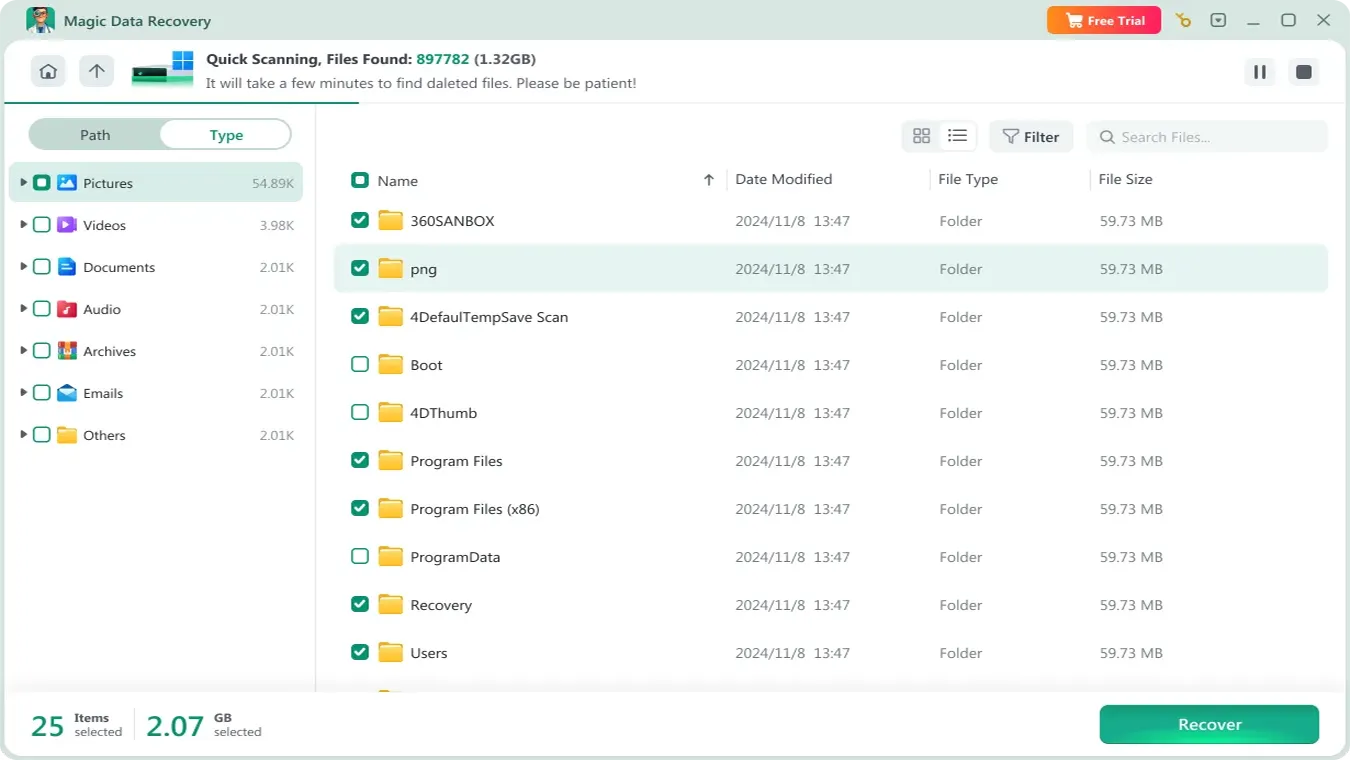
Let the software scan the selected device. After the scan finishes, Magic Data Recovery lists the files it finds. Use preview and filters to locate documents, photos, videos, archives, or other needed files.
Step 5: Recover Files to a Safe Location
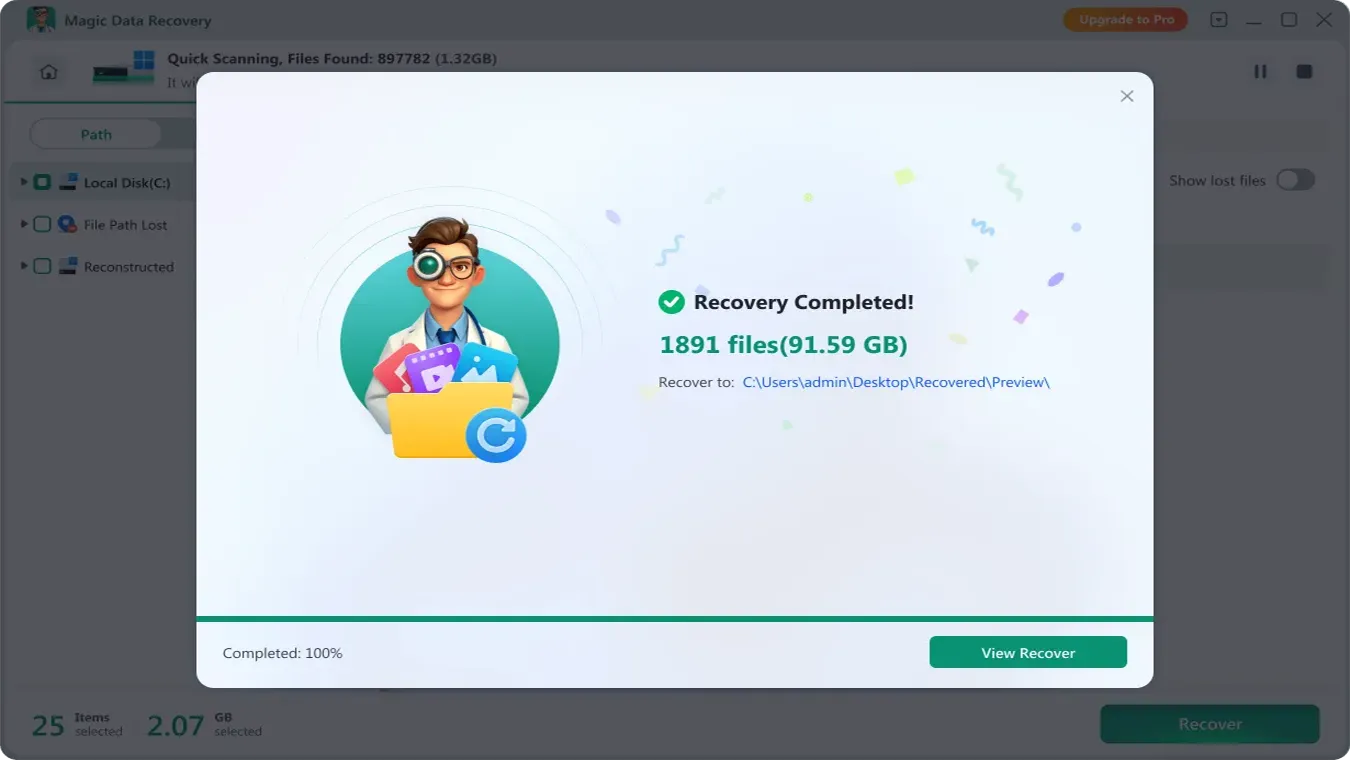
Save recovered files to a different drive. Do not restore them to the original damaged or formatted location until you confirm the data is safe.
When Should You Choose Magic Data Recovery Instead of Raise Data Recovery?
Choose Magic Data Recovery if your goal is simple and practical recovery. For example, it is a stronger choice when you need to:
- Recover deleted photos or office documents
- Restore files from a formatted USB drive
- Recover data from an SD card or external hard drive
- Fix common Windows file loss problems
- Preview files before recovery
- Use a clean interface without technical settings
- Recover multiple common file types from one place
Raise Data Recovery remains useful for users who need cross-platform recovery, Linux or macOS file system support, or certain RAID-related scenarios. But for most Windows users, Magic Data Recovery offers a smoother, more accessible solution.
Practical Tips Before Using Any Data Recovery Software
Before using Raise Data Recovery, Magic Data Recovery, or any other recovery tool, follow these best practices:
- Stop using the affected device immediately.
New data can overwrite deleted files.
- Do not format the drive again.
Repeated formatting can reduce recovery chances.
- Avoid installing software on the lost-data drive.
Use another disk or computer when possible.
- Preview before recovery.
Preview helps confirm file quality before saving.
- Recover to a different location.
This prevents further damage to the source drive.
- Back up important files after recovery.
Use an external drive or cloud backup to reduce future risk.
These steps improve your chances of success no matter which data recovery software you choose.
Conclusion
Raise Data Recovery is a capable recovery tool with meaningful strengths, especially for users who need cross-platform support, broad file system compatibility, and some RAID-related recovery options. It deserves attention in more technical recovery cases.
However, if you mainly need a simple, clean, and effective solution for deleted files, formatted drives, corrupted storage devices, or common Windows data loss, Magic Data Recovery is the better everyday recommendation. It supports a wide range of file formats, works with common storage devices, and gives users a more direct recovery process.
If you are searching for Raise Data Recovery but want a tool that feels easier, cleaner, and more focused on practical results, Magic Data Recovery is worth trying.
Supports Windows 7/8/10/11 and Windows Server
FAQs
What is Raise Data Recovery used for?
Raise Data Recovery is used to restore files lost because of accidental deletion, formatting, system crashes, and other logical data loss problems. It supports many file systems and can work across Windows, macOS, and Linux environments. It is useful for users who need broader technical recovery coverage, especially across different storage formats.
Is Raise Data Recovery good for beginners?
Raise Data Recovery offers a wizard-style interface, so beginners can use it for common recovery tasks. However, some users may still find its cross-platform and file system coverage more technical than necessary. For ordinary Windows users who want a simpler experience, Magic Data Recovery may feel easier and more direct.
Can Magic Data Recovery recover deleted files?
Yes. Magic Data Recovery can help users recover deleted files from common storage devices such as hard drives, SSDs, USB drives, and SD cards. It also supports preview and selection before recovery, which helps users check whether files are useful before saving them to a safe location.
Which is better: Raise Data Recovery or Magic Data Recovery?
The better choice depends on your recovery case. Raise Data Recovery is strong for cross-platform and file system-focused recovery. Magic Data Recovery is better for everyday Windows users who want a cleaner interface, simple steps, broad file type support, and a more beginner-friendly recovery workflow.
Can I recover files from a formatted drive?
Yes, formatted drive recovery is possible if the lost files have not been overwritten. Stop using the formatted drive immediately, install recovery software on another disk, scan the formatted device, and save recovered files elsewhere. Magic Data Recovery is a practical option for this type of recovery.
Is data recovery always successful?
No data recovery tool can guarantee complete recovery in every case. Success depends on whether new data has overwritten the lost files, how badly the file system is damaged, and whether the storage device has physical problems. For physically damaged drives, professional recovery service may be safer.
Why should I not install recovery software on the same drive?
Installing software on the same drive can write new data over deleted or lost files. Once overwritten, those files may become unrecoverable. Always install Magic Data Recovery, Raise Data Recovery, or any recovery program on another drive to protect the original lost data.
Is Magic Data Recovery suitable for non-technical users?
Yes. Magic Data Recovery is suitable for non-technical users because it follows a simple workflow: select the device, scan it, preview found files, and recover them. This makes it easier for users who need data recovery software but do not want to manage complex recovery settings.

Jason is a data recovery and technical support specialist with over 15 years of hands-on experience. He has worked extensively with frontline users, troubleshooting difficult data loss cases and providing practical recovery solutions for accidental deletion, formatted drives, damaged file systems, lost partitions, system failures, and other recovery emergencies. His expertise also includes backup and restoration, file repair, and disaster recovery, with a strong emphasis on safe, reliable, and technically accurate guidance.