
SD Card Data Recovery for Real Situations on Windows
You don’t usually search for SD card data recovery until something goes wrong.
Photos disappear after deletion. A camera card gets formatted by mistake. Or Windows suddenly says the SD card needs to be formatted before use.
In these moments, most users don’t want a generic list of tools. They want to know what to do in their exact situation—and what mistakes to avoid before data loss becomes permanent.
This article explains how to recover files from SD cards based on real-world scenarios Windows users commonly face. You’ll also learn when free SD card data recovery is enough and when a safer solution like Magic Data Recovery makes more sense.
Supports Windows 7/8/10/11 and Windows Server
Table of Contents
Before Anything Else: One Critical Rule
No matter which situation you are in, follow this rule first:
Stop using the SD card immediately.
Any new data written to the card may overwrite lost files. Overwritten data cannot be recovered by software—free or paid. This single step often decides whether SD card data recovery succeeds or fails.
Scenario 1: You Deleted Files from an SD Card by Mistake
This is one of the most common cases.
When files are deleted, the SD card usually removes only the file index, not the actual data. Until the storage space is reused, recovery is often possible.
What Usually Works
- Remove the SD card from the device
- Connect it to a Windows PC using a card reader
- Run SD card data recovery software as soon as possible
In this scenario, both free and paid recovery tools may work—especially if no new files were added.
Scenario 2: The SD Card Was Formatted Accidentally
Formatting feels final, but it often isn’t.
A quick format removes file references while leaving most data intact. That means SD card data recovery is still possible, although it usually requires a deeper scan.
What to Avoid
- Do not format the card again
- Do not try to “fix” it with repair tools
- Do not save new files to the card
What Helps
Deep scanning recovery software that supports formatted SD cards and file reconstruction.
Scenario 3: Windows Says “You Need to Format the Disk”
This message usually indicates a file system error.
At this stage, Windows cannot read the card structure, but the data may still exist. Formatting at this point often destroys remaining recovery chances.
Recommended Approach
- Ignore the format prompt
- Perform SD card data recovery first
- Save recovered files to another drive
- Fix or reformat the SD card afterward
This order follows industry best practices and significantly improves recovery success.
Scenario 4: The SD Card Shows as RAW in Windows
A RAW SD card means Windows cannot recognize the file system. This often happens after unsafe removal, power interruption, or logical corruption.
Although the card looks unusable, SD card data recovery software can still scan it at a low level.
Key Point
Do not run CHKDSK or formatting tools before recovering data. These actions may rewrite metadata and reduce recoverability.
Scenario 5: The SD Card Is Detected but Files Are Missing
Sometimes the SD card appears normally, but folders are empty or files are inaccessible.
This often happens due to:
- Hidden file system damage
- Interrupted transfers
- Index corruption
In such cases, free SD card data recovery tools with preview support are useful to verify whether files still exist.
Using Magic Data Recovery for These Scenarios (Windows)
For Windows users dealing with the scenarios above, Magic Data Recovery offers a practical and safe recovery workflow.
Why Magic Data Recovery Fits Real Situations
Instead of focusing on marketing claims, Magic Data Recovery focuses on verification and safety:
- Supports SD card data recovery after deletion, formatting, and file system errors
- Free scan and free preview of recoverable files
- Free recovery up to 500MB, allowing users to confirm results
- Read-only scanning prevents additional data damage
- Simple interface designed for non-technical users
These features are especially helpful when you are unsure whether recovery is still possible. You can download Magic Data Recovery from the button below to install it.
Supports Windows 7/8/10/11 and Windows Server
How to Recover Data from an SD Card with Magic Data Recovery
1. Insert the SD card into a Windows PC using a card reader.
2. Launch Magic Data Recovery.
3. Select the SD card from the drive list.
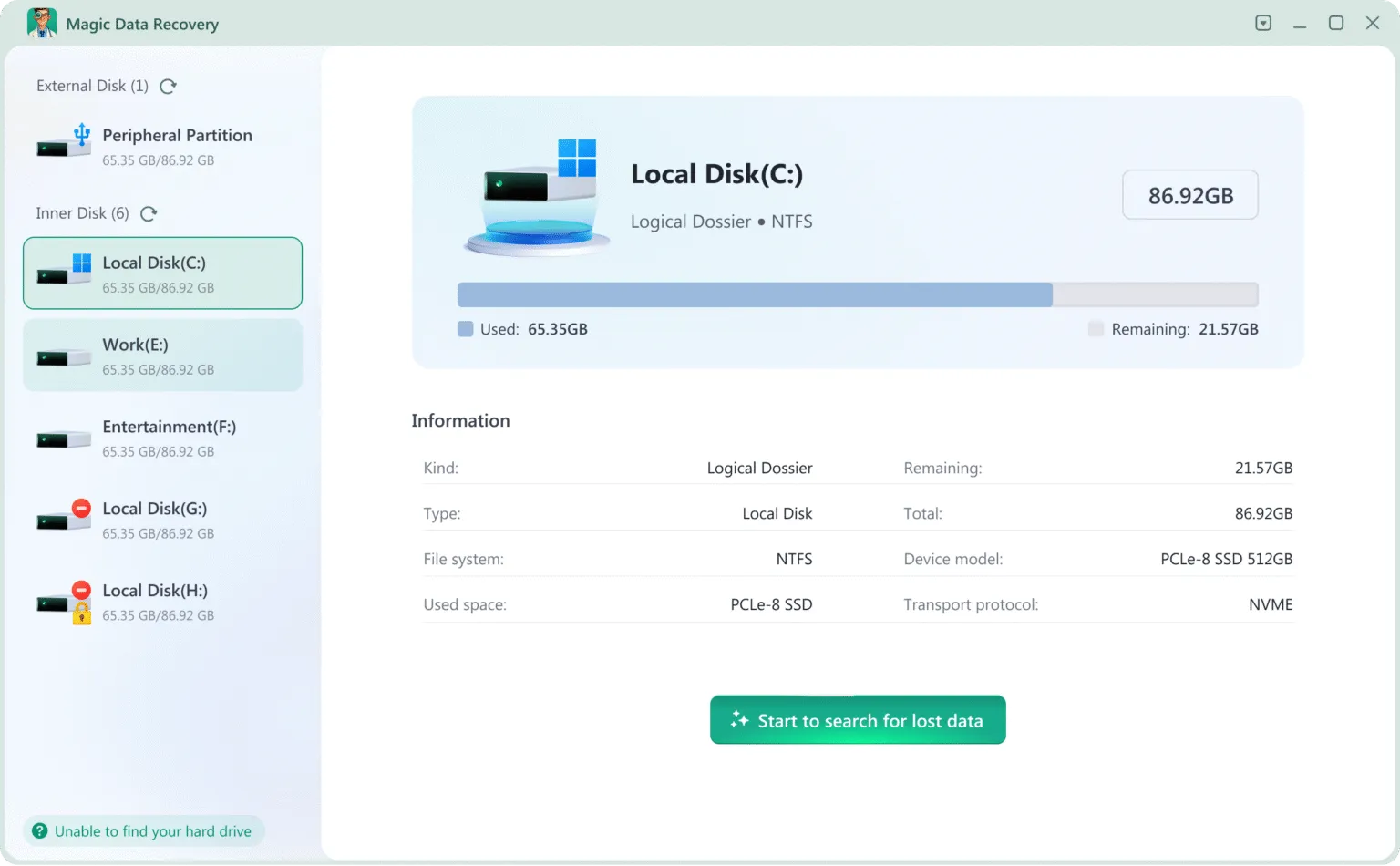
4. Start scanning (Click Search for lost data button to do the quick and deep scan).
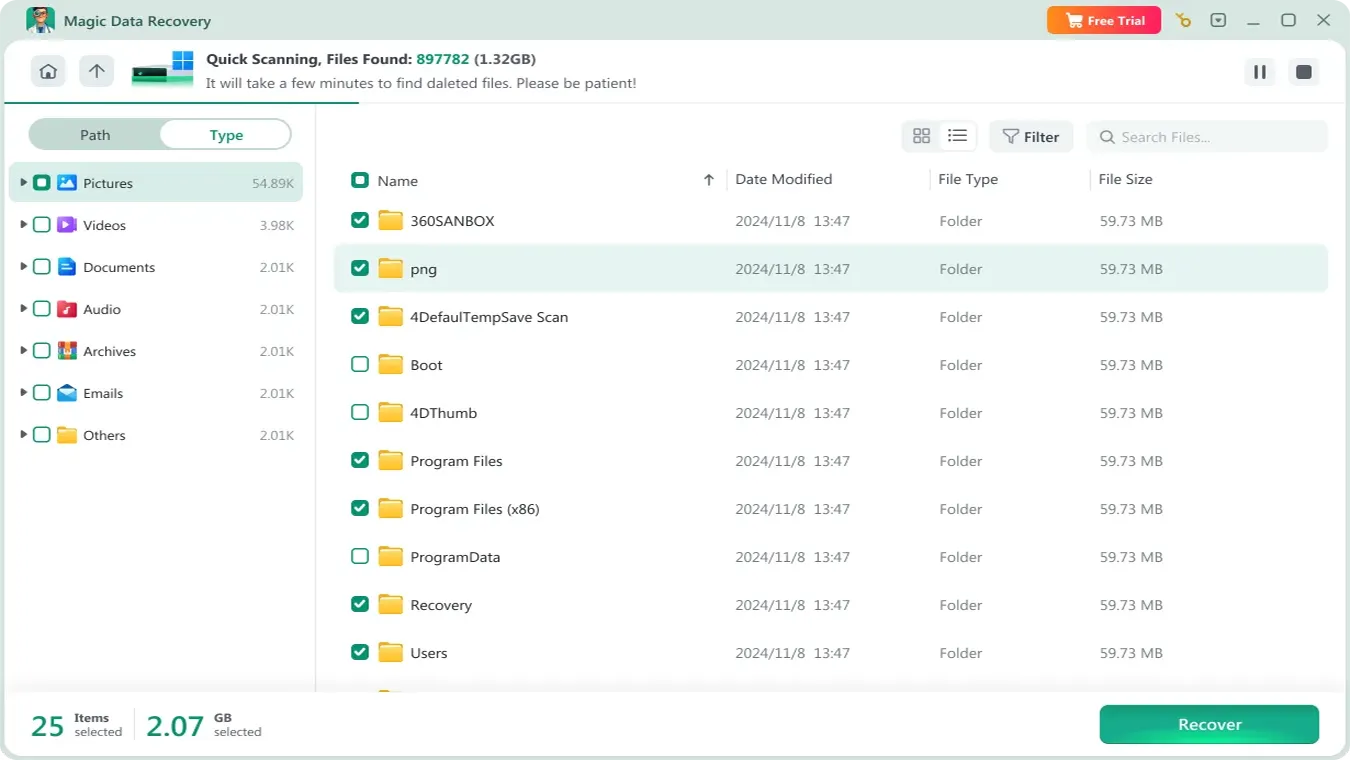
5. Preview files to confirm they are intact. Previewing files before recovery helps avoid false expectations and wasted time.

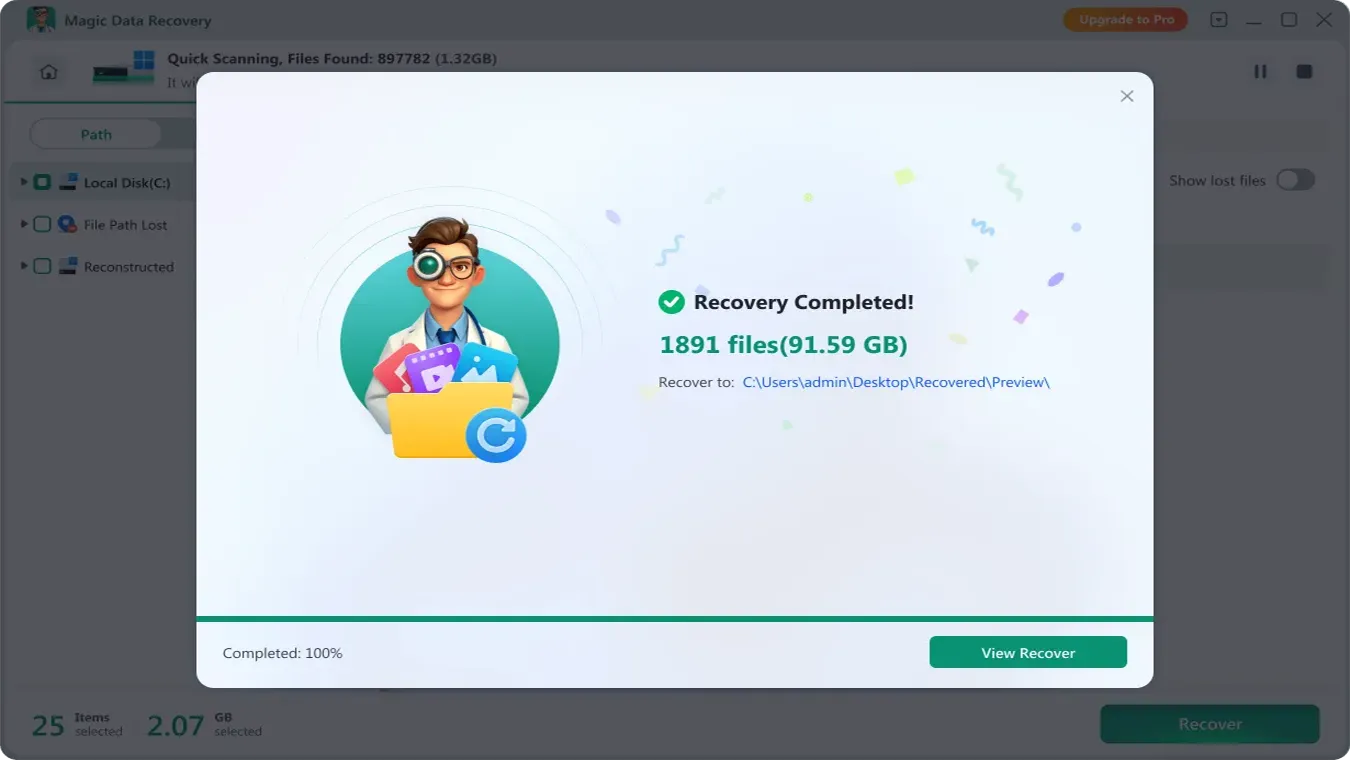
6. Recover files to a different storage device.
When Free SD Card Data Recovery Is Enough
Free SD card data recovery works well in these situations:
- Recently deleted files
- Small file sizes
- Minimal card usage after data loss
- You only need to verify recoverability
Magic Data Recovery’s 500MB free recovery allows users to test real recovery results without commitment.
When You Should Be More Careful
Free recovery may not be enough if:
- The SD card was heavily used after data loss
- Large video files are involved
- File system corruption is severe
In these cases, a more robust recovery engine improves stability and accuracy.
Common Mistakes That Reduce Recovery Success
Many failed recovery attempts come from simple mistakes:
- Continuing to use the SD card
- Recovering files back to the same card
- Formatting before recovery
- Using outdated or unreliable tools
Avoiding these errors is just as important as choosing the right SD card data recovery solution.
Why This Scenario-Based Approach Matters
Most articles explain how recovery works. Fewer explain what to do in your exact situation.
By identifying your scenario first, you reduce risks, avoid irreversible mistakes, and choose the right SD card recovery method—free or advanced.
That is why Magic Data Recovery is recommended here: it allows Windows users to scan, preview, and verify recoverability safely before making decisions.
If you are facing SD card data loss and want a cautious, transparent approach, Magic Data Recovery is worth trying.
Supports Windows 7/8/10/11 and Windows Server
FAQs
Can SD card data recovery work after accidental deletion?
Is free SD card data recovery really free?
Can I recover data from a formatted SD card?
What does it mean when an SD card shows as RAW?
Should I format an SD card when Windows asks me to?
How long does SD card data recovery usually take?
Can SD card data recovery fix physically damaged cards?
Why is file preview important in SD card data recovery?

Jason is a data recovery and technical support specialist with over 15 years of hands-on experience. He has worked extensively with frontline users, troubleshooting difficult data loss cases and providing practical recovery solutions for accidental deletion, formatted drives, damaged file systems, lost partitions, system failures, and other recovery emergencies. His expertise also includes backup and restoration, file repair, and disaster recovery, with a strong emphasis on safe, reliable, and technically accurate guidance.