
Dell Cyber Recovery vs Magic Data Recovery
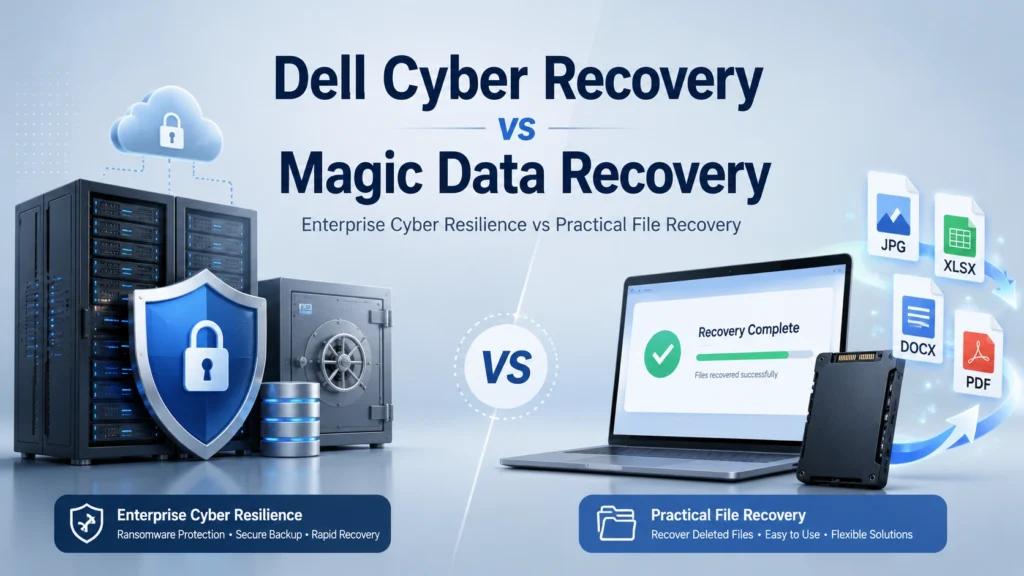
When businesses search for cyber recovery, many will quickly find Dell Cyber Recovery and Dell CyberSense. These enterprise-grade solutions focus on ransomware resilience, isolated vaults, immutable backup copies, and clean recovery after cyberattacks. However, not every data loss problem requires a large enterprise cyber vault. In many real-world cases, users simply need to recover deleted files, formatted drive data, or files lost due to file system errors.
That is where Magic Data Recovery becomes a practical alternative. It helps users recover lost files from common data loss scenarios without requiring complex infrastructure, enterprise deployment, or long IT planning cycles. This guide compares Dell Cyber Recovery, Dell CyberSense, and Magic Data Recovery from the perspective of recovery ability, ideal use cases, ease of use, and everyday practicality.
Supports Windows 7/8/10/11 and Windows Server
Table of Contents
What Is Dell Cyber Recovery?
Dell Cyber Recovery is an enterprise cyber resilience solution designed to protect critical data from ransomware and destructive cyber incidents. According to Dell, PowerProtect Cyber Recovery uses an isolated cyber recovery vault, immutable backup copies, and machine learning analytics to help organizations identify clean data and recover critical systems after an attack.
In simple terms, Dell Cyber Recovery is not a typical file recovery tool. It is a structured enterprise recovery environment. It works best when an organization already has backup infrastructure, protected workloads, security policies, recovery objectives, and IT teams that can manage cyber resilience operations.
How Dell Cyber Recovery Works
A typical cyber recovery workflow includes several layers:
- Critical data is backed up from the production environment.
- A selected copy moves into an isolated cyber recovery vault.
- The vault reduces exposure to the production attack surface.
- Immutable retention helps prevent unwanted modification or deletion.
- Analytics tools such as Dell CyberSense inspect backup data for suspicious changes.
- IT teams identify a clean copy and restore systems after validation.
This architecture makes sense for banks, healthcare organizations, government agencies, universities, and large enterprises that must protect mission-critical workloads from ransomware.
What Is Dell CyberSense?
Dell CyberSense is the analytics layer used with Dell PowerProtect Cyber Recovery. Dell describes CyberSense as an intelligent analytics engine that uses AI-based machine learning to scan data in the vault and detect signs of corruption or ransomware activity.
CyberSense tracks changes across files, databases, and infrastructure. Index Engines, the company behind CyberSense, explains that it scans protected data after it enters the air-gapped recovery vault and helps organizations identify clean, uncompromised recovery points.
What Dell CyberSense Is Good At
Dell CyberSense is useful when an organization needs to answer questions such as:
- Which backup copy is clean?
- Did ransomware corrupt this dataset?
- Which files changed suspiciously?
- Can the organization restore from this recovery point?
- Is the recovery copy trustworthy enough for business restoration?
This makes Dell CyberSense valuable for ransomware recovery planning. However, it does not replace a simple data recovery tool for users who need to restore files from a formatted USB drive, an accidentally deleted folder, or a corrupted partition.
Dell Cyber Recovery vs Magic Data Recovery: Core Difference
The biggest difference is the recovery scenario.
Dell Cyber Recovery protects enterprise systems before and after a cyberattack. It relies on backup copies, vault architecture, and security analytics. Magic Data Recovery focuses on recovering lost files from storage devices after deletion, formatting, file system errors, partition loss, or other common data loss events.
In other words, Dell focuses on enterprise cyber resilience. Magic Data Recovery focuses on accessible file recovery for individuals, small businesses, and users who need a faster way to locate missing files.
Recovery Ability: Enterprise Vault vs File-Level Recovery
Dell Cyber Recovery Recovery Ability
Dell Cyber Recovery is strong when the organization already has a clean backup strategy. Its recovery strength comes from immutability, isolation, and analytics. Dell states that PowerProtect Cyber Recovery can isolate critical data in an on-premises or cloud cyber recovery vault and use machine learning to expose suspicious activity.
This approach works well for ransomware recovery because it helps teams avoid restoring corrupted backup copies. However, it depends on previous backup copies. If a file was never backed up, or if the user only has a local drive with lost files, Dell Cyber Recovery is usually not the right tool.
Magic Data Recovery Recovery Ability
Magic Data Recovery is more suitable when files are already missing from a local device. It supports recovery from multiple common data loss scenarios, including:
- Accidental deletion
- Drive formatting
- File system errors
- Lost or inaccessible partitions
- External drive data loss
- USB drive and memory card data loss
- Files missing after improper operation
Its advantage lies in direct scanning. Instead of relying on a pre-built recovery vault, Magic Data Recovery scans the storage device, locates recoverable data, and helps users preview and recover files. For everyday users, this workflow is more direct and easier to understand.
Suitable Scenarios: When to Use Each Solution
Best Scenarios for Dell Cyber Recovery
Dell Cyber Recovery fits organizations that need a formal cyber recovery strategy. It is suitable for:
- Enterprise ransomware recovery
- Critical workload protection
- Large-scale backup and recovery planning
- Data center resilience
- Hybrid cloud cyber recovery
- Regulated industries with strict recovery requirements
- Organizations with dedicated IT and security teams
For example, a financial institution may use Dell Cyber Recovery to isolate backup copies in a secure vault. If ransomware hits production systems, the IT team can use CyberSense analytics to identify a clean recovery point and restore critical services.
Best Scenarios for Magic Data Recovery
Magic Data Recovery fits users who need practical data recovery without enterprise complexity. It is suitable for:
- Recovering deleted photos, videos, documents, and archives
- Restoring files from a formatted hard drive
- Recovering data from a damaged file system
- Finding files lost from an external drive
- Recovering data from USB drives, SD cards, or local disks
- Small business file recovery after accidental deletion or formatting
For example, a user may format an external hard drive by mistake. In this case, building a cyber recovery vault does not solve the immediate problem. A dedicated recovery tool like Magic Data Recovery can scan the drive and help locate lost files more efficiently.
Ease of Use: IT-Led Deployment vs User-Friendly Recovery
Dell Cyber Recovery Ease of Use
Dell Cyber Recovery is powerful, but it is not designed as a simple consumer tool. It may involve planning, appliance configuration, backup integration, vault deployment, access control, recovery workflows, and testing. Dell documentation also shows that Cyber Recovery can involve integration with PowerProtect Data Manager and recovery preparation steps for protected environments.
This is normal for enterprise cyber resilience. However, it also means that general users may find it too complex for simple data loss.
Magic Data Recovery Ease of Use
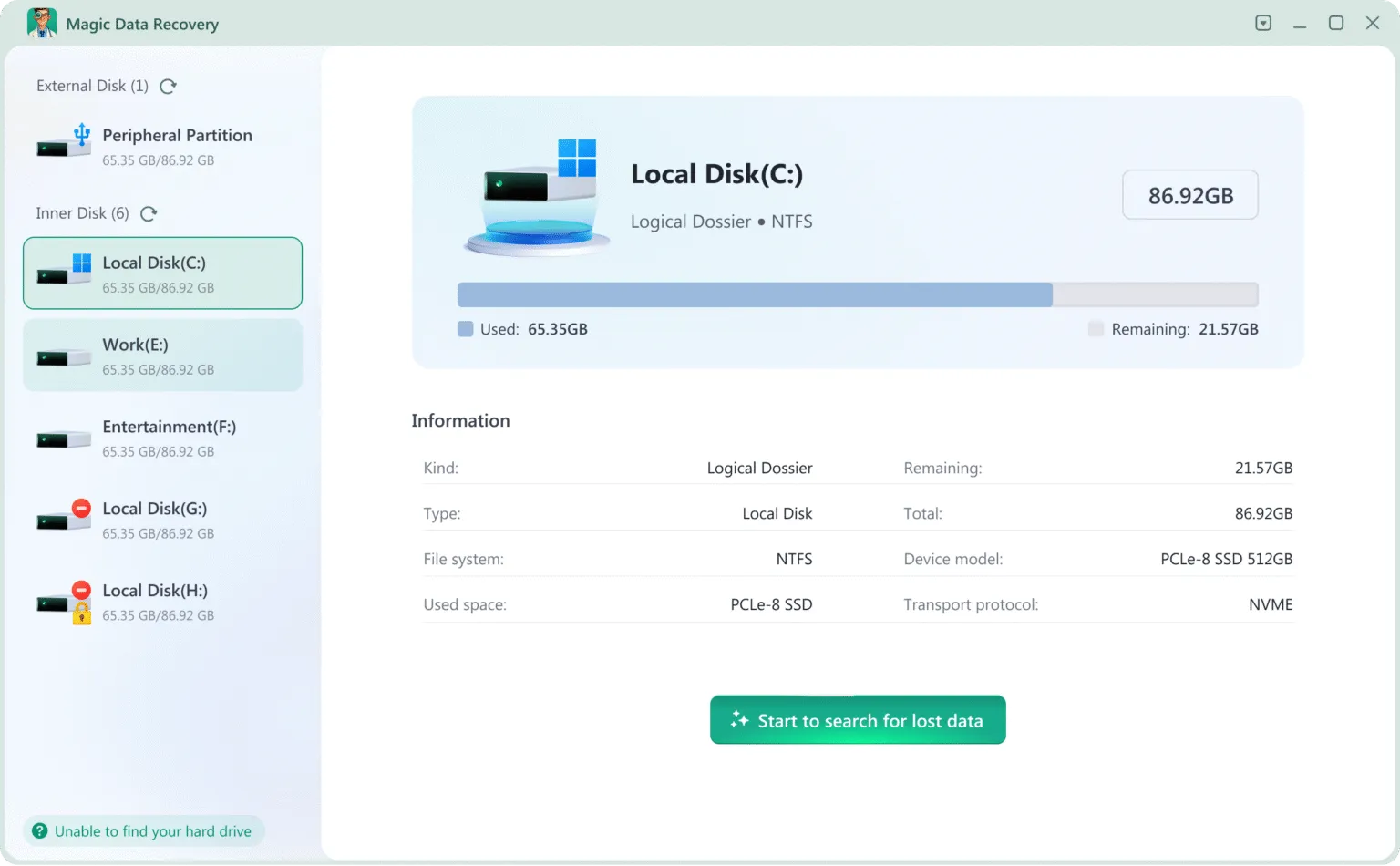
Magic Data Recovery offers a more straightforward workflow:
- Select the drive or partition.
- Start scanning.
- Preview recoverable files.
- Filter or search for target files.
- Recover selected files to a safe location.
This workflow helps users who do not have advanced IT knowledge. Moreover, Magic Data Recovery is designed to scan faster and locate lost files more precisely, which matters when users need to recover specific documents, photos, or work files quickly.
Dell CyberSense vs Magic Data Recovery
Dell CyberSense and Magic Data Recovery solve different problems.
Dell CyberSense analyzes backup data for ransomware-related corruption. It helps security and IT teams find a clean backup copy inside a protected cyber recovery vault. Magic Data Recovery scans storage devices to recover files that users can no longer access.
Comparison Area | Dell CyberSense | Magic Data Recovery |
Main purpose | Detect ransomware corruption in backup data | Recover deleted, formatted, or lost files |
Best user | Enterprise IT and security teams | Individuals, small businesses, general users |
Required setup | Cyber recovery vault and backup environment | Local installation and drive scanning |
Recovery type | Clean backup identification | File-level recovery |
Typical scenario | Ransomware attack recovery | Deleted files, formatted drive, file system error |
Ease of use | Requires technical expertise | Designed for simple recovery steps |
Therefore, Dell CyberSense is better for enterprise ransomware validation, while Magic Data Recovery is better for direct file recovery.
Supports Windows 7/8/10/11 and Windows Server
Why Magic Data Recovery Is a Practical Alternative for Common Data Loss
Many people search for cyber recovery after losing access to important data. However, the cause is not always ransomware. Sometimes the problem is simpler:
- Folder was deleted by mistake.
- Disk was formatted too quickly.
- A partition disappeared.
- USB drive asks to be formatted.
- A file system error makes files inaccessible.
In these situations, Magic Data Recovery provides a more practical path. It does not require an enterprise backup architecture. It focuses on scanning the affected device and finding recoverable files.
Key Advantages of Magic Data Recovery
Magic Data Recovery is recommended for common data loss because it addresses the core pain points directly:
1. Supports multiple data loss scenarios
It can help recover files lost due to deletion, formatting, file system errors, and other common storage problems.
2. Faster scanning experience
A faster scan helps users check recoverable files sooner, especially when dealing with large drives or urgent work documents.
3. More accurate lost file location
Precise file detection helps reduce time spent browsing irrelevant results. This is useful when users only need specific files.
4. Easier for non-technical users
The recovery process does not require vault deployment, backup policies, or enterprise infrastructure.
5. Better fit for personal and small business recovery
Users can apply it to local drives, external disks, USB drives, and memory cards.
If you are looking for a more efficient solution for everyday data loss, Magic Data Recovery is worth trying.
When Dell Cyber Recovery Is the Better Choice
To be fair, Dell Cyber Recovery remains the better choice for enterprise cyber resilience. If your organization manages large production systems, stores critical business data, and faces ransomware risk, a structured cyber recovery solution can provide stronger protection than ordinary recovery software.
Choose Dell Cyber Recovery when you need:
- Isolated recovery vaults
- Immutable backup copies
- Ransomware recovery planning
- Backup integrity analytics
- Enterprise workload protection
- IT-managed recovery workflows
- Long-term cyber resilience strategy
Dell’s approach is especially relevant when downtime can create serious financial, operational, or compliance risk.
When Magic Data Recovery Is the Better Choice
Choose Magic Data Recovery when the problem is local or file-level data loss. It is more suitable when you need to:
- Recover deleted files quickly
- Restore files from a formatted drive
- Recover data after a file system error
- Find missing files from an external hard drive
- Recover data without enterprise setup
- Preview files before recovery
- Use a simpler recovery process
For most individuals and small teams, Magic Data Recovery offers a faster and more realistic solution than deploying a full cyber recovery environment.
Common Mistakes to Avoid During Data Recovery
Before using any recovery solution, take the right first steps. These actions can improve your chance of success.
Do Not Keep Writing Data to the Same Drive
When files disappear, stop using the affected drive immediately. New data may overwrite recoverable file fragments. This matters most after accidental deletion or formatting.
Do Not Install Recovery Software on the Affected Drive
Install Magic Data Recovery on another drive if possible. Then scan the affected device. This reduces the chance of overwriting lost data.
Do Not Recover Files Back to the Same Location
Always save recovered files to a different disk. Recovering files to the same drive may damage other recoverable data.
Do Not Assume Every Data Loss Case Is a Ransomware Case
A full cyber recovery strategy matters for ransomware attacks. However, many data loss cases come from deletion, formatting, file system errors, or partition problems. Match the tool to the cause.
How to Choose the Right Cyber Recovery or Data Recovery Solution
Use this simple decision guide:
- If your company needs ransomware resilience for critical systems, consider Dell Cyber Recovery.
- Your IT team needs backup corruption analysis, consider Dell CyberSense.
- If you need to recover lost files from a drive, choose Magic Data Recovery.
- The data loss happened after deletion, formatting, or file system errors, start with Magic Data Recovery.
- If the problem involves enterprise ransomware response, involve IT security professionals and use a validated cyber recovery plan.
This decision path prevents overcomplication. It also helps users avoid choosing an enterprise platform for a simple file recovery problem.
Conclusion: Dell Cyber Recovery or Magic Data Recovery?
Dell Cyber Recovery and Dell CyberSense are strong enterprise solutions for ransomware resilience, isolated vault protection, and clean backup identification. They help organizations build a serious cyber recovery strategy for critical systems.
However, Magic Data Recovery is the better fit for everyday data loss. It supports deleted file recovery, formatted drive recovery, file system error recovery, and other common scenarios. It also offers a simpler workflow, faster scanning, and more precise file location for users who need practical recovery without enterprise complexity.
If your goal is enterprise cyber resilience, Dell’s solution deserves consideration. If your goal is to recover lost files from a local drive, external disk, USB drive, or formatted partition, Magic Data Recovery is the more direct and user-friendly choice.
Supports Windows 7/8/10/11 and Windows Server
FAQs
What is Dell Cyber Recovery?
Dell Cyber Recovery is an enterprise cyber resilience solution designed to protect critical data from ransomware and destructive attacks. It uses isolated vaults, immutable backup copies, and analytics to help organizations find clean recovery points. It works best for businesses with formal backup infrastructure, critical workloads, and dedicated IT teams.
What is Dell CyberSense used for?
Dell CyberSense analyzes backup data inside a cyber recovery vault to detect suspicious changes, corruption, and possible ransomware activity. It helps IT teams identify which backup copy is clean enough for recovery. It is mainly designed for enterprise ransomware response, not simple deleted file recovery from a local drive.
Is Dell Cyber Recovery the same as data recovery software?
No. Dell Cyber Recovery is not the same as ordinary data recovery software. It protects enterprise backup copies and helps organizations recover from cyberattacks. Data recovery software like Magic Data Recovery scans storage devices directly to recover deleted, formatted, or inaccessible files from local disks, USB drives, and external drives.
When should I use Magic Data Recovery instead of Dell Cyber Recovery?
Use Magic Data Recovery when you need to recover files lost due to deletion, formatting, file system errors, or partition problems. It is more practical for personal users, small businesses, and local storage devices. Dell Cyber Recovery is better for enterprise ransomware resilience and protected backup recovery.
Can Magic Data Recovery help after formatting a drive?
Yes. Magic Data Recovery can help recover files from a formatted drive, as long as the lost data has not been overwritten. For the best result, stop using the formatted drive immediately, install the recovery tool on another disk, scan the affected drive, and save recovered files to a different location.
Is Dell CyberSense useful for individual users?
Usually, no. Dell CyberSense is designed for enterprise environments that use Dell PowerProtect Cyber Recovery and protected backup vaults. Individual users who need to recover deleted files, formatted drive data, or files lost due to file system errors will usually find Magic Data Recovery easier and more suitable.
Which solution is easier to use?
Magic Data Recovery is easier for general users because it follows a simple scan, preview, and recover workflow. Dell Cyber Recovery requires enterprise planning, backup infrastructure, vault deployment, and IT management. Both tools are useful, but they serve very different recovery needs and technical environments.
What is the best cyber recovery solution for small businesses?
For ransomware resilience and critical system protection, a structured cyber recovery strategy is important. However, for everyday file loss, accidental deletion, formatting, or file system errors, Magic Data Recovery is often more practical. Small businesses should choose based on whether they need enterprise backup protection or direct file recovery.

Jason is a data recovery and technical support specialist with over 15 years of hands-on experience. He has worked extensively with frontline users, troubleshooting difficult data loss cases and providing practical recovery solutions for accidental deletion, formatted drives, damaged file systems, lost partitions, system failures, and other recovery emergencies. His expertise also includes backup and restoration, file repair, and disaster recovery, with a strong emphasis on safe, reliable, and technically accurate guidance.