
Recover Data from SD Card: Deleted, Formatted, or Corrupted

Need to recover data from an SD card after accidental deletion, formatting, corruption, or a RAW file system error? Stop using the card immediately. New photos, videos, or files may overwrite the lost data and reduce the chance of recovery.
SD cards are widely used in cameras, smartphones, drones, dash cams, and other portable devices. When important photos, videos, documents, or creative projects suddenly disappear, the right SD card recovery method can still help in many cases. This guide explains what happens when data is lost and shows practical recovery methods, from manual fixes to professional recovery software.
Supports Windows 7/8/10/11 and Windows Server
Table of Contents
Supports Windows 7/8/10/11 and Windows Server
Choose the Right SD Card Recovery Method for Your Situation
1. File Deletion on an SD Card – How to Recover Data from SD Card
When you delete a file from an SD card, the system doesn’t erase the actual data. Instead, it removes the reference in the FAT32 or exFAT allocation table, marking the space as available. According to Microsoft exFAT documentation, the data itself remains until overwritten—making the deleted files recoverable.
2. Recovering Data from a Formatted SD Card
Formatting clears the root directory entries and resets the file system. A quick format doesn’t overwrite the entire card but hides data from the OS. Recovery tools must scan deeply to rebuild missing file structures. However, on FAT32 and exFAT file systems, a quick format erases the root directory. This makes files previously located in the root folder impossible to recover directly. The only remaining method is to perform a raw recovery by file type, which cannot restore the original filenames.
3. Corrupted SD Cards and How It Affects Data Recovery
Corruption often happens due to unsafe ejection, power loss, or physical wear. Logical corruption usually damages the boot sector or FAT table, making the card unreadable. Such issues don’t always erase the data, but accessing it requires fixing file system or recovery tools. However, for cases of physical damage, such as a bent SD card or water damage, the only option is to consult a local data recovery specialist to determine if the data is salvageable.
3 Ways to Recover Data from an SD Card
Solution 1: Run CHKDSK for Logical Repair to Recover Data from SD Card
For mildly corrupted SD cards, CHKDSK can sometimes repair file system errors and make the card accessible again. However, do not run CHKDSK first if the card contains important lost files, because repair operations may change the file system structure. If the data matters, scan and recover files first, then repair the card later. To run CHKDSK, use `chkdsk X: /f /r` and replace X with your SD card’s drive letter.

Solution 2: Use Hex Editor for Advanced Manual SD Card Data Recovery
Hex Editor tool, like WinHex, is that allows deep inspection of raw disk sectors. Skilled users can analyze the boot sector or directory entries, and rebuild lost files manually. This method is powerful but highly technical—best reserved for experts.

Solution 3: Recover Data from SD Card Using the Best Recovery Software
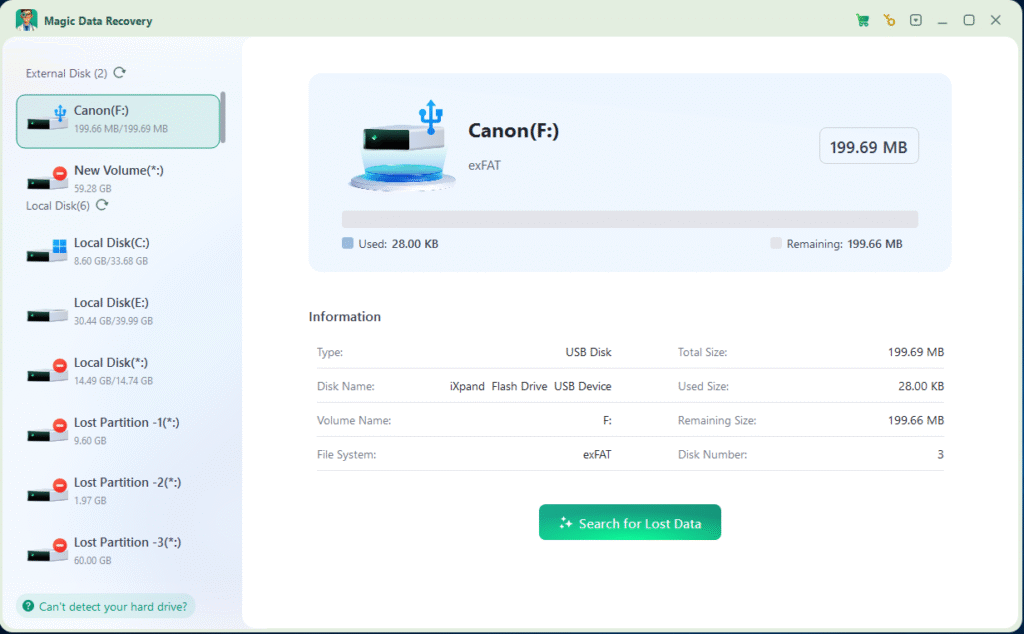
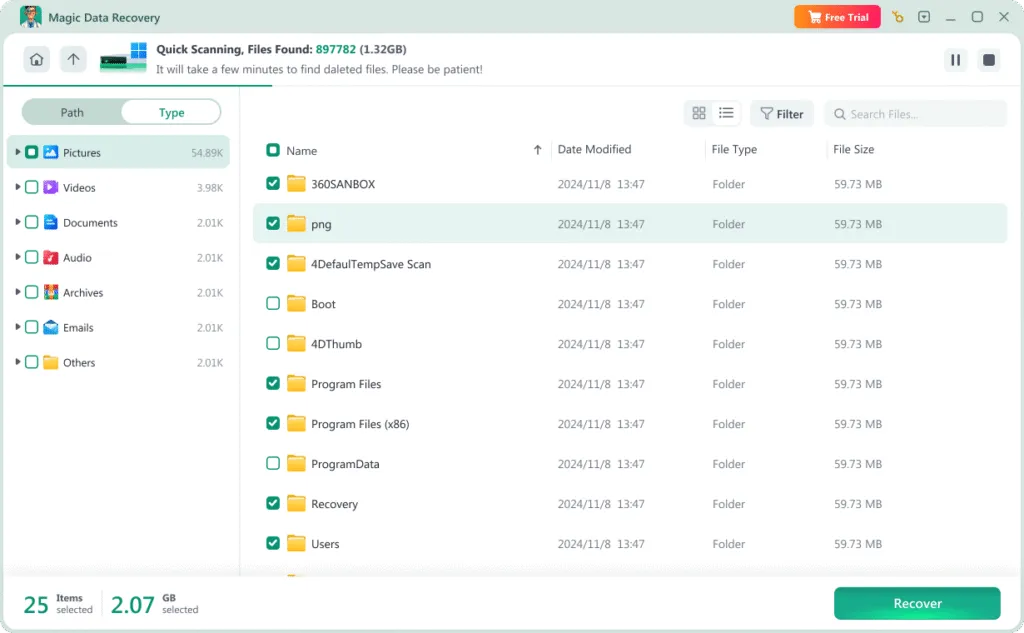
For most people, dedicated recovery software is the safest and simplest option. Magic Data Recovery supports SD card data recovery in all cases—deletion, formatting, and corruption.
- Advanced scanning retrieves files even without directory entries.
- File preview helps confirm recoverable files before saving.
- Read-only recovery ensures the original data isn’t overwritten.
How to Recover Files from an SD Card with Magic Data Recovery
Restoring lost files with Magic Data Recovery takes just a few steps:
1.1. Download and install Magic Data Recovery on your computer, not on the affected SD card.
Supports Windows 7/8/10/11 and Windows Server


Conclusion
Supports Windows 7/8/10/11 and Windows Server
FAQ
How soon should I recover data from an SD card?
Can I recover deleted files from an SD card?
Can I recover data from a formatted SD card?
Can I recover data from a corrupted or RAW SD card?
Is CHKDSK safe for SD card data recovery?
Can I recover photos and videos from a camera SD card?
Where should I save recovered SD card files?
What if my SD card is physically damaged?

Vasilii is a data recovery specialist with around 10 years of hands-on experience in the field. Throughout his career, he has successfully solved thousands of complex cases involving deleted files, formatted drives, lost partitions, and RAW file systems. His expertise covers both manual recovery methods using professional tools like hex editors and advanced automated solutions with recovery software. Vasilii's mission is to make reliable data recovery knowledge accessible to both IT professionals and everyday users, helping them safeguard their valuable digital assets.