
How to Recover Files from Formatted SD Card
If you accidentally formatted an SD card that contained photos, videos, or important documents, stop using it immediately. In many cases, you can still recover files from formatted SD card storage because a quick format may remove file-system references without instantly overwriting every file. However, SD card recovery becomes less likely once new data replaces the old content.
This guide explains when formatted SD card recovery is possible, what affects your chances, which mistakes to avoid, and how Magic Data Recovery can help when Windows still recognizes the card. In addition, you will learn when backups, CMD commands, or professional recovery services make more sense.
Supports Windows 7/8/10/11 and Windows Server
Table of Contents
Can You Recover Files from Formatted SD Card?
Yes, you can often recover files from formatted SD card storage after a quick format, especially when you stop using the card right away. A quick format usually resets file-system information rather than erasing every data block. Therefore, the original file content may remain until the device writes new data over it.
However, a full format, secure erase, heavy reuse, encryption, or physical damage can sharply reduce the chance of success.
Situation | Recovery Outlook | Best Next Step |
Quick format, no reuse | Often favorable | Scan the card as soon as possible |
Camera format, no new photos | Often favorable | Remove the card and scan it |
Card used after formatting | Uncertain | Stop all writes immediately |
Large amount of new data written | Lower | Scan before doing anything else |
Full or secure format | Very low | Check backups or professional options |
Physical damage | Uncertain | Avoid repeated DIY attempts |
The rule is simple: the less you use the card after formatting, the better your chance to recover data from formatted SD card storage. For that reason, anyone trying to recover files from formatted SD card storage should stop using the device at once.
What Affects Formatted SD Card Recovery?
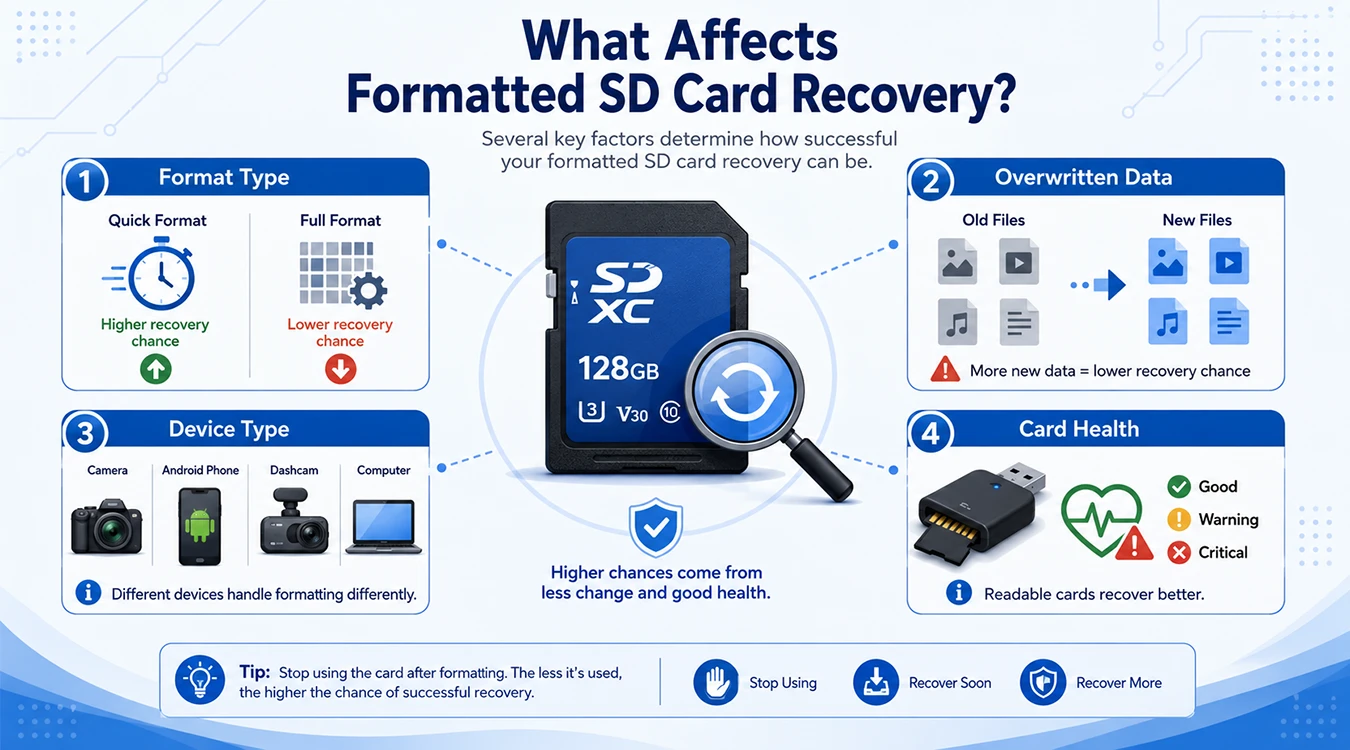
Several factors determine whether you can recover files from formatted SD card storage successfully. Understanding them helps you choose a safe solution instead of trying random fixes.
Quick Format vs. Full Format
A quick format usually changes file-system structures and marks space as available for new data. Because it may leave the underlying content intact, quick format recovery often gives you a better chance of restoring files.
In contrast, a full format may overwrite much more of the card. Therefore, normal recovery software may find fewer usable files afterward.
New Data Written After Formatting
Overwriting creates one of the biggest risks. For example, if you format a camera card and remove it immediately, a recovery scan may still find much of the original data.
However, if you continue shooting photos or recording 4K video, the camera writes new information to the card. As a result, some old files may become partially or completely unrecoverable.
Therefore, if you need to recover photos from formatted SD card storage, stop using the camera as soon as you notice the mistake.
Device Type and Card Condition
Windows, macOS, cameras, Android phones, drones, and dashcams can handle formatting differently. In addition, some Android devices encrypt cards configured as internal storage.
Meanwhile, recovery software works best when the computer can read the card consistently. If the SD card disconnects repeatedly, reports the wrong capacity, becomes unusually hot, or fails across several card readers, stop repeated scans.
In that case, professional recovery may be safer for valuable data.
What Not to Do Before You Recover Files from Formatted SD Card
Before you start formatted SD card recovery, avoid actions that can change or overwrite the original storage.
Do Not Format the Card Again
Windows or a camera may ask you to format the card again. Do not accept that prompt before recovery. Another format can change more file-system information.
Do Not Save New Files to the Card
Do not take photos, record videos, or copy files to the card. Every new write can replace data that recovery software might otherwise find.
Do Not Run CHKDSK First
CHKDSK checks and repairs file-system structures. It does not perform the same job as SD card recovery software. Moreover, repair operations can change the card before you retrieve the files you need.
Do Not Save Recovered Files Back to the Card
Always choose a different local drive or storage device as the recovery destination. Otherwise, restored data may overwrite other recoverable files.
How to Recover Files from Formatted SD Card with Magic Data Recovery
When Windows still detects the card, dedicated SD card recovery software is usually the most practical DIY solution.
For this guide, we use Magic Data Recovery because it can scan memory cards, preview recoverable files, and restore selected data through a straightforward workflow.
Magic Data Recovery supports SD, microSD, CF, and XD cards, as well as more than 5,000 file formats, including photos, RAW images, videos, documents, audio, and archives. The process stays simple: select the card, scan it, preview the results, and recover the files you need.
Step 1: Download and Install Magic Data Recovery
Download Magic Data Recovery and install it on your Windows computer. Do not install the program on the formatted SD card because any new write can overwrite recoverable data.
Next, connect the card through a reliable card reader and confirm that Windows can detect it.
Supports Windows 7/8/10/11 and Windows Server
Step 2: Select the Formatted SD Card
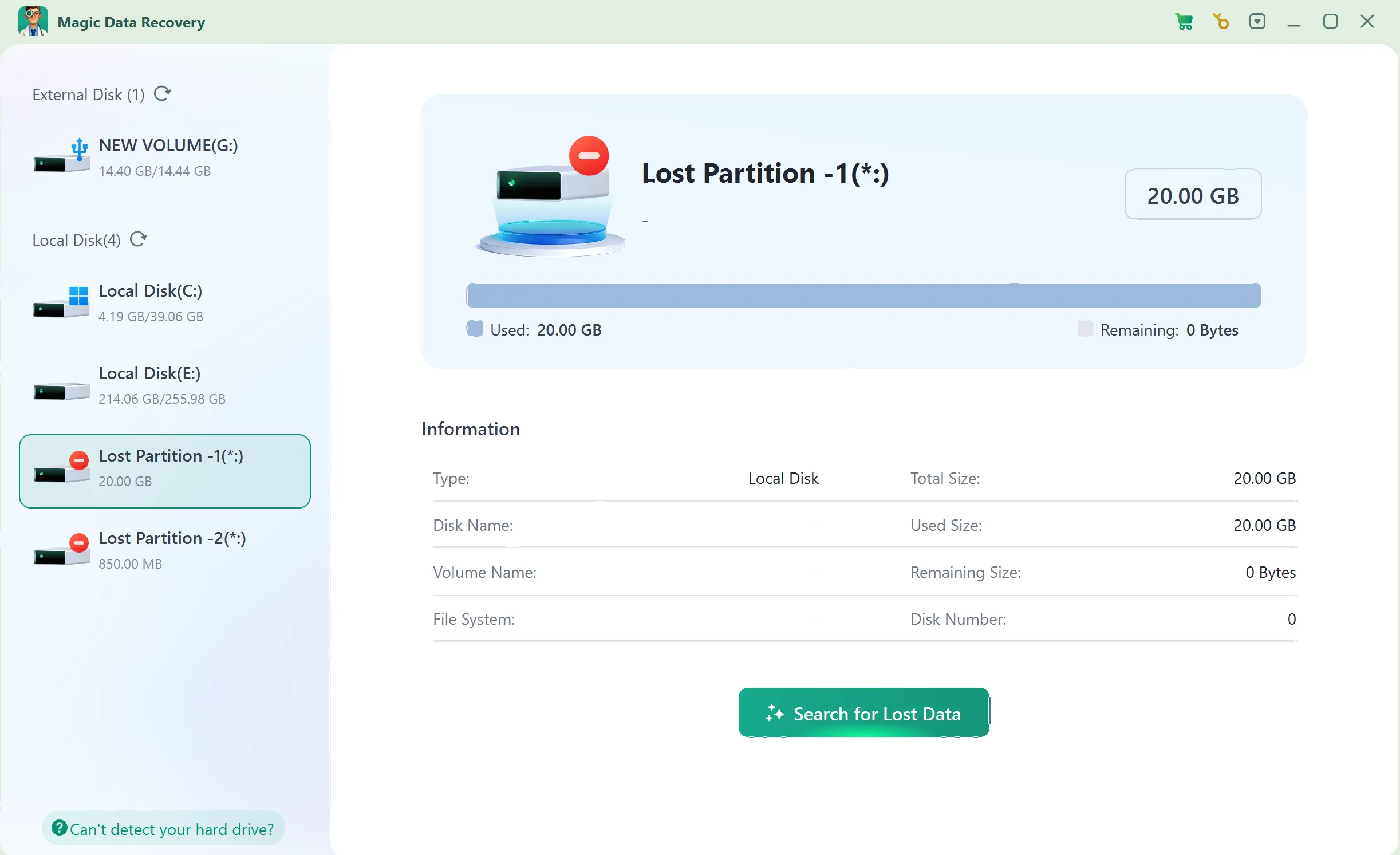
Launch Magic Data Recovery. Then, locate the formatted SD card on the main interface by checking its drive letter, capacity, and device information. Select the correct card to begin the scan. If several removable devices appear, verify the capacity carefully before you continue.
Step 3: Scan the SD Card for Lost Files
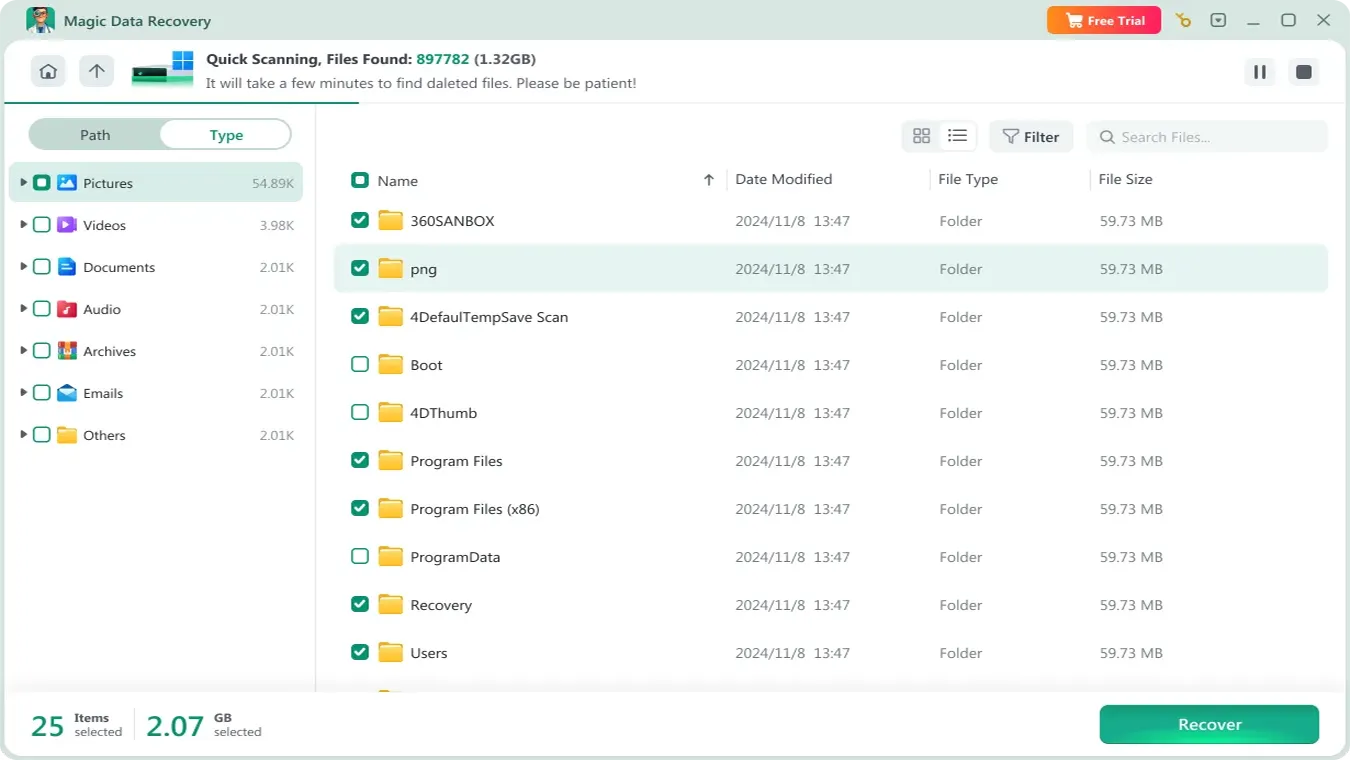
Start the scan after selecting the card. Magic Data Recovery automatically performs an Advanced Scan and lists recoverable files as the scan progresses. Meanwhile, let the scan finish whenever possible. A complete scan gives the software more time to locate file records and recognizable content when you recover files from formatted SD card storage.
Step 4: Preview Files Before Recovery
Next, review the results and use the available filters to narrow them by file type, name, or location. Preview important files when possible. Previewing matters because a detected filename does not always mean the whole file remains intact. For example, a photo may appear in the results but contain damaged areas if new data overwrote part of it. Therefore, check your most valuable files first.

Step 5: Recover Files to a Safe Location
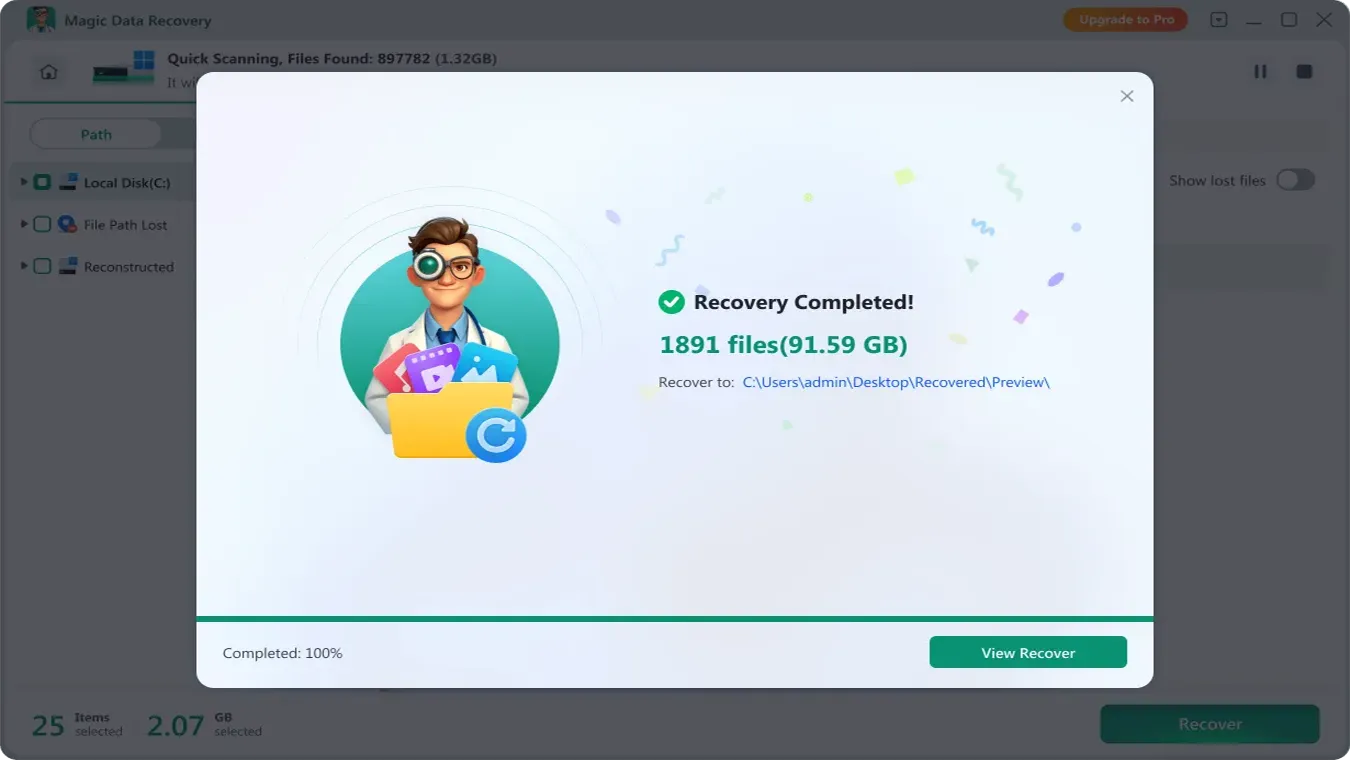
Finally, select the files you want to restore and choose a safe destination on your computer or another storage device. Do not save them back to the formatted SD card. After recovery finishes, open several photos, videos, and documents to confirm that they work normally.
This scan-preview-recover process gives ordinary users a practical way to recover files from formatted SD card storage without repairing or reformatting the card first.
Why Choose Magic Data Recovery for Formatted SD Card Recovery?
Different recovery methods solve different problems. Backups work when another copy already exists, while file-system repair tools focus on structure rather than lost content. However, when the only copy existed on an accidentally formatted SD card, a scanner that searches the card for recoverable data offers a more relevant solution.
When you need to recover files from formatted SD card storage and no backup exists, Magic Data Recovery offers a focused recovery workflow. It supports SD and microSD cards, more than 5,000 file formats, file preview, and Advanced Scan.
In addition, the current Windows version offers up to 500 MB of recovery for testing. Therefore, users can evaluate a limited recovery before deciding whether they need more capacity.
For example, a photographer can scan a formatted camera card, filter the results for JPG or RAW images, preview important shots, and restore selected files to a safe location.
Likewise, a drone or action-camera user can scan a microSD card before recording new footage.
Most importantly, no software can reliably rebuild data that new files have already overwritten. Therefore, stopping all writes remains just as important as choosing the right recovery tool.
Can You Recover Formatted SD Card Without Software?
Sometimes you can recover formatted SD card without software, but only when another copy already exists or a different recovery source is available.
First, check cloud services such as Google Photos, OneDrive, or Dropbox. Next, search previous imports on your PC, including Pictures, Videos, Downloads, and project folders. Also check NAS devices or backup storage.
However, when the only copy existed on the formatted card and Windows can still read it, recovery software usually offers the most direct way to recover files from formatted SD card storage.
If the card has physical damage, consider professional recovery instead.
When You May Not Recover Files from Formatted SD Card
No trustworthy tool should promise success in every case. Your ability to recover files from formatted SD card storage depends on what remains readable. Recovery becomes difficult or impossible when new data overwrites the original content, secure erase removes the data, a full format overwrites key areas, or severe hardware damage prevents stable access.
Encryption can create another barrier. For example, an Android card configured as encrypted internal storage may depend on keys from the original device.
Therefore, treat software as a recovery method, not a guarantee. The condition of the remaining data ultimately determines the result.
How to Prevent Future SD Card Data Loss
Recovery can solve some accidents, but prevention gives you more control. Before you ever need to recover files from formatted SD card storage again, build a reliable backup routine.
First, back up important files before formatting a card. In addition, confirm the card name and capacity before approving a format.
Keep at least two copies of valuable photos, videos, and work files. Moreover, replace cards that show repeated errors, eject cards safely, and avoid removing them while a device writes data.
Finally, test your backups occasionally. A backup only helps when you can actually open and restore the files.
Conclusion: How to Recover Files from Formatted SD Card Safely
When you need to recover files from formatted SD card storage, careful action matters more than speed alone.
Stop using the card, avoid CHKDSK and repeated formatting, scan the card before making changes, preview important files, and save recovered data somewhere else.
Magic Data Recovery offers a practical option when Windows still recognizes the card. It combines memory-card support, Advanced Scan, file preview, broad file-format support, and a simple recovery workflow. Therefore, it fits common cases such as an accidentally formatted camera card, drone microSD card, or removable storage card.
However, no software can restore data that new files have already overwritten. For that reason, the safest recovery strategy starts by protecting the original card.
If you need an efficient SD card recovery solution, try Magic Data Recovery before you reuse, repair, or format the card again.
Supports Windows 7/8/10/11 and Windows Server
FAQs About How to Recover Files from Formatted SD Card
Can I recover files after formatting an SD card?
Yes, you may still recover files from formatted SD card storage after a quick format if new data has not overwritten the original content. Stop using the card immediately, connect it to a computer, and scan it with recovery software. However, full formatting, secure erasure, heavy reuse, or physical damage can make recovery much harder or impossible.
Can I recover files after a quick format?
Often, yes. Quick format recovery has a better chance because a quick format usually resets file-system information without immediately overwriting every data block. However, the card now treats that space as available. Therefore, do not take new photos, record videos, or copy files to the card before you attempt recovery.
Can I recover photos from a formatted camera SD card?
Yes, you can often recover photos from formatted SD card storage when you stop using the camera immediately after formatting. Remove the card, connect it to a computer, and scan it before taking new pictures. RAW photos and large videos may need a deeper scan, while overwritten files may no longer open correctly after recovery.
Can I recover a formatted SD card for free?
You may recover some files for free when your recovery tool provides a free allowance or when you already have backups. Magic Data Recovery currently offers up to 500 MB of recovery for testing. Therefore, you can scan the card, preview available files, and restore a limited amount of data before deciding whether you need additional recovery capacity.
Can I recover formatted SD card without software?
Yes, but only in certain situations. You can recover formatted SD card without software when copies already exist in cloud storage, previous PC imports, NAS storage, or another backup location. However, when the only copy existed on the formatted card, you usually need recovery software or a professional service to search the storage for remaining data.
Does formatting permanently erase an SD card?
Not always. A quick format may remove or rebuild file-system references while leaving much of the underlying file data in place until new writes overwrite it. In contrast, a full format or secure erase may destroy much more recoverable information. Therefore, stop using the card immediately if you want the best chance of restoring lost files.
Where should I save recovered SD card files?
Save recovered files to your computer or another storage device, never back to the formatted SD card you are scanning. Otherwise, the recovered files may overwrite data that you have not restored yet. After the process finishes, open several photos, videos, and documents to confirm their integrity before you repair, format, or reuse the SD card.

Vasilii is a data recovery specialist with around 10 years of hands-on experience in the field. Throughout his career, he has successfully solved thousands of complex cases involving deleted files, formatted drives, lost partitions, and RAW file systems. His expertise covers both manual recovery methods using professional tools like hex editors and advanced automated solutions with recovery software. Vasilii's mission is to make reliable data recovery knowledge accessible to both IT professionals and everyday users, helping them safeguard their valuable digital assets.