
How to Extract Data from Unrecognized SSDs

When an SSD disappears, becomes RAW, or asks you to format it, the files may still exist even though Windows cannot open the drive. The first rule is simple: stop using the SSD before attempting any repair. Safe SSD data extraction focuses on reading and copying recoverable files first. It does not begin with formatting, initialization, or file-system repair.
This guide explains how to diagnose an inaccessible SSD, choose a safe recovery method, and avoid mistakes that may reduce recovery chances from the SSD. It also shows when SSD data recovery software like Magic Data Recovery can help and when a professional lab offers the safer solution.
Supports Windows 7/8/10/11 and Windows Server
Table of Contents
Can You Extract Data from an Unrecognized SSD?
In many cases, yes. However, success depends on how the computer detects the drive. If Disk Management shows the SSD with the correct capacity but labels the partition RAW or Unallocated, the problem often involves the file system or partition information. Software may still perform SSD data extraction because the computer can communicate with the device.
The situation becomes more serious when the SSD shows 0 MB, reports the wrong capacity, disconnects, or disappears from BIOS and Disk Management. These symptoms may indicate controller, firmware, interface, power, or NAND problems. Software cannot scan a drive that the operating system cannot read consistently.
SSD status | Likely issue | Best next step |
Correct capacity, RAW or Unallocated | Logical damage | Stop writing and scan |
Visible in BIOS, missing in File Explorer | Partition or drive-letter issue | Check Disk Management |
0 MB, wrong capacity, or frequent dropouts | Firmware or hardware failure | Stop DIY attempts |
Missing from BIOS and Disk Management | Connection or hardware failure | Test once, then seek help |
This distinction is central to unrecognized SSD recovery. Logical problems may allow a software solution, while physical or firmware-level failures usually require specialist equipment. A correct diagnosis makes SSD data extraction safer and more efficient.
How to Tell If the SSD Problem Is Logical or Physical
Win + R, type diskmgmt.msc, and hit Enter).

What to Do Before SSD Data Extraction
Before scanning or repairing anything, protect the original data. Each write operation can change file-system records or allow the SSD to reuse blocks that once contained lost files.
Follow these safety tips:
- Stop saving files to the affected SSD.
- Do not format, initialize, or repartition it.
- Do not install recovery software on the problem SSD.
- Do not save recovered files back to the same drive.
- Avoid repeated restarts or scans if the SSD disconnects.
- Keep the SSD powered off when you are not diagnosing it.
If the files have high business, legal, or personal value, consider professional help before experimenting. DIY SSD data extraction suits a stable, correctly detected drive, not an unstable device with irreplaceable data.

Attempting SSD Data Extraction with CHKDSK
One of the first troubleshooting methods for Recovering data from a broken SSD is running CHKDSK, a Windows command-line utility that checks and repairs file system errors.
Steps to run CHKDSK:
1. Open Command Prompt as Administrator.
2. Type the command and press Enter:
chkdsk X: /f /r
(Replace X with the drive letter of your SSD.)

CHKDSK will attempt to locate and repair errors in the file system, potentially restoring access to your SSD.
⚠️ Warning: According to Microsoft’s official CHKDSK documentation, using CHKDSK on a RAW disk is not a safe option. Running CHKDSK on a RAW or severely corrupted SSD can sometimes worsen the problem. It may overwrite file structures, making later unrecognized SSD recovery more difficult. If CHKDSK fails, do not retry repeatedly—move on to safer solutions.
Advanced SSD Data Extraction with WinHex
For IT professionals, hex editor tools like WinHex is a powerful forensic editor that enables detailed analysis of corrupted or RAW SSDs. It allows you to:
- Access sectors directly to inspect damaged areas.
- Rebuild broken file systems.
- Extract files even when the partition table is missing.
When a partition became RAW, it is normally caused by damaged file system. Here is an example to repair file system.
1.Open the disk with Winhex and check the partition status. As the screenshot shows, the sector for DBR has been damaged.

2.Locate the NTFS Backup DBR. Every NTFS volume stores a backup copy of the DBR at the last sector of the partition.
- In WinHex, scroll to the last sector of the disk.

- Search backwards for the hexadecimal signature
EB 52 90, which identifies the start of a valid NTFS DBR.

3: Replace the Corrupted Primary DBR
- Navigate to the first sector of the RAW partition (where the original DBR is corrupted).
- Carefully copy the contents of the valid backup DBR.
- Overwrite the corrupted DBR with the backup.
- Save changes in WinHex and safely close the editor.

4.Check drive status in Disk Management. If repaired correctly, it shows NTFS, instead of RAW.

Simple and Reliable Unrecognized SSD Recovery for Everyone
For most users, manual tools like WinHex are too complex. A safer and easier choice is Magic Data Recovery.
This software is designed to simplify SSD data extraction by:
- Supporting unrecognized SSD recovery with automatic scans.
- Handling RAW drives, formatted partitions, and deleted files.
- Recovering documents, photos, and videos with a few clicks.
- Offering a clean, intuitive interface—no technical expertise required.
With Magic Data Recovery, Recovering data from a broken SSD becomes accessible to anyone, not just professionals.
How to Use Magic Data Recovery for SSD Data Extraction
Using Magic Data Recovery is straightforward and beginner-friendly:
1.Download & Install: Get Magic Data Recovery from the official website.
Supports Windows 7/8/10/11 and Windows Server

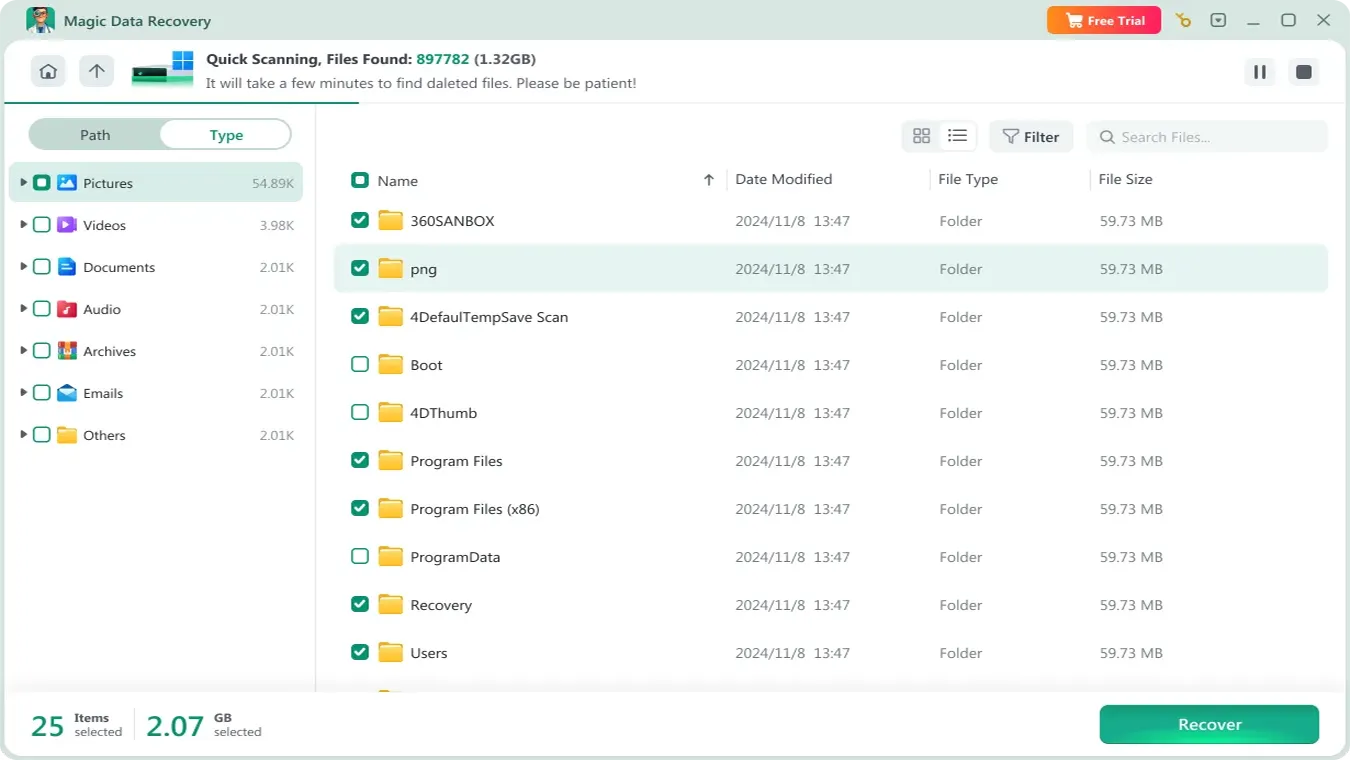

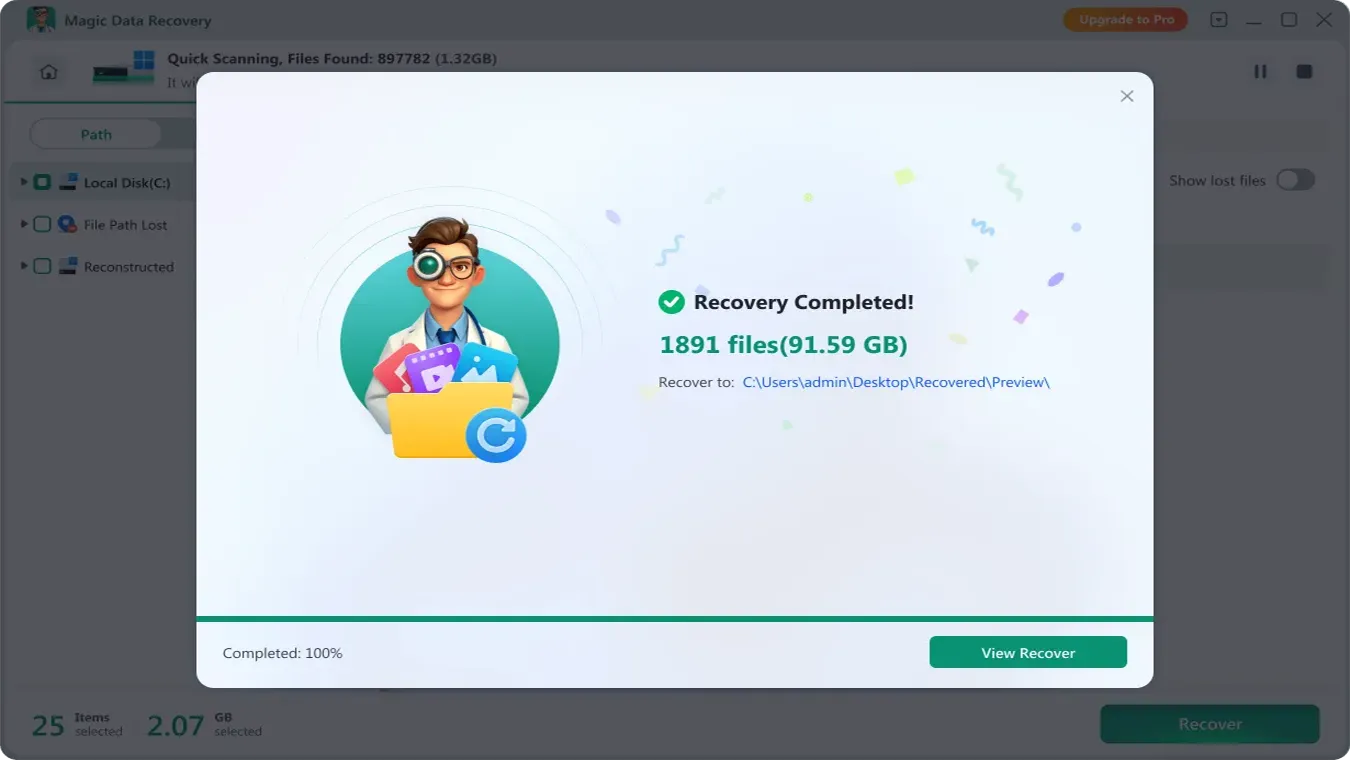
With just these simple steps, Recovering data from a broken SSD becomes something anyone can do without specialized knowledge.
Here is a video tutorial for reference.
Conclusion
When it comes to SSD data extraction, many users worry that once their drive becomes RAW, unrecognized, or even broken, recovery is impossible. The truth is, as long as the problem is not physical, there are reliable ways to bring your files back from the SSD. Advanced methods such as replacing the DBR in WinHex or attempting repair with CHKDSK can sometimes succeed, but they require professional knowledge and carry risks.
For most users, especially those facing unrecognized SSD recovery or struggling with recovering data from a broken SSD, the safest path is to use dedicated software. Magic Data Recovery simplifies the entire process—allowing anyone to scan, preview, and restore lost files in just a few clicks, without needing technical expertise.
Supports Windows 7/8/10/11 and Windows Server
FAQ
Can I extract data from an unrecognized SSD?
Can I recover files from a RAW SSD without formatting it?
Why is my SSD detected in Disk Management but not File Explorer?
Can CHKDSK recover data from an inaccessible SSD?
Does TRIM make deleted SSD files impossible to recover?
Why use Magic Data Recovery for SSD data extraction?

Vasilii is a data recovery specialist with around 10 years of hands-on experience in the field. Throughout his career, he has successfully solved thousands of complex cases involving deleted files, formatted drives, lost partitions, and RAW file systems. His expertise covers both manual recovery methods using professional tools like hex editors and advanced automated solutions with recovery software. Vasilii's mission is to make reliable data recovery knowledge accessible to both IT professionals and everyday users, helping them safeguard their valuable digital assets.