
5 Best Data Recovery Software for RAW Drives in 2026
When Windows shows a drive as RAW and asks you to format it, the operating system can no longer recognize its file system. The files may still exist, but formatting, CHKDSK, or continued use of the device could make recovery more difficult. Therefore, recover the data before attempting to repair the drive. You can also review this formatted drive recovery guide to understand how file-system damage and formatting affect recoverability.
The best data recovery software for RAW drives should be able to detect an inaccessible partition, scan beyond damaged file-system records, locate files through metadata or file signatures, preview recoverable data, and save it to another device. It should also help users distinguish logical corruption from physical drive failure.
This guide compares five RAW drive recovery tools for Windows: Magic Data Recovery, Disk Drill, EaseUS Data Recovery Wizard, Stellar Data Recovery, and Recuva. The comparison focuses on RAW drive support, scanning methods, usability, file preview, recovery limitations, and the type of user each program suits best.
Supports Windows 7/8/10/11 and Windows Server
Table of Contents
What Is a RAW Drive and Why Does It Happen?
A RAW drive is not using a file system called “RAW.” Instead, RAW is the label Windows displays when it cannot recognize or mount the existing file system. The cause may be a damaged NTFS boot sector, corrupted FAT or exFAT metadata, an interrupted format, partition damage, or failing hardware.
A RAW drive should not be confused with RAW image formats such as CR2, NEF, or ARW. In this article, “RAW” refers to an inaccessible disk, partition, USB drive, or memory card.
Common causes include:
- File system corruption due to power failure or system crashes
- Accidental formatting or interrupted formatting
- Virus or malware damage
- Bad sectors or failing storage hardware
- Improper ejection of external drives
When this happens, the operating system cannot read file tables, even though the actual data blocks often remain intact. This is why raw drive data recovery is still possible in many cases.
Can Data Be Recovered from a RAW Drive?
Yes, in many real-world scenarios, RAW drives can be recovered. However, success depends on three key factors:
- Whether new data has overwritten the original files
- The extent of file system damage
- The recovery method and software used
Standard tools like built-in disk utilities focus on repairing file systems, not retrieving lost data. That is why specialized tools designed for RAW environments perform better. The best data recovery software for raw drives works by scanning storage sectors directly and reconstructing files based on signatures and metadata.
Can Recovery Software Handle Your RAW Drive?
Recovery software is appropriate when:
- The drive appears in Disk Management with the correct capacity.
- Windows labels the file system as RAW.
- The drive is inaccessible but remains stable during reading.
- There are no unusual clicking or grinding sounds.
Stop using software and consult a professional service when:
- The drive is not detected in BIOS or Disk Management.
- The reported capacity is incorrect.
- The drive clicks, repeatedly disconnects, or becomes extremely slow.
- The device has suffered water, fire, impact, or electrical damage.
Repeatedly scanning a physically failing drive can worsen its condition. In professional workflows, technicians normally create a sector-by-sector image before attempting file recovery.
How We Evaluated RAW Drive Recovery Software
We compared each tool using criteria that matter specifically when Windows reports a drive as RAW:
- Whether it can detect and scan an inaccessible RAW volume
- Metadata-based and file-signature scanning capabilities
- Support for HDDs, SSDs, USB drives, and memory cards
- File filtering and preview options
- Ability to recover files to another storage device
- Ease of use for non-technical users
- Free scanning or recovery limitations
- Availability of disk imaging or advanced recovery features
This is a feature-based comparison rather than a guaranteed recovery ranking. Actual results depend on the drive’s condition, overwritten data, bad sectors, and the extent of file-system damage.
Top 5 Best Data Recovery Software for RAW Drives
Below is a practical comparison of tools commonly used for RAW drive recovery. Each option serves different user needs and experience levels.
| Software | Best for | RAW drive scanning | Main advantage | Main limitation |
|---|---|---|---|---|
| Magic Data Recovery | Windows users wanting a simple RAW recovery workflow | Yes | Easy scanning, filtering, and preview | Windows only |
| Disk Drill | Users who need additional disk tools | Yes | Disk imaging and polished interface | Limited free recovery |
| EaseUS Data Recovery Wizard | Beginners wanting guided recovery | Yes | Straightforward recovery wizard | Full recovery requires a paid license |
| Stellar Data Recovery | Users who want configurable scan options | Yes | Broad recovery and file-type options | Some advanced functions depend on edition |
| Recuva | Basic deleted-file recovery on readable drives | Limited for inaccessible RAW volumes | Free and lightweight | Not primarily designed for RAW partitions |
1. Magic Data Recovery — Best Overall for Windows Users
Magic Data Recovery is a Windows data recovery application designed for deleted files, formatted drives, lost partitions, file-system errors, and RAW storage devices. It can scan a RAW partition without requiring the user to format it first.
Key features
- Quick and advanced scanning for damaged file systems
- Support for HDDs, SSDs, USB drives, SD cards, and external drives
- More than 5,000 supported file types
- File filtering and preview before recovery
- Recovery to a separate storage location
Limitations
- Available for Windows rather than macOS
- Cannot recover data from a drive that is physically undetectable
- Recovery is not guaranteed after overwriting or severe hardware damage
Best for: Windows users who want an accessible interface for recovering files from a detectable RAW drive before formatting it.
2. Disk Drill
Disk Drill is popular for its clean interface and wide file system support.
Pros
- Strong RAW scanning capability
- Disk image recovery support
Cons
- Free version has recovery limits
- Advanced features require paid upgrades
3. EaseUS Data Recovery Wizard
EaseUS focuses on guided recovery for beginners.
Pros
- Step-by-step recovery process
- Supports many storage devices
Cons
- Slower deep scans on large RAW drives
- Pricing can be high for full recovery
4. Stellar Data Recovery
Stellar offers advanced options for professional environments.
Pros
- Strong file type reconstruction
- Supports severely corrupted drives
Cons
- Interface may feel complex for casual users
5. Recuva
Recuva is often mentioned as a free solution.
Limitations
- Limited success with RAW drives
- Better suited for simple deleted file recovery
How to Recover Data from a RAW Drive with Magic Data Recovery
Follow these steps to maximize recovery success:
Step 1: Stop Using the RAW Drive
Do not format the drive, create a new partition, run CHKDSK, or copy files to it. If it is an external device, keep it disconnected until you are ready to scan.
Step 2: Install the Software on a Healthy Drive
Download and install Magic Data Recovery on the computer’s system drive or another healthy device. Never install it on the RAW partition.
Supports Windows 7/8/10/11 and Windows Server
Step 3: Select the RAW Partition or Physical Disk
Launch the program and locate the affected storage device by its capacity and model. A RAW partition may not have its usual drive letter, so verify the size carefully before scanning.
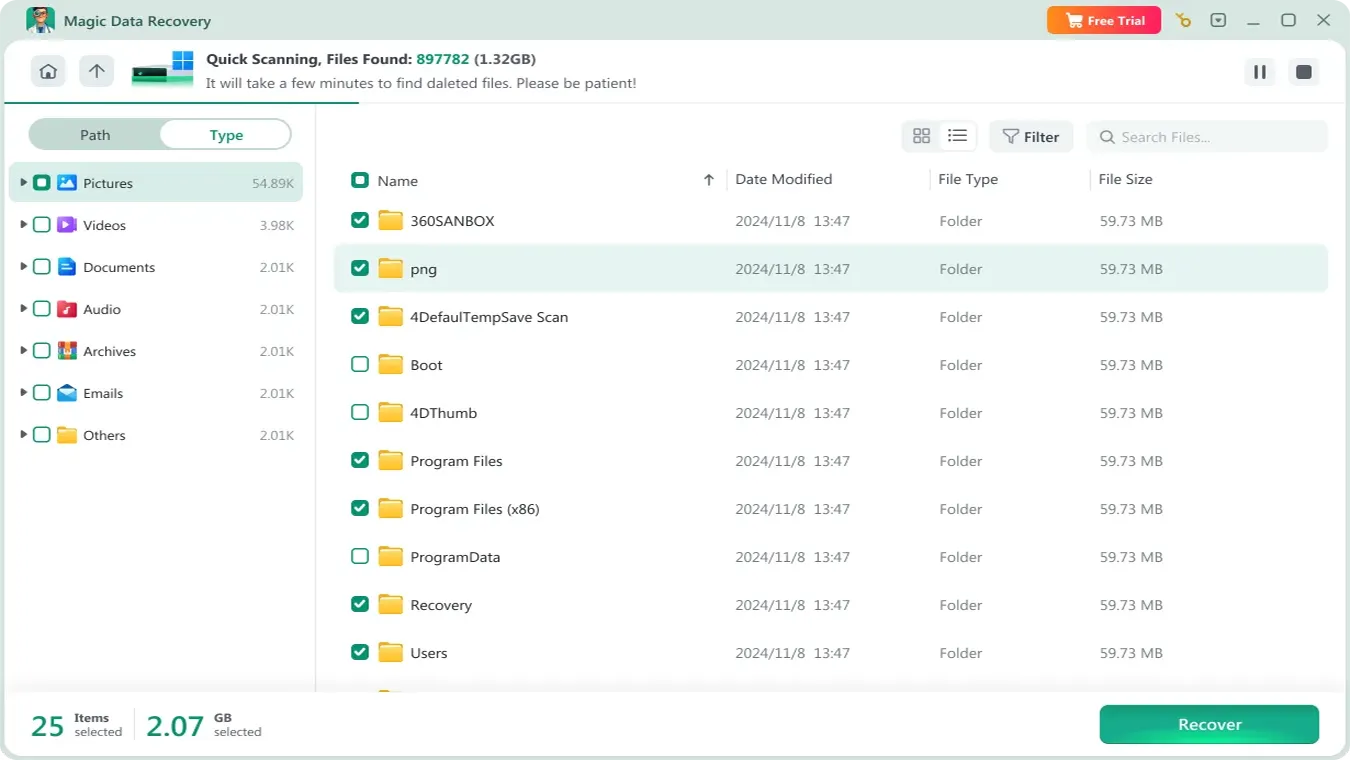
Step 4: Complete the Scan and Filter the Results
Allow the advanced scan to finish. Filter the results by file type, original path, size, or modification date. Preview supported files when available, but remember that a preview does not guarantee every part of a large file is intact.

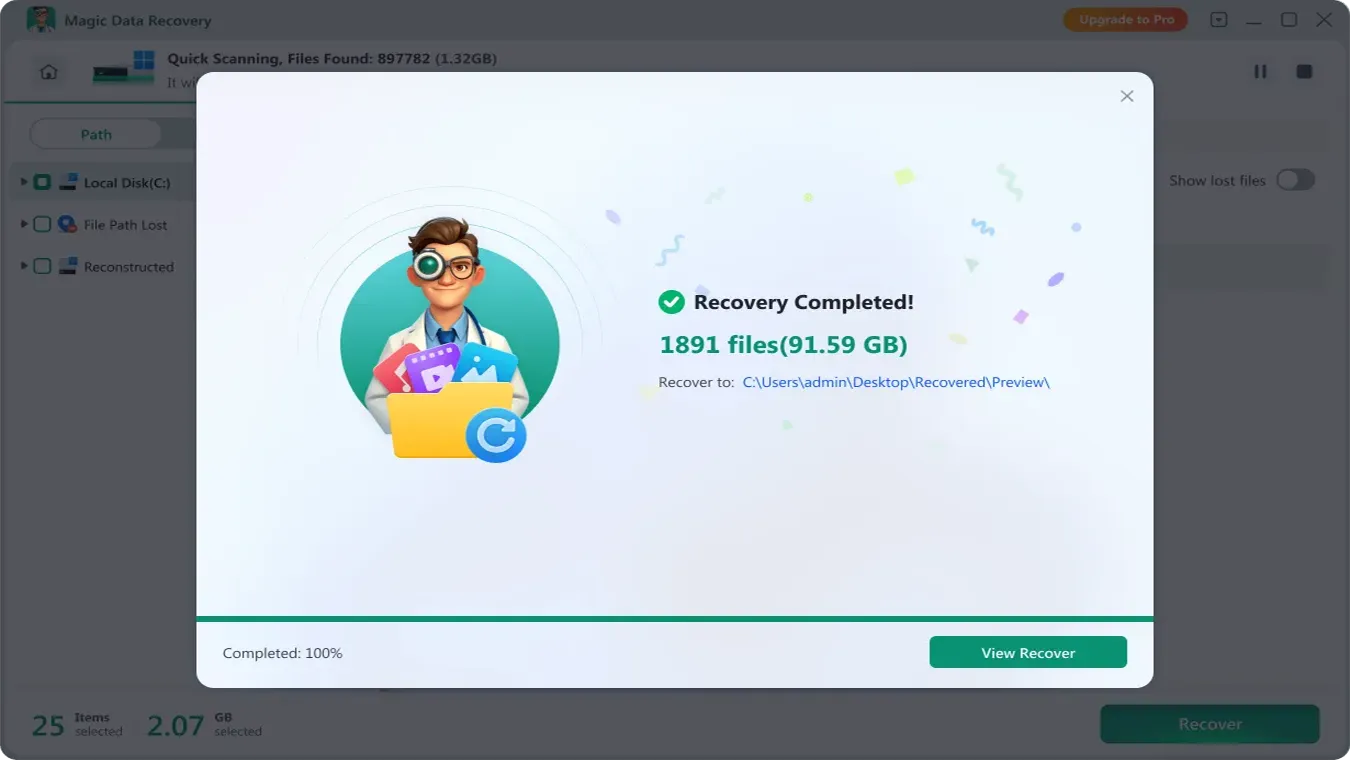
Step 5: Recover Files to Another Device
Select the required files and save them to a different physical drive. Verify the recovered data before formatting or repairing the original RAW device.
How to Fix a RAW Drive After Recovering the Data
After the recovered files have been verified on another device, you can recreate or format the RAW volume through Windows Disk Management. Choose NTFS for a Windows-only internal or external drive, or exFAT when broad device compatibility is required.
Do not rely on CHKDSK as the first recovery method. Windows commonly reports that CHKDSK is unavailable for RAW drives, and repair operations can alter remaining file-system metadata. If the drive develops new bad sectors or repeatedly becomes RAW, replace it rather than continuing to store important data on it.
Conclusion
The best data recovery software for RAW drives depends on the condition of the device and the user’s technical experience. Disk Drill offers additional disk tools, EaseUS provides a guided workflow, Stellar offers configurable recovery options, and Recuva remains more suitable for basic deleted-file recovery than inaccessible RAW volumes.
For Windows users who want to scan a detectable RAW HDD, USB drive, SD card, or external disk without formatting it first, Magic Data Recovery offers a practical balance of advanced scanning, file filtering, preview, and ease of use. Regardless of the tool selected, stop using the affected drive and save recovered files to another device.
If the drive is clicking, disconnecting, or missing from Disk Management, do not continue scanning it. Physical problems require a professional recovery service rather than ordinary software.
If you need a dependable solution for RAW drive recovery, Magic Data Recovery is a practical choice worth considering. To learn more about recovering files before reformatting an inaccessible disk, visit Amagicsoft’s formatted drive recovery guide.
Supports Windows 7/8/10/11 and Windows Server
FAQs
How to recover data from a raw drive?
What is the best hard drive data recovery software?
Can raw files be recovered?
What's better than Recuva?
How to fix a corrupted raw drive?
How do professionals recover data from a hard drive?
Which is better, Recuva or Disk Drill?
What software do police use to recover data?

Jason is a data recovery and technical support specialist with over 15 years of hands-on experience. He has worked extensively with frontline users, troubleshooting difficult data loss cases and providing practical recovery solutions for accidental deletion, formatted drives, damaged file systems, lost partitions, system failures, and other recovery emergencies. His expertise also includes backup and restoration, file repair, and disaster recovery, with a strong emphasis on safe, reliable, and technically accurate guidance.