
Corrupted Hard Drive Recovery: Complete Data Rescue Guide
We’ve all experienced that moment of panic when facing corrupt hard drive recovery. You try to open an important file, and your computer presents a chilling error: “The file or directory is corrupted and unreadable” or “You need to format the disk in drive before you can use it.” Your heart sinks. That drive holds years of work documents, irreplaceable family photos, or critical project files. A corrupted hard drive feels like a digital disaster, but normally, hard drive recovery is often possible.
But here’s the crucial truth: In most cases, your data is still there. The problem is often a logical corruption in the file system—a corrupted map—not the physical loss of the data itself. The single most important rule is this: Do not formatthe drive. Formatting destroys the map entirely, making professional recovery far more difficult and expensive.
This guide is your action plan. We will walk you through the safest, most effective process for corrupted hard drive data recovery, introduce you to powerful corrupt hard drive data recovery software like Magic Data Recovery, and explain how to repair the drive after your files are safe. By following this structured approach, you maximize your chances of a full recovery.
Supports Windows 7/8/10/11 and Windows Server
Table of Contents
Understanding Hard Drive Corruption: Symptoms and Causes
Before taking action, it helps to understand what you’re dealing with. Corruption can manifest in various ways, ranging from subtle warnings to complete failure.
Common Symptoms of a Corrupted Drive
- Access Errors: The “file/directory corrupted” or “need to format” messages.
- Missing Files/Folders: Data seems to vanish without being deleted.
- Unrecognized File System: The drive shows as “RAW” in Disk Management with no listed capacity.
- Extreme Slowdown: The drive freezes, takes forever to open files, or causes system hangs.
- Strange Noises: Clicking, grinding, or buzzing sounds from a mechanical hard drive (This indicates physical damage and requires immediate professional help).
Primary Causes
Corruption typically falls into two categories:
- Logical Corruption: This is the most common and recoverable type. It involves software or file system errors.
- Sudden Power Loss: An improper shutdown during a write operation.
- Bad Sectors: Small, unreadable areas on the disk platter that accumulate.
- Malware or Virus Infection: Malicious software can deliberately corrupt data structures.
- File System Errors: Bugs, crashes, or improper ejection of external drives.
- Physical Damage: This involves hardware failure and is more severe.
- Head Crash: The read/write head touches the disk platter, causing severe damage.
- Motor Failure: The platter stops spinning.
- PCB (Circuit Board) Damage: From power surges or physical impact.
The key takeaway: For logical corruption, DIY data recovery with specialized software is highly feasible. For physical damage, power down the drive immediately and consult a professional data recovery service to avoid irreversible data loss.
The Golden Rule: Recover Data BEFORE Attempting Any Repair
This cannot be overstated. Many well-intentioned repair tools, like Windows CHKDSK, are designed to fix the file system so the drive can be used again. In doing so, they might delete or overwrite the very data you’re trying to save. Your sequence of operations must be:
Step 1: Data Recovery → Step 2: Drive Repair/Assessment
The safest professional practice is to first create a byte-for-byte disk image—a complete sector-by-sector copy of the failing drive—and then perform recovery scans on that image. This prevents further stress on the damaged drive. While this requires an extra storage space equal to the drive’s size, for critical data, it’s the ultimate safety net.
Step-by-Step Guide: Recovering Data with Magic Data Recovery
For logical corruption, a powerful and user-friendly recovery tool is your best ally. Magic Data Recovery is designed precisely for these scenarios, offering deep scanning algorithms that can reconstruct lost file structures.
Here’s how to perform corrupted hard drive recovery using Magic Data Recovery:
1. Download and Install Magic Data Recovery on your computer.
Supports Windows 7/8/10/11 and Windows Server
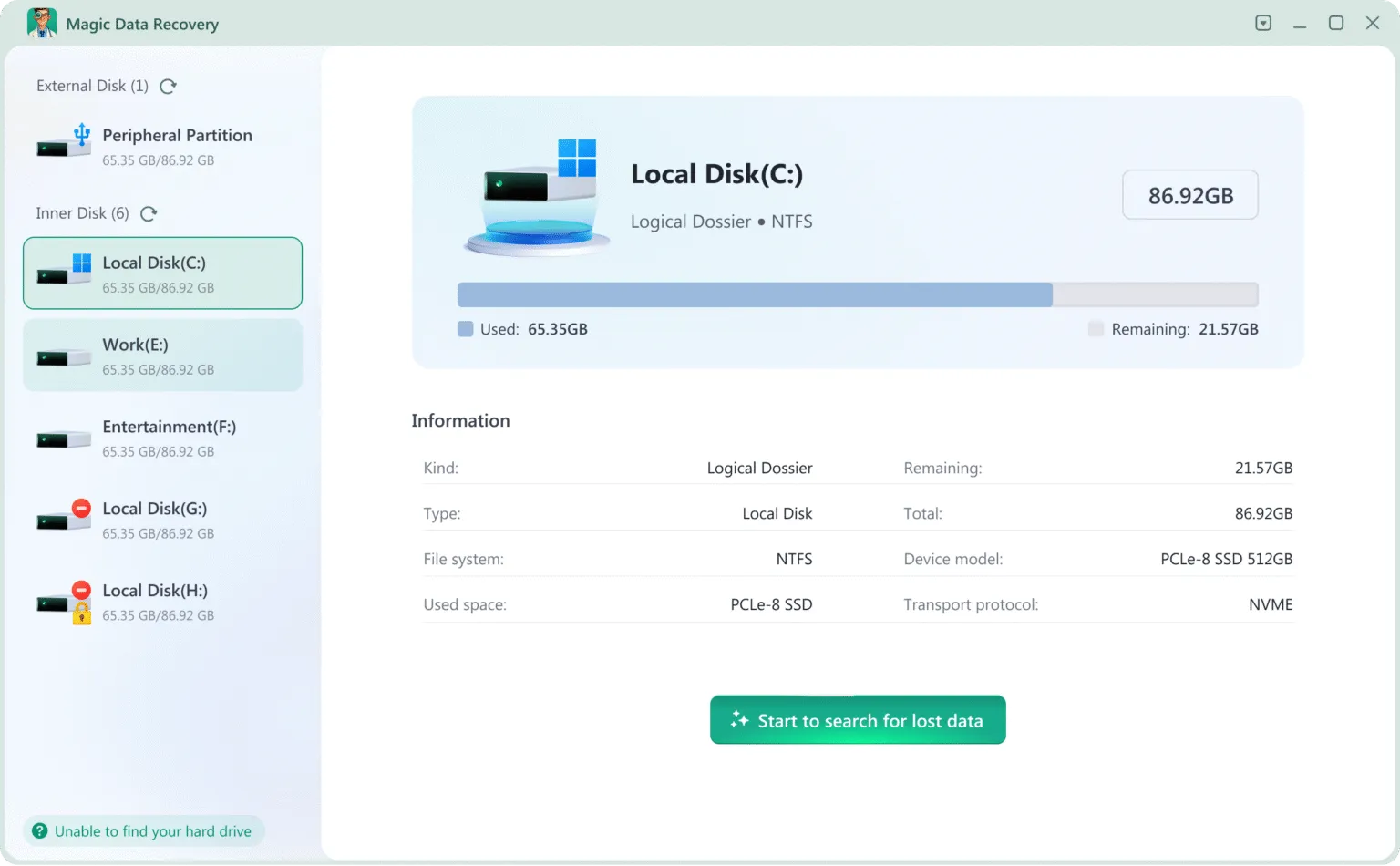
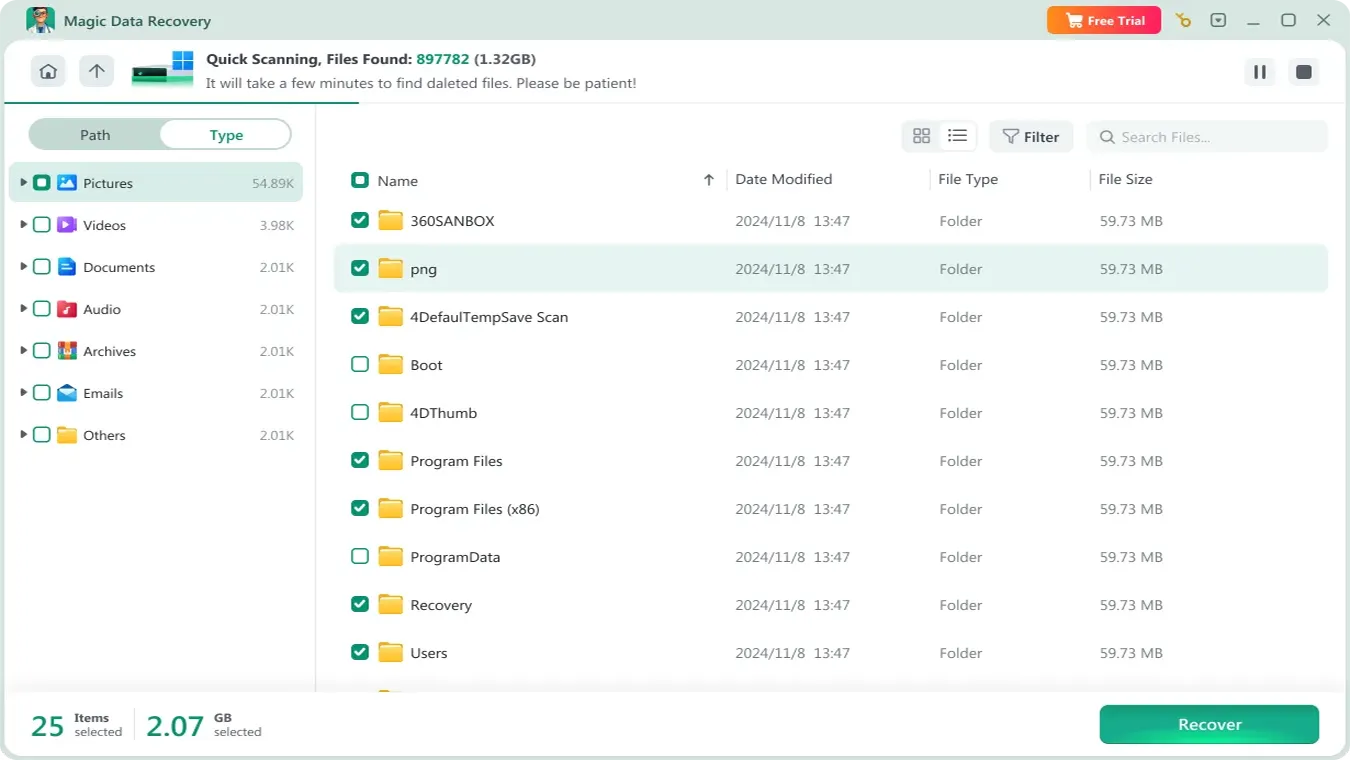

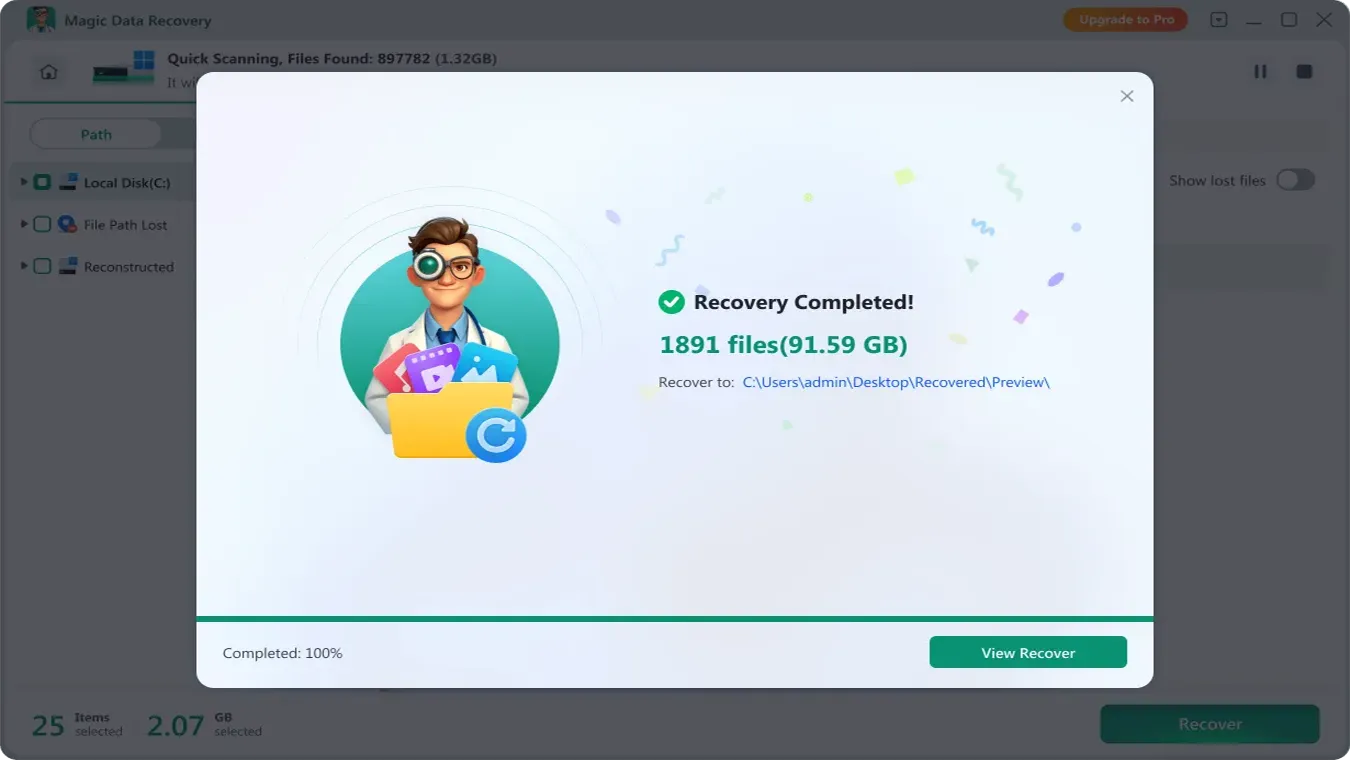
Why Magic Data Recovery Stands Out:
- Corruption-Focused Algorithms: Its deep scan is optimized for RAW, corrupted, and formatted drives.
- Broad Compatibility: Recovers data from HDDs, SSDs, USB drives, SD cards, and more, supporting NTFS, FAT32, exFAT, and EXT2/3 file systems.
- File Preview: Saves time by confirming recoverable files before purchase.
- User-Centric Design: The clear interface guides even novice users through a complex process safely.
If you’re facing a daunting data loss situation, trying Magic Data Recovery provides a reliable and efficient path to getting your files back.
How to Repair a Corrupted Hard Drive (After Data is Safe)
Once your data is securely recovered to another drive, you can attempt to repair the corrupted drive to make it usable again.
Important: Only proceed with these steps after you have successfully recovered and verified your files.
Method 1: Using Windows Built-in Tools (For Minor Logical Errors)
- CHKDSK (Check Disk): Open Command Prompt as Administrator. Type
chkdsk X: /f /r(replaceXwith your drive letter) and press Enter. The/fflag fixes errors, and/rlocates bad sectors. Note: CHKDSK can take hours on large drives and is not recommended for severely corrupted or physically failing drives. - Reformatting: In Disk Management, you can right-click the corrupted (now empty) drive and select “Format.” This creates a fresh, clean file system. This is a last resort that erases all data, which is why recovery must come first.
Method 2: Assess for Physical Damage (When Software Fails)
If the drive is not detected at all, makes unusual noises, or software tools fail, the issue is likely physical.
- Stop Using It: Further power cycles can cause more damage.
- Consult a Professional: Reputable data recovery labs have cleanrooms and specialized tools to repair hardware and extract data. This service is costly but is the only option for physical failure.
Prevention: Best Practices to Avoid Future Corruption
Protecting your data is always better than recovering it. Adopt these habits:
- Maintain Regular Backups: Follow the 3-2-1 Backup Rule: 3 total copies of your data, on 2 different media, with 1 copy offsite (e.g., cloud storage).
- Eject Safely: Always use the “Safely Remove Hardware” option for external drives.
- Use a UPS (Uninterruptible Power Supply): This protects against sudden power outages that can cause file system corruption.
- Monitor Drive Health: Use tools like Magic Data Recovery’s disk health monitor or built-in S.M.A.R.T. status checkers to get early warnings of drive degradation.
- Keep Your System Clean: Use reputable antivirus software to protect against malware.
Conclusion
Corrupted hard drive recovery is a manageable process if you stay calm and follow the correct order: Recovery First, Repair Second. Logical corruption, which is the most common type, can often be resolved effectively using dedicated corrupt hard drive data recovery software like Magic Data Recovery. Its strength lies in its ability to bypass broken file systems and directly salvage files from the raw storage medium.
For physical damage, recognize the limits of software and seek professional help immediately. Ultimately, combining the hard drive solutions with robust backup practices is the key to digital peace of mind. Your data is valuable—treat it with the care it deserves.
Supports Windows 7/8/10/11 and Windows Server
FAQs
Can a corrupted hard drive be recovered?
How do you repair a corrupted hard drive?
How do I recover a corrupted unreadable hard drive?
Can a corrupted SSD be fixed?
Does CHKDSK fix corrupt files?
How much does it cost to recover data from a corrupted hard drive?
Is it worth fixing a hard drive?
Is data permanently stored in a hard disk?

Jason is a data recovery and technical support specialist with over 15 years of hands-on experience. He has worked extensively with frontline users, troubleshooting difficult data loss cases and providing practical recovery solutions for accidental deletion, formatted drives, damaged file systems, lost partitions, system failures, and other recovery emergencies. His expertise also includes backup and restoration, file repair, and disaster recovery, with a strong emphasis on safe, reliable, and technically accurate guidance.