
The Ultimate Guide to Corrupt Pen Drive Recovery in 2026

You plug in your USB drive, only to face a chilling error message or an empty folder. This moment of panic is common when dealing with a corrupt pen drive. Before attempting any fix, the most critical step is to stop using the drive immediately to prevent overwriting your data. Successful corrupt pen drive recovery hinges on a safe, methodical USB drive recovery approach.
This definitive guide will first help you diagnose the issue, then walk you through the most effective solution for logical corruption: using dedicated corrupted pen drive recovery software like Magic Data Recovery to get your files back.
Supports Windows 7/8/10/11 and Windows Server
Table of Contents
Diagnose Your Corrupted USB Drive: Understanding the Problem
Correctly identifying the symptoms is the first step towards a solution. Logical corruption, which software can fix, often shows these signs:
Common Symptoms of Logical Corruption
- Your drive appears but shows a RAW file system or 0 bytes used.
- Windows prompts you: “You need to format the disk before you can use it.”
- Critical errors pop up: “The file or directory is corrupted and unreadable.”
- Files and folders have vanished or appear as generic icons.
- The drive is detected in Disk Management but not in File Explorer.
Key Causes Behind the Scenes
- Improper Ejection: Unplugging the drive during a data transfer.
- File System Corruption: Damage to the drive’s internal “table of contents” (FAT32, NTFS, exFAT).
- Bad Sectors: Wear on the flash memory over time.
- Virus or Malware that alters file structures.
- Sudden power failure while the drive is in use.
The Critical First Response: Safety Before Recovery
The moment you suspect corruption, follow these two rules to maximize your chances of successful corrupted pen drive recovery:
- Cease All Write Operations: Do not save new files to the drive, run repair tools that modify it, or accept a format prompt.
- Perform Basic Diagnostics: Try the drive on another computer or USB port. Open Windows Disk Management(type
diskmgmt.mscin the Run dialog). This will confirm if your computer detects the drive’s hardware, even if it can’t read the data—a clear sign that corrupted pen drive recovery software is your next logical step.
Method 1: Attempt Basic Built-in Windows Repairs
For minor corruption, these no-cost system tools might restore access. Use them cautiously and only if your data is not critically important.
Run the CHKDSK Utility
The Check Disk command can fix file system errors.
- Open Command Prompt as Administrator.
- Type
chkdsk X: /fand press Enter (replaceXwith your USB drive letter). - The utility will scan and attempt repairs. Note: While sometimes helpful,
chkdskcan be aggressive in “fixing” errors, potentially making lost files harder for recovery software to find later. For valuable data, many experts recommend skipping straight to data recovery software.
Use the Windows Error Checking Tool
This offers a graphical interface for a similar function.
- Right-click your USB drive in This PC.
- Go to Properties > Tools > Check under “Error checking.”
- Follow the on-screen prompts.
Method 2: The Professional Solution – Data Recovery Software
When built-in tools fail, are too risky, or your drive shows as RAW, professional corrupted pen drive recovery software becomes the most reliable and effective tool. This software works by performing a deep, sector-by-sector scan of the storage media. It bypasses the damaged file system and looks for raw file signatures—the unique “headers” that identify photos, documents, videos, and other file types.
Why Magic Data Recovery is the Recommended Choice
For users facing a corrupt pen drive, Magic Data Recovery provides a focused, powerful, and user-friendly solution that directly addresses logical data loss.
1. It Solves the Exact Core Problem
The software is engineered specifically for recovering files lost due to deletion, formatting, virus attacks, partition loss, and system crashes—the very scenarios that lead to a corrupted USB drive. It tackles the logical corruption that makes your data inaccessible.
2. Key Advantages for Effective Recovery
- Dual-Scan Technology: It employs both a Quick Scan for recently deleted files and a powerful Deep Scan that meticulously searches the entire drive for recoverable data patterns, ensuring a thorough search.
- Pre-Recovery Preview: This is a critical feature. You can see and preview found files (images, text, documents) before performing any recovery. This allows you to verify the integrity and content of your files, ensuring the recovery will be successful and saving you time.
- Safe & Read-Only Operation: The software operates in a strictly read-only mode. It only reads data from your corrupted pen drive, guaranteeing it will never write to or alter the source drive, adhering to the foremost rule of data recovery.
- Broad File & Format Support: It can recover over 1000 different file types from all common file systems (FAT32, exFAT, NTFS, and others), making it versatile for any USB drive.
3. A Practical Recovery Scenario
Imagine your USB drive is suddenly recognized as “RAW” with 0 bytes free. Instead of formatting, you:
① Download and install Magic Data Recovery on a different, healthy drive (not the corrupted one).
Supports Windows 7/8/10/11 and Windows Server
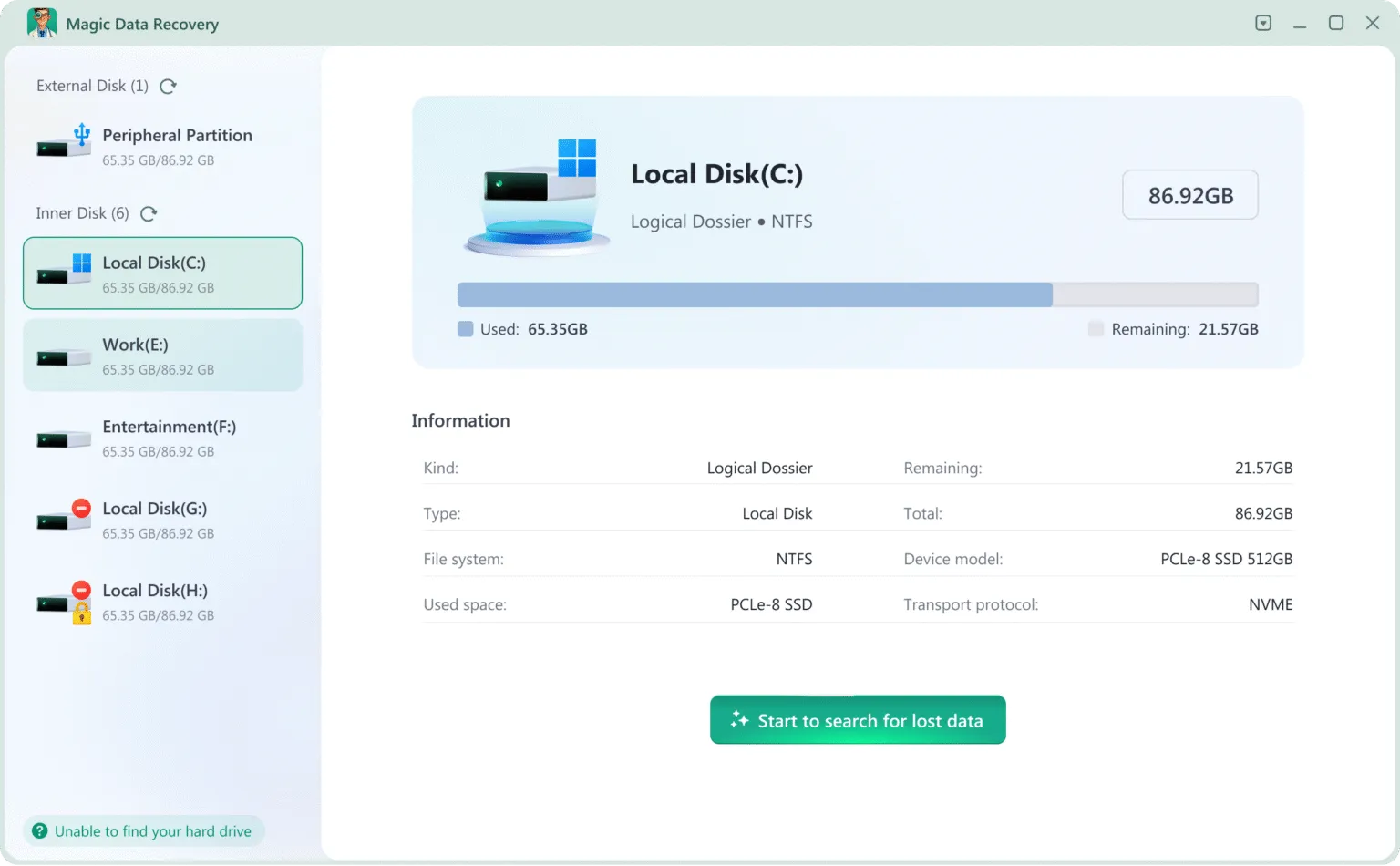
.DOCX and .JPG files, use the preview pane to confirm they are your missing project report and photos.
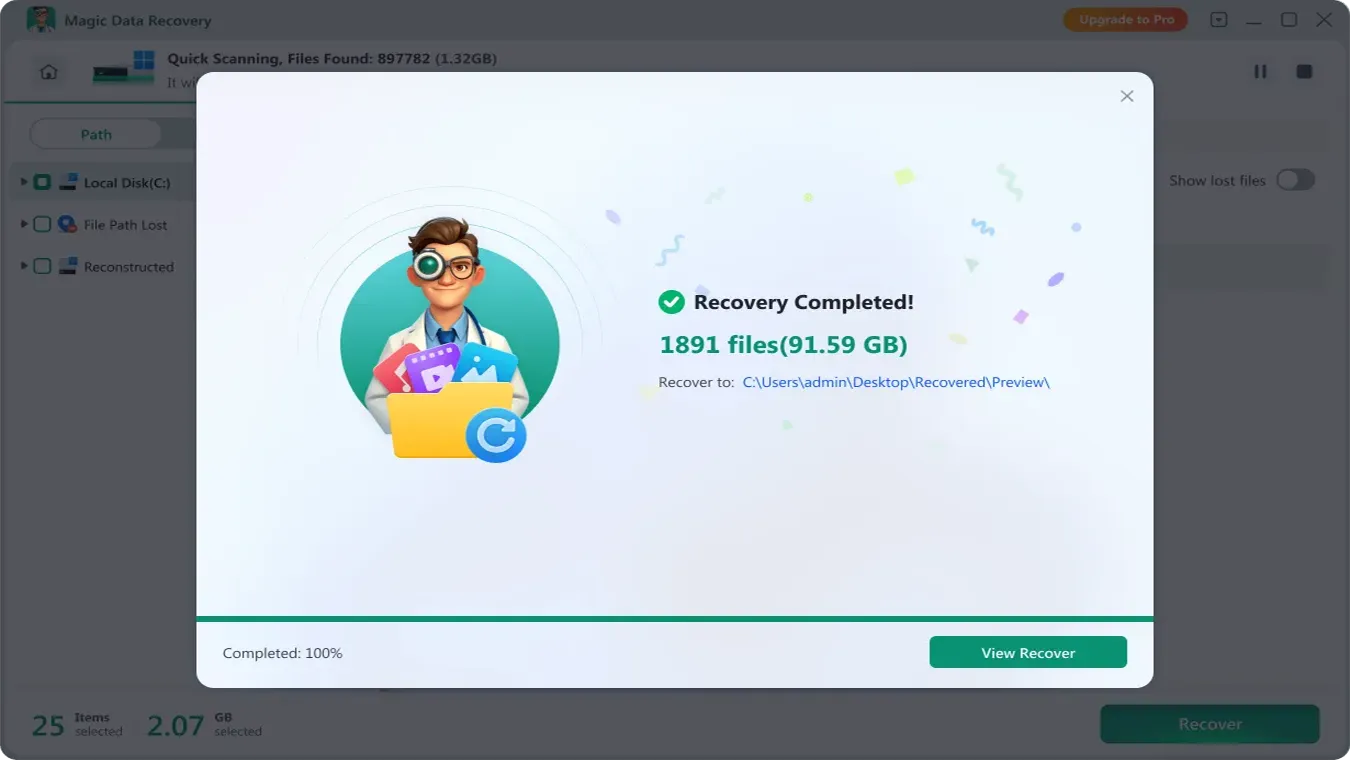
4. Why It’s More Reliable Than Manual Methods
Compared to complex command-line tools or hit-and-miss system utilities, Magic Data Recovery offers a guided, all-in-one process. It removes the guesswork and technical intimidation, providing a higher success rate for the average user while incorporating the deep scanning capabilities professionals rely on. Its preview function alone makes it a more trustworthy choice than tools that offer no verification before recovery.
If you are looking for a direct and effective path to corrupted pen drive recovery, consider starting with Magic Data Recovery. Its streamlined process is designed to turn a complex problem into a manageable task.
Method 3: Addressing Physical Damage
If your USB drive exhibits physical signs—a bent connector, cracked casing, water damage, or it feels hot to the touch and is not detected on any computer—stop all software-based recovery attempts immediately.
- Do not repeatedly plug it in.
- Do consult a professional data recovery service. Physical repair requires specialized tools and cleanroom environments, a process beyond the scope of any software.
After Recovery: Fixing the Drive and Prevention
Once your files are safely recovered, you can address the drive itself.
- Safe Formatting: In Windows Disk Management, right-click on the USB drive’s partition and select “Format…”. Choose exFAT for large file support and cross-platform compatibility.
- Future Prevention Tips:
- Always Eject: Use the “Safely Remove Hardware” notification icon.
- Invest in Quality: Purchase drives from reputable brands.
- Maintain Backups: Never let a USB drive be the sole copy of important data.
- Scan for Viruses: Regularly check external drives with security software.
- Avoid Extremes: Keep your drive away from moisture, heat, and physical stress.
Conclusion
Successfully navigating a corrupt pen drive recovery requires a calm, structured approach: Diagnose > Secure > Recover. We’ve outlined the spectrum of solutions, from basic system checks to professional-grade intervention.
While Windows tools have their place for minor issues, dedicated corrupted pen drive recovery software like Magic Data Recovery is overwhelmingly the most effective and secure solution for significant logical corruption. It directly targets the problem of inaccessible data through deep scanning, provides crucial verification via file previews, and operates safely. By following this guide and choosing the right USB recovery tool for the job, you can confidently resolve a corrupted USB drive crisis and secure your valuable digital files.
Supports Windows 7/8/10/11 and Windows Server
FAQs
Can a corrupted pen drive be fixed?
How to uncorrupt a USB hard drive?
How to fix a corrupted pen drive using cmd?
How to recover data from an unreadable USB?
Why is it bad if a USB becomes corrupted?
How much does it cost to fix a USB drive?
How to fix a USB that is corrupted and unreadable?
Can a corrupted hard drive be restored?

Jason is a data recovery and technical support specialist with over 15 years of hands-on experience. He has worked extensively with frontline users, troubleshooting difficult data loss cases and providing practical recovery solutions for accidental deletion, formatted drives, damaged file systems, lost partitions, system failures, and other recovery emergencies. His expertise also includes backup and restoration, file repair, and disaster recovery, with a strong emphasis on safe, reliable, and technically accurate guidance.