
Best Data Recovery App for Windows 7 (Free Download)

Losing important files on Windows 7 can be stressful. Accidental deletion, disk formatting, system reinstall, or file system errors often happen without warning. If you are searching for a reliable data recovery app for Windows 7, this guide will help you understand what really works, what to avoid, and how to recover lost data safely.
In this article, you will learn more about data recovery on Windows 7 and know Why Magic Data Recovery is a practical solution for real HDD recovery scenarios.
Supports Windows 7/8/10/11 and Windows Server
Table of Contents
What Is a Data Recovery App for Windows 7?
A data recovery app for Windows 7 is software designed to scan storage devices and retrieve lost files when they are no longer accessible through the operating system.
These tools work by:
- Scanning file system records (NTFS, FAT32, exFAT)
- Locating deleted file entries that have not been overwritten
- Reconstructing files after formatting or system reinstall
Unlike backups, data recovery apps are often the last option when no copy exists.
Common Windows 7 Data Loss Scenarios
Understanding how data is lost helps you choose the right recovery method.
Accidental Deletion
Files removed using Delete or Shift + Delete are not erased immediately. They often remain recoverable until overwritten.
Disk or Partition Formatting
Quick format usually preserves file data. Full format reduces recovery success but does not always make recovery impossible.
File System Errors
Windows 7 users often encounter errors like:
- “You need to format the disk before you can use it”
- RAW file system
These issues typically indicate damaged file structures rather than lost data.
System Reinstallation or OS Crash
Reinstalling Windows 7 can overwrite system areas while leaving personal files partially intact.
What to Do Before Using Any Data Recovery App for Windows 7
Before you proceed with a data recovery app for Windows 7 free download, take these steps to avoid permanent data loss.
Stop Using the Affected Drive
Continued use increases the risk of overwriting deleted data.
Do Not Install Software on the Same Drive
Always install recovery software on a different partition or external drive.
Prepare a Safe Recovery Location
Recovered files should never be saved back to the original disk.
These simple precautions significantly improve recovery success.
How to Choose the Best Data Recovery App for Windows 7
Not all recovery tools work well on older systems. A reliable data recovery app for Windows 7 should offer:
- Full compatibility with Windows 7 (32-bit & 64-bit)
- Support for NTFS, FAT32, and exFAT
- Deep scan for formatted or corrupted drives
- File preview before recovery
- Read-only scanning to avoid disk damage
- Transparent free version limitations
Avoid tools that promise unrealistic recovery rates or hide restrictions.
Recommended Solution: Magic Data Recovery
When evaluating different recovery tools, Magic Data Recovery stands out as a balanced and reliable option for Windows 7 users.
Core Problems It Solves
- Recover deleted files, even after recycle bin is emptied
- Restore data from formatted partitions
- Fix file loss caused by file system errors
- Recover files after Windows reinstallation or system crash
Why Magic Data Recovery Works Well on Windows 7
- Designed to handle older file systems common on Windows 7
- Clear scan modes reduce confusion during recovery
- Read-only scanning minimizes risk of further damage
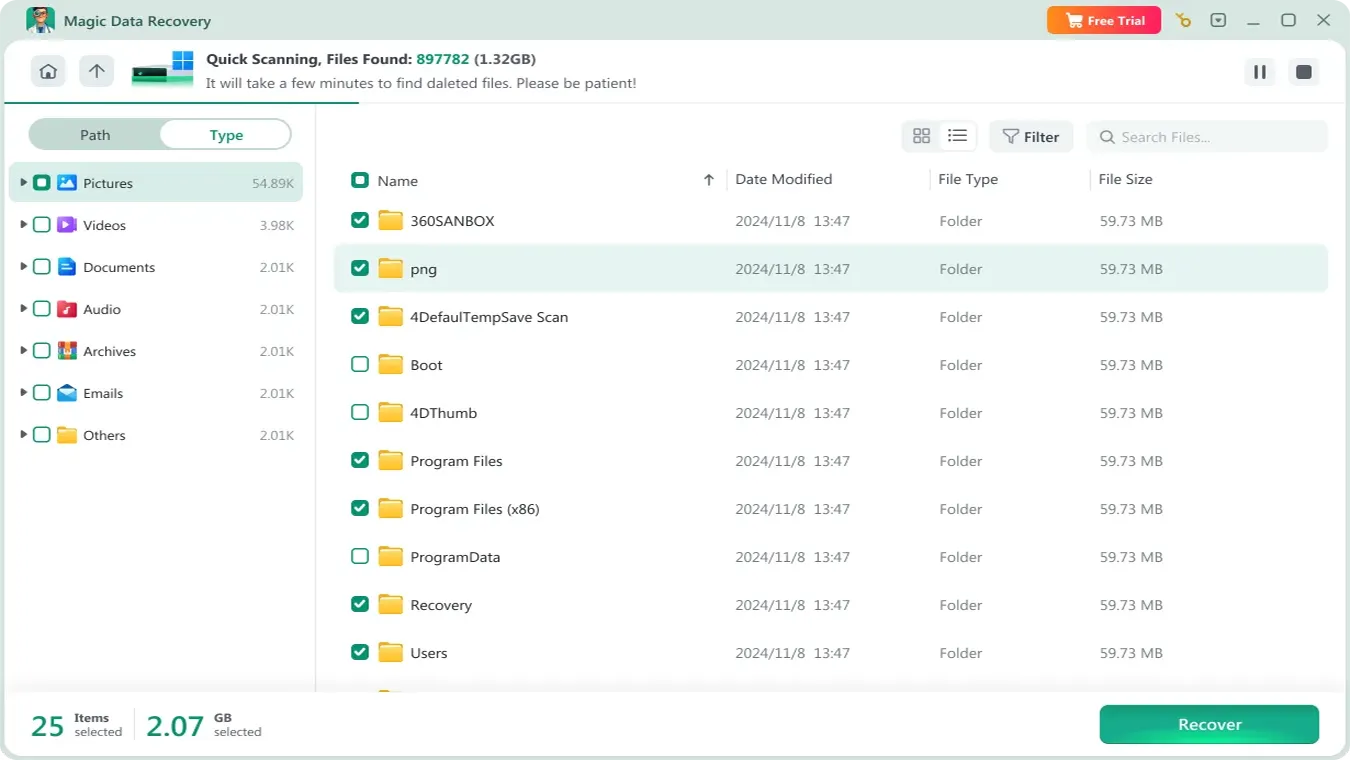
- File preview helps confirm recoverability before saving
Real-World Use Case
For example, after a quick format on a USB drive, Magic Data Recovery was able to detect original folder structures and preview documents before recovery. This saves time and avoids restoring unusable files.
Compared with generic tools, Magic Data Recovery focuses more on recovery accuracy rather than aggressive upgrades.
If you are looking for a dependable data recovery app for Windows 7, Magic Data Recovery offers a practical and safer approach.
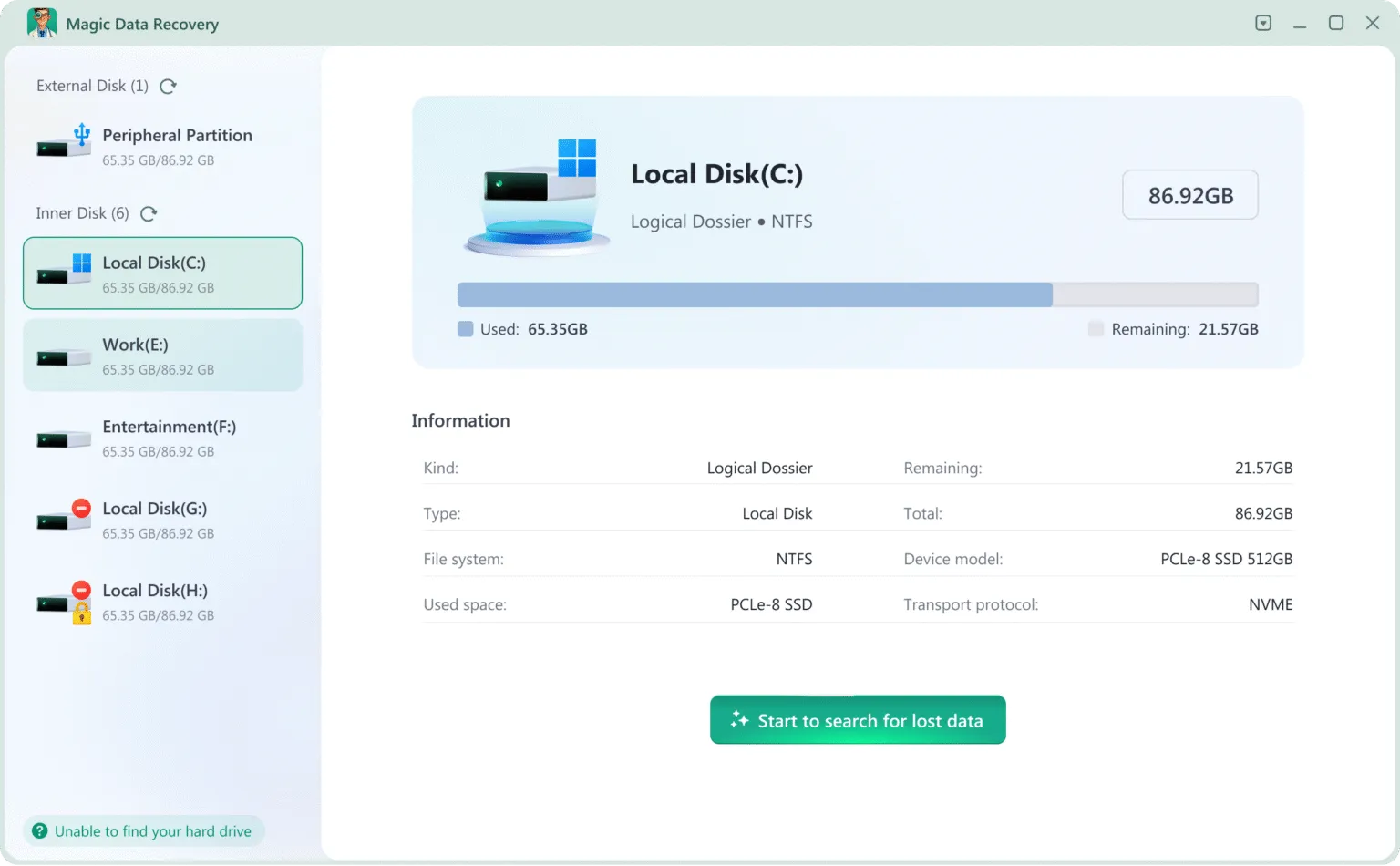
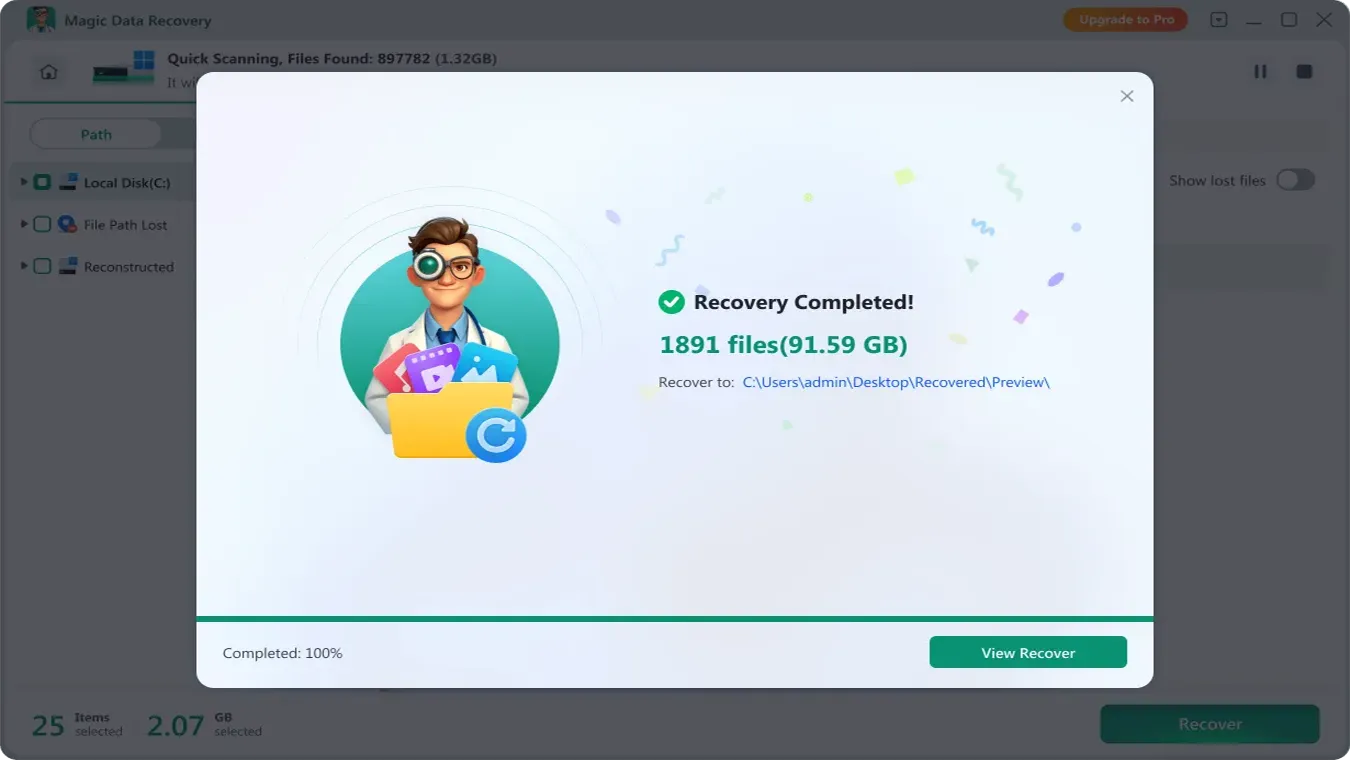
Step-by-Step: How to Recover Data on Windows 7
Follow these steps to recover lost files efficiently.
1. Download and Install Magic Data Recovery on a different drive.
Supports Windows 7/8/10/11 and Windows Server

Common Reasons Data Recovery May Fail
Even the best data recovery app for Windows 7 has limits.
- Files were overwritten by new data
- SSD TRIM erased data blocks
- Physical disk damage exists
- Full format or secure erase was performed
In such cases, stop using the drive immediately and consider professional recovery services.
Free Download Options and Safety Tips
Many users search for a data recovery app for Windows 7 free download. Free versions are useful for testing recoverability, but often have limits.
Safety tips:
- Download only from official sources
- Avoid bundled installers
- Check version compatibility with Windows 7
Magic Data Recovery provides a trial option that allows users to scan and preview files before deciding.
Conclusion
Choosing the right data recovery app for Windows 7 is about reliability, transparency, and real HDD recovery results.
Magic Data Recovery focuses on solving actual data loss scenarios without exaggerated claims.
Its compatibility with Windows 7, clear workflow, and practical recovery features make it a dependable choice for users facing deleted, formatted, or system-related data loss.
If you need an effective solution without unnecessary complexity, Magic Data Recovery is worth trying.
Supports Windows 7/8/10/11 and Windows Server
FAQs
Can a data recovery app really work on Windows 7?
Is free data recovery software safe to use?
Can I recover data after reinstalling Windows 7?
How long does a deep scan usually take?
Can formatted USB drives be recovered?
Should I install recovery software on the same disk?
What file systems are supported on Windows 7?
When should I stop using recovery software?

Jason is a data recovery and technical support specialist with over 15 years of hands-on experience. He has worked extensively with frontline users, troubleshooting difficult data loss cases and providing practical recovery solutions for accidental deletion, formatted drives, damaged file systems, lost partitions, system failures, and other recovery emergencies. His expertise also includes backup and restoration, file repair, and disaster recovery, with a strong emphasis on safe, reliable, and technically accurate guidance.