
Best Software That Recovers Deleted Files: Complete Guide
Accidental file deletion happens more often than most users expect. For example, a single mistake—such as emptying the recycle bin, formatting a USB drive, or reinstalling an operating system—can cause the sudden loss of important documents, photos, or work files. When this occurs, panic is common, and many people assume their data is gone forever. Fortunately, that assumption is often wrong. In many situations, deleted data still exists on the storage device until new information overwrites it. This is exactly where software that recovers deleted files becomes useful. With timely action and the right deleted file recovery approach, lost data can often be restored safely.
In this guide, you will learn how file recovery works, how to evaluate recovery tools, and why Magic Data Recovery is a practical option for everyday data loss scenarios.
Supports Windows 7/8/10/11 and Windows Server
Wondering if your files can be recovered? Find out in seconds with our quick check below.
Data Recovery Assessment
Answer 3 quick questions to estimate your recovery chances
Table of Contents
How Software That Recovers Deleted Files Works
When a file is deleted, most operating systems do not immediately erase the underlying data. Instead, they remove the file reference and mark the space as available for reuse. As a result, recovery remains possible until new data replaces that space.
Professional software that recovers deleted files scans storage devices to locate:
- File system records linked to deleted entries
- Recognizable file signatures, such as documents, images, and videos
- Data blocks that remain intact and unoverwritten
Because of this process, timing plays a critical role. Therefore, starting recovery early significantly improves success rates. For this reason, experts strongly recommend avoiding further use of the affected drive.
What to Look for in Software That Recovers Deleted Files
Choosing an effective recovery solution requires more than checking a feature list. Instead, it helps to focus on proven criteria drawn from real recovery situations.
Recovery Support and Compatibility
Reliable software that recovers deleted files typically supports:
- Internal and external storage devices, including HDDs and SSDs
- USB flash drives and memory cards
- Widely used file systems such as NTFS, FAT32, and exFAT
Scan Accuracy and Preview Options
In addition to basic scanning, quality recovery tools offer deep scans for complex cases. Moreover, file preview features allow users to confirm recoverability before restoring data.
Ease of Use and Data Safety
Since most users are not technical specialists, a clear interface and guided workflow are essential. At the same time, trustworthy tools perform read-only scans, which helps prevent accidental overwriting.
Best Software That Recovers Deleted Files: Objective Comparison
Although many tools claim to restore lost data, their real-world performance differs. Below is a balanced comparison based on usability and common recovery needs.
Magic Data Recovery: A Practical and Balanced Solution
Magic Data Recovery is designed for users who need dependable software that recovers deleted files without unnecessary complexity. It emphasizes clarity, safety, and consistent scan results.
Key advantages include:
- Support for deleted, formatted, and partially corrupted storage devices
- Compatibility with common file types, including documents, photos, and videos
- Built-in preview to verify files before recovery
- A guided interface suitable for everyday users
Typical use cases include:
- Recovering office documents after accidental deletion
- Restoring photos from formatted drives
- Retrieving files after system errors or unexpected shutdowns
Rather than relying on exaggerated claims, Magic Data Recovery focuses on safe scanning and informed recovery decisions. As a result, it offers a reliable balance between simplicity and capability.
Disk Drill: Feature-Oriented Alternative
Disk Drill offers advanced filtering and broad file support. However, beginners may find its interface complex, and some useful features require paid upgrades.
EaseUS Data Recovery Wizard: Beginner-Friendly Choice
EaseUS provides clear instructions and an intuitive layout. Still, recovery limits in the free version may restrict its usefulness for larger recovery tasks.
Recuva: Lightweight Free Tool
Recuva works well for recently deleted files. However, its limited deep-scan capability can reduce success in more complex scenarios.
How to Use Software That Recovers Deleted Files
Recovering lost data is more effective when you follow a structured process. The steps below illustrate how software that recovers deleted files like Magic Data Recovery is commonly used.
Step 1: Download and Install Magic Data Recovery
First, download Magic Data Recovery and install it on a drive different from the one where data was lost. This precaution helps avoid overwriting recoverable files and preserves recovery potential.
Supports Windows 7/8/10/11 and Windows Server
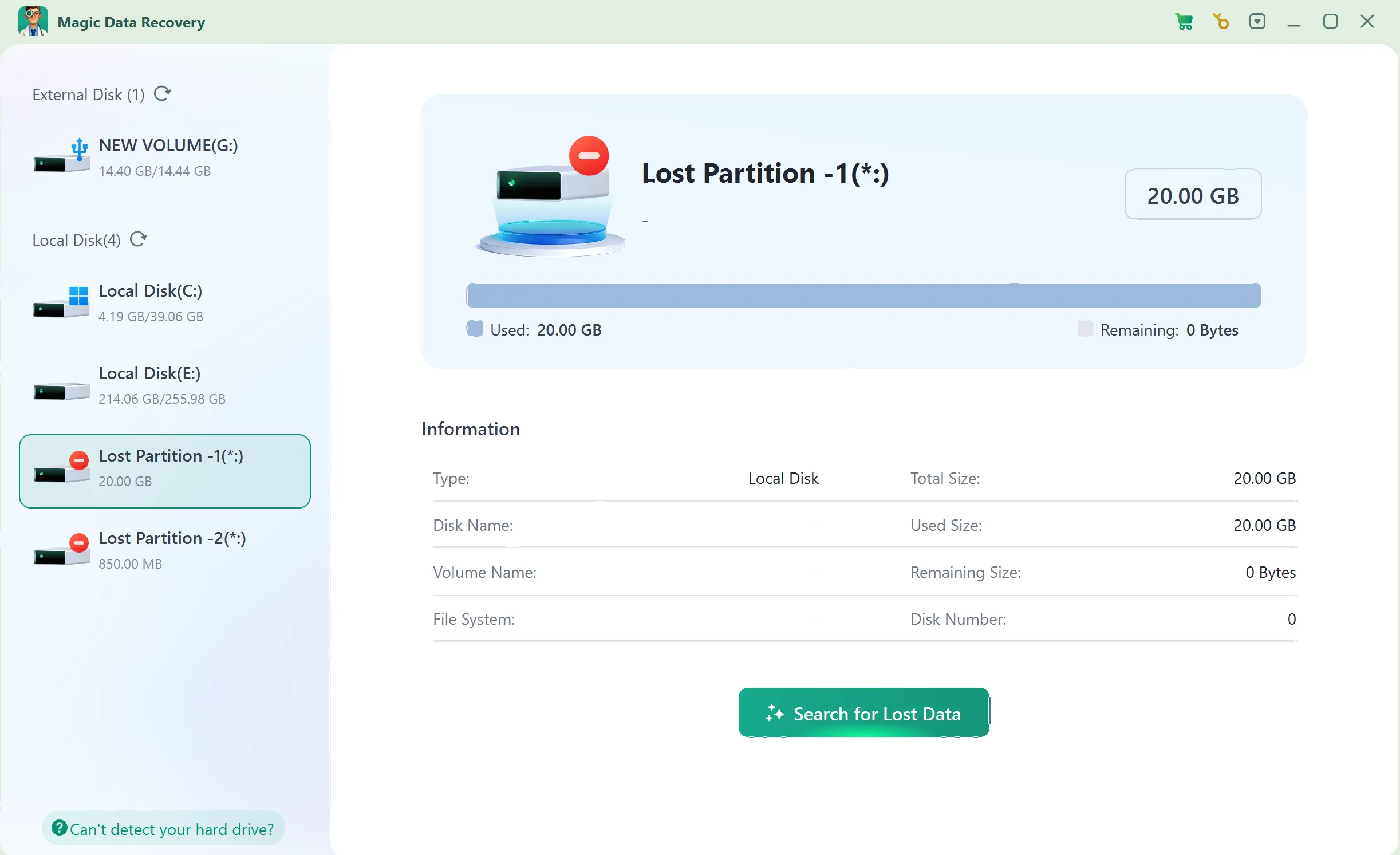
Step 2: Select the Drive to Scan
Next, launch the program. From the main interface, choose the drive where files were deleted, then start the scan.
Step 3: Scan the Drive for Deleted Files
Magic Data Recovery automatically performs an advanced scan. Meanwhile, recoverable files appear gradually as the scan progresses.
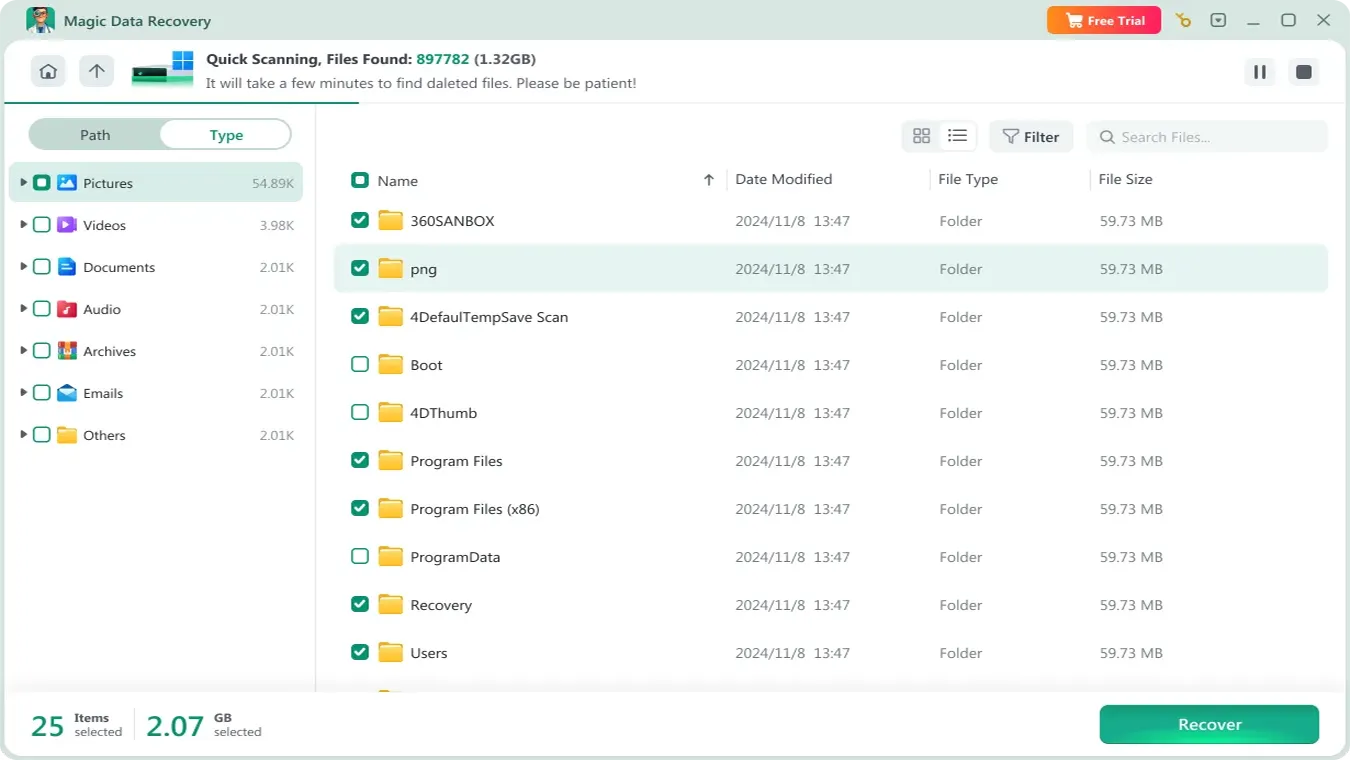
Step 4: Preview Deleted Files Before Recovery
After scanning, use the preview feature to confirm file content. This step helps ensure that only useful files are restored.

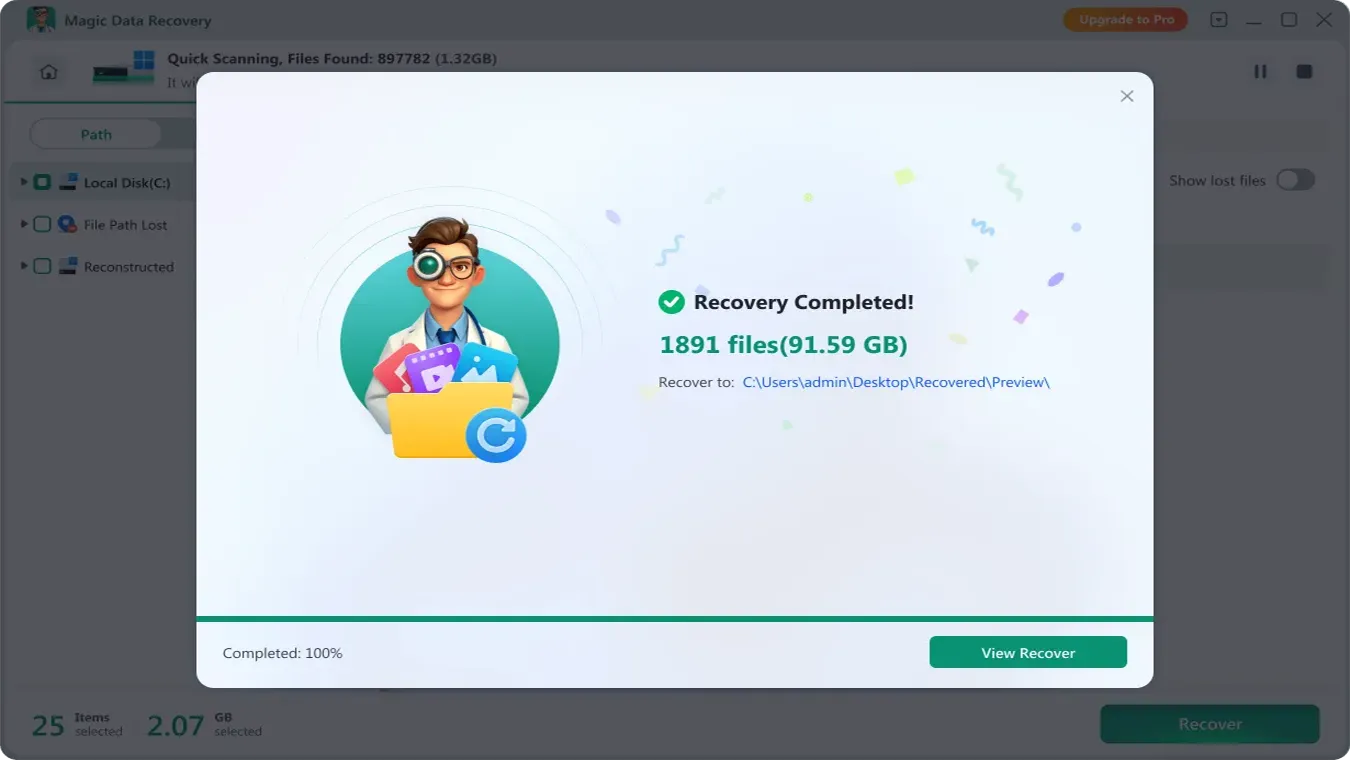
Step 5: Recover Files to a Safe Location
Finally, select the files you want to recover and save them to a different storage location. Avoid restoring data to the original drive, as doing so may cause permanent data loss.
Common Mistakes That Reduce Recovery Success
Even reliable recovery methods after deletion cannot overcome poor recovery habits. For instance, common mistakes include continuing to use the affected drive, installing recovery software on the same disk, or skipping file previews. Therefore, following best practices is essential for successful recovery.
Conclusion: Choosing Software That Recovers Deleted Files
Data loss does not always mean permanent loss. With quick action and reliable software that recovers deleted files, many users can restore valuable data successfully.
Magic Data Recovery stands out because it combines clear guidance, safe scanning, and consistent performance. Rather than relying on marketing promises, it focuses on solving real recovery problems. If you need a practical and trustworthy deleted data recovery solution, Magic Data Recovery is well worth considering.
Supports Windows 7/8/10/11 and Windows Server
FAQs About Software That Recovers Deleted Files
Can deleted files be recovered after emptying the recycle bin?
Can this type of software work on SSDs?
What file types are easiest to recover?
How soon should I start recovery after data loss?
Is it safe to use data recovery software?
Can formatted drives still be recovered?
Are free data recovery tools enough for serious data loss?

Vasilii is a data recovery specialist with around 10 years of hands-on experience in the field. Throughout his career, he has successfully solved thousands of complex cases involving deleted files, formatted drives, lost partitions, and RAW file systems. His expertise covers both manual recovery methods using professional tools like hex editors and advanced automated solutions with recovery software. Vasilii's mission is to make reliable data recovery knowledge accessible to both IT professionals and everyday users, helping them safeguard their valuable digital assets.