
Data Loss Statistics 2025: Key Findings & 2026 Predictions (Amagicsoft Report)
Table of Contents
Executive Summary: The 2025 Data Loss Landscape
Detailed Analysis of 2025 Data Loss Statistics
Our survey of 10,000 affected users provides a clear breakdown of the causes and consequences of data loss, offering crucial insights for prevention.
1. Primary Causes of Data Loss (2025)
- Human Error (34%): This category remains the leading cause, according to our data loss statistics. Common incidents include accidental file deletion, mistaken drive formatting, and improper software handling during updates.
- Hardware & System Failures (27%): Sudden hard drive (HDD/SSD) crashes, power surge damage, and server failures constitute a major segment of these data loss statistics.
- Malicious Software & Cyber Attacks (22%): This growing threat, particularly from ransomware that encrypts files, represents a severe and costly segment of modern data loss statistics.
- Software Corruption & Bugs (11%): Data loss often results from operating system crashes, file system corruption (e.g., NTFS errors), and failed software updates.
- Physical Damage & Theft (6%): These data loss statistics cover damage from water, fire, or impact, as well as the loss or theft of devices like laptops and external drives.
2. The Financial and Operational Impact
The true cost of data loss extends far beyond simple recovery:
- For Businesses: Costs include direct recovery expenses, significant downtime, lost productivity, reputational harm, and potential regulatory fines. For many SMEs, a single major incident can threaten business continuity.
- For Individuals: The loss is frequently emotional. Irreplaceable items like family photos, personal videos, and important documents are often cited as the most devastating loss.
3. Device & Platform Vulnerability Analysis
Our data loss statistics show that desktops and laptops are still the most common failure points (58%). However, data loss from external storage devices (23%) like USB drives is remarkably high. Loss events from mobile devices (12%) and cloud storage services (7%) are also notable, challenging the assumption of cloud infallibility.
2026 Predictions and Future Trends
Based on our 2025 data loss statistics and technology trends, Amagicsoft forecasts key developments for 2026:
- The SSD Data Recovery Challenge Grows: As SSDs dominate the market, recovery issues related to TRIM command and hardware encryption will become more common. Public awareness of SSD recovery complexities must increase.
- AI Becomes a Dual-Faceted Tool: Cybercriminals will leverage AI for more sophisticated attacks. Conversely, AI will power advanced predictive analytics for hardware health and enhance data recovery software capabilities.
- “Edge Data” Vulnerability Rises: Data generated by IoT devices and remote endpoints will increasingly outpace robust backup solutions, creating new vulnerabilities.
- Cloud Data Loss Gains Attention: User error, sync issues, and account compromises will lead to more visible cloud data loss incidents, boosting demand for independent cloud backup solutions.
Your 2026 Action Plan: How to Prevent Data Loss
- Implement the 3-2-1 Backup Rule: Keep 3 data copies on 2 different media types, with 1 copy stored offsite (e.g., secure cloud).
- Invest in Hardware Health Monitoring: Use reliable components and monitoring tools to get early warnings for potential drive failures.
- Strengthen Security and Training: Conduct regular cybersecurity training and maintain robust, updated security software as a critical first defense.
- Develop a Disaster Recovery Plan: Create and regularly test a clear plan to minimize downtime and confusion during a data loss incident.
When Prevention Fails: Recovering Your Data
If you experience data loss from deletion, formatting, or corruption, act quickly and correctly. Immediately stop using the affected device to prevent overwriting lost data.
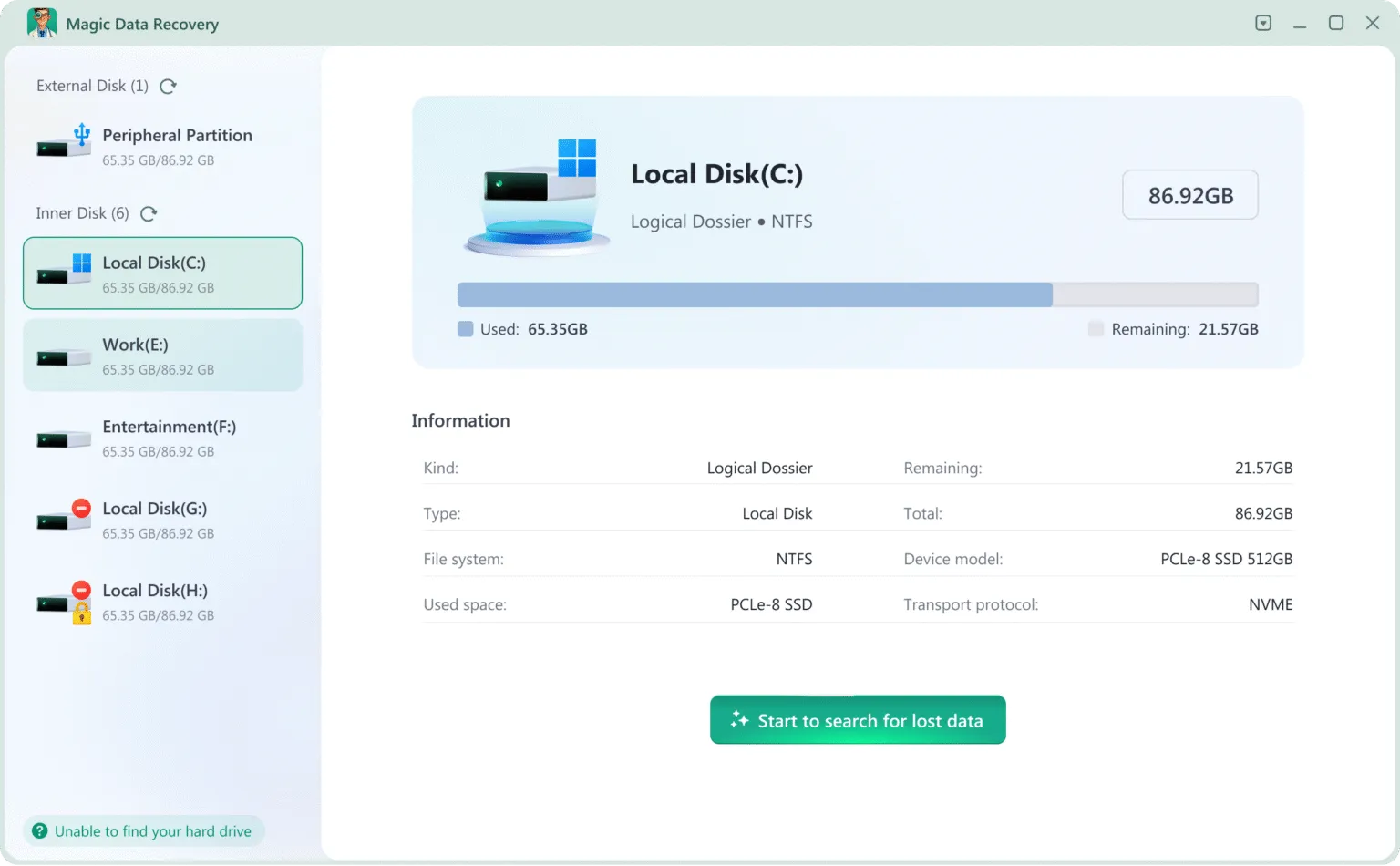
For many common scenarios, professional recovery software provides an effective solution. We recommend Magic Data Recovery software. It addresses complex situations with:
- Comprehensive Recovery: Effectively restores data lost to accidental deletion, formatting, partition loss, system crashes, and virus attacks.
- Broad Compatibility: Works with file systems like NTFS, FAT32, exFAT, EXT2, and EXT3 on Windows, Linux, and from various storage devices.
- Advanced Deep Scan: Uses sophisticated algorithms to find file signatures, helping retrieve files even with damaged directory information.
- User-Friendly Design: An intuitive, step-by-step wizard makes the recovery process accessible for all users, offering a vital chance to regain data.
Conclusion
The data loss statistics presented in this Amagicsoft report paint a clear picture: data loss is not a matter of if but when. The landscape is evolving, with human factors and hardware reliability remaining central, while new technologies like AI and edge computing introduce both risks and solutions.
The key insight from these data loss statistics is the critical importance of a proactive and layered defense. Relying on a single protection method is insufficient. A robust strategy must combine preventive measures (like the 3-2-1 backup rule and user training) with prepared responses (a tested disaster recovery plan and access to reliable recovery tools like Magic Data Recovery).
Supports Windows 7/8/10/11 and Windows Server
FAQs
What are the most current data loss statistics?
Do SSDs or HDDs have better data loss statistics?
What is the average business cost in data loss statistics?
Can I recover data after formatting a drive?
What is the 3-2-1 backup rule?
Is cloud storage safe from data loss?
What is my first step after data loss?
Should I use software or a professional recovery service?

Jason is a data recovery and technical support specialist with over 15 years of hands-on experience. He has worked extensively with frontline users, troubleshooting difficult data loss cases and providing practical recovery solutions for accidental deletion, formatted drives, damaged file systems, lost partitions, system failures, and other recovery emergencies. His expertise also includes backup and restoration, file repair, and disaster recovery, with a strong emphasis on safe, reliable, and technically accurate guidance.