
SanDisk Micro SD Card Data Recovery Guide
Losing photos, videos, or documents from a SanDisk micro SD card can feel like a disaster. Fortunately, SanDisk micro SD card data recovery is often possible if you act quickly and avoid common mistakes. For example, many users accidentally delete files while cleaning storage, or they format the card without realizing important data is still inside.
At the same time, recovery success depends heavily on your next steps. Therefore, it is essential to stop using the card immediately and choose a reliable SD card recovery method. In this guide, you will learn practical solutions, common troubleshooting tips, and how to select the right sandisk micro sd card recovery tool. Most importantly, you will also discover why Magic Data Recovery is a trustworthy option for recovering lost data safely.
Supports Windows 7/8/10/11 and Windows Server
Table of Contents
Why SanDisk Micro SD Cards Lose Data (Common Causes)
To increase the success rate of SanDisk micro SD card data recovery, you should first understand what caused the data loss. After all, different causes often require different solutions.
Accidental Deletion
This is the most common cause. For instance, users often delete the wrong folder while organizing photos. Similarly, some devices automatically delete older files when storage runs out.
Formatting the Card
Formatting removes the file table. However, it often does not erase the data itself. Therefore, deep scanning software can still recover many files.
File System Corruption (RAW Card Error)
Sometimes a SanDisk micro SD card suddenly shows as RAW. This usually happens after unsafe removal, sudden shutdown, or system crash. Consequently, the device cannot read the file structure anymore.
Power Failure While Writing Files
If your phone or camera powers off while saving data, the file may become incomplete. As a result, the card can develop corrupted entries.
Virus or Malware Infection
In some cases, malware hides files instead of deleting them. Meanwhile, more aggressive viruses may corrupt partitions, which makes recovery harder.
Bad Sectors and Memory Wear
Micro SD cards have limited write cycles. Over time, bad sectors may appear. Therefore, you may experience missing files or unreadable media.
Important: If the card has physical damage, software recovery may not work. In that case, professional repair may be required.
How to Choose the Best SanDisk Micro SD Card Recovery Tool
Not all recovery programs deliver the same results. For example, some tools detect many files but fail to restore them properly. Similarly, others may not support RAW recovery.
A reliable Sandisk micro SD card recovery tool should offer:
- Deep scan for formatted and corrupted cards
- File preview before recovery
- Support for photos, videos, and documents
- Compatibility with FAT32 and exFAT
- A clear interface for beginners
- Stable performance for large micro SD cards
Therefore, you should choose a tool that balances simplicity and professional recovery features.
Best SanDisk Micro SD Card Recovery Tools – Comparison Table
Feature | Magic Data Recovery | Disk Drill | Recuva | Recoverit |
Best for | Formatted/RAW + deleted recovery | Beginner-friendly recovery | Quick free deletion recovery | Photo/video recovery |
Deleted file recovery | ✔️ High | ✔️ Medium–High | ✔️ Medium | ✔️ High |
Formatted / RAW recovery | ✔️ High | ✔️ Medium | ❌ Low | ✔️ Medium–High |
Preview before recovery | ✔️ Yes | ✔️ Yes | ✔️ Limited | ✔️ Yes |
Ease of use | ⭐⭐⭐⭐ | ⭐⭐⭐⭐ | ⭐⭐⭐ | ⭐⭐⭐ |
Free version | ✔️ Limited | ✔️ Limited | ✔️ Yes | ✔️ Trial |
Note: “High / Medium / Low” ratings are based on real-world recovery scenarios such as formatted cards, RAW file systems, and large media files.
SanDisk Micro SD Card Recovery Tools – Detailed Comparison
Magic Data Recovery
Magic Data Recovery provides a strong balance between recovery depth and usability. Most importantly, it performs well in complex SanDisk micro SD card data recovery scenarios, such as formatted cards and RAW file systems.
- Strengths:
- Deep scan for formatted and corrupted micro SD cards
- Reliable preview before recovery
- Stable performance on large-capacity cards
- Best for:
- Photos and videos from cameras, drones, and smartphones
- Users who want reliable results without complex setup
Overall, Magic Data Recovery works well as an all-round Sandisk micro sd card recovery tool.
Disk Drill
Disk Drill is known for its clean interface and wide device support. It handles deleted file recovery well. However, deep recovery on severely corrupted or RAW SanDisk micro SD cards may take longer.
- Pros: modern UI, good preview, multi-device support
- Cons: deep scan efficiency varies on formatted cards
- Best for: basic recovery and first-time users
Recuva
Recuva is a lightweight and popular free recovery tool, especially for Windows users. It works well for recently deleted files. However, its ability to handle formatted or RAW micro SD cards is limited.
- Pros: free version available, simple setup, fast scans
- Cons: weak formatted/RAW recovery, limited preview, fewer file formats
- Best for: simple accidental deletion scenarios
Recuva can be useful for quick checks, but it is usually not sufficient for advanced SanDisk micro SD card recovery needs.
Recoverit (Wondershare)
Recoverit offers solid media recovery capabilities and supports many file formats. However, its trial version restricts recovery, and deep scans can be slower on large micro SD cards.
- Pros: strong media file detection, broad format support
- Cons: limited trial, slower deep scan in some cases
- Best for: users focusing mainly on photos and videos
Which SanDisk Micro SD Card Recovery Tool Should You Choose?
If you need a recovery tool that performs well in most scenarios—including deleted files, formatted cards, and RAW corruption—Magic Data Recovery is often the most practical option.
On the other hand, users who value a modern interface and broad device support may prefer Disk Drill, especially for basic recovery tasks.
Recuva is still a good choice when you only need a quick check for recently deleted files and want a free Windows-based solution.
Meanwhile, Recoverit can work well for photo and video recovery, although its trial limitations may affect users who need full recovery without restrictions.
How to Perform SanDisk Micro SD Card Data Recovery Using Magic Data Recovery
Magic Data Recovery is designed for real-world recovery needs. Instead of forcing users to deal with complicated technical settings, it focuses on a clean workflow and reliable results. As a result, it works well for both beginners and experienced users.
Step 1: Install and Open Magic Data Recovery
Install Magic Data Recovery on your computer drive, not on the micro SD card. Otherwise, installation files may overwrite recoverable data.
Supports Windows 7/8/10/11 and Windows Server
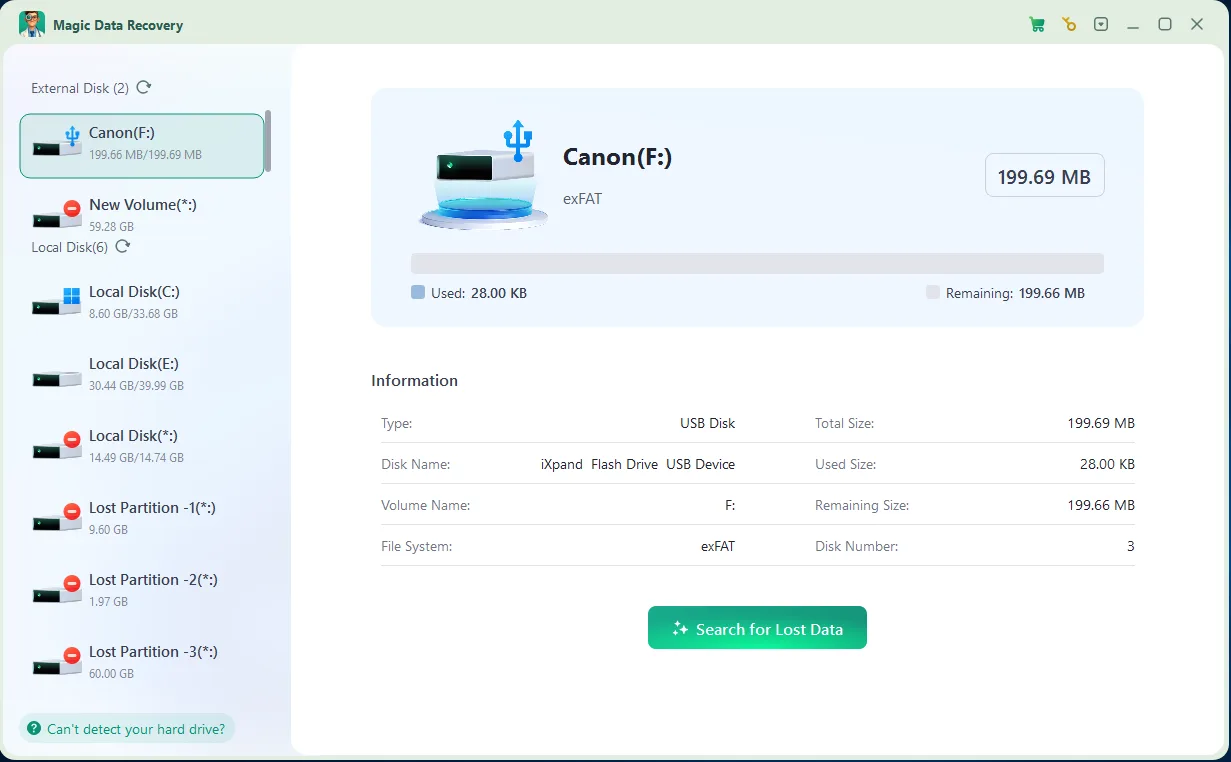
Step 2: Select Your SanDisk Micro SD Card
From the drive list, choose the correct card, and then start searching.
Step 3: Run a Full Scan
Magic Data Recovery will run advanced scan automatically to search for deleted file entries and file signatures. Meanwhile, you can monitor progress and check early scan results.
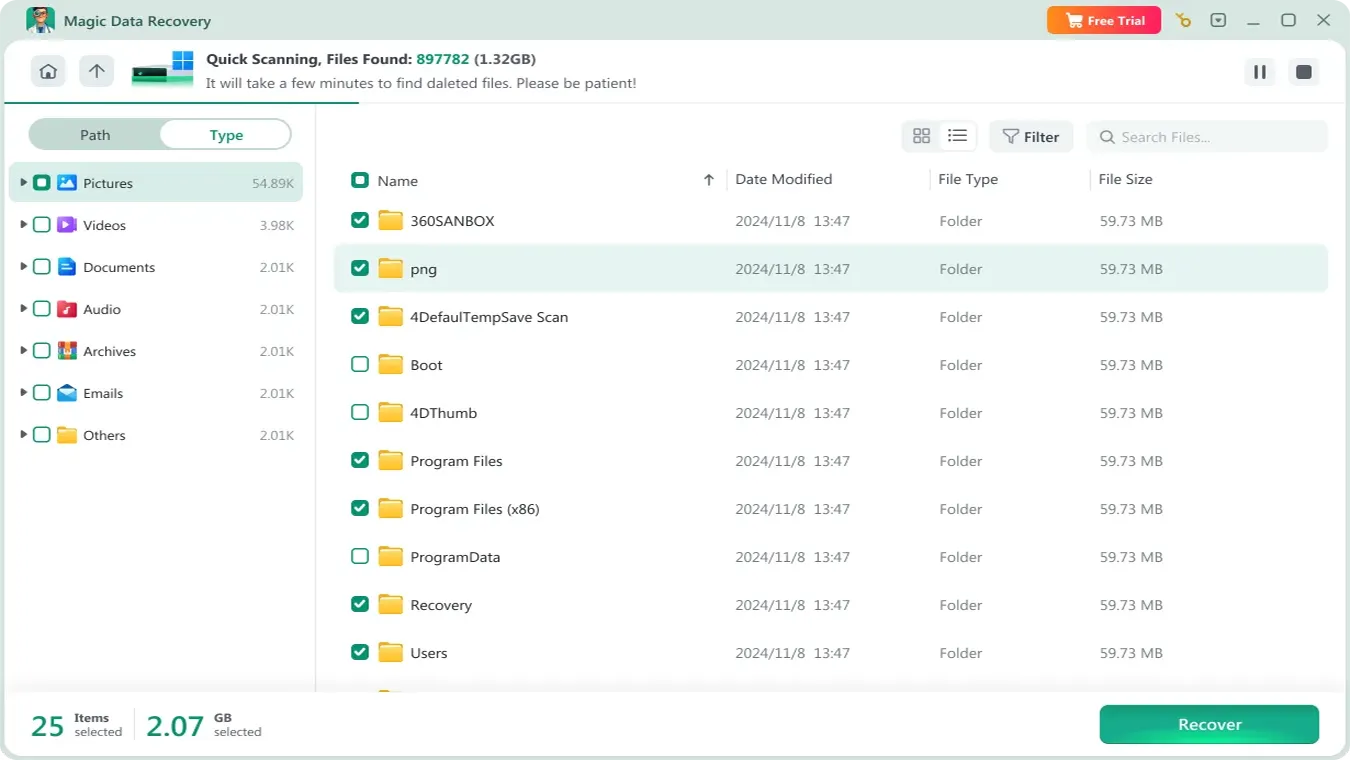
Step 4: Preview Files Before Restoring
Preview photos and videos. This step is important because it confirms file integrity. In other words, you avoid recovering broken files blindly.

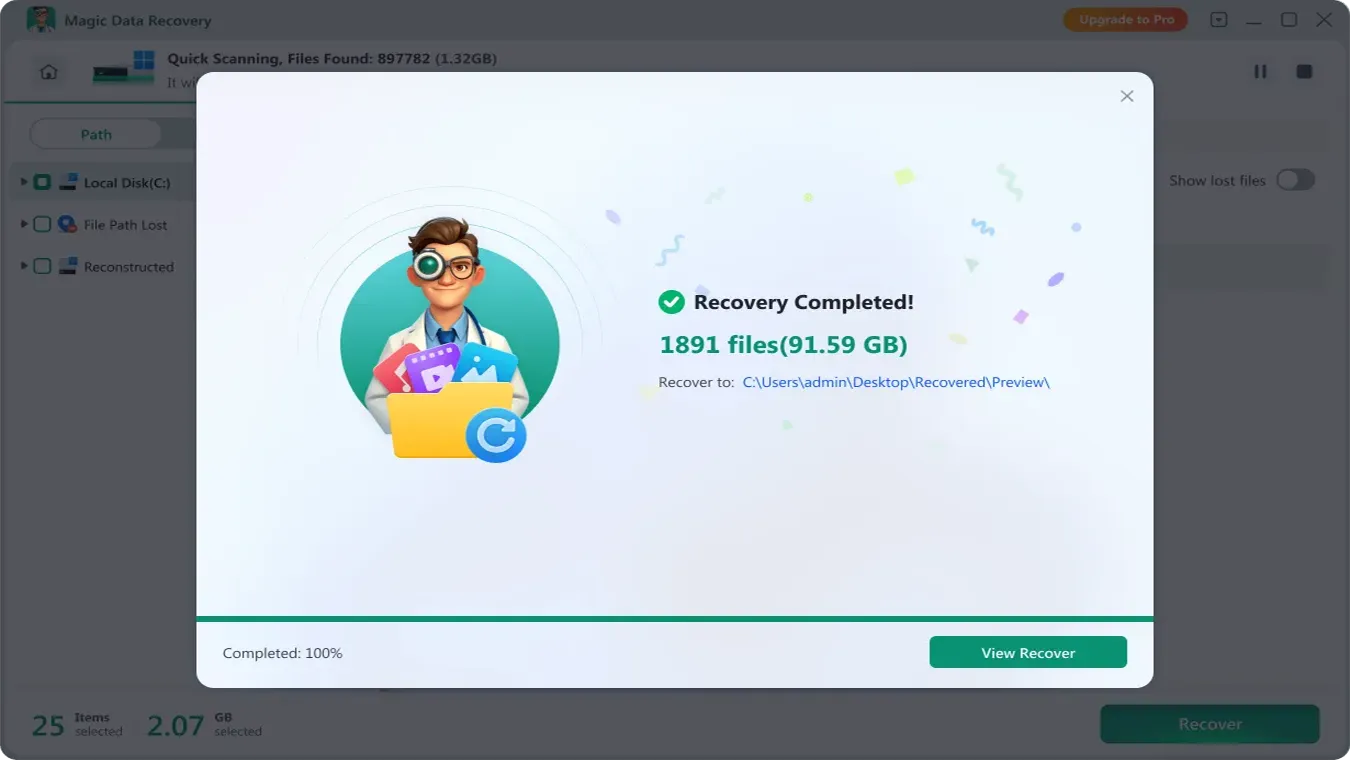
Step 5: Recover and Save Files to Another Location
Select the files you need, then click Recover. Save them to your computer or external drive. Do not save them back to the same micro SD card.
Tips to Prevent SanDisk Micro SD Card Data Loss in the Future
After completing SanDisk micro SD card data recovery, you should take preventive steps. Otherwise, the same issue may happen again.
Here are reliable best practices:
- Always eject the card safely
- Avoid using one card across too many devices
- Back up important data regularly
- Replace old cards that show frequent corruption
- Use branded card readers for stability
- Avoid filling the card to 100% capacity
In addition, consider using cloud backups for critical photos and documents. That way, even if the card fails, you still get the files back from a safe backup strategy.
Conclusion
Data loss can happen suddenly, whether you use your card in a smartphone, camera, drone, or dash cam. Fortunately, SanDisk micro SD card data recovery often works when you stop using the card immediately and follow a safe SD card recovery process.
While system tools like CHKDSK can fix minor errors, they usually cannot restore deleted or formatted files. Therefore, using a dedicated sandisk micro sd card recovery tool is often the best solution.
Magic Data Recovery stands out because it offers advanced scanning, file preview, and an easy workflow that reduces mistakes. In addition, it supports common recovery situations such as deletion, formatting, and RAW corruption.
If you are looking for a safe and efficient recovery solution, you can try Magic Data Recovery to restore your lost files with fewer risks.
Supports Windows 7/8/10/11 and Windows Server
FAQ: SanDisk Micro SD Card Data Recovery
Can I recover files from a formatted SanDisk micro SD card?
How long does SanDisk micro SD card recovery take?
What is the best SanDisk micro SD card recovery tool for beginners?
Why does my SanDisk micro SD card show RAW?
Should I run CHKDSK before using recovery software?
What if my SanDisk micro SD card is not detected at all?

Vasilii is a data recovery specialist with around 10 years of hands-on experience in the field. Throughout his career, he has successfully solved thousands of complex cases involving deleted files, formatted drives, lost partitions, and RAW file systems. His expertise covers both manual recovery methods using professional tools like hex editors and advanced automated solutions with recovery software. Vasilii's mission is to make reliable data recovery knowledge accessible to both IT professionals and everyday users, helping them safeguard their valuable digital assets.