
SD Card Repair Without Data Loss: Safe Methods That Work

When your SD card suddenly stops working, the first reaction is usually panic. Photos disappear, videos become inaccessible, or Windows asks you to format the card before you can use it. At this point, you may start searching for SD card repair methods and try to fix the card as quickly as possible. However, repairing an SD card in the wrong order can make data loss worse.
The safest approach is simple: recover your important files from the SD card first, then repair the SD card. Many repair methods, including CHKDSK and formatting, can modify the file system. They may make the SD card usable again, but they can also overwrite or remove recoverable data.
This guide explains how to repair an SD card safely, including simple checks, Windows repair tools, CHKDSK, RAW SD card repair, formatting, and using Magic Data Recovery to recover lost files before repairing or formatting the card.
Supports Windows 7/8/10/11 and Windows Server
Table of Contents
What Happens When an SD Card Fails
Before you begin any SD card repair, it helps to understand the symptoms. In general, a faulty card shows clear warning signs. For example, it may ask you to format it. In addition, it may become inaccessible or display incorrect capacity.
In these situations, the file system often becomes RAW or corrupted. However, the underlying data may still exist. Therefore, you should not rush into fixing the card without a proper plan.
Common Signs of a Corrupted SD Card
Understanding the cause makes any SD card repair more effective. In most cases, the issue comes from everyday actions rather than hardware failure.
For instance, removing the card during a file transfer can interrupt the writing process. As a result, the file structure becomes unreadable. Similarly, power interruptions or bad sectors may damage the system.
Because of this, both recovery and repair may be required, depending on the situation.
Understanding RAW Cases And Find a Free Recovery Method
When your SD card becomes unreadable, it is typically due to one of two common issues. By applying the knowledge below, you can perform the necessary fixes yourself at no cost.
1. Damaged File System
One of the common reasons why an SD card becomes RAW is that the operating system cannot recognize its file system. According to Microsoft’s official documentation, RAW simply indicates that Windows fails to detect FAT32, exFAT, or NTFS structures. This often happens due to:
- Sudden power loss during data writing
- Improper ejection of the SD card
In this case, you normally receive a message that “You need to format this drive before you can use it.“

Solution:
File system information is recorded on the first sector of the volume, which is called DBR (DOS Boot Sector). Normally, if the file system is damaged, you can repair it with the backup DBR. For FAT32, the backup DBR is on the 6th sector. For ExFAT, the backup DBR is located on the 12th sector. Take an example with FAT32, we can find the backup DBR on the 6th sector.


2. FAT Corruption
FAT (File Allocation Table) corruption is another frequent issue. The FAT structure tells your device where each file is located. If it is damaged, your files appear missing even though the data still exists. Typical causes include:
- Improper ejection of the SD card
- Bad sectors
- Virus attacks
In this case, you normally get a message that “The file or directory is corrupted and unreadable.“

Solution:
Repairing FAT corruption requires careful editing of low-level data structures. For FAT32, you can find a backup FAT, as long as the DBR is intact. The easist way is to copy FAT 2 to the location of FAT 1.

3. CHKDSK (Risky)
If you cannot find backup DBR or FAT, you can also use Windows build-in command to fix both cases.
Press Win key on the keyboard, type “CMD”, and run as administrator.

Enter the command:
chkdsk G: /f /r
(Replace G: with your SD card’s drive letter)

This command scans the card, repairs file system errors, and recovers readable data clusters. It’s a highly recommended by Microsoft, but be aware that it modifies the file system and could lead to data loss, even it makes the SD card accessible.
The Safe and Simple Way: SD Card Recovery Software
While manual editing works for experts, most users need a safe and simple solution. That’s where Magic Data Recovery comes in.
Why Magic Data Recovery is Better than Manual SD Card Repair
- No technical knowledge required – user-friendly interface guides you step by step.
- Powerful recovery engine – supports RAW SD card recovery and damaged FAT/NTFS/exFAT file systems.
- Free SD card data recovery preview – you can recover 500 MB files (around 80-100 high-resolution images) for free to see recoverable files before deciding.
- Supports all storage devices – SD cards, microSD, USB drives, external HDDs.
- Faster and safer than manual WinHex operations.
In short, if you are not confident editing hex values, Magic Data Recovery offers a professional-grade yet accessible solution.
How to Use Magic Data Recovery for SD Card Repair and Recovery
Unlike manual tools like WinHex, Magic Data Recovery makes SD card recovery simple for everyone. You dont need technical knowledge—just follow these steps:
1.Download and install Magic Data Recovery.
Supports Windows 7/8/10/11 and Windows Server
2.Select your SD card and Start a scan. When you run the program, it shows all the devices connected to the computer.
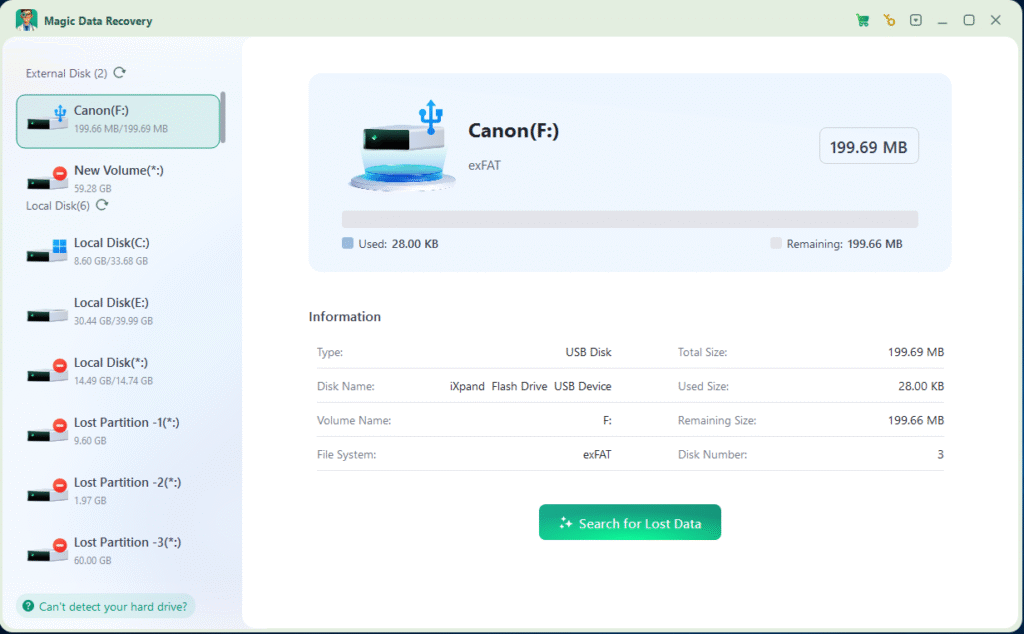
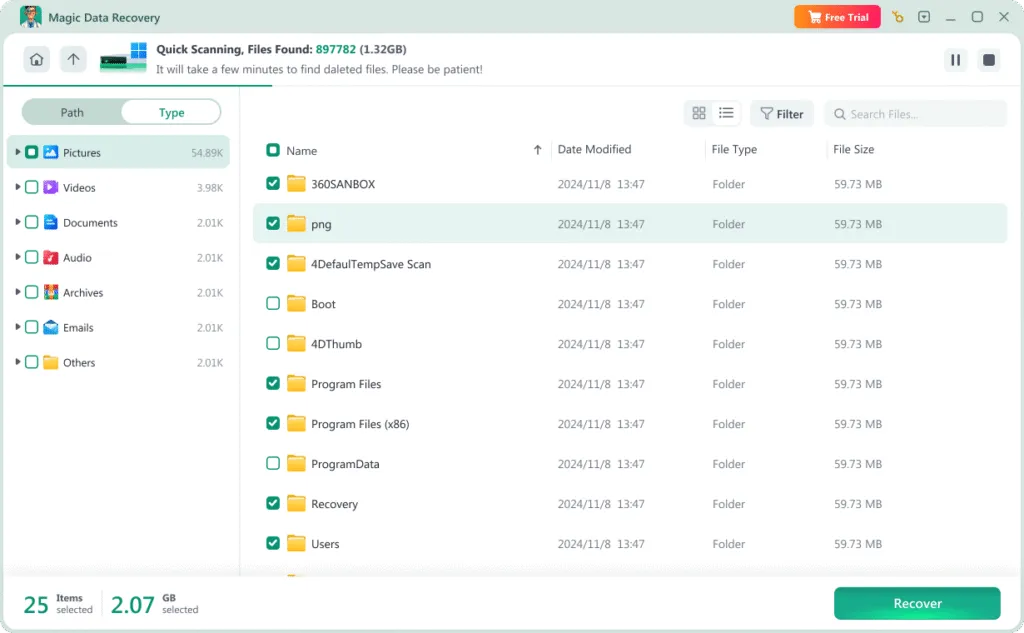


With just a few clicks, you can perform Free SD card data recovery preview and restore important photos, videos, or documents—no professional background required.
You can also find a video tutorial here.
How to Prevent SD Card Corruption in the Future
After repairing or replacing your SD card, follow these habits to reduce the risk of corruption:
- Always eject the SD card safely before removing it.
- Do not remove the card during file transfer.
- Avoid using the same card across too many devices.
- Keep your camera, phone, and computer battery charged during writing.
- Back up important photos and videos regularly.
- Do not use an SD card after it starts showing repeated errors.
- Use high-quality SD cards from trusted brands.
- Avoid filling the SD card completely.
- Format the card in the device where you use it most.
- Replace old or unreliable SD cards.
SD cards are convenient, but they are not permanent storage. If the files are important, keep at least one backup on another device or cloud storage.
Conclusion
SD card repair should never begin with formatting. Instead, you should always recover your files from the SD card first. For most users, the safest workflow is:
Recover important files with Magic Data Recovery → repair or format the SD card → test the card → replace it if errors return.
This approach gives you the best chance to fix the SD card while avoiding unnecessary data loss.
In the end, a careful approach makes all the difference. Therefore, always prioritize data safety before fixing the card. If your SD card has failed, don’t panic—choose the method that matches your skill level. And for everyday users, Magic Data Recovery is the best choice for quick and safe SD card recovery.
Supports Windows 7/8/10/11 and Windows Server
FAQ
Can an SD card be repaired?
How do I repair a corrupted SD card without formatting?
Can CHKDSK repair an SD card?
How do I repair a RAW SD card?
Is formatting a good SD card repair method?
What is the best SD card repair tool?
Why does my SD card keep getting corrupted?

Vasilii is a data recovery specialist with around 10 years of hands-on experience in the field. Throughout his career, he has successfully solved thousands of complex cases involving deleted files, formatted drives, lost partitions, and RAW file systems. His expertise covers both manual recovery methods using professional tools like hex editors and advanced automated solutions with recovery software. Vasilii's mission is to make reliable data recovery knowledge accessible to both IT professionals and everyday users, helping them safeguard their valuable digital assets.