
Word Auto Recovery File Location Guide
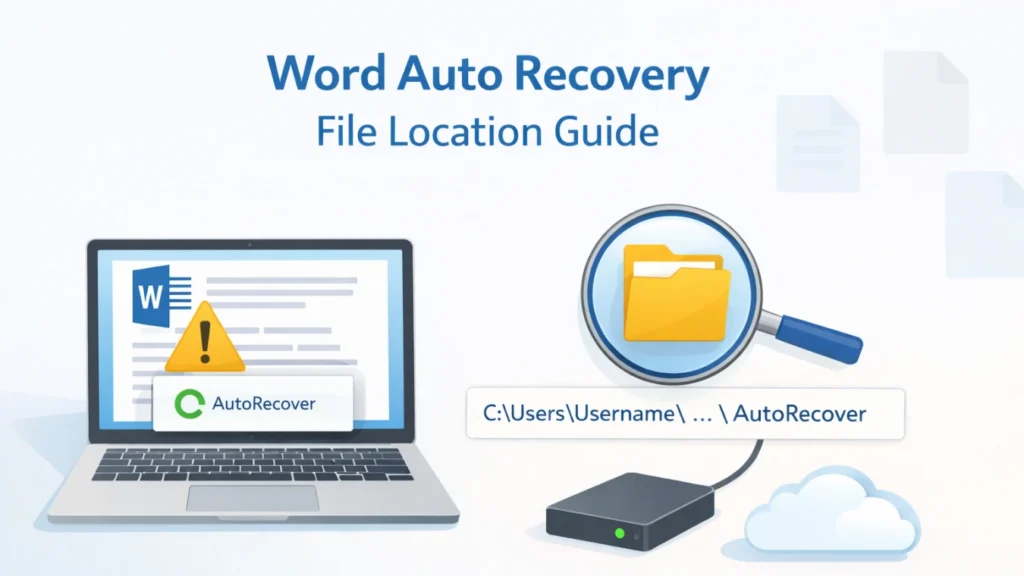
Losing a Word document is frustrating, especially when you spent hours writing it. In many cases, the fix starts with knowing the word auto recovery file location and the correct word recovery files location for your system. Word can often recover unsaved work after a crash, power outage, or forced shutdown through AutoRecover, backup copies, or the Recover Unsaved Documents feature. Microsoft specifically points users to AutoRecover folders, backup file searches, and the Document Recovery pane as the first recovery routes.
However, built-in Word methods do not solve every problem. They help most when a file was unsaved or Word closed unexpectedly. They are much less reliable when the document was deleted, the drive was formatted, the file system is damaged, or the storage device becomes inaccessible. That is where a dedicated recovery tool like Magic Data Recovery becomes relevant as a practical next step. According to Amagicsoft and the Microsoft Store listing, Magic Data Recovery is designed for deleted, formatted, and corrupted-file scenarios across common storage devices.
Supports Windows 7/8/10/11 and Windows Server
Table of Contents
What Is the Word Auto Recovery File Location?
The word auto recovery file location is the folder where Microsoft Word stores temporary recovery data for documents that were not saved normally. In Windows, Microsoft says common locations include C:\Users\<UserName>\AppData\Roaming\Microsoft\Word and C:\Users\<UserName>\AppData\Local\Microsoft\Office\UnsavedFiles. If you still cannot locate the document, Microsoft recommends using Word’s built-in Recover Unsaved Documents feature or searching your PC for .asd files.
In simple terms, AutoRecover is for interrupted work sessions. It is not the same as a guaranteed backup system. That distinction matters because many users assume any missing Word file can be restored from AutoRecover, which is not always true.
Word Recovery Files Location: Default Places to Check
If you want the fastest answer, start with these word recovery files location checks:
On Windows
- C:\Users\<UserName>\AppData\Roaming\Microsoft\Word
- C:\Users\<UserName>\AppData\Local\Microsoft\Office\UnsavedFiles
- File > Info > Manage Document > Recover Unsaved Documents
- Windows search for .asd
- Windows search for .wbk if backup copies were enabled
On Mac
On Mac, Microsoft’s support guidance focuses on changing the AutoRecover save location through Word preferences: Word > Preferences > File Locations > AutoRecover files > Modify. That means the actual folder can vary, so checking the configured location inside Word is often the safest method.
How to Find the Word Auto Recovery File Location in Word
The most accurate way to find the word auto recovery file location is inside Word itself.
Windows steps
Open Word, then go to:
File > Options > Save
Look for the field labeled AutoRecover file location. That path shows where Word is currently saving recovery data. Many tutorials mention this step, and it is useful because some users change the default folder without remembering it later.
Mac steps
Open Word, then go to:
Word > Preferences > File Locations > AutoRecover files
From there, you can review or change the folder Word uses. Microsoft documents this path directly in its support article for AutoRecovery file storage settings on Word for Mac.
How to Recover an Unsaved Word Document
If your issue is a crash, sudden shutdown, or accidental close without saving, try these methods in order.
1. Use Recover Unsaved Documents
This is usually the easiest option.
Go to:
File > Info > Manage Document > Recover Unsaved Documents
Microsoft lists this as a primary method when you cannot find the missing file in the default folders.
2. Search for ASD Files
If the in-app list is empty, search Windows for:
.asd
Microsoft specifically recommends this because AutoRecover files commonly use the ASD extension. Once you find one, open Word, choose File > Open > Browse, switch file type to All Files, and open the ASD file.
3. Check the Document Recovery Pane
If Word crashes and reopens, the Document Recovery pane may appear automatically. Microsoft notes that the pane often lists multiple recoverable versions and shows time stamps to help you identify the newest copy.
4. Search for WBK Backup Files
If backup copies were enabled, your file may exist as a .wbk file. Microsoft advises checking File > Options > Advanced > Save > Always create backup copy, then searching for .wbk files if needed.
Backup Copy vs AutoRecover vs AutoSave
Many ranking articles blur these terms. That is one reason users still fail to recover files.
AutoRecover
It saves recovery information at intervals and is intended to help after a crash or unexpected closure. It often uses ASD-type recovery data.
AutoSave
AutoSave is different. It continuously saves changes, often when files are stored in supported cloud locations such as OneDrive or SharePoint. Microsoft’s recovery guidance separately references restoring documents saved to SharePoint and OneDrive, which reinforces that cloud-synced recovery is a different route from local AutoRecover folders.
Backup Copy
Backup copy is an optional Word setting that can create WBK files. It helps in some cases, but only if the option was enabled before the file was lost.
When Built-In Word Recovery Stops Working
This is the section many competing articles do not explain well enough.
The built-in word recovery files location methods are useful when Word created a temporary or backup file. They are less useful when:
- you permanently deleted the document
- you emptied the Recycle Bin
- the drive or USB was formatted
- the partition has file system errors
- a storage device becomes inaccessible
- Word recovery files were overwritten or never created
Microsoft’s own guidance moves from Word-level recovery to broader Windows-level recovery, including Recycle Bin checks and Windows File Recovery, once Word-specific paths fail. That shift shows an important truth: after a certain point, you are no longer dealing with a Word problem. You are dealing with a storage-level data loss problem.
A More Reliable Option for Lost Data: Magic Data Recovery
If you already checked the word auto recovery file location and still cannot find your file, a recovery tool becomes the more realistic solution.
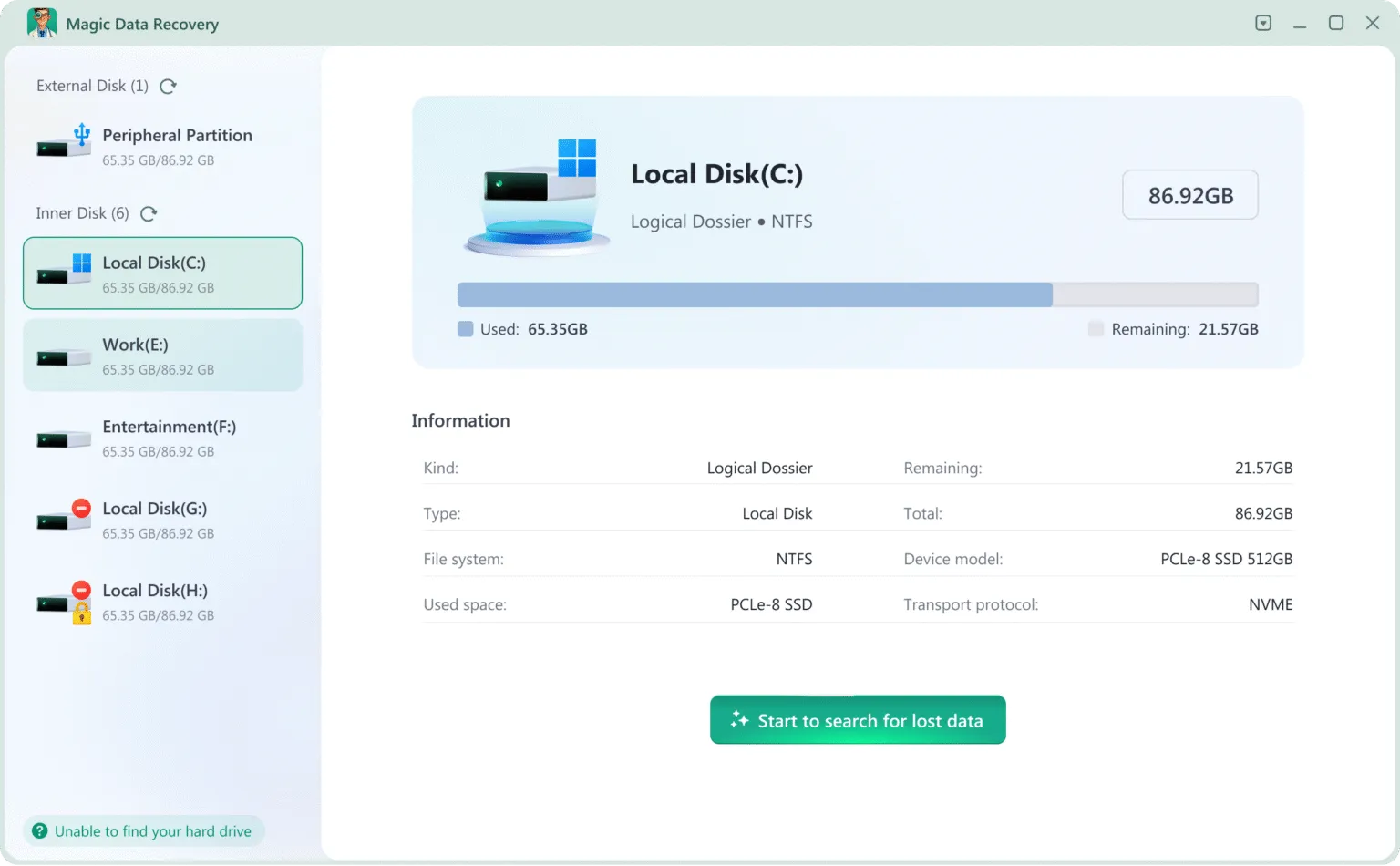
Magic Data Recovery is worth recommending here because it targets the exact scenarios where Word’s built-in methods often stop helping. According to Amagicsoft and its Microsoft Store listing, it supports recovery of deleted, formatted, or otherwise lost files from HDDs, SSDs, USB drives, SD cards, memory cards, cameras, recycle-bin loss, and corrupted storage situations.
Why it solves the core pain point
The main user pain is simple: the file is no longer in Word’s recovery path, or the document was lost outside Word entirely. Magic Data Recovery addresses that by scanning the storage device itself rather than depending only on AutoRecover remnants.
Key advantages
- Supports recovery after deletion, formatting, and file system errors.
- Works across common storage types such as HDDs, SSDs, USB drives, and SD cards.
- Handles a large range of file types, which is useful if your Word file is not the only missing item. Amagicsoft states support for 5000+ file types.
- Designed for regular users as well as more advanced recovery needs, with an interface focused on scan, preview, and recover.
Real use cases
Use it when:
- you deleted a Word file and emptied the Recycle Bin
- the file disappeared after formatting a USB drive
- a memory card or external drive shows errors
- the document was stored on a device that is now unreadable
- Word’s ASD and WBK searches return nothing
Why it can be more reliable than Word-only methods
Word-based recovery depends on prior conditions. AutoRecover must have been enabled. The recovery file must still exist. The document must not be overwritten. Backup copy must have been turned on earlier. In contrast, Magic Data Recovery is built for device-level recovery paths that go beyond Word’s internal safety features. That makes it a better fit when the data loss happened after deletion, formatting, or file system damage.
If you are looking for a more efficient solution after standard fixes fail, Magic Data Recovery is a sensible next step.
Supports Windows 7/8/10/11 and Windows Server
Best Practices to Improve Your Recovery Chances
Before you do anything else, stop writing new data to the affected drive. New files can overwrite the space where the missing Word document still exists.
Then follow this order:
- Check the word auto recovery file location
- Use Recover Unsaved Documents
- Search for .asd and .wbk
- Check the Recycle Bin
- Try a dedicated tool like Magic Data Recovery for deleted, formatted, or damaged-storage cases
Also, reduce future risk by shortening the AutoRecover interval in Word and confirming the save location in settings. Microsoft provides direct settings for changing AutoRecover frequency and storage location.
Conclusion
Knowing the word auto recovery file location and the correct word recovery files location is the fastest way to recover many unsaved Word documents. Microsoft’s built-in options work well for crashes, accidental closes, and some backup scenarios.
Still, not every loss happens inside Word. Once a document is deleted, a drive is formatted, or the file system starts failing, Word’s native recovery paths become much less dependable. That is why Magic Data Recovery is the tool I would recommend after the standard methods. It covers the broader recovery scenarios users actually face, and it does so in a way that is more aligned with storage-level data loss than Word-level temporary recovery alone.
Supports Windows 7/8/10/11 and Windows Server
FAQs
Where is the word auto recovery file location in Windows?
In Windows, the most common word auto recovery file location is C:\Users\<UserName>\AppData\Roaming\Microsoft\Word, while unsaved files may also appear in C:\Users\<UserName>\AppData\Local\Microsoft\Office\UnsavedFiles. You can also confirm the active path in Word through File > Options > Save.
What is the difference between word recovery files location and AutoSave?
The word recovery files location usually refers to local folders used by Word to store AutoRecover or backup data. AutoSave is different because it continuously saves changes, often for cloud-based files in OneDrive or SharePoint. They support different recovery workflows and should not be treated as the same feature.
How do I recover an unsaved Word document after a crash?
Start with File > Info > Manage Document > Recover Unsaved Documents. If that does not work, search your computer for .asd files and open them in Word using File > Open > Browse with the file type set to All Files. The Document Recovery pane can also appear when Word reopens.
Why can’t I find my Word recovery file?
There are several common reasons. AutoRecover may have been disabled, the file may have been overwritten, or the loss may have happened after deletion rather than a crash. In some cases, the file was never saved locally. That is why checking Word settings and then moving to device-level recovery is often necessary.
Can I recover a deleted Word file if AutoRecover does not help?
Yes, but you may need more than Word’s built-in tools. First check the Recycle Bin. If the file was permanently deleted or the bin was emptied, a data recovery program is the better path. Microsoft even points users to broader recovery options after Word-level methods fail.
When should I use Magic Data Recovery for Word files?
Use Magic Data Recovery when the document was deleted, lost after formatting, affected by file system errors, or stored on a drive that Word can no longer read properly. It is especially useful after you already checked the word auto recovery file location and found no usable ASD or WBK file.
Is Magic Data Recovery only for Word documents?
No. Word recovery is just one use case. Amagicsoft says Magic Data Recovery supports thousands of file types and works across HDDs, SSDs, USB drives, SD cards, and other storage devices. That makes it practical when document loss is part of a larger data-loss issue rather than a single missing DOCX file.
What should I do first after losing a Word document?
Stop using the affected drive right away. New data can overwrite recoverable content. Then check the word recovery files location, use Recover Unsaved Documents, search for .asd or .wbk, and move to a recovery tool if needed. Acting early usually improves the odds of successful recovery.

Jason is a data recovery and technical support specialist with over 15 years of hands-on experience. He has worked extensively with frontline users, troubleshooting difficult data loss cases and providing practical recovery solutions for accidental deletion, formatted drives, damaged file systems, lost partitions, system failures, and other recovery emergencies. His expertise also includes backup and restoration, file repair, and disaster recovery, with a strong emphasis on safe, reliable, and technically accurate guidance.