
Deleted Image Recovery Guide & Best Software

Losing important photos can feel irreversible. A family album disappears after a cleanup. A work folder vanishes after formatting an SD card. A camera card suddenly shows an error and all images seem gone. That is why deleted image recovery matters so much. In many cases, deleted or inaccessible images are not gone forever. They become harder to access, but they may still be recoverable if you act quickly and use the right method.
This guide explains how deleted image recovery works, when recovery is possible, and which steps improve your chances. It also covers common scenarios such as accidental deletion, formatting, and file system errors. If you need a practical photo recovery solution instead of guesswork, this article will help you choose the right path.
Table of Contents
What Is Deleted Image Recovery?
Deleted image recovery is the process of restoring image files that are no longer accessible from a storage device. This can happen after:
- accidental deletion
- emptying the Recycle Bin or Trash
- formatting an HDD, SSD, USB drive, or SD card
- file system corruption
- partition loss
- memory card errors
- unexpected system shutdowns
In simple terms, deletion often removes the file reference first, not the underlying data immediately. That is why recovery can still work, especially when the device has not been heavily used after the loss.
However, recovery results depend on timing and device type. For example, overwritten sectors reduce the chance of success. SSD recovery can also be more difficult in some cases because of TRIM behavior. So, the first rule is simple: stop using the affected device as soon as possible.
Why Images Get Lost in Real Life
Most users do not lose photos because of one dramatic event. More often, the problem starts with a normal action:
Accidental deletion during cleanup
You remove duplicates, clear old folders, or free up phone storage. Then you realize some important images were in the same batch.
Formatting the wrong device
This happens often with SD cards, USB drives, and external hard drives. A quick format can make a full photo library disappear in seconds.
File system errors
A drive may suddenly show messages like “You need to format the disk before you can use it” or “The file directory is corrupted.” In this case, the photos may still exist, but the system cannot read them normally.
Interrupted transfers
Photos may disappear when a camera card is removed too early, the computer crashes during transfer, or power drops while files are being written.
These are exactly the situations where users start searching for image deleted recovery methods and reliable deleted images recovery software.
First Steps Before You Recover Deleted Images
Before using any tool, follow these steps. They improve recovery odds and reduce avoidable mistakes.
1. Stop writing new data
Do not keep taking photos on the same SD card. Do not save new files to the same partition. New data can overwrite deleted image data.
2. Check easy restore locations first
Look in:
- Recycle Bin
- Trash
- Recently Deleted album
- Google Photos Trash
- iCloud Recently Deleted
- OneDrive or Dropbox deleted files
This step is fast and often solves simple cases.
3. Disconnect removable storage safely
If the lost files were on a USB drive, camera card, or external drive, disconnect it and connect it only when you are ready to scan.
4. Avoid installing recovery software on the affected drive
Always install recovery software on a different disk or partition. This matters because installation itself writes data.
How Deleted Image Recovery Works
To understand why some tools work better than others, it helps to know the basics.
When an image is deleted, the operating system usually marks the space as available. The content may stay there until new data replaces it. Recovery software looks for recoverable traces in two main ways:
File system scan
This method checks existing file records and deleted entries. It is useful for recently deleted images and often keeps original names, folders, and timestamps.
Signature-based deep scan
This method searches raw storage sectors for known file patterns such as JPG, PNG, TIFF, RAW, CR2, NEF, and other formats. It is especially useful after formatting or file system damage.
That is why a good deleted images recovery software tool should support both quick and deep scanning. It should also let users preview files before recovery, filter by file type, and recover from common devices without making the process too technical.
Deleted Image Recovery Without Software: When It Works
Not every case needs third-party software. You may recover images without extra tools if:
- the images are still in Recycle Bin or Trash
- cloud backup is enabled
- File History or another backup captured the folder earlier
- the phone gallery has a Recently Deleted folder
- the memory card issue is logical, not physical, and the files still appear elsewhere
These methods are ideal for basic recovery. Still, they do not help much when files are permanently deleted, storage is formatted, or the file system becomes unreadable. In those cases, users usually need image deleted recovery software.
Best Approach for Serious Photo Loss
When deletion is permanent or the device shows errors, software-based deleted image recovery becomes the most practical option. The best tools usually share these features:
- support for JPG, PNG, RAW, PSD, HEIC, MP4, and more
- recovery from HDD, SSD, USB, SD card, and external drives
- quick scan for recent deletions
- deep scan for formatted or damaged partitions
- preview before recovery
- clear workflow for non-technical users
This is the point where Magic Data Recovery fits naturally.
Why Magic Data Recovery Is a Strong Solution
If your goal is not just to recover recently deleted photos, but also to handle more complex loss scenarios, Magic Data Recovery is a better fit than many image-only tools. According to Amagicsoft’s official product pages, it supports recovery of 5000+ file types, works across HDDs, SSDs, USB drives, SD cards, and other devices, and is designed for deleted, formatted, or file-system-related loss cases. It also uses a simple 3-step process: select the device, scan, preview, and recover.
The core pain points it solves
Many users start with a photo-only mindset, but real data loss is rarely limited to pictures. A formatted SD card may contain images, videos, and project files. A corrupted external drive may hold wedding photos, exported edits, and documents together. Magic Data Recovery solves this broader problem by supporting image recovery and wider file recovery in one workflow.
Its practical advantages
Magic Data Recovery stands out because it balances ease of use with broader recovery coverage. The interface is built for ordinary users, but the software still supports deeper recovery scenarios, including accidental deletion, formatted drives, and file system errors. It also supports file preview and a straightforward scan-and-recover process, which helps users avoid restoring the wrong files.
Real use cases where it makes sense
You may want Magic Data Recovery if:
- you deleted images and already emptied the Recycle Bin
- your SD card was formatted by mistake
- your external hard drive now asks to be formatted
- a USB drive shows file system errors
- you lost photos and related videos or documents together
- you need one tool instead of separate tools for separate file types
Why it can be more reliable than narrower options
Some tools focus mainly on photo recovery. That can work for simple cases. But when data loss comes from formatting or logical file system problems, broader recovery support matters more. Magic Data Recovery is more reliable in those scenarios because it is not limited to one file type or one narrow recovery path. It is built for image recovery, but also for the real-world complexity behind modern data loss.
If you are looking for a more efficient solution, Magic Data Recovery is worth trying.
Supports Windows 7/8/10/11 and Windows Server
How to Use Magic Data Recovery for Deleted Image Recovery
Here is a simple workflow for deleted image recovery:
Step 1: Install the software on a safe drive
Do not install it on the drive that lost the images. Use another partition or another physical disk.
Step 2: Select the affected device
Choose the SD card, hard drive, USB drive, or partition where the images were lost.
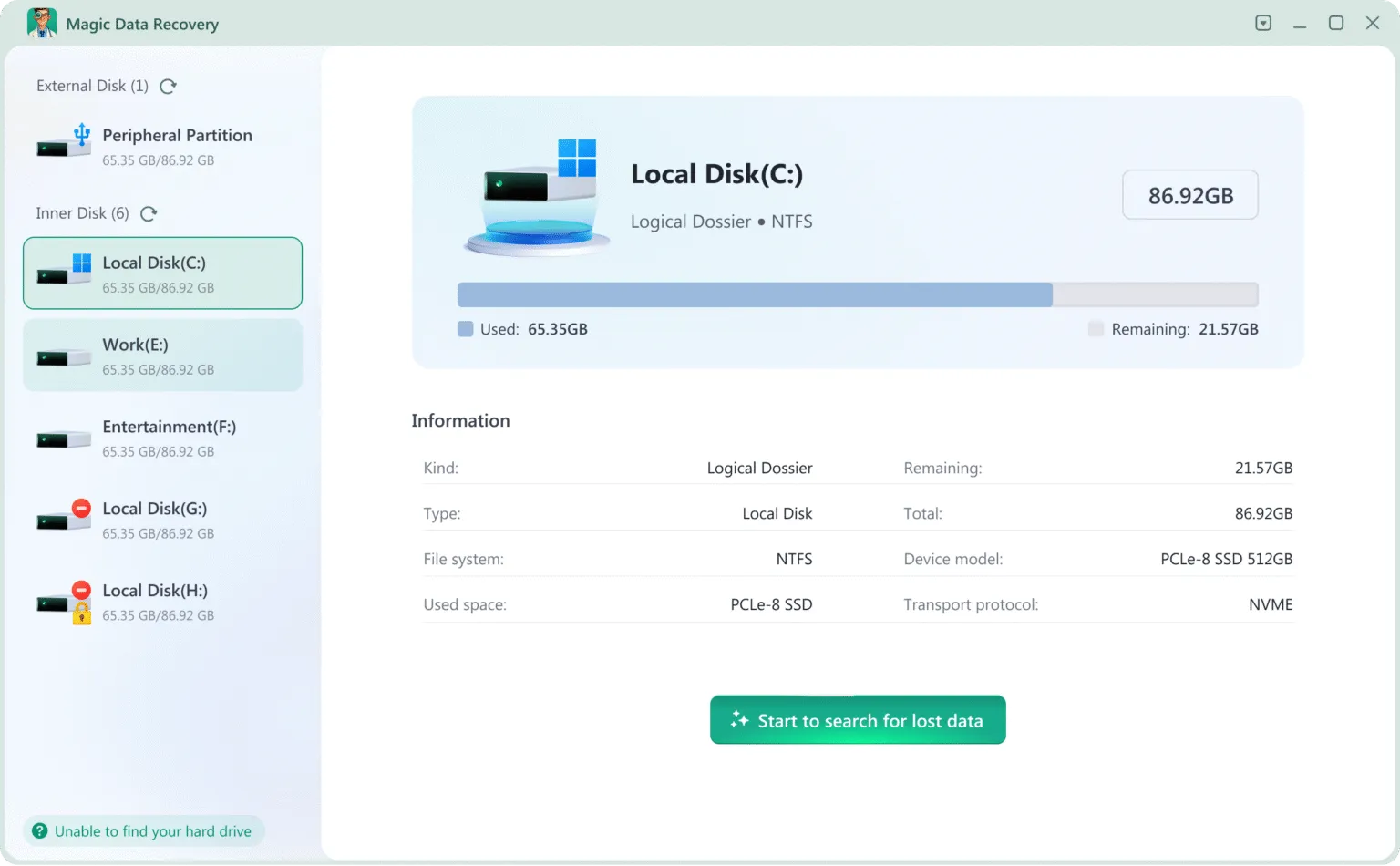
Step 3: Run a scan
Start with a standard scan. Then move to deeper scanning if the first results are incomplete.
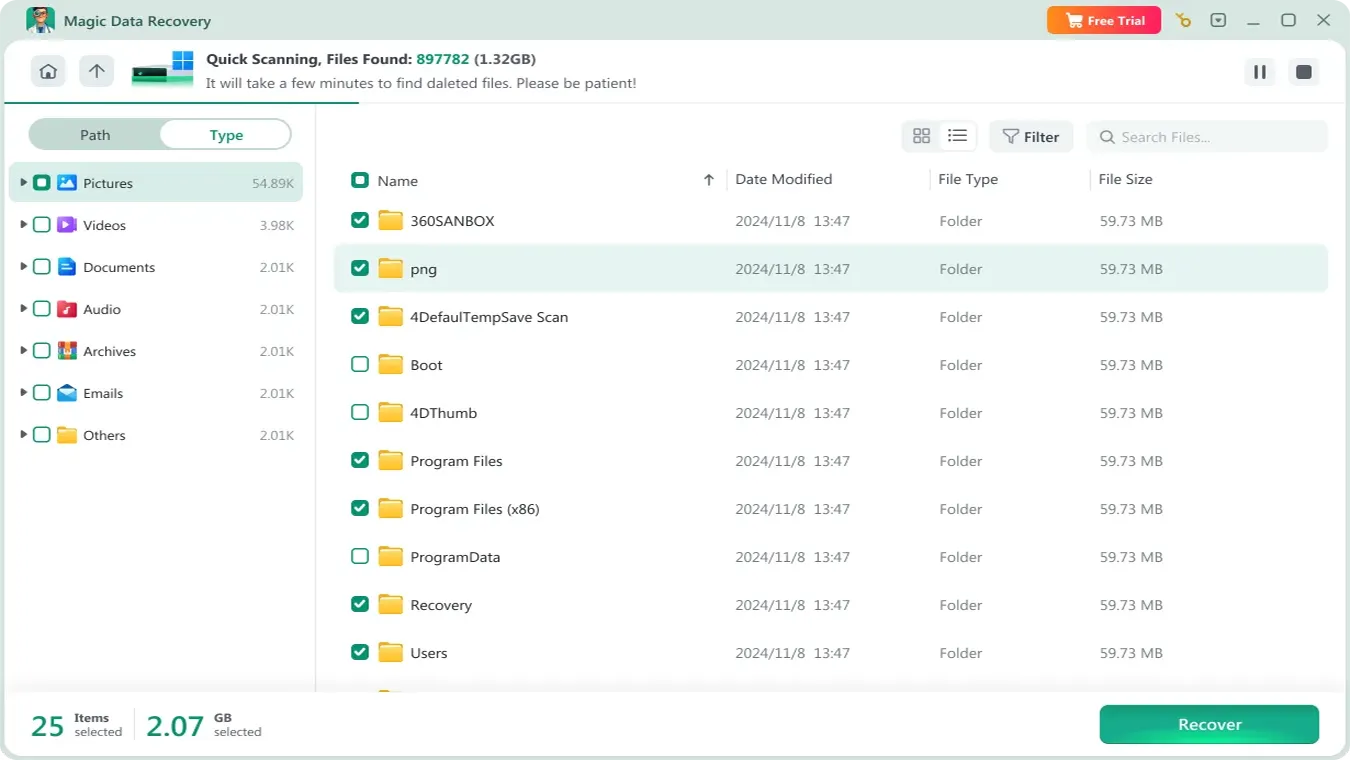
Step 4: Filter and preview image files
Look for JPG, PNG, HEIC, TIFF, RAW, or other relevant formats. Previewing files helps confirm quality before recovery.

Step 5: Recover to a different location
Save recovered files to another device or partition. This avoids overwriting remaining recoverable data.
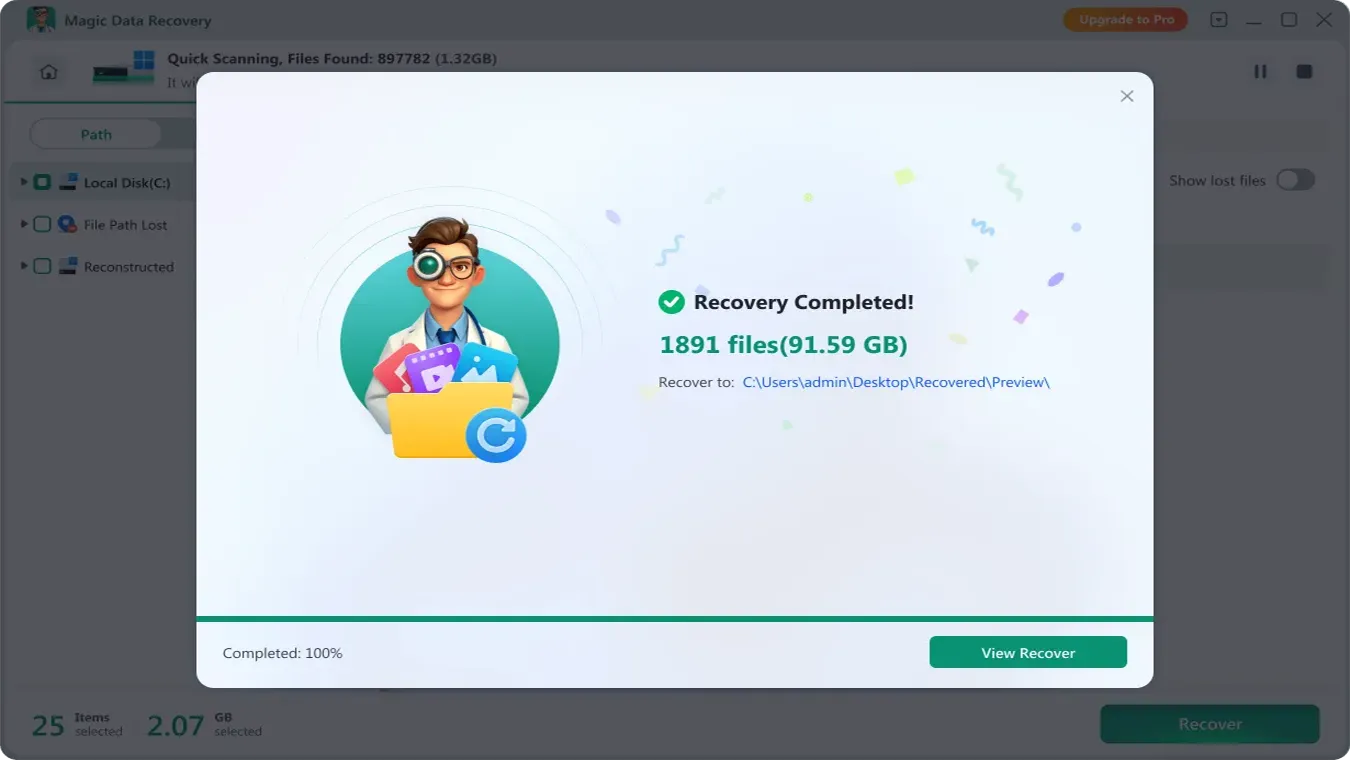
That workflow is especially useful for users searching for image deleted recovery help because it reduces trial and error.
Common Mistakes That Reduce Recovery Success
Even good tools cannot fully fix avoidable mistakes. Try not to do the following:
Continuing to use the same device
This is the biggest issue. New writes can overwrite deleted images.
Saving recovered files back to the same drive
Always restore to a different destination.
Waiting too long
The longer you wait, the more likely new activity will reduce recovery quality.
Assuming formatting means total loss
A quick format often does not erase everything immediately. That is why deleted images recovery software can still work after formatting.
Ignoring file system warnings
If Windows asks you to format a drive before using it, do not do it right away. Scan first.
Deleted Image Recovery: Software vs Backup
This comparison helps users choose the right route.
Use backup when:
- backup already exists
- you need the fastest and safest restore
- file versions matter more than raw recovery
Use recovery software when:
- no backup exists
- files were permanently deleted
- the drive was formatted
- the file system is damaged
- the device is detected but inaccessible
In many real cases, recovery software becomes the only practical option.
Final Thoughts
A strong deleted image recovery strategy starts with speed, caution, and the right tool. First, stop using the affected device. Next, check simple restore paths like Trash or cloud backups. If those fail, move to a reliable recovery solution that can handle more than basic deletion.
That is why Magic Data Recovery is a practical recommendation. It does not position itself as a photo-only utility. Instead, it helps with accidental deletion, formatting, and file system errors across common storage devices, while keeping the workflow simple for ordinary users. If you need a dependable deleted images recovery software option that also supports broader data loss scenarios, Magic Data Recovery is a sensible choice.
Supports Windows 7/8/10/11 and Windows Server
FAQs
What is the best method for deleted image recovery?
The best method depends on how the images were lost. If they are still in Trash or a cloud backup, restore them there first. If they were permanently deleted, the drive was formatted, or the file system is damaged, a dedicated recovery tool is usually the most practical and effective option.
Can image deleted recovery work after I empty the Recycle Bin?
Yes, image deleted recovery can still work after the Recycle Bin is emptied. In many cases, the image data remains on the drive until new files overwrite it. Your chances are better when you stop using the device immediately and scan it with reliable recovery software as soon as possible.
Does deleted images recovery software work on formatted SD cards?
Yes, many deleted images recovery software tools can recover files from a formatted SD card, especially after a quick format. Formatting usually removes file references first instead of erasing all content immediately. Recovery success depends on whether the card has been reused and whether the lost data has already been overwritten.
Why are deleted photos harder to recover from SSDs?
SSDs can be harder to recover from because of TRIM, a storage optimization feature that may clear deleted data more quickly than on traditional hard drives. That does not mean recovery is always impossible, but it does mean timing is critical. You should stop using the SSD and attempt recovery as early as possible.
Is deleted image recovery safe for beginners?
Yes, deleted image recovery can be safe for beginners if they follow a few basic rules. Do not install the software on the affected drive, do not save recovered files back to the same device, and choose a tool with preview and a guided workflow. These steps reduce mistakes and improve recovery quality.
Can I recover more than just photos with image recovery software?
Often, yes. Many tools marketed for photo recovery also restore videos, documents, audio files, and archives. This is useful when the loss came from formatting or file system errors, because those situations usually affect many file types at once. A broader recovery tool can be more practical than an image-only solution.
When should I use Magic Data Recovery instead of a basic photo restore method?
Use Magic Data Recovery when simple restore methods do not work, such as after permanent deletion, formatting, or file system errors. It is also a better choice when the lost storage contains not only images but also videos and documents. That makes it useful for real-world, mixed-file recovery scenarios.
What should I do immediately after losing important images?
First, stop using the affected device. Then check Recycle Bin, Recently Deleted folders, and cloud backups. If the images are not there, avoid saving or installing anything on that drive. Connect the device safely to a computer and scan it with a trusted recovery tool to maximize your chances of success.

Jason is a data recovery and technical support specialist with over 15 years of hands-on experience. He has worked extensively with frontline users, troubleshooting difficult data loss cases and providing practical recovery solutions for accidental deletion, formatted drives, damaged file systems, lost partitions, system failures, and other recovery emergencies. His expertise also includes backup and restoration, file repair, and disaster recovery, with a strong emphasis on safe, reliable, and technically accurate guidance.