
Hard Disk Recovery Guide
Losing files from a computer drive can feel urgent, especially when the missing data includes work documents, family photos, videos, or project archives. However, many data loss cases still have a chance of recovery if you act quickly and avoid overwriting the drive. This hard disk recovery guide explains what causes data loss, what you should do first, how recovery software works, and when a professional lab may be the safer option.
Whether you searched for disk recovery, hard disk data recovery, harddisk recovery, or external hard disk recovery, the core question is the same: how can you get important files back without making the damage worse? In this guide, you will also learn how Magic Data Recovery can help recover deleted, formatted, inaccessible, or corrupted data in common real-world hard drive situations.
Supports Windows 7/8/10/11 and Windows Server
Table of Contents
What Is Hard Disk Recovery?
Hard disk recovery is the process of restoring lost, deleted, formatted, or inaccessible files from a hard drive. The drive may be an internal HDD, an external hard disk, a USB-connected storage device, or another disk-based device.
In many cases, deleted files do not disappear immediately. Instead, the operating system marks their storage space as available. If new data does not overwrite that space, recovery software may still locate and rebuild the files.
This is why timing matters. Once you notice data loss, stop using the affected drive. Do not download new files, install programs, or save recovered data back to the same disk.
Common Reasons You May Need Disk Recovery
Most users need disk recovery after a sudden mistake, system issue, or storage error. The most common causes include:
- Accidental deletion or emptying the Recycle Bin
- Formatting the wrong partition or external drive
- File system errors, such as RAW or inaccessible partitions
- System reinstallation without proper backup
- Virus or malware damage
- Partition loss after resizing or disk management changes
- External hard disk not recognized by Windows
- Unexpected power failure during file transfer
For example, you may connect an external hard drive and see a message asking you to format it before use. In that case, formatting may make recovery harder. A safer first step is to scan the drive with reliable hard disk data recovery software.
First Steps Before Hard Disk Data Recovery
Before starting hard disk data recovery, take a few precautions. These steps can protect your remaining data and improve your recovery chances.
Stop Using the Affected Drive
Do not copy, move, rename, or download files to the damaged drive. New data may overwrite deleted files and reduce the chance of recovery.
Do Not Format the Disk Again
If Windows says the drive needs formatting, avoid clicking “Format.” The drive may have a file system error, and recovery software may still be able to read the lost data structure.
Check the Physical Condition
Listen for clicking, grinding, or repeated spin-up sounds. If the drive makes unusual noises, disconnect it. In this case, DIY hard disk recovery may create more damage.
Use Another Drive to Save Recovered Files
Always export recovered files to a different disk. Saving files back to the original drive can overwrite other recoverable data.
How Hard Disk Recovery Software Works
Professional recovery software scans the storage device for file records, file signatures, lost partitions, and remaining data blocks. A quick scan usually checks recently deleted files and visible file system records. A deep scan goes further and searches the disk sector by sector.
This approach helps with many logical data loss scenarios, including deleted files, formatted drives, file system errors, lost partitions, and virus-damaged data. However, software cannot repair severe physical hardware failure. If the drive has mechanical damage, a recovery lab is usually safer.
Why Magic Data Recovery Is a Practical Solution
Magic Data Recovery is designed for users who need a clear and guided hard disk recovery process without complex technical steps. It supports recovery from common storage devices, including HDDs, SSDs, USB drives, memory cards, and external hard disks.
The product is useful when files are lost because of deletion, formatting, file system errors, system reinstallation, or virus damage. Instead of forcing users to understand partition structures or raw disk sectors, it provides a simple workflow: choose a location, scan, preview, and recover.
Key Advantages of Magic Data Recovery
Magic Data Recovery focuses on practical recovery needs:
- It supports recovery from deleted, formatted, and inaccessible drives.
- It can help with file system errors and lost data after system reinstallation.
- It supports many file types, including documents, photos, videos, archives, and more.
- It allows users to preview recoverable files before saving them.
- It helps reduce risk by guiding users through a step-by-step recovery process.
This makes it a strong choice for everyday hard disk data recovery cases where the disk is still physically readable.
How to Recover Data from a Hard Disk with Magic Data Recovery
Follow these steps for safer hard disk recovery.
Step 1: Install the Software on a Safe Drive
Install Magic Data Recovery on a different drive, not on the disk where files were lost. For example, if you lost files from drive D, install the program on drive C or another external device.
Supports Windows 7/8/10/11 and Windows Server
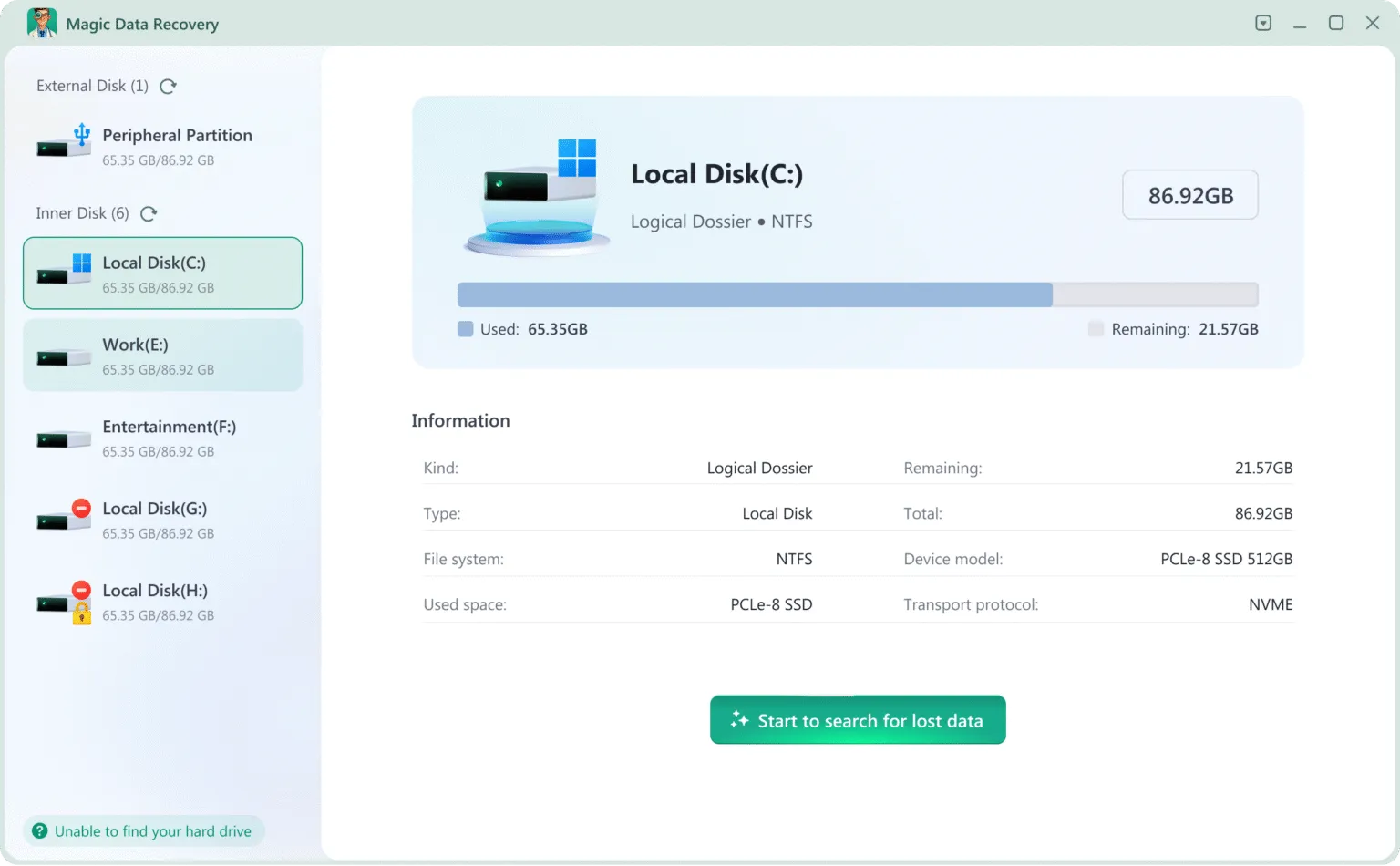
Step 2: Select the Lost Data Location
Open the program and choose the hard disk, external drive, partition, or removable storage device where the files disappeared.
Step 3: Start the Scan
Run a scan to search for deleted, formatted, or inaccessible files. If the first scan does not show the target files, then continue a deeper scan for a more complete search.
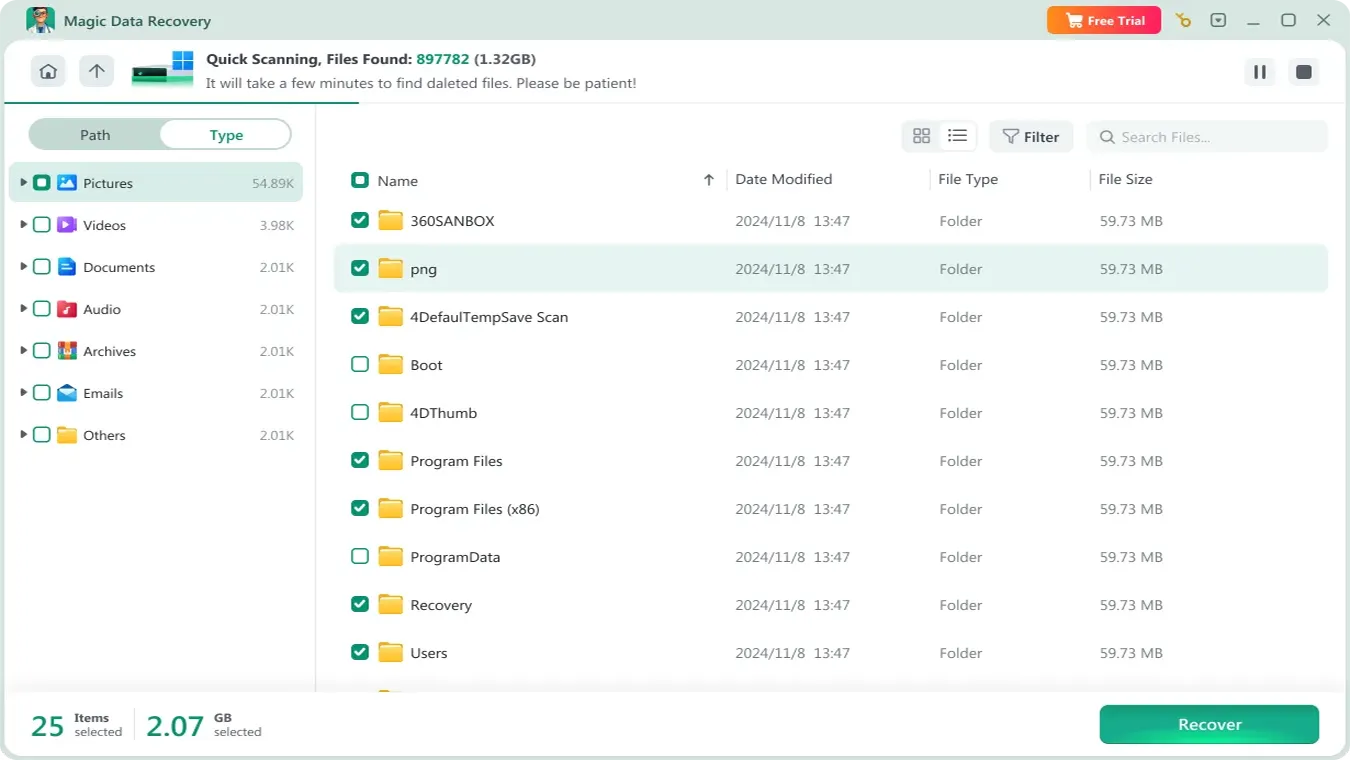
Step 4: Preview Recoverable Files
Preview files when possible. This helps you confirm whether the file content is usable before recovery.

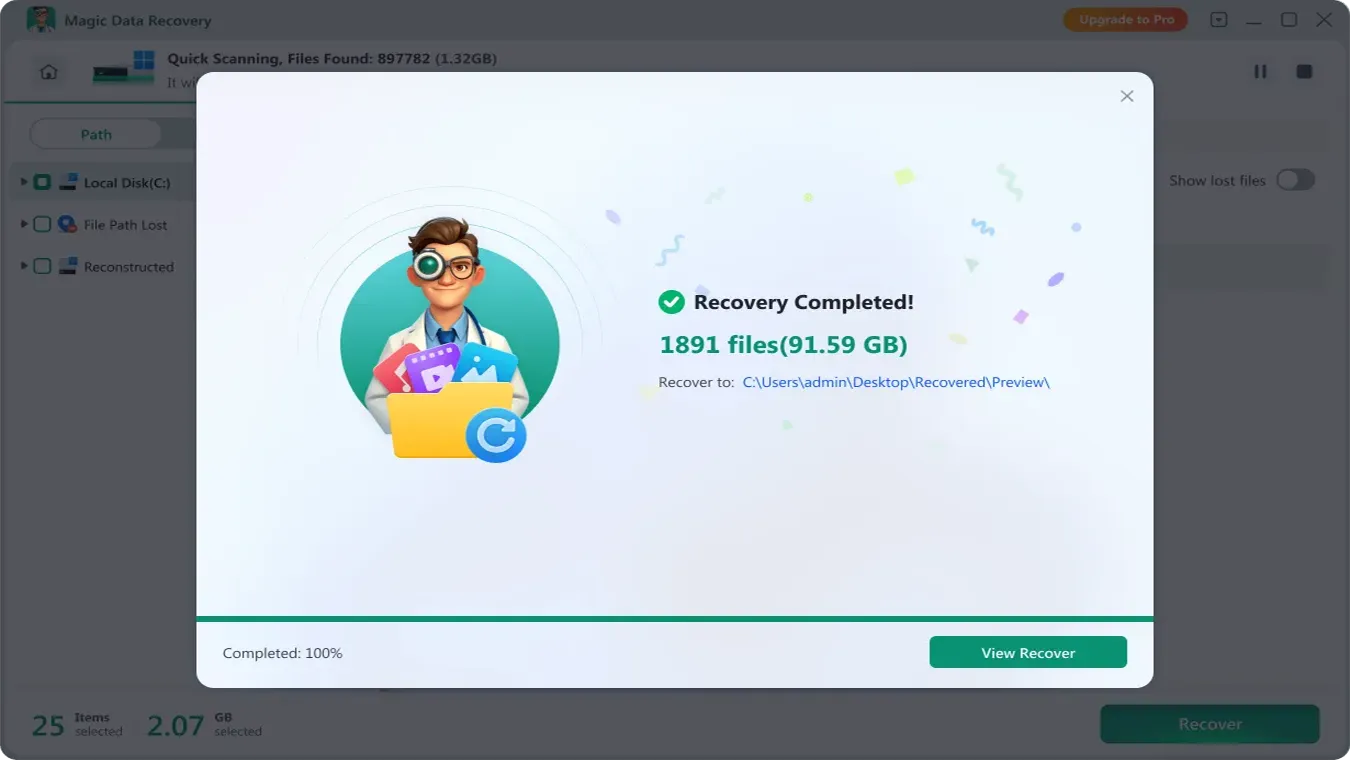
Step 5: Recover Files to Another Drive
Choose the files you need and save them to another storage location. Never save recovered files back to the same disk during recovery.
External Hard Disk Recovery: What Makes It Different?
External hard disk recovery has a few extra considerations because external drives often depend on cables, USB ports, adapters, and external enclosures. Before assuming the drive has failed, try these checks:
- Use another USB cable.
- Connect the drive to another USB port.
- Test the drive on another computer.
- Check Disk Management to see whether the drive appears.
- Avoid formatting if Windows asks you to initialize or format the disk.
If the external hard disk appears in Windows but files are missing, Magic Data Recovery may help scan the device and restore recoverable data. If the drive does not spin, clicks repeatedly, or disconnects constantly, contact a professional service.
Hard Disk Data Recovery Cost: Software vs Lab Service
Many users search for hard disk data recovery cost because they are unsure whether to use software or a professional service.
The cost depends on the cause of data loss. Software recovery is usually more affordable for logical issues, such as accidental deletion, formatting, lost partitions, file system errors, or virus damage. A professional lab costs more because it may require hardware diagnosis, cleanroom work, donor parts, and manual reconstruction.
Here is a simple way to decide:
Situation | Best First Option |
Deleted files | Recovery software |
Formatted drive | Recovery software |
RAW or inaccessible partition | Recovery software |
Virus-related file loss | Recovery software |
System reinstallation | Recovery software |
Clicking or grinding drive | Professional lab |
Burned, dropped, or water-damaged drive | Professional lab |
Mission-critical business data | Professional diagnosis first |
Magic Data Recovery is a sensible first step when the drive has no clear physical damage. It lets you check recoverable files before deciding whether a paid recovery or lab service is necessary.
Best Practices to Improve Recovery Success
Good recovery habits matter as much as the tool you choose. Follow these tips:
- Stop using the drive immediately after data loss.
- Do not install recovery software on the affected disk.
- Do not run disk repair tools before recovery.
- Save recovered files to another device.
- Scan as soon as possible.
- Back up important files after recovery.
- Use professional help if the drive has physical symptoms.
These steps help prevent overwriting and reduce the risk of permanent loss.
When Not to Use DIY Disk Recovery
DIY disk recovery is not always the right answer. You should stop and consider a professional lab if:
- The drive makes clicking, buzzing, or grinding sounds.
- The disk does not spin at all.
- The drive smells burned.
- The storage device suffered water, fire, or impact damage.
- The data is legally, financially, or operationally critical.
Software is best for logical data loss. Physical damage requires specialized equipment and controlled repair conditions.
Why Magic Data Recovery Is Recommended
Magic Data Recovery is recommended because it addresses the most common recovery pain points: deleted files, formatted disks, file system errors, system reinstallation, virus damage, and inaccessible storage devices. It gives users a practical way to scan, preview, and recover files without requiring advanced technical knowledge.
Compared with manual recovery attempts or risky disk repair operations, Magic Data Recovery offers a safer first step for many logical data loss cases. It does not promise impossible results, but it gives users a clear chance to recover data before choosing a more expensive lab service.
If you are looking for a more efficient hard disk recovery solution, Magic Data Recovery is worth trying before you give up on your lost files.
Conclusion
Hard disk recovery works best when you act quickly, avoid overwriting data, and choose the right recovery method. For deleted files, formatted drives, file system errors, system reinstallation, virus damage, and many external drive problems, recovery software is often the most practical first step.
Magic Data Recovery is a strong recommendation because it combines a beginner-friendly workflow with support for common data loss scenarios. It helps users scan safely, preview recoverable files, and restore important data without unnecessary complexity. For non-physical drive problems, it offers a reliable and cost-conscious way to start hard disk data recovery.
Supports Windows 7/8/10/11 and Windows Server
FAQs
What is hard disk recovery?
Hard disk recovery is the process of restoring lost, deleted, formatted, or inaccessible files from a hard drive. It usually applies to internal HDDs, external hard disks, and other storage devices. If the data has not been overwritten and the drive is still readable, recovery software may help locate and restore the missing files.
Can I recover files from a formatted hard disk?
Yes, you may recover files from a formatted hard disk if new data has not overwritten the original file content. A quick format often removes file system references rather than wiping every data block. Use recovery software as soon as possible and save recovered files to another drive.
Is external hard disk recovery different from internal drive recovery?
External hard disk recovery is similar to internal drive recovery, but you should also check the cable, USB port, enclosure, and power connection. If the drive appears in Windows, software may scan it. If it clicks, disconnects repeatedly, or does not spin, professional help is safer.
How much does hard disk data recovery cost?
Hard disk data recovery cost depends on the problem. Software recovery is usually more affordable for deletion, formatting, file system errors, or virus damage. Professional lab recovery costs more because physical damage may require diagnostics, cleanroom handling, donor parts, and manual reconstruction.
Is Magic Data Recovery safe to use?
Magic Data Recovery is designed to scan storage devices and help recover files from common logical data loss scenarios. For safer use, install it on a different drive and save recovered files to another storage device. Do not write new data to the affected disk during recovery.
Can virus-damaged files be recovered?
In many cases, yes. If a virus deletes, hides, corrupts, or changes file access records, recovery software may still locate recoverable data. However, you should remove active malware first or scan from a safe system. After recovery, check restored files with security software before opening them.
What should I avoid after losing hard disk data?
Avoid saving new files, installing programs, formatting the drive, or running repair tools before recovery. These actions may overwrite recoverable data or change the disk structure. The safest approach is to stop using the affected drive and scan it from another working system or drive.
When should I choose a professional data recovery lab?
Choose a professional lab if the drive has physical damage, makes clicking or grinding sounds, does not spin, smells burned, or contains mission-critical data. Software works best for logical problems. Physical failure needs specialized equipment, controlled handling, and experienced technicians to reduce further damage.

Jason is a data recovery and technical support specialist with over 15 years of hands-on experience. He has worked extensively with frontline users, troubleshooting difficult data loss cases and providing practical recovery solutions for accidental deletion, formatted drives, damaged file systems, lost partitions, system failures, and other recovery emergencies. His expertise also includes backup and restoration, file repair, and disaster recovery, with a strong emphasis on safe, reliable, and technically accurate guidance.