
Disaster Recovery Server Guide
A disaster recovery server plan matters most when business files, databases, shared folders, or application data suddenly become unavailable. A server crash can happen after accidental deletion, ransomware, disk formatting, file system corruption, failed updates, hardware problems, or human error. In many cases, the first priority is not only to restart the server. It is also to recover the missing files safely.
This guide explains how a disaster recovery server strategy works, what steps to take first, when backups help, and when file recovery software becomes necessary. If your issue involves deleted or lost server files, you can also learn more from Amagicsoft’s deleted file recovery guide, which is especially useful when files are no longer visible in the original folder.
Supports Windows 7/8/10/11 and Windows Server
Table of Contents
What Is a Disaster Recovery Server?
A disaster recovery server is a standby, restored, or rebuilt server environment used to bring critical systems back online after a major failure. It may be a physical server, virtual machine, cloud instance, or temporary recovery environment.
However, the term also refers to the complete recovery process around that server. A good server disaster recovery process usually includes:
- Backup copies of important data
- A clear recovery plan
- Server hardware or virtual infrastructure
- Access control and administrator credentials
- Tested restore procedures
- File-level recovery options
- Documentation for urgent incidents
In simple terms, a disaster recovery server helps you answer one question: “How can we restore access to critical data and services with the least damage?”
Why Server Disaster Recovery Matters
Servers often store the files that teams use every day. For example, a small company may keep accounting documents, customer files, project folders, shared databases, and software installation packages on one Windows Server. If that server fails, work can stop immediately.
A disaster recovery server plan reduces risk in several ways.
First, it gives your team a predictable process. Instead of guessing under pressure, you already know which data matters most and which recovery method to try first.
Second, it reduces downtime. When the server role, file shares, user permissions, and backup locations are documented, recovery becomes faster.
Third, it protects data integrity. Panic actions, such as reinstalling Windows on the same disk or copying new files to the affected volume, may overwrite recoverable data. A controlled process helps avoid those mistakes.
Common Scenarios That Require a Disaster Recovery Server Plan
Not every server issue is the same. Therefore, you should identify the failure type before choosing a solution.
Accidental File Deletion
Someone may delete a folder from a shared drive and later discover that it contained important business files. In Windows Server environments, deleted files may not always appear in the local Recycle Bin, especially when they were removed through network shares.
If the files are not in a backup, file recovery software may help, as long as the original data has not been overwritten.
Formatted Server Partition
A partition may be formatted during maintenance, disk migration, or reinstall preparation. Quick formatting usually removes file system records rather than immediately erasing every sector. Because of that, recovery may still be possible if you stop writing data to the disk.
File System Error or RAW Partition
A server volume may become inaccessible due to file system corruption. Windows may ask you to format the drive, or the partition may appear as RAW. In this case, do not format the drive immediately. A recovery-first approach gives you a better chance to restore important files.
Failed Windows Server Update
Updates may fail because of disk issues, driver conflicts, power loss, or storage errors. If the server cannot boot normally, you may need to recover data from the disk using another Windows computer.
Ransomware or Malware Damage
Malware can delete, encrypt, rename, or damage files. Backups are usually the first recovery option. However, if some original files were deleted before encryption or if backups are incomplete, file recovery software may still be worth trying on the affected storage.
Hardware Failure
Hardware failure requires extra caution. If a drive clicks, disappears repeatedly, overheats, or makes unusual sounds, stop using it. Software recovery works best for logical data loss, not physical damage. In serious hardware cases, a professional recovery lab is safer.
Backup vs File Recovery: What Is the Difference?
A strong disaster recovery server strategy should include both backup and recovery thinking. They solve different problems.
Backups restore data from a previous copy. They are useful when your backup is recent, complete, and healthy. For example, if last night’s backup contains the missing folder, restoring it may be the fastest option.
File recovery software scans the affected storage device directly. It looks for deleted, lost, formatted, or inaccessible files that still exist on the disk but no longer appear in the file system.
Here is the practical difference:
Solution | Best For | Limitation |
Server backup | Restoring known good copies | May fail if backups are missing, old, or corrupted |
Cloud disaster recovery | Fast failover and service continuity | Usually requires prior setup and licensing |
Manual rebuild | Restoring server roles and applications | Does not recover missing files by itself |
File recovery software | Deleted, formatted, or file system error data loss | Cannot repair physical drive damage |
Recovery service | Severe hardware or RAID failure | Usually slower and more expensive |
A reliable disaster recovery server plan should not rely on one method only. Instead, it should define which method to use for each failure type.
What to Do First After a Server Data Loss Incident
When data disappears, your first actions strongly affect the recovery result. Follow these steps before you try any repair.
Step 1: Stop Writing New Data
Do not copy new files to the affected drive. Do not install software on that partition. Do not rebuild the server on the same disk unless you already have a verified backup.
New data may overwrite deleted file records or lost file content.
Step 2: Confirm the Failure Scope
Check whether the issue affects one folder, one partition, one disk, one server role, or the whole server. This helps you choose between file recovery, backup restore, OS repair, or hardware service.
Step 3: Check Existing Backups
Review Windows Server Backup, NAS snapshots, cloud backups, backup software, and previous versions. If you have a recent clean copy, restore it to a safe location first.
Step 4: Avoid Formatting the Drive
If Windows asks you to format a server volume, cancel the prompt. Formatting may reduce recovery chances, especially if new data is written after the format.
Step 5: Create a Disk Image When Possible
For important server data, consider creating a sector-level image before recovery. This protects the original disk from repeated scans and gives you a safer working copy.
How to Build a Better Disaster Recovery Server Plan
A good disaster recovery server plan should be simple enough to follow during an emergency. It should also be detailed enough to avoid mistakes.
Define Critical Data and Services
List the files, folders, databases, applications, and server roles that must be restored first. For example:
- Shared department folders
- Accounting files
- Customer documents
- Application data
- Active Directory-related files
- SQL databases
- Virtual machine files
- License documents and installation packages
This inventory helps you prioritize recovery instead of trying to restore everything at once.
Set RTO and RPO
RTO means Recovery Time Objective. It defines how quickly the server should return to operation.
RPO means Recovery Point Objective. It defines how much data loss is acceptable. For example, an RPO of 24 hours means the business may tolerate losing up to one day of data.
These two values guide your backup frequency, recovery server design, and storage budget.
Use the 3-2-1 Backup Rule
A practical server backup strategy often follows the 3-2-1 rule:
- Keep 3 copies of important data
- Store them on 2 different media types
- Keep 1 copy off-site or in the cloud
This structure reduces the chance that one incident destroys every copy.
Test Restores Regularly
A backup that has never been tested is only a hope. Schedule test restores for shared folders, databases, and full server images. Then document the exact steps.
Testing also reveals hidden issues, such as missing credentials, slow network paths, corrupted backup sets, or incomplete retention policies.
Protect Backup Credentials
Ransomware often targets backups. Therefore, backup accounts should use strong passwords, limited permissions, and multi-factor authentication where possible. Immutable or offline backups can also reduce risk.
Document the Recovery Workflow
Your disaster recovery server document should include:
- Server name and role
- IP address and network settings
- Backup locations
- Restore order
- Admin contacts
- Software license details
- Storage layout
- Recovery tool list
- Escalation rules
Clear documentation saves time when every minute matters.
When Backups Are Not Enough
Backups are essential, but they are not always enough. In real server incidents, several problems may appear:
- The backup is too old.
- The backup job failed silently.
- The backup does not include the missing folder.
- The user deleted files before the last backup ran.
- The backup repository was damaged.
- The server disk was formatted before backup verification.
- The file system error also affected backup access.
In these cases, file recovery software can provide another path. It does not replace backup. Instead, it fills the gap when backup-based recovery cannot find the files you need.
Software Recovery Option: Why Magic Data Recovery Fits Server File Loss
When a disaster recovery server incident involves deleted, formatted, or inaccessible files, Magic Data Recovery can be a practical recovery option. It is designed to scan storage devices and locate lost files caused by common logical data loss scenarios.
You can use Magic Data Recovery when the affected drive still appears in Windows and has no clear signs of physical damage. It supports recovery from deletion, formatting, file system errors, and other common data loss cases. It can also help users preview recoverable files before saving them to another location.
Core Pain Points It Solves
Magic Data Recovery is useful when:
- Server files were permanently deleted.
- A shared folder disappeared.
- A partition was formatted by mistake.
- A drive shows file system errors.
- Important documents vanished after malware damage.
- A disk is accessible but files cannot be opened normally.
These situations are common in small business and Windows Server environments. They often require a file-level recovery tool rather than a full infrastructure failover solution.
Unique Advantages
Magic Data Recovery offers several practical advantages:
- It supports deleted, formatted, and file system error recovery.
- It provides an easy workflow for non-expert users.
- It allows users to scan storage devices and preview results.
- It supports many common file types.
- It works well as a first software recovery attempt before choosing a lab service.
- It helps users avoid risky manual operations on damaged file structures.
For step-by-step operation, users can follow the official Magic Data Recovery user guide.
Example Use Case
Imagine a Windows file server where a department folder was deleted from a shared drive. The folder is not in the Recycle Bin, and the backup is three weeks old. In this case, restoring from backup would lose recent work. A recovery scan may find the recently deleted files if the disk space has not been overwritten.
Another example is a server partition that was quick-formatted during maintenance. If no new data has been written to that partition, Magic Data Recovery may help locate files from the previous file system.
Why It Can Be More Reliable Than Manual Fixes
Manual fixes can be risky. Running repair commands, formatting a RAW partition, reinstalling the OS, or copying files to the same drive may reduce recovery chances. Magic Data Recovery takes a recovery-first approach. It scans for recoverable data and lets users save files to a different safe location.
For users who need a structured recovery process, this is usually safer than guessing with random commands. If you want to compare general Windows recovery steps, you can also read this Windows data recovery guide.
Supports Windows 7/8/10/11 and Windows Server
How to Use Magic Data Recovery in a Server Incident
Follow this safe workflow during a disaster recovery server file recovery case.
Step 1: Stop Using the Affected Disk
Stop file transfers, downloads, updates, and service writes to the affected volume. If possible, shut down the server and connect the disk to another Windows computer.
Step 2: Install the Software on a Healthy Drive
Do not install recovery software on the same partition where files were lost. Use another internal drive, external drive, or recovery workstation.
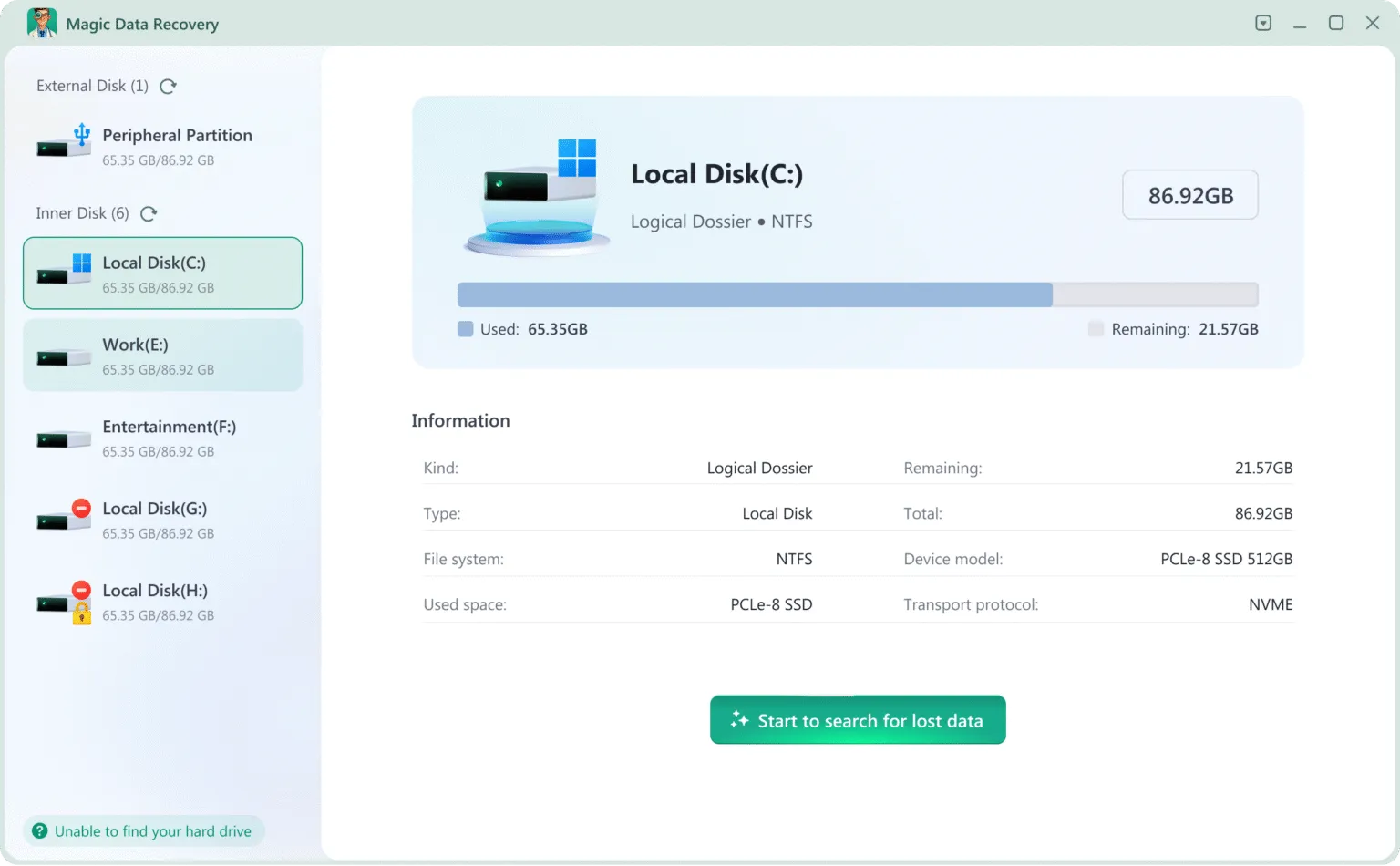
Step 3: Select the Affected Drive
Launch Magic Data Recovery and choose the disk or partition where the lost server files were stored.
Step 4: Run a Scan
Start the scan and wait for the software to search for deleted, formatted, or inaccessible files. Larger drives may take longer.
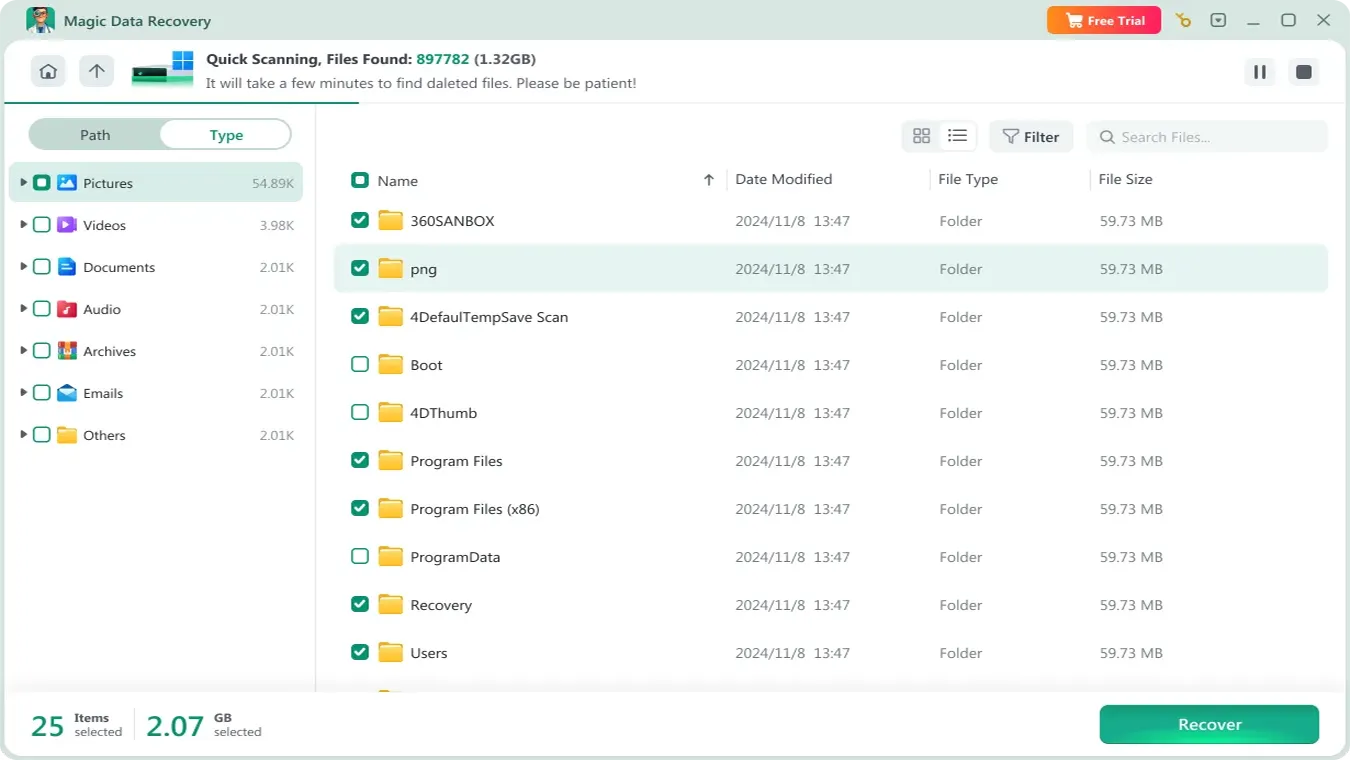
Step 5: Preview Recoverable Files
Preview documents, images, archives, and other supported files when available. This helps confirm whether the target data can be recovered.

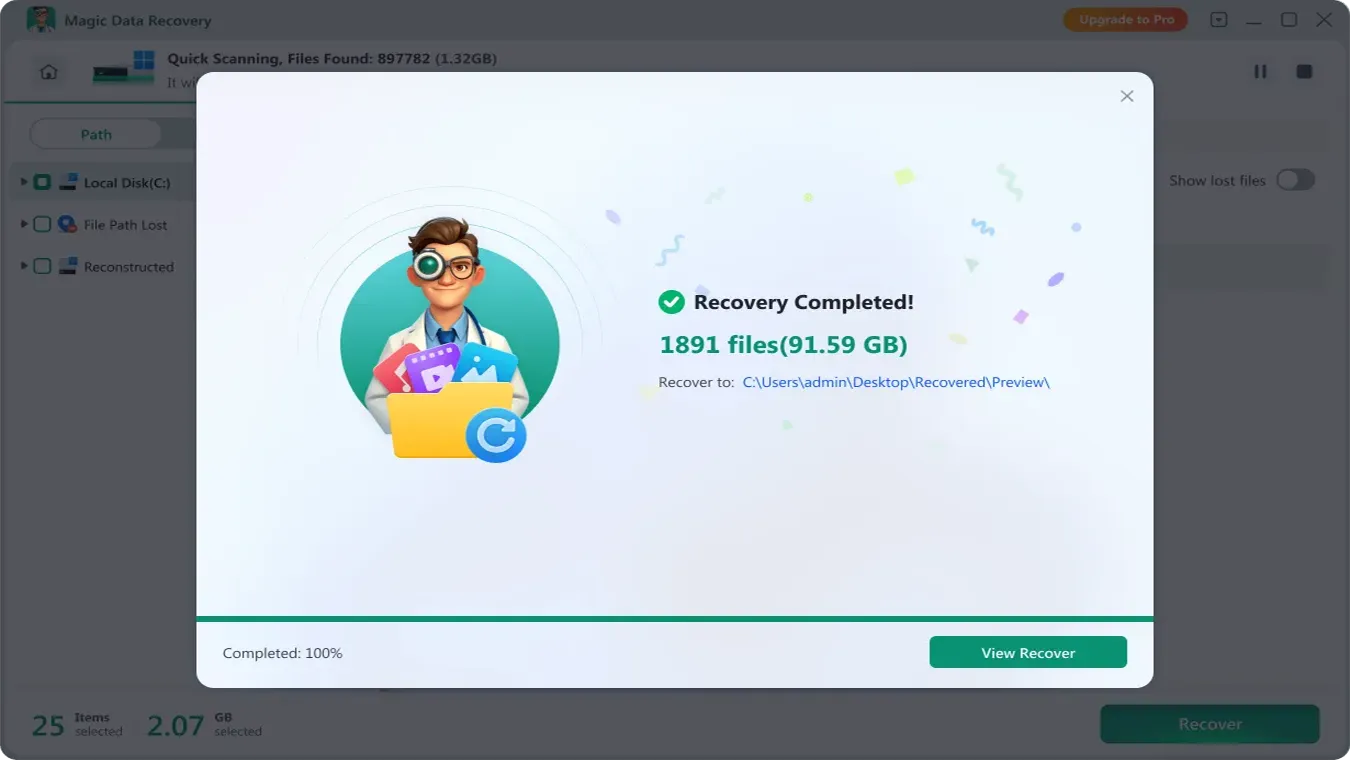
Step 6: Save Files to Another Location
Never save recovered files back to the same affected drive. Choose a healthy disk, external storage device, or network location.
For purchase or license options, users can visit the Magic Data Recovery purchase page.
When to Choose a Professional Server Recovery Service
Software recovery is not always the right answer. Choose a professional service if:
- The server drive makes clicking or grinding sounds.
- The disk is not detected in BIOS or Disk Management.
- The RAID array has multiple failed disks.
- The server suffered fire, water, or electrical damage.
- The data is legally sensitive and requires forensic handling.
- Previous recovery attempts made the situation worse.
In those cases, stop all operations. A professional lab can inspect the hardware and reduce the risk of further damage.
Common Mistakes to Avoid
A disaster recovery server plan should also tell users what not to do. Many recovery failures happen because people act too quickly.
Avoid these mistakes:
- Do not format a RAW drive before recovery.
- Do not reinstall Windows Server on the affected disk.
- Do not save recovered files to the same partition.
- Do not run random repair commands without a backup.
- Do not keep using a failing drive.
- Do not assume cloud sync equals backup.
- Do not test recovery for the first time during a real emergency.
If you only remember one rule, remember this: protect the original data source before attempting repair.
Best Practices for Long-Term Server Disaster Recovery
A better disaster recovery server strategy combines prevention, backup, testing, and file recovery readiness.
Use these best practices:
- Keep recent, tested backups.
- Store one backup copy offline or off-site.
- Monitor backup job failures.
- Keep server documentation updated.
- Use role-based permissions.
- Protect backup repositories from ransomware.
- Test file-level and full-server restores.
- Keep a trusted recovery tool ready.
- Train staff on first-response actions.
- Review the plan after every incident.
This balanced approach gives you more options. If a backup works, restore it. If backup fails and the storage is still readable, use file recovery software. If hardware is damaged, contact a professional service.
Conclusion: Build a Smarter Disaster Recovery Server Strategy
A disaster recovery server plan should not focus only on hardware failover or cloud backup. Real incidents often involve smaller but urgent data loss cases, such as deleted folders, formatted partitions, file system errors, and missing business documents. That is why your recovery plan should include both backup restore methods and file-level recovery options.
Magic Data Recovery is worth recommending because it solves a specific problem: recovering lost files when the storage device is still readable but files are no longer accessible through normal Windows methods. It supports deleted, formatted, and file system error recovery, gives users a clearer scan-and-preview workflow, and helps reduce risky manual operations.
If you are improving your disaster recovery server process and need a practical way to recover missing files, start with a safe recovery workflow and review Amagicsoft’s deleted file recovery solution before writing new data to the affected drive.
Supports Windows 7/8/10/11 and Windows Server
FAQs About Disaster Recovery Server
What is a disaster recovery server?
A disaster recovery server is a backup, standby, rebuilt, or temporary server environment used to restore business services after a failure. It may run on physical hardware, a virtual machine, or cloud infrastructure. Its purpose is to help recover applications, shared files, databases, and critical access as quickly and safely as possible.
Is server disaster recovery the same as backup?
No. Backup means creating copies of data, while server disaster recovery covers the full process of restoring operations after an incident. A complete plan includes backups, recovery servers, network settings, user access, restore steps, testing, and documentation. Backup is one part of disaster recovery, but it is not the whole strategy.
When should I use file recovery software for server data?
Use file recovery software when server files were deleted, a partition was formatted, or a file system error made data inaccessible, and no clean backup is available. The drive should still be detected by Windows. If the disk has physical damage, unusual noise, or unstable connections, stop using software and contact a professional service.
Can Magic Data Recovery recover deleted files from a server?
Magic Data Recovery can help recover deleted files from readable Windows-based storage devices if the deleted data has not been overwritten. It is useful for accidental deletion, formatted partitions, and file system errors. For safer results, stop using the affected drive, install the software elsewhere, and save recovered files to another location.
What should I do first after server data loss?
Stop writing new data to the affected drive immediately. Then check backups, snapshots, previous versions, and cloud copies. Do not format the drive or reinstall the operating system on the same disk. If backups are missing or incomplete, scan the affected storage with recovery software before trying repair operations.
Can a disaster recovery server prevent data loss?
A disaster recovery server can reduce downtime and improve recovery speed, but it cannot prevent every type of data loss by itself. You still need tested backups, secure storage, access controls, monitoring, and user training. For deleted or formatted files, file-level recovery software may still be needed when backups do not contain the latest data.
What is the best disaster recovery server strategy for small businesses?
Small businesses should keep the strategy simple and tested. Use regular backups, one off-site copy, documented restore steps, and clear recovery priorities. Also prepare a file recovery option for accidental deletion or formatting cases. This gives the business both fast backup restore options and a practical fallback when backups are incomplete.
When should I avoid software recovery?
Avoid software recovery if the server drive has physical damage, makes clicking sounds, disconnects repeatedly, or is not detected by the system. Software scans can stress failing hardware and may make recovery harder. In those cases, power down the drive and contact a professional data recovery service for evaluation.

Jason has over 15 years of hands-on experience in the computer data security industry. He specializes in data recovery, backup and restoration, and file repair technologies, and has helped millions of users worldwide resolve complex data loss and security issues.