
Data Recovery on Windows 10: How to Recover Deleted or Lost Files

Losing important files on a Windows 10 computer can be stressful. Photos disappear, documents go missing, or an entire drive suddenly becomes inaccessible. In most cases, the data is not truly gone. With the right approach, data recovery on Windows 10 is often possible—even after deletion, formatting, or file system errors.
This guide explains how Windows 10 data recovery works, what to do immediately after data loss, and how to choose the right hard drive recovery method for your situation. When built-in options fall short, we will also show why Magic Data Recovery is a reliable solution for complex recovery scenarios.
Supports Windows 7/8/10/11 and Windows Server
Table of Contents
Before You Start: Maximize Your Windows 10 Data Recovery Chances
Before attempting any data recovery on Windows 10, your actions matter. A few mistakes can permanently overwrite lost data.
Stop Using the Affected Drive Immediately
When files are deleted, Windows only marks their space as “available.” Any new data may overwrite those sectors. To improve recovery success:
- Avoid installing new software on the affected drive
- Do not download large files
- Stop copying or editing files
Never Install Recovery Software on the Same Partition
Always install recovery tools on a different drive or external storage. This prevents accidental overwriting during the scan process.
Watch for Signs of Hardware Failure
If the drive makes clicking noises, disconnects frequently, or fails to initialize, stop using it. In such cases, professional recovery services may be safer.
Quick Diagnosis: What Happened to Your Files?
Understanding the exact data loss scenario helps you choose the most effective Windows 10 data recovery method.
Data Loss Scenario | Recommended Approach |
Files deleted accidentally | Recycle Bin → Recovery software |
Recycle Bin emptied | Data recovery software |
Drive formatted | Deep scan recovery tool |
File system error (RAW, corrupted) | Advanced recovery software |
Partition missing | |
Backup exists | Restore from backup |
If your case involves formatting or file system corruption, basic Windows tools may not be enough.
Built-in Windows 10 Data Recovery Options (Try These First)
Windows 10 includes several recovery features. These options work best for simple scenarios.
Restore from Recycle Bin
This is the fastest option for recently deleted files:
- Open Recycle Bin
- Right-click the file
- Select Restore
Use Previous Versions or File History
If File History was enabled:
- Right-click the folder
- Choose Restore previous versions
- Select a snapshot created before data loss
This method depends entirely on prior backups.
Windows File Recovery (Command-Line Tool)
Microsoft provides Windows File Recovery for advanced users. It supports NTFS, FAT, and exFAT file systems.
However, it has limitations:
- Command-line only
- No file preview
- Complex syntax
- Lower success rate for heavily damaged file systems
For users without technical experience, this option can be difficult and time-consuming.
Recover Data with Magic Data Recovery (Recommended Solution)
When built-in tools fail, Magic Data Recovery offers a practical and reliable solution for data recovery on Windows 10.
Why Magic Data Recovery Works When Others Don’t
Magic Data Recovery is designed for real-world data loss scenarios, including:
- Deleted files (even after Shift + Delete)
- Formatted hard drives, SSDs, USB drives
- File system errors and corrupted partitions
- RAW drives and unreadable volumes
Unlike command-line tools, it provides a guided recovery process that minimizes user error.
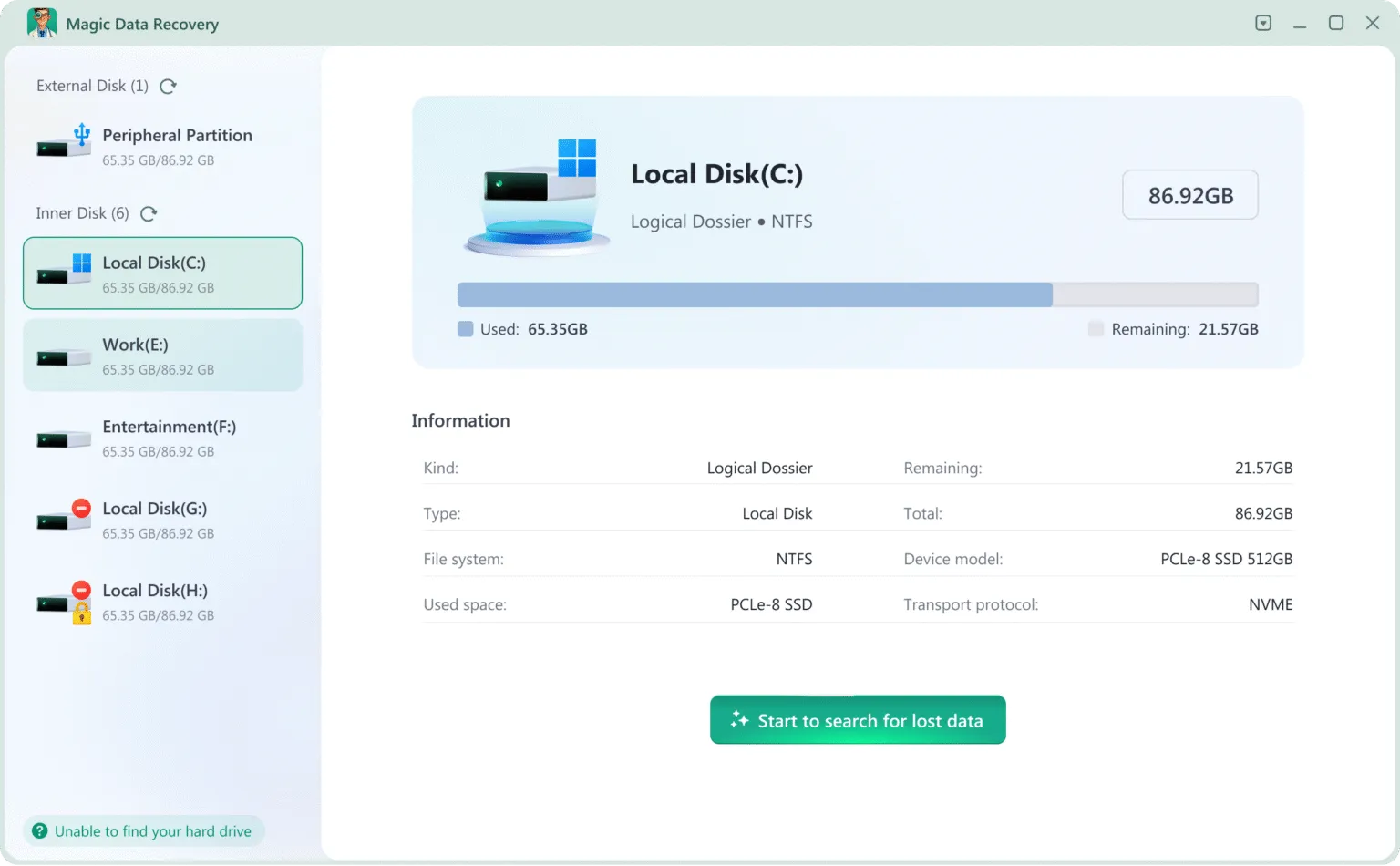
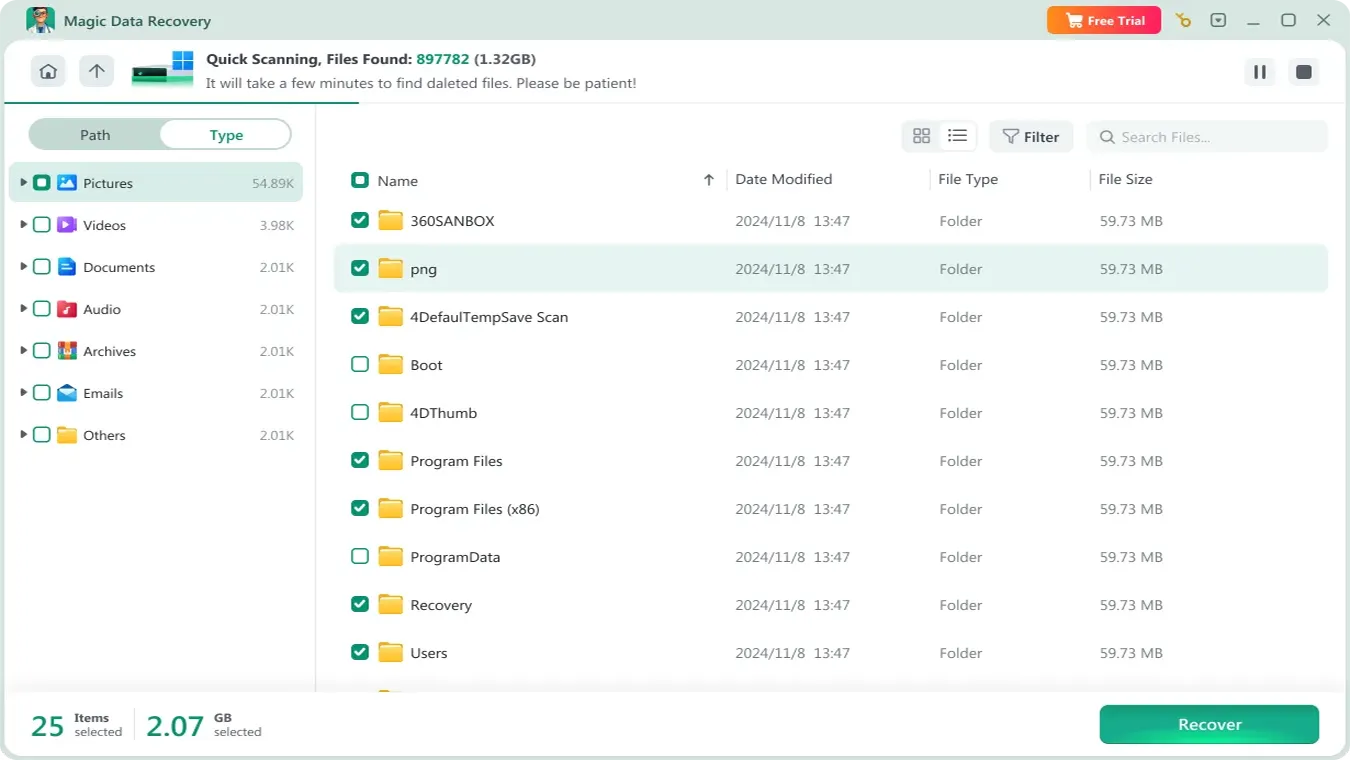
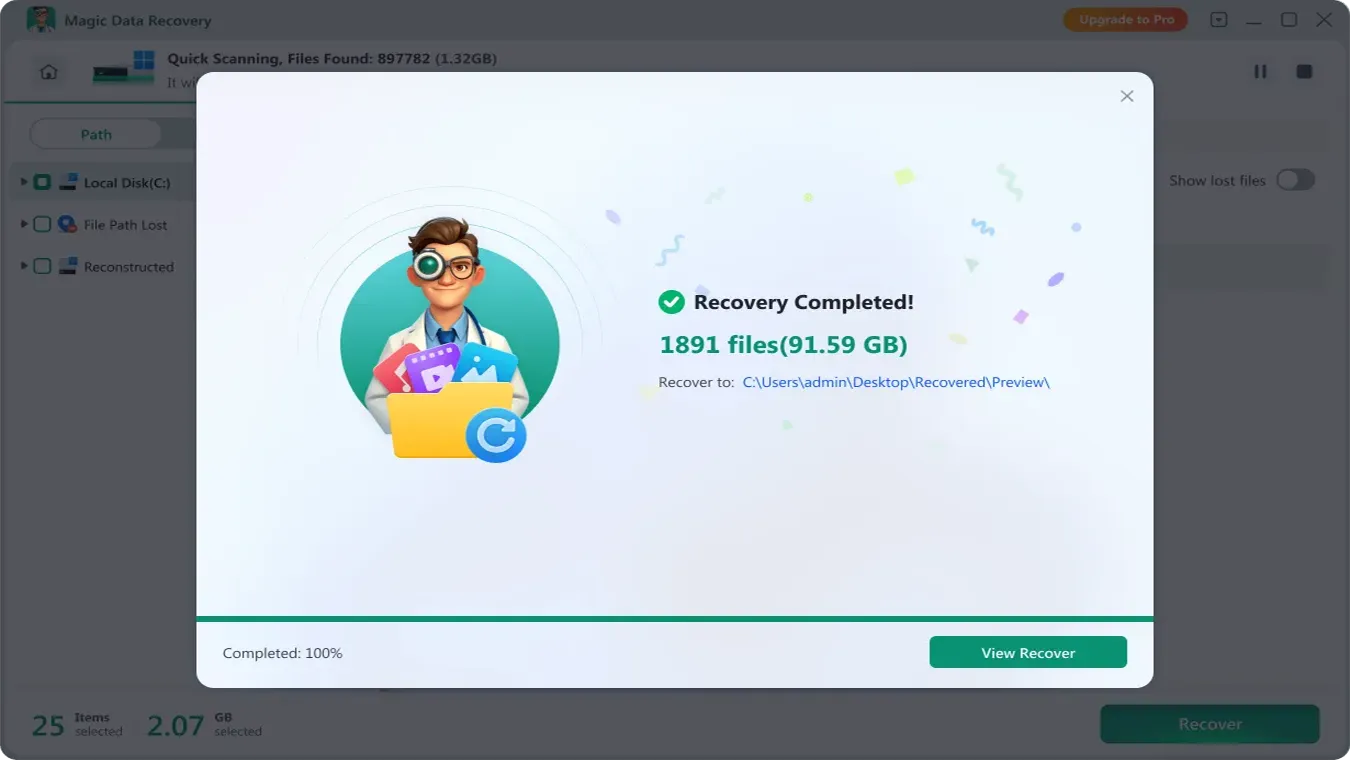
Step-by-Step: How to Recover Files on Windows 10
1. Download and Install Magic Data Recovery on a healthy drive.
Supports Windows 7/8/10/11 and Windows Server

Real-World Recovery Scenarios
Recover Deleted Files
A user accidentally deletes work documents and empties the Recycle Bin. Magic Data Recovery scans unused disk space and restores files with original names and folder structure.
Recover a Formatted Drive
After reinstalling Windows 10, an entire partition is wiped. Deep scanning reconstructs files by analyzing file signatures and metadata.
Fix File System Errors
When Windows asks to format a drive due to corruption, Magic Data Recovery reads the disk directly, bypassing file system errors to retrieve data safely.
Built-in Tools vs Magic Data Recovery
Feature | Windows Tools | Magic Data Recovery |
User-friendly interface | ❌ | ✅ |
Works after formatting | Limited | ✅ |
Handles file system errors | ❌ | ✅ |
File preview | ❌ | ✅ |
Recovery accuracy | Moderate | High |
For complex Windows 10 data recovery, Magic Data Recovery clearly offers more flexibility and reliability.
Prevent Data Loss on Windows 10
Prevention is always easier than recovery:
- Enable File History
- Use cloud backups
- Follow the 3-2-1 backup rule
- Regularly check disk health
These practices reduce the need for emergency recovery.
Conclusion
Data recovery on Windows 10 requires the right balance of speed, safety, and accuracy. While Windows provides basic tools, they often fail in real-world HDD recovery situations involving formatting or corruption.
Magic Data Recovery stands out because it:
- Solves multiple data loss scenarios
- Requires no advanced technical skills
- Minimizes risk during recovery
- Provides consistent and reliable results
If you are looking for an efficient and trustworthy Windows 10 data recovery solution, Magic Data Recovery is a practical choice.
Supports Windows 7/8/10/11 and Windows Server
FAQs
Can permanently deleted files be recovered on Windows 10?
How long does Windows 10 data recovery take?
Is it possible to recover data after formatting?
Where do deleted files go in Windows 10?
Does Windows File Recovery work for everyone?
Can I recover data from a RAW drive?
Should I stop using my PC after data loss?
What is the safest recovery method?

Jason is a data recovery and technical support specialist with over 15 years of hands-on experience. He has worked extensively with frontline users, troubleshooting difficult data loss cases and providing practical recovery solutions for accidental deletion, formatted drives, damaged file systems, lost partitions, system failures, and other recovery emergencies. His expertise also includes backup and restoration, file repair, and disaster recovery, with a strong emphasis on safe, reliable, and technically accurate guidance.