
Restored Files from Recycle Bin Disappeared?

If your restored files from recycle bin disappeared, do not assume the data is permanently lost. Windows normally returns a restored item to its original folder. However, a changed folder path, OneDrive sync, hidden files, or an interrupted restore can make a file seem to vanish. This guide explains where restored files go, how to locate them in Windows 11, and what to do when Windows tools cannot bring them back.
In many cases, restored files from recycle bin disappeared describes a location problem rather than permanent data loss. Therefore, start with simple checks such as the original path, File Explorer, OneDrive, and File History. If those methods fail, move to Windows File Recovery, Magic Data Recovery, or professional deleted file recovery when the drive shows physical problems.
Important: If you cannot find an important file anywhere, minimize activity on the affected drive. New downloads, installations, updates, and copied files may overwrite recoverable data.
Supports Windows 7/8/10/11 and Windows Server
Table of Contents
Where Do Restored Files from the Recycle Bin Go?
Windows usually returns a restored file to the folder where it existed before deletion. For example, if you deleted report.docx from C:\Users\Name\Documents\Projects, Restore should return it to that Projects folder. Windows does not normally create a separate “Restored Files” folder.
Therefore, if you wonder where do restored files go from recycle bin, check the Original Location first. However, OneDrive may redirect Desktop, Documents, or Pictures to another path. A folder may also have moved or changed. As a result, Restore can succeed even though the file does not appear where you expect.
Restored Files from Recycle Bin Disappeared? Common Causes
Several issues can create the same symptom. For example, the original path may have changed, OneDrive may manage the folder, Windows may hide the file, or Restore may stop before completion.
Common causes include:
- The original folder moved or changed.
- OneDrive redirected Desktop, Documents, or Pictures.
- Windows marked the item as hidden.
- The Restore operation stopped or failed.
- The file returned to an unexpected path.
- A recycle bin restore failed, so normal browsing cannot locate the file.
- New data overwrote recoverable file information.
Because each cause needs a different fix, check file locations before running recovery software. Moreover, if your restored files from recycle bin disappeared, avoid unnecessary disk activity until you determine whether the file still exists.
How to Find Restored Files from Recycle Bin Disappeared
Check the Original File Location
First, open the folder that stored the file before deletion. Common locations include Desktop, Documents, Downloads, Pictures, and project folders.
If the file still appears in Recycle Bin, check its Original Location before clicking Restore. This step often helps users who can’t find restored files from recycle bin because Windows returned them to a less obvious folder.
After Restore, open that exact path. In addition, check the parent folder if you recently renamed or reorganized folders.
Search the PC with File Explorer
Next, search the original drive instead of opening folders one by one. Try:
- The full or partial file name
- An extension such as
*.docx,*.jpg, or*.pdf - A project name or keyword
- Date Modified if you remember when you edited the file
For example, if a file disappeared after restoring from recycle bin, search *.docx and sort the results by Date Modified. Likewise, if you remember only part of the name, search that fragment instead of relying on an exact match.
If a full-drive search finds nothing, continue to the next method.
Show Hidden Files and Folders
Sometimes Windows hides an item from the normal File Explorer view. To check, open File Explorer and choose:
View > Show > Hidden items
Then, return to the original folder and search again.
However, hidden status is only one possibility. If restored files from recycle bin disappeared and you still cannot locate them, continue with the OneDrive check instead of assuming the files are gone.
Check OneDrive and Redirected Folders
OneDrive can change where Windows stores Desktop, Documents, and Pictures. For example:
C:\Users\YourName\OneDrive\Desktop
may replace:
C:\Users\YourName\Desktop
Therefore, if OneDrive restored files missing describes your case, check both local and OneDrive-backed folders. In addition, review the OneDrive web Recycle Bin if the file originally belonged to a synced folder.
Microsoft provides a separate recovery process for files deleted from OneDrive. Consequently, restored files from recycle bin disappeared may simply mean the item returned to a OneDrive-managed path that you were not checking.
Check File History or Previous Versions
If File Explorer and OneDrive do not help, check whether Windows has an earlier copy:
- Open File Explorer.
- Go to the folder that originally contained the file.
- Right-click the folder and choose Restore previous versions.
- Open an available version.
- Restore or copy the missing file.
Of course, this method only works if File History or another usable backup existed before the loss. Still, for files missing after recycle bin restore, it can provide a usable copy without requiring a deeper recovery scan.
Restored Files from Recycle Bin Disappeared? Protect the Drive First
What to Do If Restored Files from Recycle Bin Disappeared
If the previous checks do not locate your files, choose a recovery method based on your technical experience, the importance of the files, and the condition of the storage drive.
Option 1: Use Windows File Recovery
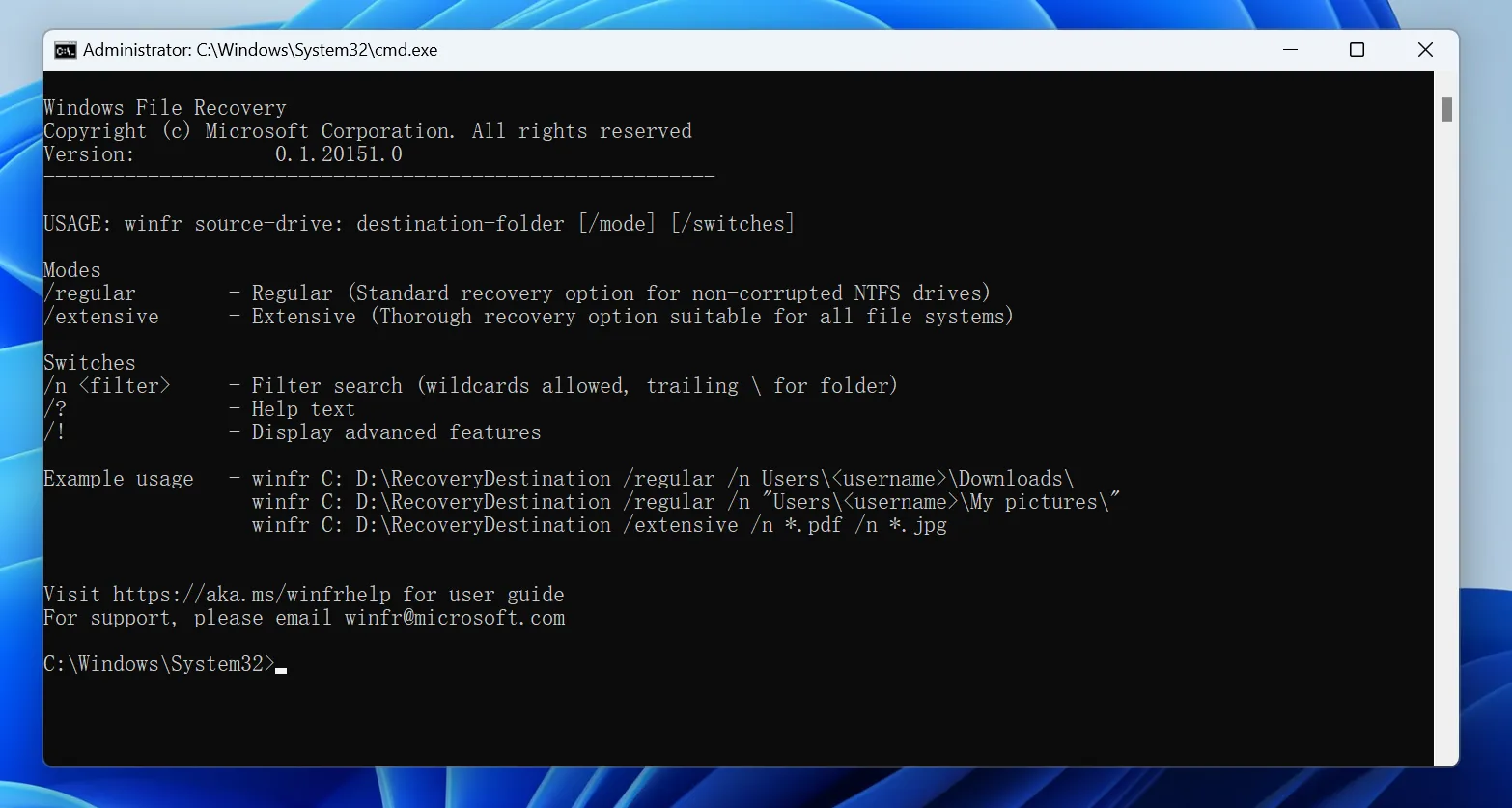
Windows File Recovery is Microsoft’s command-line utility for recovering deleted files that no longer appear in Recycle Bin. It can help when a recycle bin restore failed or when normal Windows tools cannot locate a file.
Its basic command format is:
winfr source-drive: destination-drive: [/mode] [/switches]
The source and destination drives should be different.
Windows File Recovery makes sense if you want a free solution and feel comfortable with commands. However, you need to choose recovery modes, filters, source paths, and destination paths manually.
Therefore, if you want to recover files after recycle bin restore failed through a visual interface, the next option may be easier to navigate.
Option 2: Recover Missing Files with Magic Data Recovery
When restored files from recycle bin disappeared and Windows Search, OneDrive, File History, or other built-in methods cannot locate them, Magic Data Recovery provides a graphical scan-and-recovery workflow.
Magic Data Recovery supports 5,000+ file types and allows users to scan, preview, filter, and recover files through a visual interface. It also offers a 500 MB recovery trial. Therefore, it can help when you remember the file name, type, or original folder but no longer know where the file went.
No recovery program can restore data after new writes have completely overwritten it. However, Magic Data Recovery lets you inspect candidate files before recovery, which can make the process easier for users who prefer not to work with command-line syntax by following simple steps:
Step 1: Download and Install Magic Data Recovery
Download and install Magic Data Recovery. If possible, choose a drive other than the one that originally stored the missing files.
This approach reduces unnecessary writes to the affected drive and helps protect data that may still be recoverable.
Supports Windows 7/8/10/11 and Windows Server
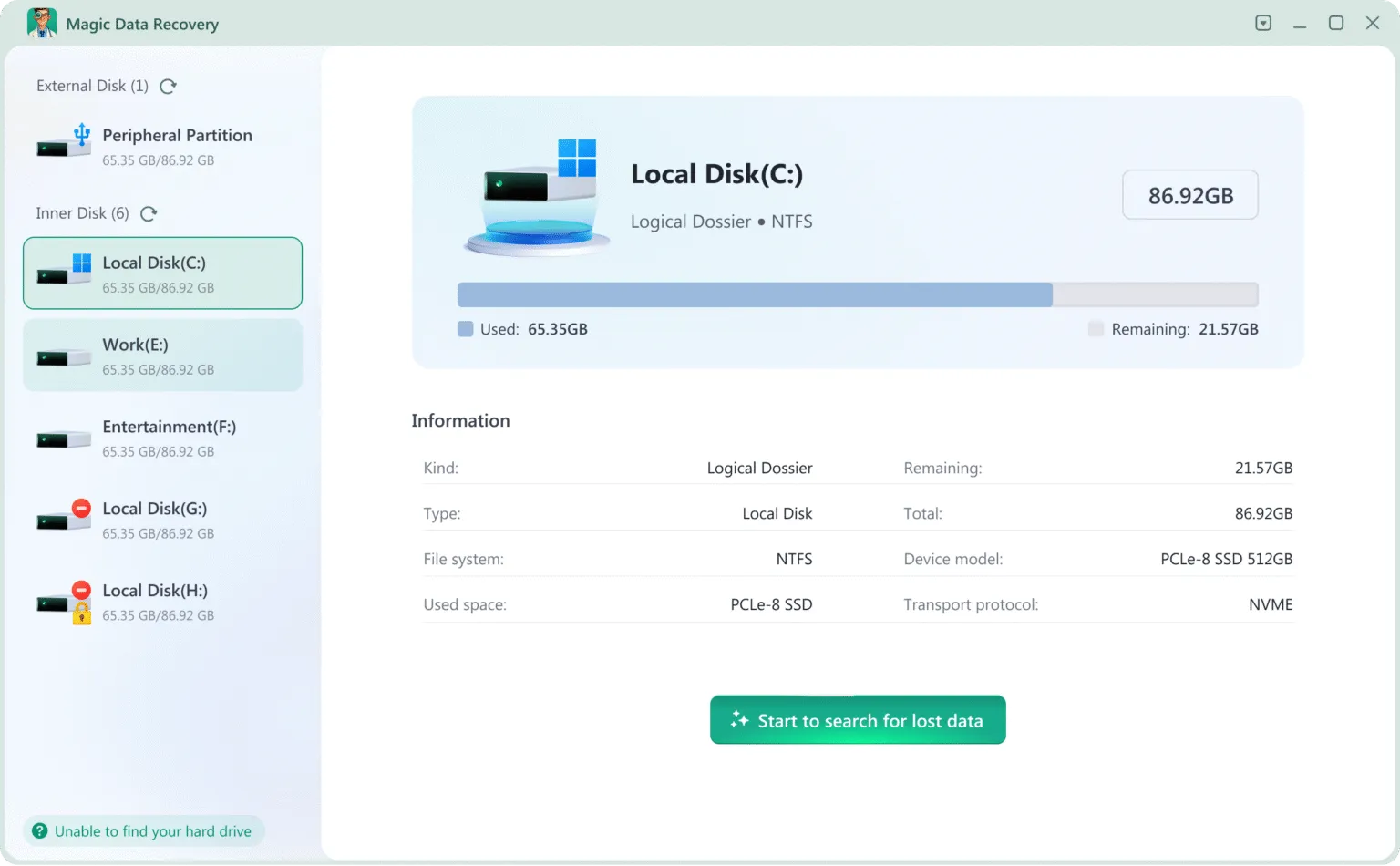
Step 2: Select the Drive Where the Missing Files Were Stored
Launch Magic Data Recovery. Then, choose the drive that contained the files before deletion or Restore and start the scan.
When restored files from recycle bin disappeared, scan the original storage drive rather than focusing only on the Recycle Bin location. This gives the software a more relevant place to look for missing data.
Step 3: Scan the Drive for Missing or Deleted Files
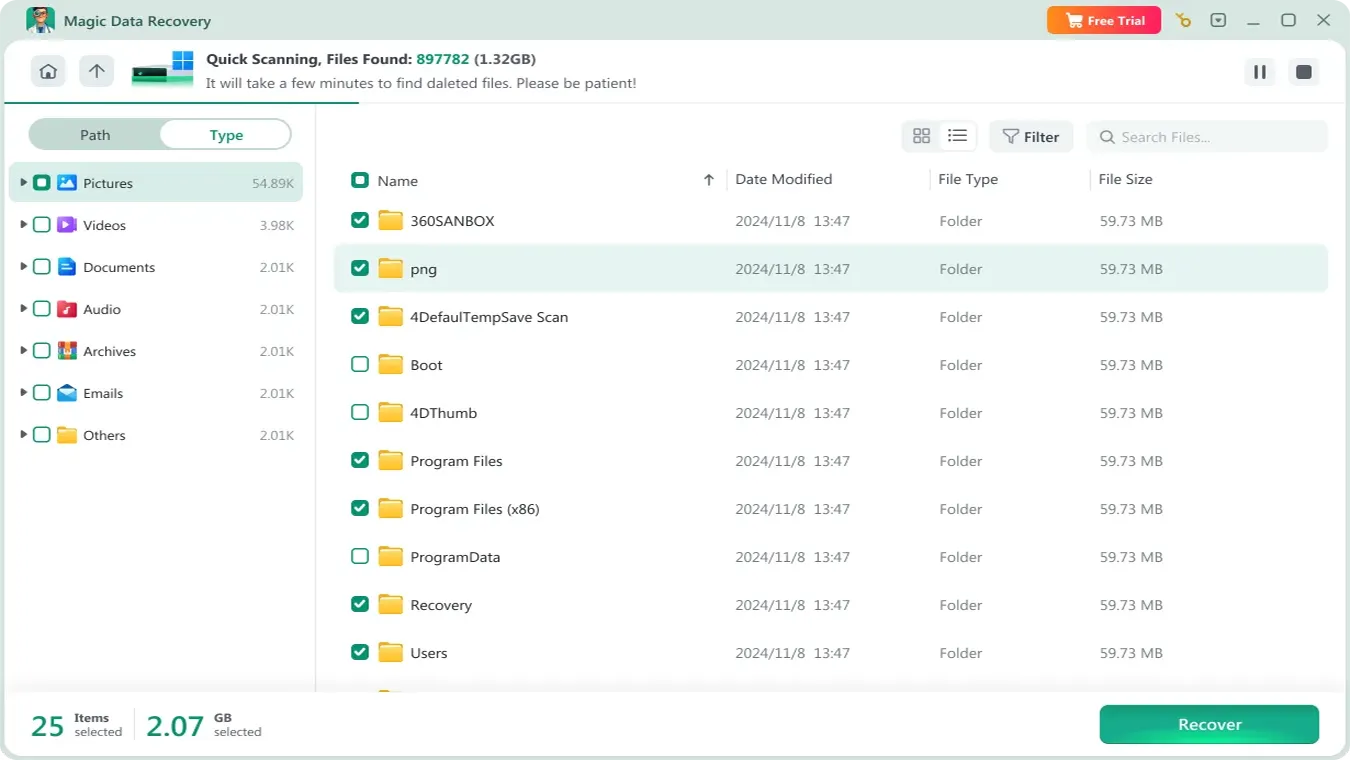
Magic Data Recovery automatically runs an Advanced Scan and lists recoverable files as it finds them. Meanwhile, you can review the scan results as they appear.
For a more complete result set, let the scan finish whenever possible. This step is particularly useful when files restored from recycle bin disappeared and you no longer know their exact folder path.
Step 4: Preview Files Before Recovery
Next, preview the available files to confirm that you found the correct items. In addition, use file names, file types, or paths to narrow the results.
Previewing becomes especially useful when several deleted versions of the same document or photo appear. Instead of recovering everything, you can identify the file you actually need.

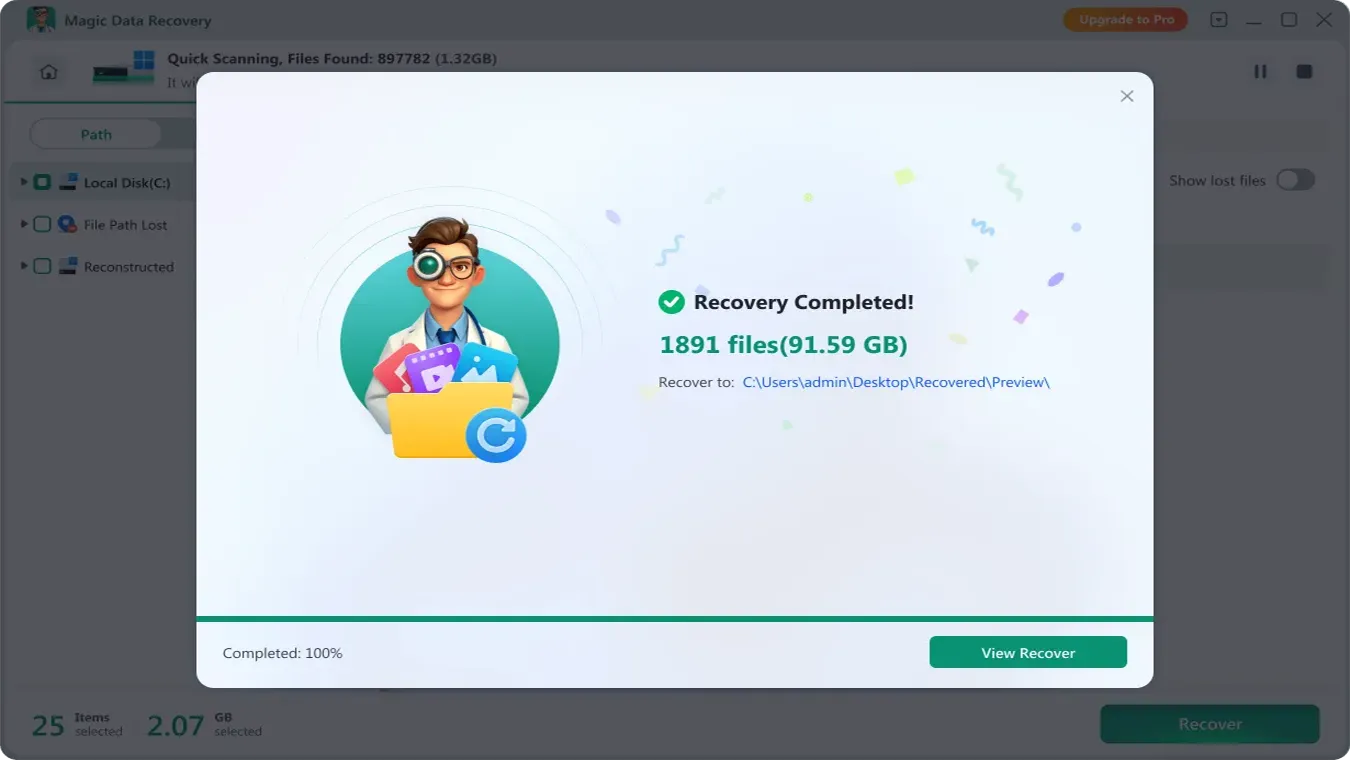
Step 5: Recover Files to a Safe Location
Finally, select the files you want to recover and choose a safe destination. Whenever possible, save them to a different drive from the original source.
Avoid immediately writing recovered files back to the source location. Otherwise, you may overwrite other recoverable data that you have not restored yet.
Why Choose Magic Data Recovery?
Magic Data Recovery suits users who want a simpler alternative to command-line recovery. In particular, it can help when:
- File Explorer cannot locate the missing file.
- Restore appeared to finish, but the file is still missing.
- File History or Previous Versions contains no usable copy.
- Windows File Recovery feels too complicated.
- You want to preview candidate files before recovery.
The graphical workflow is its main advantage. Instead of building commands manually, you can select a drive, scan for recoverable data, filter results, preview files, and recover only what you need.
Moreover, previewing gives you a practical way to verify candidate files before saving them. This does not guarantee recovery, but it gives ordinary users more control over the process.
Therefore, when restored files from recycle bin disappeared, Magic Data Recovery is a practical next step for users who want a guided recovery workflow.
Option 3: Consider a Professional Data Recovery Service
Software recovery is not always the right choice. If the drive repeatedly disconnects, Windows cannot detect it correctly, or the device makes unusual clicking or mechanical noises, stop using it and consider a professional data recovery service.
In addition, professional help may make sense when the files are extremely important and you do not want to risk further damage. Repeated scans can place additional stress on failing hardware.
For normal logical data-loss cases, however, such as restored files from recycle bin disappeared, accidental deletion, or an interrupted Restore operation, software recovery usually provides a more practical first step.
Windows File Recovery vs. Magic Data Recovery vs. Professional Recovery
The best recovery solution depends on what caused the loss and how comfortable you are with technical tools.
Recovery Method | Best For | Ease of Use | Cost Approach | Main Limitation |
Windows File Recovery | Users comfortable with commands | Moderate to difficult | Free | Requires command syntax |
Magic Data Recovery | Logical data loss and missing files | Easier for beginners | Trial and paid options | Cannot recover overwritten data |
Professional Recovery Service | Physical drive failure or critical data | Easy for the user | Usually higher | Requires specialist handling |
Windows File Recovery remains a useful free option. By contrast, Magic Data Recovery provides a visual workflow with file preview and selective recovery. Meanwhile, professional recovery makes more sense when hardware failure changes the problem from logical file loss to physical drive damage.
How to Prevent Missing Files After Recycle Bin Restore
After you locate or recover the files, improve your backup and restore habits:
- Check Original Location before clicking Restore.
- Keep File History or another reliable backup enabled.
- Review OneDrive settings for Desktop and Documents.
- Keep critical files in more than one location.
- Confirm restored files open correctly before emptying Recycle Bin.
- Avoid major disk activity when Restore behaves unexpectedly.
- Test your backups occasionally.
These steps cannot prevent every problem. However, they reduce the chance that restored files from recycle bin disappeared turns from a simple location issue into permanent data loss.
Conclusion
When restored disappeared files from recycle bin, begin with simple checks instead of immediately running recovery software. Confirm the original location, search with File Explorer, show hidden items, review OneDrive, and check available backups. These methods often solve cases where Windows placed the file somewhere unexpected.
If the file remains missing, protect the affected drive from unnecessary writes. Windows File Recovery offers a free command-line option. Magic Data Recovery, by comparison, provides scanning, filtering, preview, and selective recovery through a graphical interface.
For ordinary users, that visual workflow is the main reason to recommend Magic Data Recovery. It does not make unrealistic recovery promises. Instead, it gives you a clearer way to inspect deleted files and choose what to restore. Therefore, if restored files from recycle bin disappeared and Windows built-in methods no longer solve the problem, Magic Data Recovery is a practical next step.
Supports Windows 7/8/10/11 and Windows Server
FAQs About Restored Disappeared Files from Recycle Bin
Where do restored files from Recycle Bin go?
Windows normally returns restored files to the folder they occupied before deletion. Therefore, check the Original Location in Recycle Bin or open the folder where you last used the file. If restored files from recycle bin disappeared, also check whether OneDrive redirected Desktop, Documents, or Pictures to another Windows path.
Why can't I find a file after restoring it from Recycle Bin?
The original folder may have moved, OneDrive may manage the location, Windows may hide the file, or Restore may not have completed correctly. First, search the original drive with File Explorer. Next, check hidden items, OneDrive paths, and backups. If nothing appears, reduce drive activity before trying recovery.
How do I find recently restored files in Windows 11?
To learn how to find recently restored files, start with the Original Location. Next, search File Explorer by full name, partial name, extension, or modified date. Also, check Desktop, Documents, and OneDrive folders when relevant. Sorting search results by Date Modified can help you locate recently returned files faster.
Can OneDrive make restored files appear missing?
Yes. OneDrive can redirect Desktop, Documents, and Pictures into its own folders. As a result, a restored item may return to a synced location instead of the local path you expected. Check both local and OneDrive folders. Then, review the OneDrive web Recycle Bin if the file originally belonged to cloud storage.
Can I recover files if Recycle Bin Restore failed?
Possibly. First, search the original drive and check File History, Previous Versions, and OneDrive. If those methods fail, Windows File Recovery or data recovery software can scan for recoverable files. However, act promptly because new writes may overwrite deleted data and reduce the chance of recovery.
Is Magic Data Recovery suitable when restored files are missing?
Magic Data Recovery can help when restored files from recycle bin disappeared and normal Windows methods cannot locate them. Its visual scan, preview, and selective recovery workflow may feel easier than command-line recovery. For safer recovery, install it on another drive when possible and save recovered files to a different destination.
What should I do first if restored files from Recycle Bin disappear?
First, check the original folder and search the drive with File Explorer. Then, review hidden items, OneDrive, File History, and Previous Versions. If restored files from recycle bin disappeared after those checks, reduce unnecessary writes and move to Windows File Recovery, Magic Data Recovery, or professional help when hardware failure is involved.

Vasilii is a data recovery specialist with around 10 years of hands-on experience in the field. Throughout his career, he has successfully solved thousands of complex cases involving deleted files, formatted drives, lost partitions, and RAW file systems. His expertise covers both manual recovery methods using professional tools like hex editors and advanced automated solutions with recovery software. Vasilii's mission is to make reliable data recovery knowledge accessible to both IT professionals and everyday users, helping them safeguard their valuable digital assets.