
File Recovery Formatted Drive: Recover Data in 3 Steps
Realizing you need a file recovery formatted drive solution after an accidental click is a nightmare for any computer user. Fortunately, performing a successful recovering files from formatted drive is highly probable if you act quickly and use the right professional tools. While many people initially search for a file recovery formatted drive free method to save their files, it is crucial to understand the technology behind professional restoration to avoid permanent data loss.
This comprehensive guide explores how Magic Data Recovery can retrieve your lost photos, documents, and videos from formatted partitions in just a few minutes. Whether it was a quick lapse in judgment or a system error that forced your hand, the result doesn’t have to be permanent.
Supports Windows 7/8/10/11 and Windows Server
Table of Contents
Why Can You Still Recover Data After Formatting?
To understand how a file recovery formatted drive works, we must first understand what happens during a format. When you perform a “Quick Format,” the operating system does not actually erase the data bits from the physical disk. Instead, it merely destroys the “address book” or the file system index (like NTFS or FAT32).
Consequently, the space is marked as “available” for new data. The original files remain on the platters or flash cells until new information overwrites them. Therefore, the secret to success lies in two factors: speed and non-interference.
The Golden Rule: Stop Everything Immediately
Before we dive into the solution, you must follow one critical rule. If you realize you need a file recovery formatted drive, stop using that drive immediately. Do not save new files, do not install software on that specific partition, and do not even browse the web if the cache is being saved there. Every new bit of data written to the drive increases the risk of overwriting your precious lost files.
Introducing Magic Data Recovery: Your Professional Safety Net
While Windows and macOS offer basic command-line tools, they often fail when dealing with complex formatting issues. This is where Magic Data Recovery shines. It serves as a specialized bridge between your “empty” drive and your lost memories.
Why Magic Data Recovery is the Preferred Choice
Most users struggle with technical jargon, but this software simplifies the file recovery formatted drive experience. It is engineered to handle various high-stress formatted drive recovery scenarios, including:
- Accidental “Quick Format” of HDDs, SSDs, and USB sticks.
- Drives that have turned “RAW” and are no longer accessible by Windows.
- Partitions that show the dreaded “Disk is not formatted, do you want to format it now?” error.
Furthermore, Magic Data Recovery uses an advanced deep-scan engine. This technology reads the raw sectors of your drive to reconstruct file signatures even when the file system index is completely destroyed. Unlike basic tools, it provides a high-fidelity preview, allowing you to verify your files before you commit to the recovery process.
File Recovery Formatted Drive: The 3-Step Guide
Supports Windows 7/8/10/11 and Windows Server
Step 1: Select the Target Drive
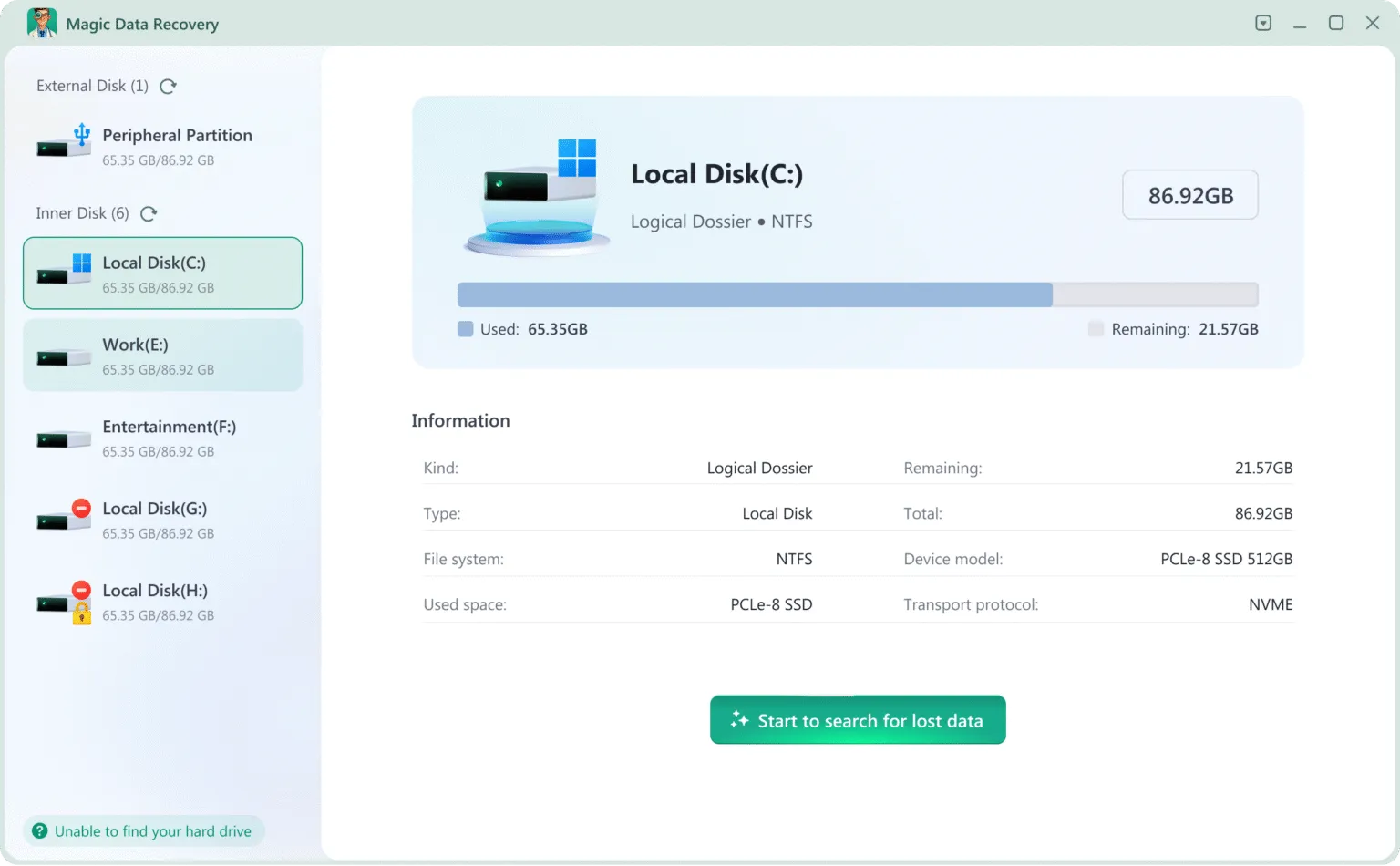
After you download and launch the software, the main interface will display all connected storage devices. You should identify the drive that was formatted. It might appear with its original name or as a “Lost Partition.” Selecting the correct source is vital because it ensures the software focuses its scanning power exactly where the data resides.
Step 2: Initiate the Comprehensive Scan
Once you have selected the drive, click the “Search for lost data” button. For a file recovery formatted drive, we highly recommend the Deep Scan mode (it will start deep scan directly after the quick scan). While this takes longer than a quick scan, it meticulously analyzes every sector of the storage medium. The software begins to rebuild the directory structure, often finding files that other programs miss. You can watch the progress bar as the software populates a list of found items in real-time.
Step 3: Preview and Save Your Data
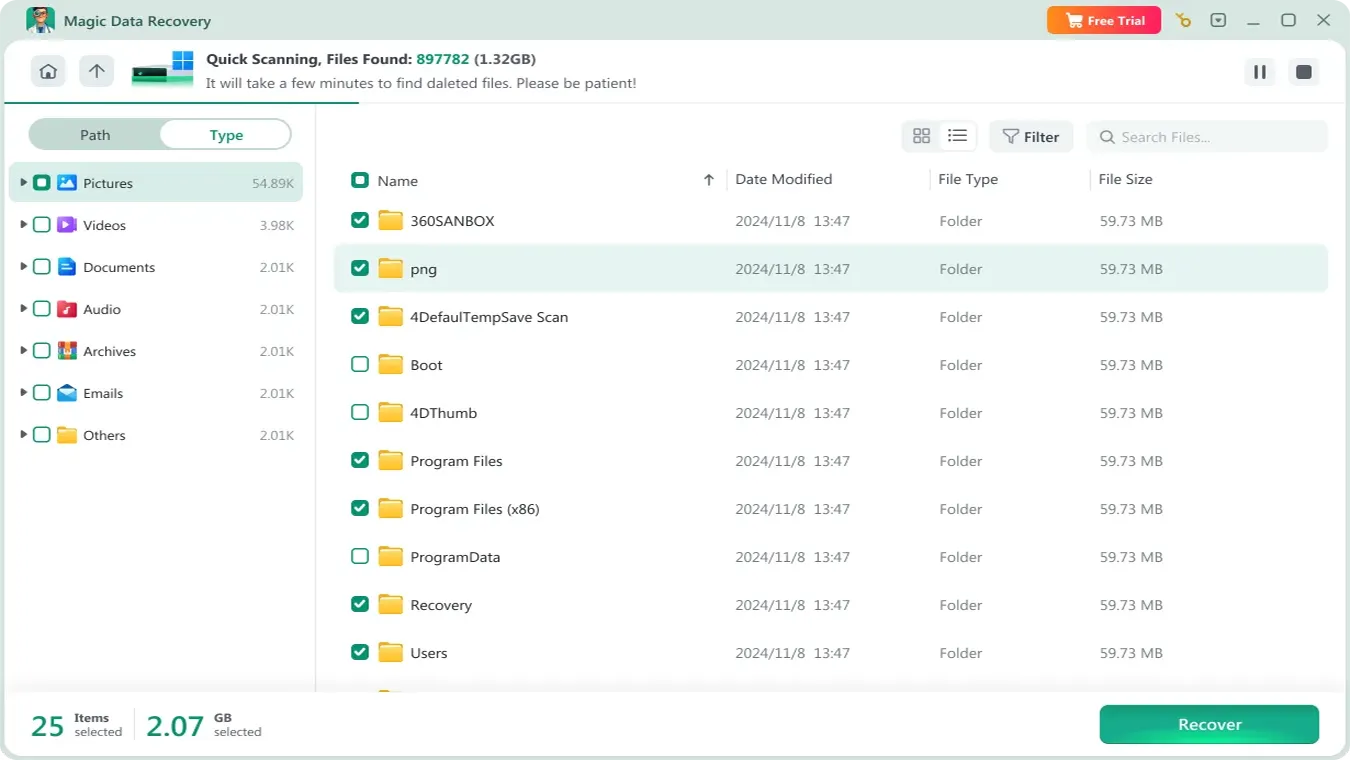
After the scan concludes, you can browse through the results. Magic Data Recovery organizes found files by type (e.g., JPEG, DOCX, MP4), making it easy to find what you need. One of the most powerful features here is the preview window. Always check the preview to ensure the file is intact. Finally, click “Recover” and choose a different drive to save the restored files. Saving them back to the original formatted drive is a common mistake that could lead to data corruption.

Is There a File Recovery Formatted Drive Free Option?
Many users start their search by looking for file recovery formatted drive free solutions. It is important to be realistic about what “free” means in the professional data recovery industry. Open-source tools like PhotoRec exist, but they lack a user-friendly interface and often fail to recover the original folder structure.
Magic Data Recovery offers a balanced approach. You can download the software and perform a full scan to see exactly what can be retrieved without paying a cent. This “try-before-you-buy” model ensures that you only invest in the tool if it successfully identifies your lost data. Using the file recovery formatted drive free scan feature is the safest way to assess the health of your data without any financial risk.
Handling Specific Data Loss Scenarios
Different storage media react differently to formatting. Understanding these nuances can help you manage your expectations during the file recovery formatted drive process.
External Hard Drives and USB Sticks
These are the most common victims of accidental formatting. Because they are often used for file transfers between different computers, file system errors are frequent. Magic Data Recovery is particularly adept at handling these “plug-and-play” devices, even if they have been formatted from NTFS to exFAT or vice versa.
The Challenge of SSDs and TRIM
If you are performing a file recovery formatted drive on an internal SSD, time is of the essence. Modern SSDs use a feature called TRIM, which proactively clears deleted data blocks to maintain speed. However, if you act quickly and use a professional tool like Magic Data Recovery, you still have a significant window of opportunity to grab the data before the TRIM command is fully executed.
Dealing with RAW Partitions
Sometimes, a drive isn’t formatted by you, but the system suddenly thinks it is. It might show up as “RAW” in Disk Management. This usually indicates a corrupted partition table. Instead of formatting it to “fix” the error, run Magic Data Recovery first. It can bypass the corruption and extract the files as they were before the error occurred.
Best Practices to Maximize Recovery Success
To ensure your file recovery formatted drive effort is successful, keep these expert tips in mind:
- Avoid Metadata Changes: Do not rename the drive or change its drive letter until after the recovery is complete.
- Use a Stable Power Source: If you are recovering data from an external drive on a laptop, ensure your laptop is plugged in. A sudden power loss during a deep scan can cause further logical damage.
- Hardware Health Check: If the drive was formatted because it was “acting up,” it might have physical bad sectors. Magic Data Recovery is gentle on hardware, but if you hear clicking sounds, seek professional hardware repair.
- Verify the Integrity: Once the file recovery formatted drive process is finished, open several recovered files to ensure they weren’t partially overwritten before the recovery started.
Conclusion: Don’t Let a Format Be the End
Losing data to a formatted drive is a stressful experience, but it is not a hopeless one. By understanding that your files still exist in the “digital shadows” of your drive, you can take the necessary formatted drive recovery steps to bring them back. The combination of immediate caution and professional software like Magic Data Recovery offers the highest probability of success.
Whether you are looking for a file recovery formatted drive free scan to check your chances or you need a robust, professional-grade solution to restore an entire business database, Magic Data Recovery provides the tools you need. It turns a complex technical nightmare into a simple, 3-step success story.
If you are ready to get your files back, don’t wait another minute. The longer a drive remains active, the higher the risk. Download Magic Data Recovery today and start your journey back to data safety.
Supports Windows 7/8/10/11 and Windows Server
FAQs
Can I recover files from a formatted drive?
Is it possible to recover data from a wiped hard drive?
Can Recuva recover a formatted disk?
How to recover data from formatted SSD drive?
Can files still be recovered after formatting?
How do professionals recover data from a hard drive?
Can I still recover permanently deleted files?
Is data permanently stored in hard disk?

Jason is a data recovery and technical support specialist with over 15 years of hands-on experience. He has worked extensively with frontline users, troubleshooting difficult data loss cases and providing practical recovery solutions for accidental deletion, formatted drives, damaged file systems, lost partitions, system failures, and other recovery emergencies. His expertise also includes backup and restoration, file repair, and disaster recovery, with a strong emphasis on safe, reliable, and technically accurate guidance.