
OpenClaw Deleted Files? Recover Files Deleted by AI Agent

Imagine opening your project folder only to find that important files have suddenly disappeared. For some users working with AI automation tools, this situation happens unexpectedly when OpenClaw Deleted Files becomes more than just a search query—it becomes a real problem.
OpenClaw is designed to automate tasks, manage workflows, and execute commands on your computer. While these capabilities can greatly improve productivity, they also mean the AI agent sometimes performs actions that users did not intend, such as removing files or wiping entire directories during automated cleanup tasks.
The good news is that data lost through AI automation is often recoverable. In many cases, deleted files still exist on the disk until new data overwrites them. With the right deleted file recovery approach, it is possible to restore documents, project folders, and other important files.
This article explains why AI agents sometimes delete files unexpectedly, what actually happens to your data after deletion, and how to safely recover files deleted by AI agent using both built-in recovery methods and professional tools like Magic Data Recovery.
Supports Windows 7/8/10/11 and Windows Server
Table of Contents
What Is OpenClaw?
- Managing files and directories
- Running shell commands
- Reading documents and logs
- Sending messages and emails
- Automating workflows across applications
- Move files
- Modify folders
- Execute scripts
- Delete directories
Why Did OpenClaw Delete My Files?
If you searched for “OpenClaw Deleted Files”, you’re not alone. There are several real scenarios where this can occur.
Understanding the cause helps determine the best OpenClaw accidental wipe recovery strategy.
1. Misinterpreted AI Instructions
AI agents rely on prompts and context. If the instructions are vague or ambiguous, the agent may take actions the user did not expect.
Example scenario:
User prompt:
Clean unnecessary files from project directory.
Possible AI interpretation:
- Delete build folders
- Remove logs
- Remove temporary files
- Delete entire folder
Even safety rules may fail if the AI loses context during long sessions.
2. Autonomous Task Automation
OpenClaw can execute scheduled tasks automatically.
For example:
- Weekly cleanup scripts
- Disk space optimization
- Archiving old files
If configured incorrectly, the agent might execute commands like:
rm -rf project/*
This results in an OpenClaw delete directory event.
3. Permission Misconfiguration
AI agents sometimes run with broad system privileges.
If the agent has access to:
- root directories
- project repositories
- system folders
A single incorrect command can remove large amounts of data.
Some developers even block dangerous commands like rm -rf specifically to prevent accidental deletion.
4. Bugs or AI Context Loss
There have been real cases where an OpenClaw agent attempted to delete large numbers of emails after losing instructions during processing.
This phenomenon can happen when:
- conversation context resets
- memory compaction occurs
- system state changes unexpectedly
The AI continues executing tasks but forgets restrictions.
5. Malicious Extensions or Security Issues
Because OpenClaw supports third-party extensions and skills, malicious code can also trigger data deletion.
Researchers have warned that some extensions contain malware or unsafe commands.
These risks make OpenClaw accidental wipe recovery a real concern for users.
What Happens When Files Are Deleted?
When files are deleted on Windows:
- The system removes file references.
- The storage blocks remain intact temporarily.
- New data may overwrite those blocks.
This means the files are not immediately destroyed.
However, recovery becomes harder if:
- new files are saved
- the disk is optimized
- the system writes new data
Therefore, stop using the drive immediately after noticing the deletion.
How to Recover Files Deleted by AI Agent
If OpenClaw deleted your files, try these solutions in order.
Method 1: Check the Recycle Bin
The simplest fix is often overlooked.
Steps:
- Open Recycle Bin
- Search for deleted files
- Right-click and select Restore
This works when OpenClaw uses standard delete commands instead of permanent deletion.
However, if the AI agent used command-line deletion (such as rm), files may bypass the Recycle Bin.
Method 2: Restore From Backup
If you have backups, recovery becomes easy.
Possible backup sources:
- Windows File History
- Cloud storage
- Git repositories
- External drive backups
Steps:
- Open backup system
- Locate the folder
- Restore previous version
Backup recovery works best when the deletion occurred recently.
Method 3: Use Windows Previous Versions
Windows automatically creates restore points in some situations.
To check:
- Right-click the affected folder
- Select Properties
- Open Previous Versions
If snapshots exist, you can restore the directory.
However, this feature is not always enabled.
Method 4: Use Professional Recovery Software
If the files were permanently deleted, you need a professional recovery tool.
This is the most effective solution for recover files deleted by AI agent scenarios.
Best Solution: Magic Data Recovery
When basic solutions fail, Magic Data Recovery provides a reliable way to recover deleted files from Windows systems.
Why Magic Data Recovery Helps After OpenClaw Accidental Wipe
AI agents often delete files using command-line operations. These deletions bypass the Recycle Bin and appear permanent.
Magic Data Recovery scans the disk directly and reconstructs lost data.
It works even when:
- OpenClaw delete directory commands removed entire folders
- files were deleted permanently
- partitions appear empty
- accidental automation wiped projects
Key Advantages
Deep File Recovery
The software performs deep scanning to detect recoverable data blocks.
It can recover:
- documents
- images
- videos
- project files
- archives and others
Recovery From Multiple Scenarios
Magic Data Recovery supports recovery after:
- accidental deletion
- system errors
- disk formatting
- AI agent mistakes
- script-based file removal
User-Friendly Interface
Unlike complex command-line tools, the software provides a visual recovery workflow:
- Select drive
- Scan for deleted files
- Preview recoverable files
- Restore data safely
This makes it accessible even for non-technical users.
Safer Than Manual Recovery Attempts
Some users attempt risky fixes like:
- disk repair commands
- partition rebuilding
- system resets
These actions may overwrite recoverable data.
Magic Data Recovery avoids these risks by performing read-only scanning.
Example Use Case
Scenario:
A developer runs an OpenClaw automation script to clean project folders.
The AI agent misinterprets instructions and deletes:
/projects/client-app
/projects/backup
Using Magic Data Recovery:
1. Select the drive from where you lost files.
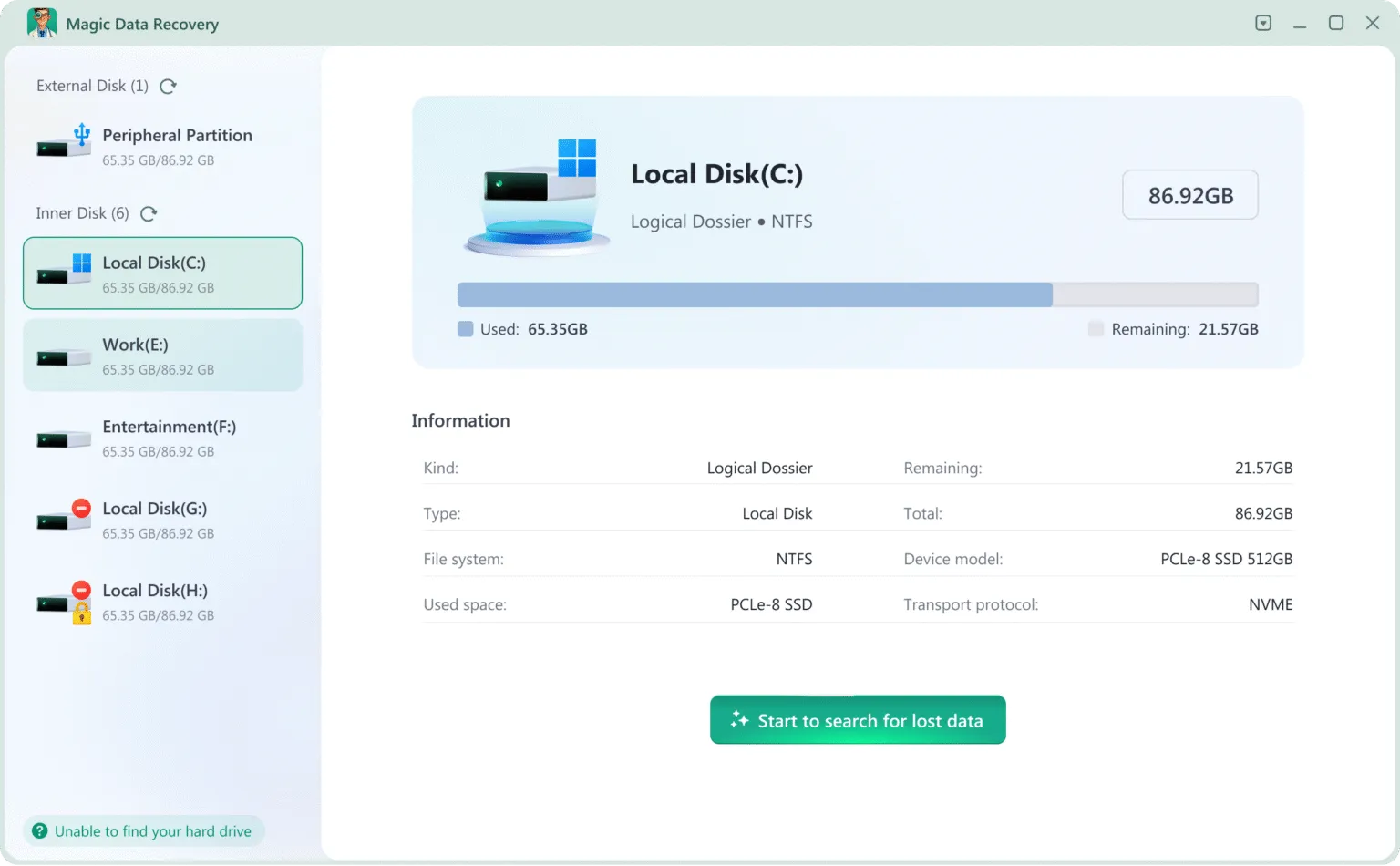
2. Click “Search for lost data” to scan your lost drive and it will list your files.
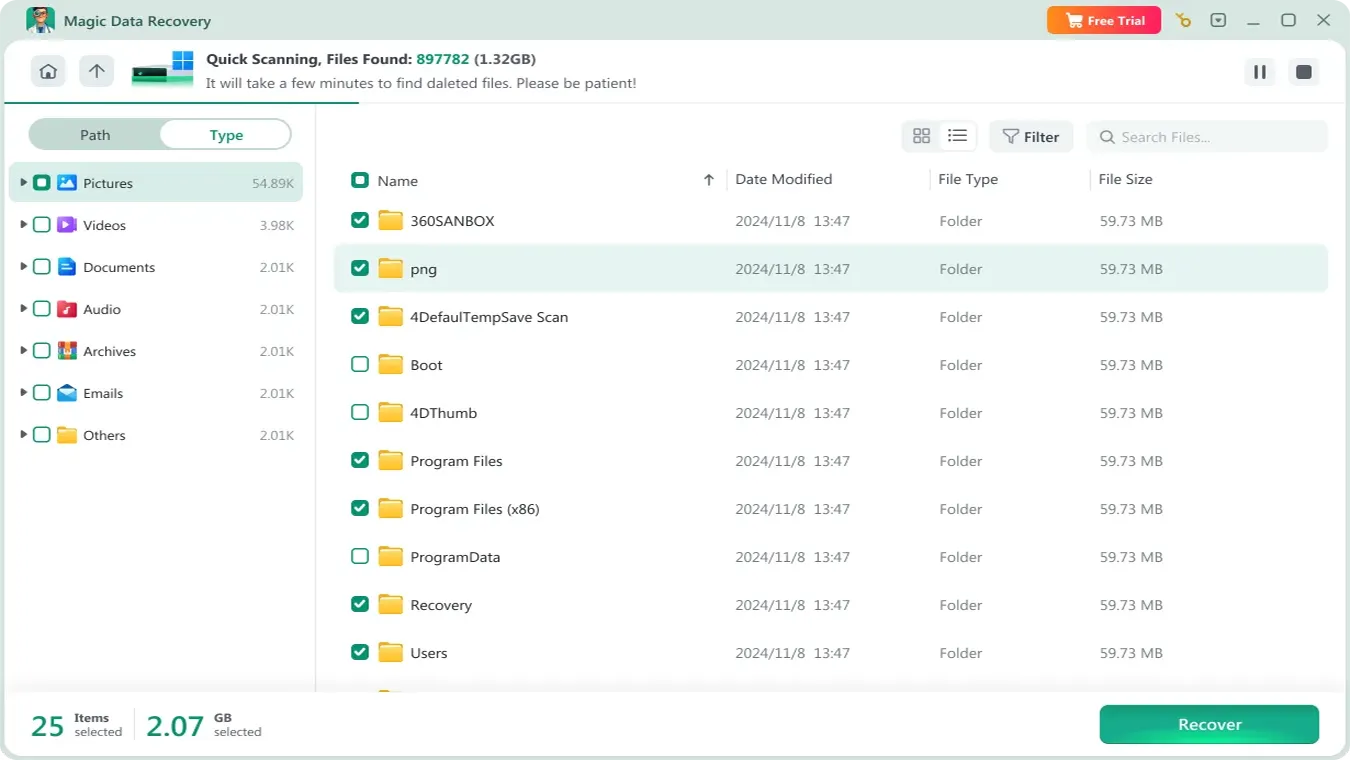
3. Preview your lost files and Save them to another drive.

If you are facing an OpenClaw accidental wipe recovery situation, using a specialized tool significantly improves recovery success.
If you need a faster and safer solution, consider trying Magic Data Recovery.
Supports Windows 7/8/10/11 and Windows Server
How to Prevent OpenClaw Data Loss in the Future
Prevention is always better than recovery.
Here are best practices for AI agent safety.
Restrict Dangerous Commands
Block high-risk operations such as:
rm -rf
format
delete /
Many OpenClaw configurations allow defining blocked commands.
Use Limited File Permissions
Run AI agents inside restricted directories rather than the entire system.
Example:
/workspace/project
Instead of giving full disk access.
Enable Regular Backups
Set automatic backups for important files:
- daily cloud backup
- Git commits
- system snapshots
Review AI Automation Scripts
Always review automation prompts that contain commands like:
- delete
- cleanup
- remove
- purge
These instructions can easily be misinterpreted by AI agents.
Conclusion
AI agents like OpenClaw bring powerful automation capabilities, but they also introduce new risks.
If you’re dealing with problems like OpenClaw Deleted Files. Don’t panic. In many cases, deleted files are still recoverable.
Start with simple methods like Recycle Bin or backups. If those fail, professional tools such as Magic Data Recovery provide the most reliable deleted file recovery way to restore lost data on Windows systems.
By combining recovery tools with better AI safety practices, you can enjoy automation without risking your important files.
Supports Windows 7/8/10/11 and Windows Server
FAQs
Can I recover files after OpenClaw deleted them?
Yes. In many cases, files deleted by OpenClaw are still recoverable because the system only removes file references initially. If the storage space has not been overwritten, recovery tools like Magic Data Recovery can scan the disk and restore lost files effectively.
Why did OpenClaw accidentally delete my files?
OpenClaw may delete files due to unclear instructions, automation scripts, permission misconfiguration, or AI context loss during execution. Since the agent can run system commands and manage directories, incorrect prompts or configurations may lead to unintended deletions.
Does OpenClaw permanently delete files?
It depends on the command used. If OpenClaw uses standard deletion commands, files may appear in the Recycle Bin. However, command-line operations such as rm can bypass the Recycle Bin, making the deletion appear permanent.
What should I do immediately after OpenClaw deletes files?
Stop using the affected drive immediately. Avoid downloading new files or installing programs because new data may overwrite recoverable blocks. Then attempt recovery using backup systems or a professional data recovery tool.
Can I recover an entire folder deleted by OpenClaw?
Yes. Many recovery tools can restore entire directories if the underlying file structure remains intact. Software like Magic Data Recovery scans the disk and reconstructs folders along with their original files.
Is AI agent data loss common?
As AI agents gain more control over system operations, accidental actions become possible. Misinterpreted instructions, automation scripts, and third-party extensions can all increase the risk of data loss if safeguards are not implemented.
What is the best tool to recover files deleted by AI agents?
A professional data recovery solution is recommended. Magic Data Recovery is designed to recover files lost due to accidental deletion, formatting, or automation errors on Windows systems.
How can I prevent OpenClaw accidental wipe in the future?
Limit the agent’s permissions, block dangerous commands, and create regular backups. Running OpenClaw inside a restricted workspace directory and reviewing automation prompts can significantly reduce the risk of accidental data deletion.

Jason is a data recovery and technical support specialist with over 15 years of hands-on experience. He has worked extensively with frontline users, troubleshooting difficult data loss cases and providing practical recovery solutions for accidental deletion, formatted drives, damaged file systems, lost partitions, system failures, and other recovery emergencies. His expertise also includes backup and restoration, file repair, and disaster recovery, with a strong emphasis on safe, reliable, and technically accurate guidance.