
How to Run RAW Hard Drive Recovery Safely

When a hard drive suddenly appears as RAW, most users feel immediate panic. Files become inaccessible, Windows asks you to format the disk, and valuable data seems lost. In reality, raw hard drive recovery is often possible—as long as you take the right lost partition recovery steps from the beginning.
A RAW hard drive usually indicates file system corruption rather than actual data deletion. However, incorrect actions such as formatting or running repair commands too early can permanently destroy recoverable files. This guide explains what a RAW hard drive means, how recovery works in real scenarios, and why using reliable raw hard drive recovery software like Magic Data Recovery is often the safest solution.
Supports Windows 7/8/10/11 and Windows Server
Wondering if your files can be recovered? Find out in seconds with our quick check below.
Data Recovery Assessment
Answer 3 quick questions to estimate your recovery chances
Table of Contents
What Does It Mean When a Hard Drive Is RAW?
A hard drive is labeled RAW when the operating system cannot recognize its file system. As a result, the drive cannot be opened, and Windows may prompt you to format it before use.
Common causes include:
- File system corruption after an improper shutdown
- Sudden power failure during disk activity
- Virus or malware attacks
- Bad sectors or aging storage media
- Interrupted formatting or partition changes
Importantly, RAW status does not mean the data is gone. In many cases, files remain intact but cannot be indexed or accessed normally.
Can You Recover Data from a RAW Hard Drive?
Yes, raw hard drive recovery is possible in many practical situations. Recovery success depends on the disk condition and the actions taken after the problem occurs.
Data can usually be recovered when:
- The system can still detect the hard drive
- No new data has been written to the RAW disk
- The drive has not been repeatedly repaired or reformatted
However, recovery becomes more difficult if the drive suffers from severe physical damage or if destructive repair tools overwrite file system metadata.
What NOT to Do Before RAW Hard Drive Recovery
Before starting recovery, avoiding common mistakes is critical. Many users unintentionally cause permanent data loss at this stage.
- Do not format the RAW hard drive, even if Windows recommends it
- Avoid running CHKDSK or similar commands blindly
- Avoid copying or saving new files to the RAW disk
Professionals always follow one rule: recover data first, repair the drive later.
How to Recover a RAW Drive Without Formatting
The safest way to recover files from a RAW drive without formatting is to use dedicated raw hard drive recovery software designed for read-only scanning.
Such software analyzes the disk sector by sector, identifies file signatures, and reconstructs data without modifying the original structure. This approach minimizes risk and preserves the highest possible amount of recoverable data.
Recover Data from a RAW Hard Drive with Magic Data Recovery
Magic Data Recovery can handle complex data loss scenarios, including RAW hard drives caused by file system error or partition damage. Instead of forcing risky repairs, it focuses on secure and practical raw hard drive recovery.
How Magic Data Recovery Addresses RAW Drive Issues
Magic Data Recovery solves several common pain points:
- Detects RAW hard drives even when they cannot be opened
- Performs Advanced Scans to locate files by structure and signature
- Recovers documents, photos, videos, and archives reliably
- Operates in read-only mode to avoid overwriting existing data
For example, if an external hard drive becomes RAW after improper ejection, Magic Data Recovery can scan the disk and restore files before any repair attempts. Compared with built-in system tools, it provides greater transparency and control during recovery.
How to Use Magic Data Recovery for RAW Drive Recovery
Step 1: Download and Install the Software on a Separate Drive
Download Magic Data Recovery and install it on a healthy drive. This prevents any installation process from writing data to the RAW drive, safeguarding your lost files.
Supports Windows 7/8/10/11 and Windows Server
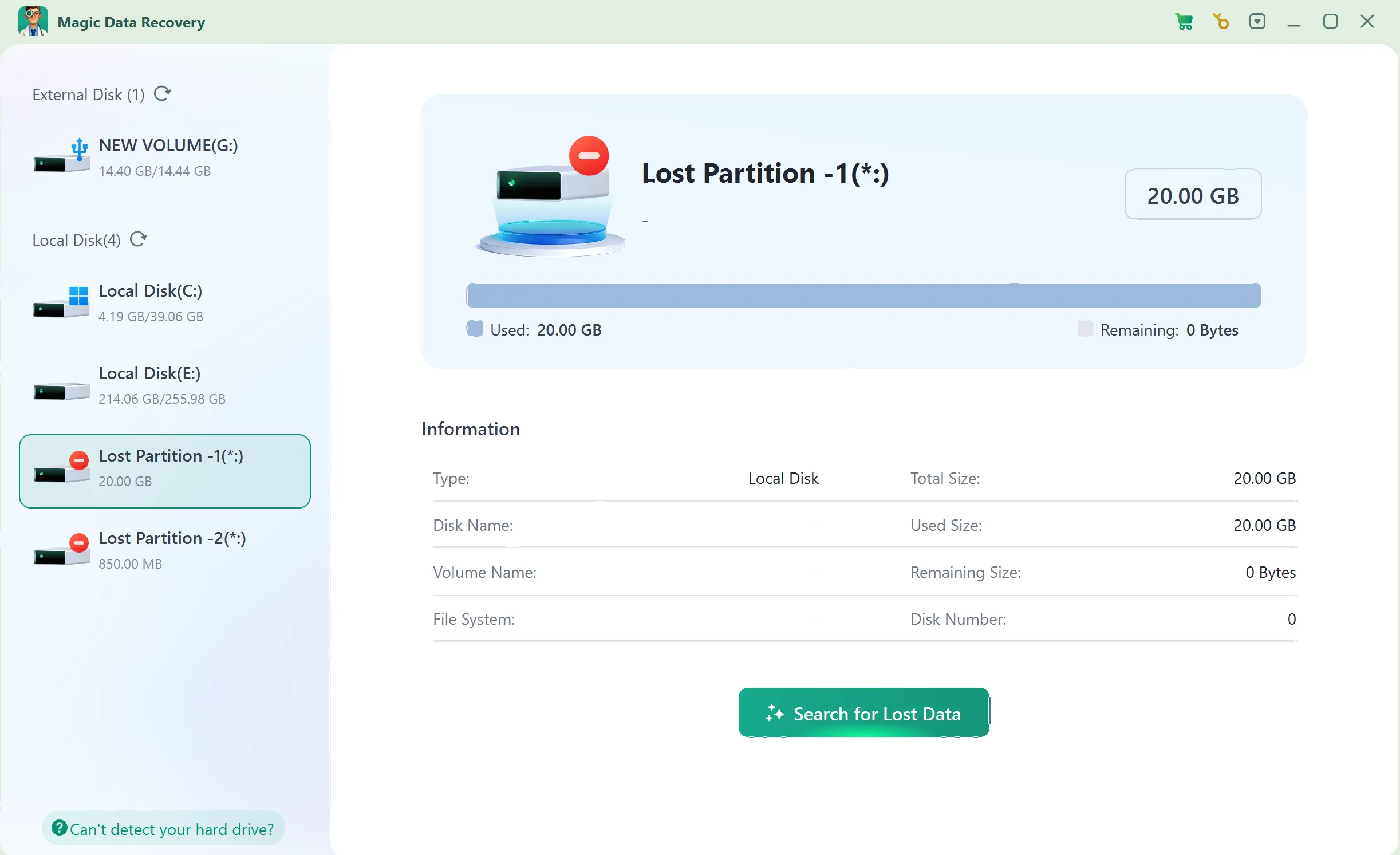
Step 2: Select the RAW Drive for Scanning
Launch the software. From the main interface, identify and select the drive that is currently showing as “RAW” or has an unknown file system. This is the drive you will be scanning to locate and rebuild its original structure.
Step 3: Perform an Advanced Scan on the RAW Drive
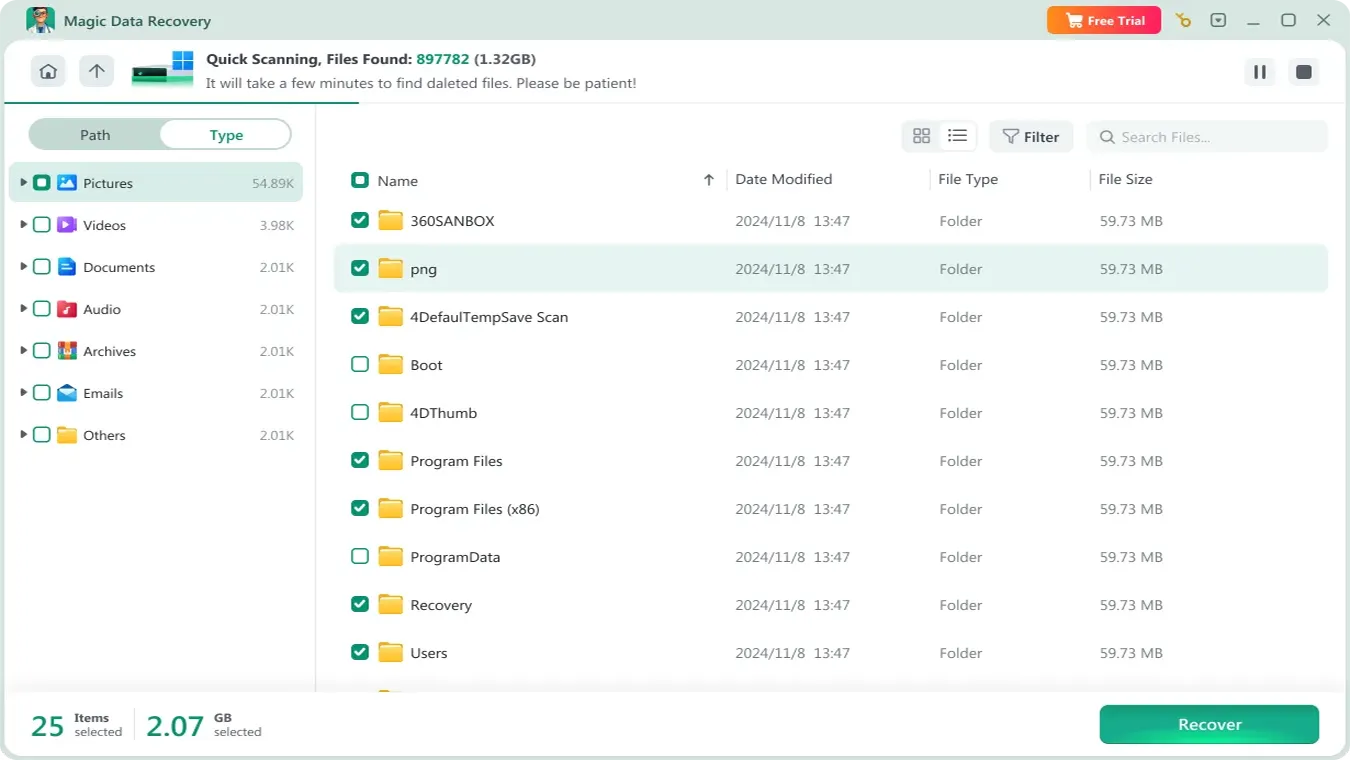
Magic Data Recovery will run an Advanced Scan automatically to analyze the RAW drive to identify the original file system and find recoverable data. Found files and folder structures will appear in real-time during the scan.
Step 4: Preview Files from the RAW Drive
After the scan completes, use the preview function to check the integrity of important files. This confirms their recoverability and helps you select the correct data found on the RAW drive.

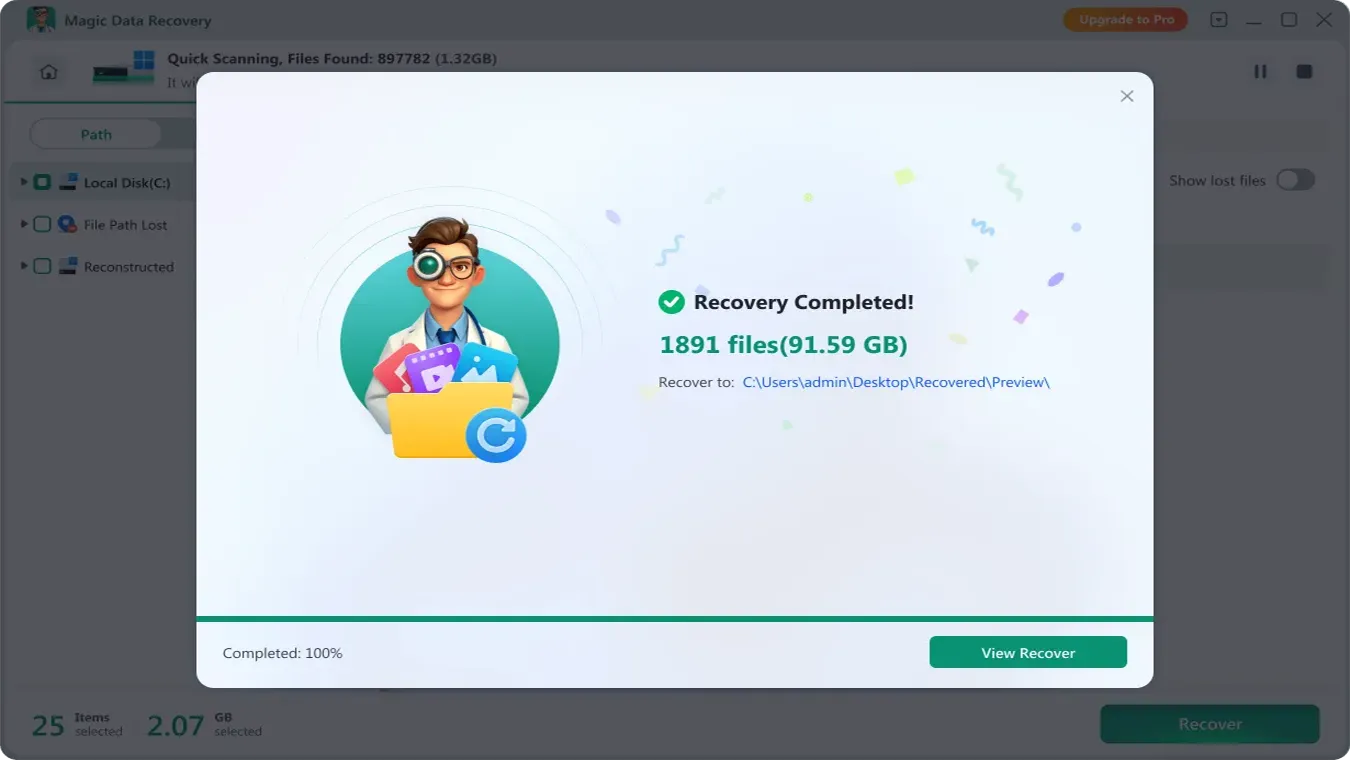
Step 5: Save Recovered Data to a Different, Healthy Drive
Select the files and folders you wish to recover. Crucially, save them to a different and healthy storage device. Never save recovered data back to the original RAW drive to avoid permanent data overwrite.
How to Repair a RAW Hard Drive After Data Recovery
Once data recovery is complete, repairing the RAW hard drive becomes safe.
Common repair methods include:
- Formatting the drive to NTFS or exFAT
- Rebuilding partitions using disk management tools
- Scanning for bad sectors with CHKDSK
Always ensure that data is fully recovered before attempting any repairs, as repair operations permanently modify disk structures.
Conclusion
A RAW hard drive issue does not automatically mean permanent data loss. With the correct lost partition recovery approach, raw hard drive recovery is often achievable. The key is to avoid formatting or repair operations blindly. Recover data first, and only then repair the drive.
Magic Data Recovery provides a balanced solution that combines safety, usability, and professional-grade scanning. By focusing on secure data recovery rather than risky repairs, it offers a reliable path for users facing RAW hard drive problems.
Supports Windows 7/8/10/11 and Windows Server
FAQ
How to repair a RAW hard drive?
How to recover a RAW drive without formatting?
What does it mean when a hard drive is RAW?
How to fix a corrupted RAW drive?
How to fix RAW hard drive to NTFS?
How to repair a hard drive without formatting?
How do professionals recover data from a hard drive?

Vasilii is a data recovery specialist with around 10 years of hands-on experience in the field. Throughout his career, he has successfully solved thousands of complex cases involving deleted files, formatted drives, lost partitions, and RAW file systems. His expertise covers both manual recovery methods using professional tools like hex editors and advanced automated solutions with recovery software. Vasilii's mission is to make reliable data recovery knowledge accessible to both IT professionals and everyday users, helping them safeguard their valuable digital assets.