
Lost Word File Recovery: 7 Proven Ways to Recover Deleted or Unsaved Word Documents

Losing an important Word document can be stressful, especially when it contains hours of work. Fortunately, lost Word file recovery is possible in most cases, whether your file was deleted, unsaved, or lost after a system crash.
This guide walks you through 7 proven recovery methods, with detailed steps that you can follow easily. By the end, you will know exactly how to recover your Word files in any situation.
Table of Contents
Can You Recover a Lost Word File?
Yes, you can recover a lost Word file in most situations.
Microsoft Word and Windows both include built-in recovery features. If those methods fail, professional recovery tools can help retrieve files even after formatting or system errors.
The most important thing is to choose the correct method based on how the file was lost.
Common Causes of Lost Word Files
Before starting recovery, it helps to understand what caused the problem:
- Accidental deletion
- Closing Word without saving
- System crash or sudden shutdown
- Disk formatting
- Windows reinstallation
- File system corruption
Each situation requires a different recovery approach.
Quick Recovery Guide (Choose the Right Method Fast)
Use this quick reference to save time:
Scenario | Best Method |
Deleted file | Recycle Bin / Recovery software |
Unsaved document | AutoRecover |
Word crash | Document Recovery |
Formatted drive | Data recovery software |
System reinstall | Advanced recovery tool |
File system error | Recovery software |
Method 1: Recover from Recycle Bin
If you deleted the file recently, this is the easiest method.
Detailed Steps:
- Double-click the Recycle Bin icon on your desktop
- In the search bar (top right), type part of your Word file name
- Look for files with extensions like .doc or .docx
- Once you find the file, right-click on it
- Click Restore
- Go to the original folder location to confirm the file is back
Tips:
- Sort by “Date Deleted” to find recent files faster
- If the file is not there, it may have been permanently deleted
Method 2: Recover Unsaved Word Document (AutoRecover)
Word automatically saves temporary versions of your work.
Detailed Steps:
- Open Microsoft Word
- Click File in the top menu
- Select Info from the left panel
- Click Manage Document
- Choose Recover Unsaved Documents
- A list of unsaved files will appear
- Click the file you want
- Once opened, click Save As immediately
Extra Tip:
- Save the recovered file to a different location to avoid overwriting
Method 3: Recover from Temporary Files
Temporary files may still contain your lost content.
Detailed Steps:
- Press Windows + R to open the Run dialog
- Type %temp% and press Enter
- In the folder, click View > Details
- Sort files by Date Modified
- Look for files ending in .tmp, .asd, or .wbk
- Open suspicious files using Microsoft Word
- If the content looks correct, click Save As
Tips:
- Use the search bar with .asd for faster results
- Rename the file to .docx if needed before opening
Method 4: Restore Previous Versions
Windows may have saved older versions automatically.
Detailed Steps:
- Navigate to the folder where your Word file was saved
- Right-click on the folder
- Select Restore previous versions
- A list of available versions will appear
- Choose a version with the correct date
- Click Open to preview
- Click Restore if it contains your file
Important:
- This only works if File History or backup is enabled
Method 5: Recover Lost Word Files After Formatting or System Crash (Best Solution)
If your data was lost due to formatting, system crash, or OS reinstallation, standard methods usually do not work.
Why Standard Methods Fail
Basic recovery methods rely on temporary storage or backups. They cannot handle:
- Formatted drives
- Damaged file systems
- Reinstalled operating systems
- Permanently deleted files
Use Magic Data Recovery (Recommended)
Magic Data Recovery is designed for complex recovery scenarios.
It can:
- Recover permanently deleted Word files
- Restore files from formatted drives
- Recover data after system reinstall
- Repair file system errors
- Support HDD, SSD, USB drives, and more
Step-by-Step Guide
- Download and install Magic Data Recovery
Supports Windows 7/8/10/11 and Windows Server
- Launch the software
- Select the drive where your Word file was lost
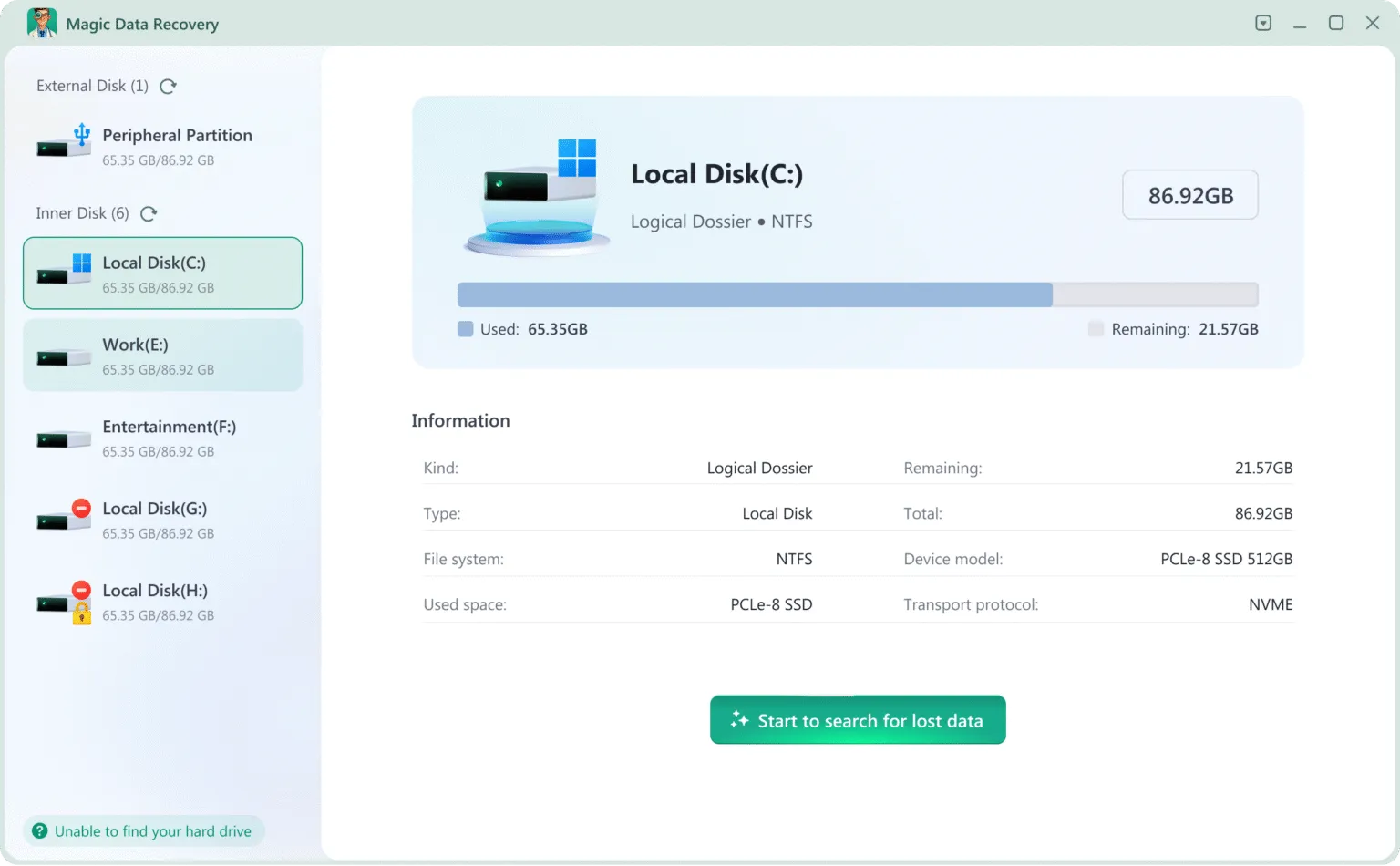
- Click Search for lost data to begin
- Wait for the scanning process to complete
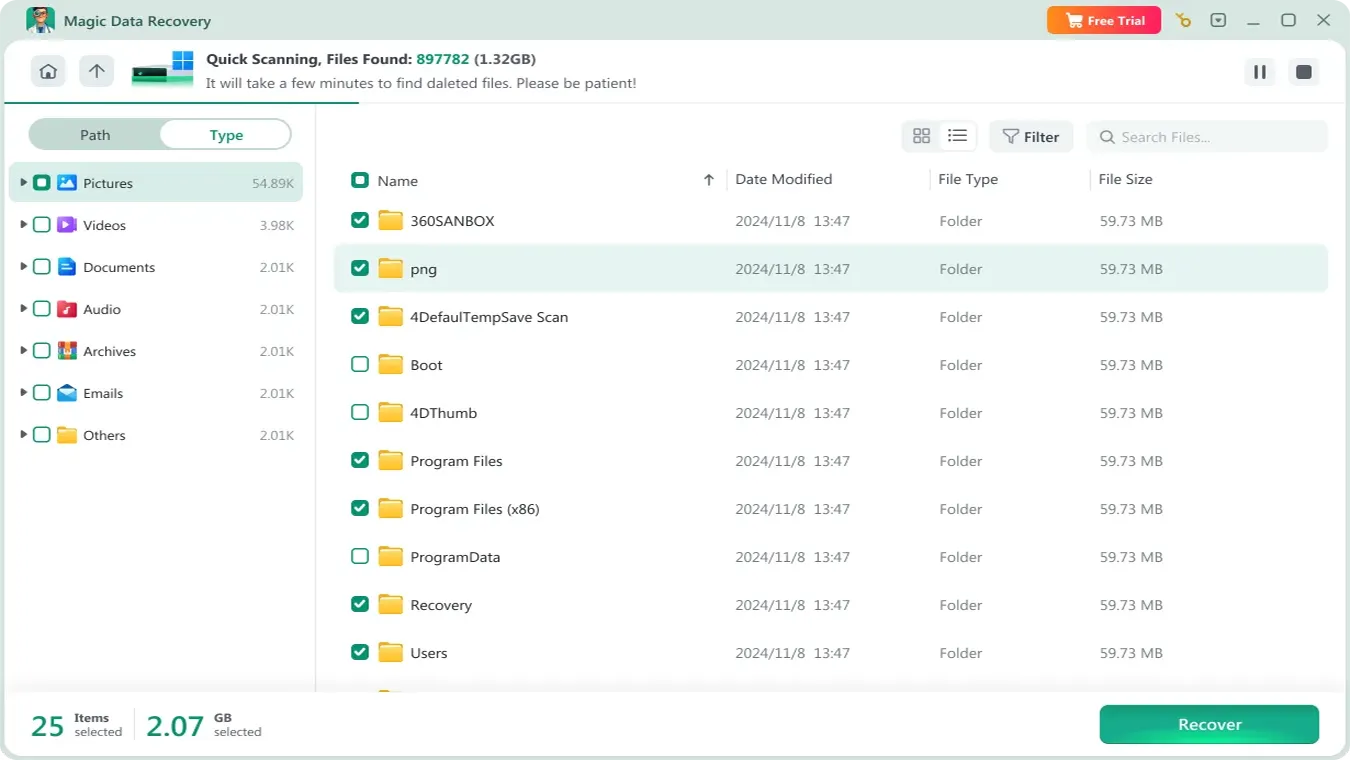
- Use filters to locate .doc or .docx files
- Preview the files to confirm they are correct
- Select the files you want to recover
- Click Recover
- Save them to a different drive or location
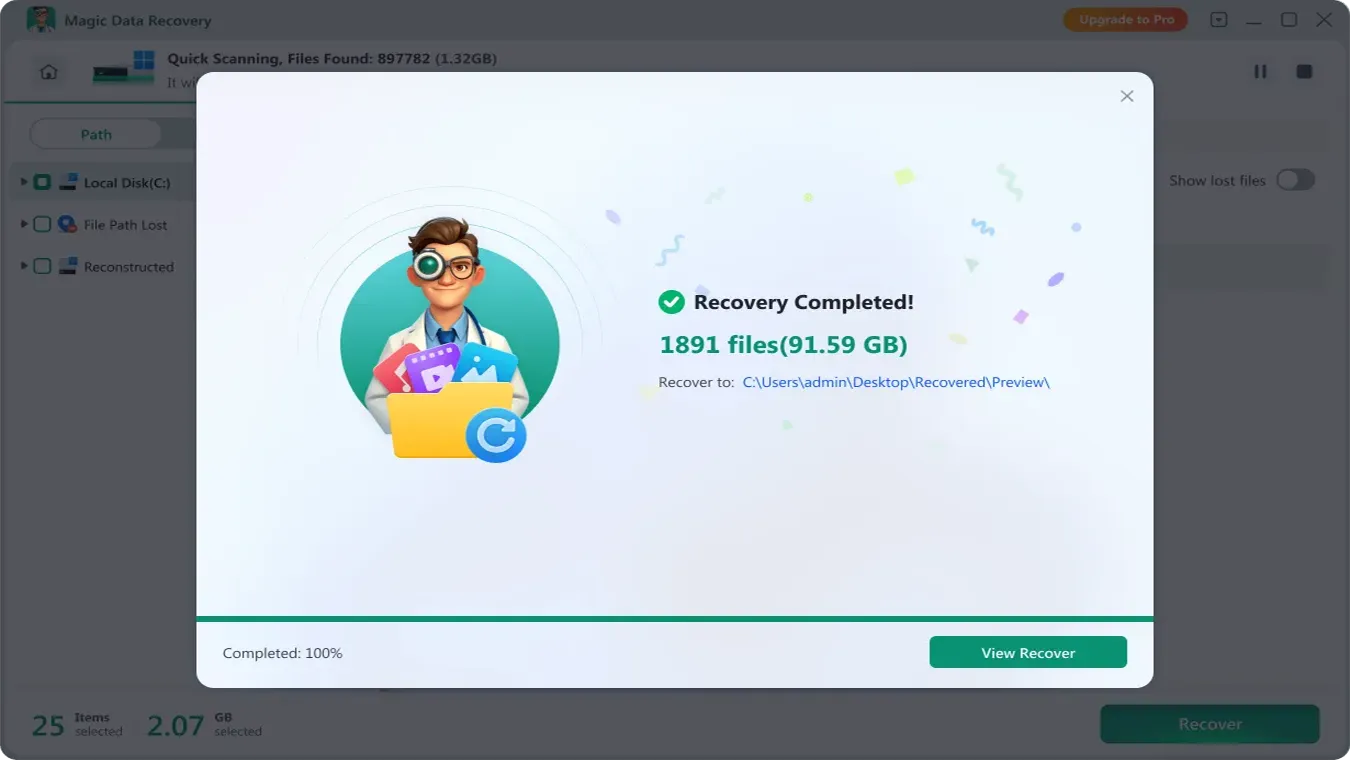
Tips:
- Avoid saving recovered files to the same drive
- Use deep scan for better results
Why Magic Data Recovery is Better
- Higher success rate for complex data loss
- Deep scanning technology
- Supports multiple recovery scenarios
- Easy for beginners to use
It is the most reliable option when other methods fail.
Method 6: Recover from Word Backup Files
Word may create backup files automatically.
Detailed Steps:
- Open Microsoft Word
- Click File > Open > Browse
- Navigate to your document folder
- In the file type dropdown, select All Files
- Look for files ending in .wbk
- Open the file
- Save it immediately as a new document
Method 7: Use Document Recovery Panel
After a crash, Word may show recovery options.
Detailed Steps:
- Restart Microsoft Word
- Wait for the Document Recovery panel to appear
- Review the list of recovered files
- Click each file to preview it
- Choose the most complete version
- Click Save As to store it safely
Tip:
- Always save recovered files immediately to prevent loss
Comparison of All Recovery Methods
Method | Difficulty | Success Rate | Best Scenario |
Recycle Bin | Easy | High | Deleted files |
AutoRecover | Easy | Medium | Unsaved files |
Temp Files | Medium | Medium | Crashes |
Previous Versions | Medium | Medium | Backup enabled |
Magic Data Recovery | Easy | Very High | Formatting, system crash |
Backup Files | Medium | Low | Backup enabled |
Recovery Panel | Easy | Medium | Word crash |
Pro Tips to Prevent Word File Loss
- Turn on AutoSave in Word
- Save files frequently
- Use cloud backup like OneDrive
- Enable File History in Windows
- Avoid forced shutdowns
- Install reliable antivirus software
Prevention reduces the risk of data loss significantly.
Conclusion
Losing a Word document does not mean it is gone forever. In most cases, you can complete lost Word file recovery by choosing the right word recovery method based on your situation.
For simple cases, built-in options like Recycle Bin, AutoRecover, and temporary files often work well. However, if your file was lost due to formatting, system crashes, or permanent deletion, basic methods may not be enough.
In these advanced scenarios, using a professional tool like Magic Data Recovery gives you the highest chance of success. It can recover data from complex situations where other methods fail.
To avoid future data loss, remember to enable AutoSave, back up your files regularly, and act quickly when data loss happens.
The sooner you start recovery, the higher your chances of getting your Word file back.
Supports Windows 7/8/10/11 and Windows Server
FAQs
Can I recover a permanently deleted Word file?
Yes, permanently deleted Word files can still be recovered if they have not been overwritten. When a file is deleted, the system only removes its reference, not the actual data. Using professional tools like Magic Data Recovery increases the chance of successful recovery.
How do I recover an unsaved Word document?
You can recover unsaved documents using the AutoRecover feature in Microsoft Word. Go to File > Info > Manage Document and select Recover Unsaved Documents. This method works best if Word created a temporary save before closing.
Can I recover Word files after formatting a drive?
Yes, it is possible to recover Word files after formatting. However, built-in tools will not work in this case. You need specialized software like Magic Data Recovery, which scans formatted drives and retrieves lost data effectively.
Where are Word AutoRecover files stored?
AutoRecover files are stored in system folders, usually under AppData. You can access them directly through Word’s recovery feature or search manually using the file extension .asd. These files often contain recent versions of your document.
Is data recovery software safe to use?
Reliable data recovery software is safe when downloaded from official sources. Tools like Magic Data Recovery only scan your storage and recover files without damaging existing data. Always avoid unknown or untrusted programs.
Can I recover Word files after a system crash?
Yes, you can recover files after a system crash using Word’s Document Recovery panel or AutoRecover. If these options fail, recovery software can scan your drive and retrieve files that were not saved properly.
Why can't I find my Word document?
Your Word document may be missing due to deletion, unsaved changes, or corruption. It may also be hidden or stored in a temporary location. Checking recovery folders or using recovery software can help locate it.
What is the best tool for lost Word file recovery?
The best tool depends on the situation. Built-in methods work for simple issues. For advanced cases like formatting or system errors, Magic Data Recovery provides the most reliable and complete solution.

Jason is a data recovery and technical support specialist with over 15 years of hands-on experience. He has worked extensively with frontline users, troubleshooting difficult data loss cases and providing practical recovery solutions for accidental deletion, formatted drives, damaged file systems, lost partitions, system failures, and other recovery emergencies. His expertise also includes backup and restoration, file repair, and disaster recovery, with a strong emphasis on safe, reliable, and technically accurate guidance.