
Recover Overwritten Excel File Guide
Few mistakes feel worse than opening an Excel workbook and realizing the original data has been replaced. Maybe you saved a blank template over a report, synced the wrong version from another computer, or updated a shared spreadsheet without keeping a copy. At that moment, the main question is simple: can you recover overwritten excel file data before it is gone forever?
The answer depends on how the file was overwritten. In many cases, you may still find an earlier version through Excel AutoRecover, Windows File History, OneDrive Version History, temporary files, or a local backup. In other cases, parts of the old file may still exist on the drive if the original data was not fully overwritten at the storage level. That is where a reliable deleted file recovery solution can help you scan the drive and check whether recoverable Excel data still exists.
This guide explains how to recover overwritten excel file versions step by step. It also explains when recovery is realistic, when software can help, and when a file may be permanently unrecoverable.
Table of Contents
Can You Recover an Overwritten Excel File?
Yes, you can sometimes recover overwritten excel file versions, but success depends on where the earlier copy exists. Excel and Windows may store previous versions, temporary copies, or backup data. Cloud services may also keep file history. If one of these copies exists, recovery is often straightforward.
However, if a new file fully replaced the old file on the same physical storage space, no software can rebuild the original workbook from nothing. This point matters because many users confuse “overwritten” with “deleted.” A deleted file may still remain on the disk until new data replaces it. A completely overwritten file has already lost its original content.
Therefore, your first move should be to stop using the affected drive or folder. Do not save new Excel files, install software, or download large files to the same location. The less new data you write, the better your chance of finding a previous version or remaining recoverable data.
Quick Comparison: Best Ways to Restore Overwritten File Versions
Method | Best For | Difficulty | Recovery Chance |
Excel Version History | Files saved in OneDrive or SharePoint | Easy | High if history exists |
Recover Unsaved Workbooks | Crashes, accidental close, unsaved edits | Easy | Medium |
Windows Previous Versions | File History or restore points enabled | Easy | Medium to high |
Temporary Excel files | Local edits, interrupted saves, hidden temp copies | Medium | Medium |
Backup drives | Users with manual or automatic backups | Easy | High |
Data recovery software | Deleted, missing, partially overwritten, or lost Excel files | Easy to medium | Depends on overwrite level |
Professional lab | Failing drives or serious hardware issues | Hard / costly | Case-specific |
Method 1: Check Excel Version History First
If your workbook was stored in OneDrive, SharePoint, or another synced Microsoft location, Version History should be your first option. It often gives you the cleanest way to recover overwritten excel file versions without scanning the drive.
Steps
- Open the folder where the Excel file is stored.
- Right-click the workbook.
- Select Version History.
- Review the available versions.
- Open the version you need.
- Restore it or save it as a separate file.
This method works best when AutoSave was enabled and the file was synced to the cloud. It is also useful when you accidentally saved over the workbook from another device.
Practical Tip
Before restoring, open the older version and check the worksheet tabs, formulas, and recent edits. If you are not sure which copy is correct, use Save As and keep both versions. This avoids replacing another useful copy by mistake.
Method 2: Use Excel Recover Unsaved Workbooks
Excel includes a built-in recovery feature for unsaved workbooks. It does not always help with a fully saved overwrite, but it can help when Excel crashed, Windows restarted, or you closed a file without saving.
Steps
- Open Excel.
- Go to File > Info.
- Select Manage Workbook.
- Click Recover Unsaved Workbooks.
- Open the available file.
- Choose Save As and save it to a safe location.
This method is worth trying because it only takes a minute. Even when it cannot fully restore overwritten file content, it may contain recent formulas, worksheet structures, or partial edits that reduce the amount of manual rebuilding.
Method 3: Restore Previous Versions in Windows
Windows may keep previous file versions through File History, restore points, or backup settings. If this feature was enabled before the overwrite happened, it can help you recover overwritten excel file copies quickly.
Steps
- Open File Explorer.
- Go to the folder containing the Excel file.
- Right-click the file or folder.
- Select Properties.
- Open the Previous Versions tab.
- Choose a version dated before the overwrite.
- Click Open to inspect it.
- Click Restore only when you are sure.
If you see no previous versions, it usually means File History or restore-based protection was not active for that location. In that case, move to temporary files, backups, or recovery software.
Method 4: Search for Excel Temporary Files
Excel may create temporary files while you edit or save a workbook. These files can be especially useful when the original workbook was interrupted during saving or when Excel generated a working copy before the overwrite.
Where to Look
Search these locations:
- The same folder as the original workbook
- %temp%
- C:\Users\YourName\AppData\Local\Microsoft\Office\UnsavedFiles
- OneDrive or synced cache folders
- Recent files in Excel
File Names to Search
Try searching for:
- *.tmp
- *.xlsb
- *.xlsx
- ~$*.xlsx
- The original workbook name
- Part of the worksheet title
Temporary files may not always open directly. If you find a suspicious file, copy it to another folder first. Then rename a copy with the .xlsx extension and try opening it in Excel. Do not rename or edit the only copy.
Method 5: Check OneDrive, Google Drive, Dropbox, or Email Attachments
Many overwritten Excel files survive in cloud storage or email attachments. This is common in business workflows where users send reports, download templates, or sync files across several computers.
Check these places:
- OneDrive Version History
- Google Drive version management
- Dropbox file history
- Email attachments
- Chat apps where the workbook was shared
- Downloads folder
- External USB drives
- Old desktop copies
This method is often overlooked. However, it can be one of the safest ways to restore overwritten file content because you are retrieving an existing copy instead of trying to reconstruct deleted data.
Method 6: Use Magic Data Recovery to Scan for Lost or Partially Recoverable Excel Files
If the methods above do not work, you can scan the drive with Magic Data Recovery. This is useful when the Excel file was deleted, replaced, moved, lost after formatting, or affected by file system errors. It can also help when the old workbook was not completely overwritten and recoverable traces still exist.
Magic Data Recovery supports common data loss scenarios, including deleted files, formatted drives, file system errors, and other cases where files disappear from Windows. For Excel recovery, it can scan the original drive and help you preview found documents before recovery. You can also read the Magic Data Recovery user guide for a clearer recovery workflow.
Why Use Recovery Software in This Situation?
When you do not know whether the Excel file was fully overwritten, guessing is risky. A scan gives you a practical answer. If the software finds and previews the lost workbook, recovery is likely possible. If no earlier copy appears after a complete scan, the file may have been fully overwritten or never stored as a separate recoverable copy.
This makes recovery software useful not only as a recovery method but also as a diagnostic tool.
Supports Windows 7/8/10/11 and Windows Server
How to Recover Excel Files with Magic Data Recovery
- Stop using the drive where the Excel file was overwritten.
- Install Magic Data Recovery on a different drive if possible.
- Open the software and select the original file location.
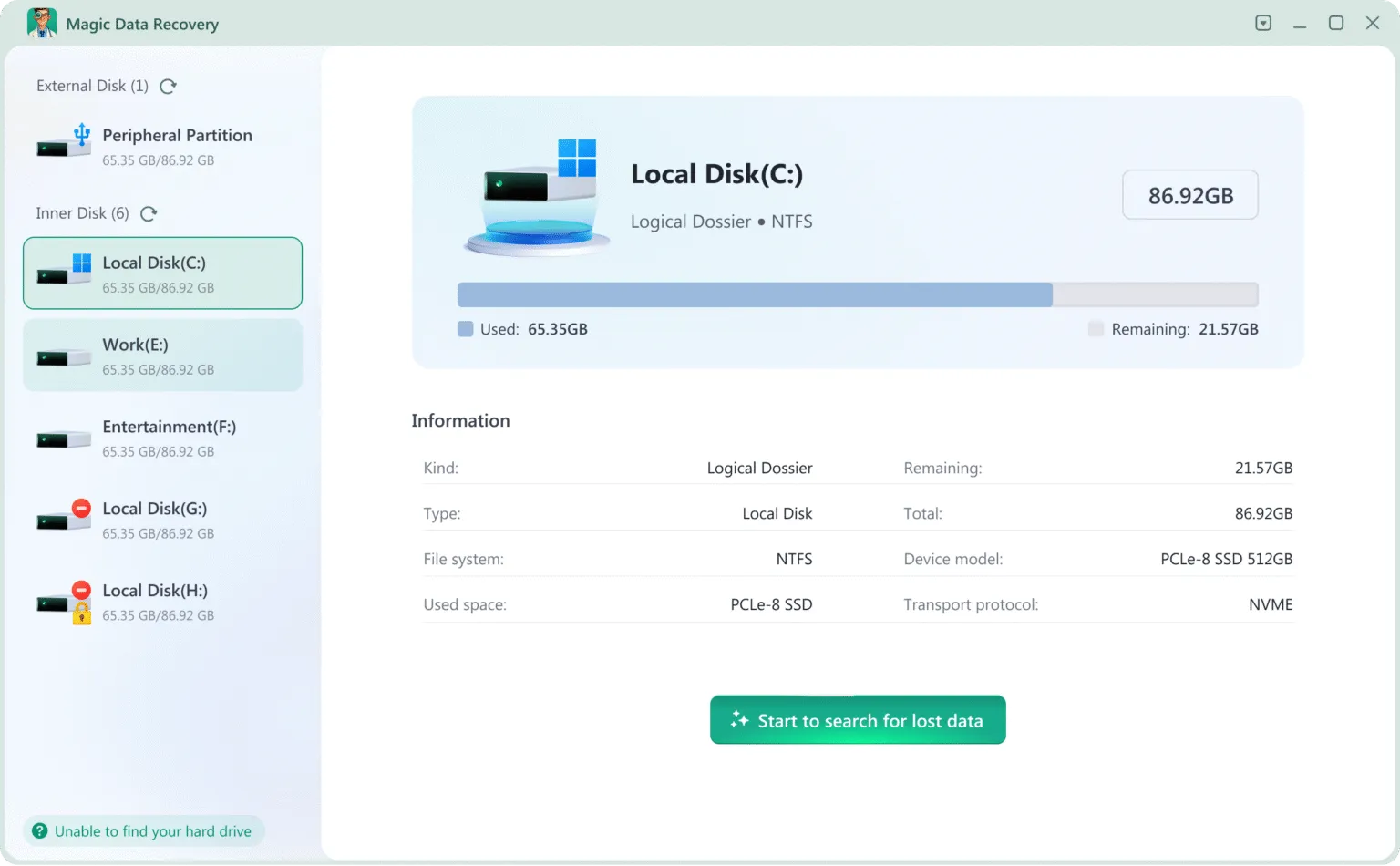
4. Start a scan.
5. Filter results by document type or search for .xlsx, .xls, or the workbook name.
6. Preview the found files.

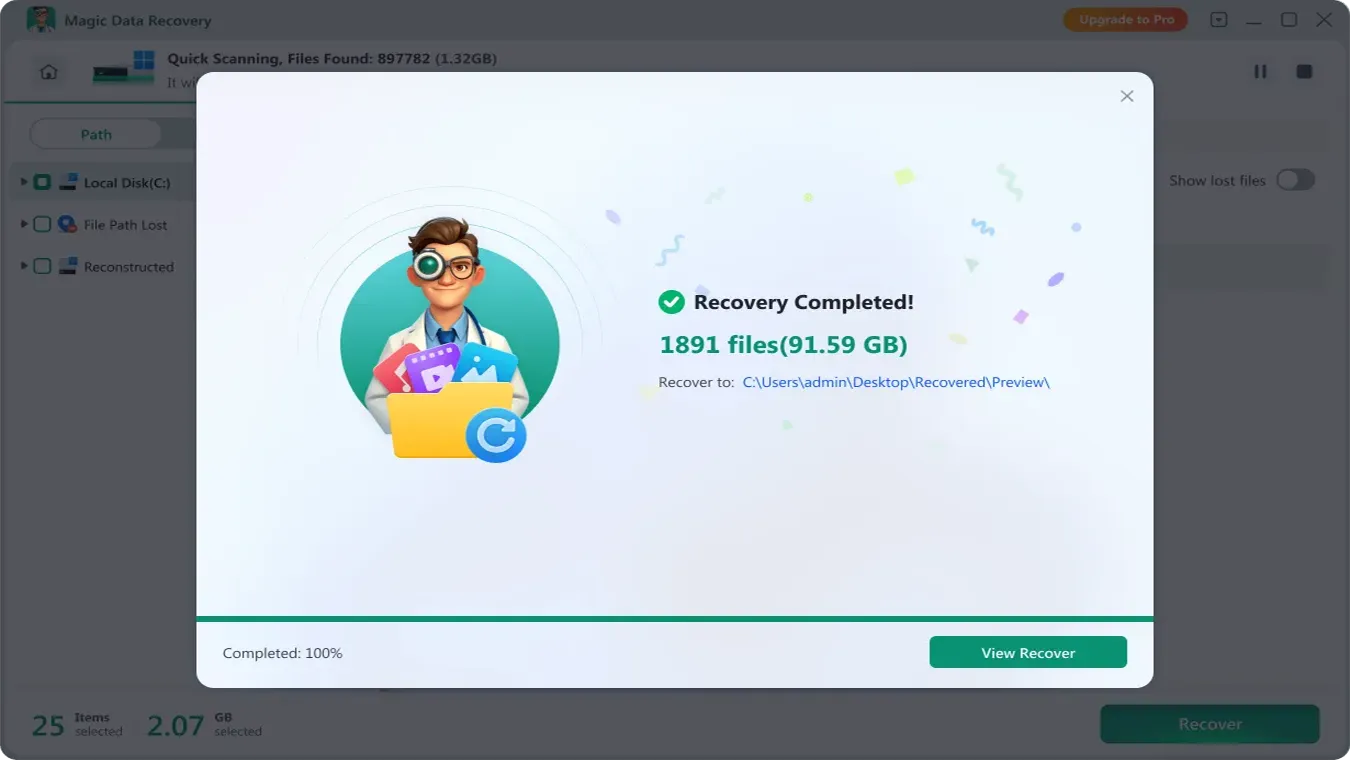
7. Recover the file to another drive.
For broader Windows file loss cases, you can also refer to this guide on how to recover lost files on Windows.
Why Magic Data Recovery Is a Practical Choice
Magic Data Recovery is useful because it focuses on real recovery scenarios rather than promising impossible results. It can scan for deleted, formatted, and file-system-error data loss cases. It also allows free scanning and preview, which helps users confirm whether a lost workbook can be found before they recover it.
For example, if you saved a new Excel file over an old report but Windows or Excel still left a temporary copy, the scan may locate it. If you deleted the old workbook before saving a new one, the software may find the deleted copy if it has not been overwritten. However, if the original file content was fully replaced on the disk, no recovery tool can guarantee restoration.
If you are unsure whether your workbook still exists, Download Magic Data Recovery and scan the affected drive before writing more data to it.
Supports Windows 7/8/10/11 and Windows Server
What If the Excel File Was Completely Overwritten?
A completely overwritten file is different from a deleted file. When a file is deleted, the storage space may still contain the old data until new data uses that space. When a file is fully overwritten, the new data has replaced the old data.
In that situation, recovery software cannot recreate the original workbook unless another copy exists somewhere else. Your best options then become:
- Excel Version History
- Cloud storage version history
- Windows Previous Versions
- Backups
- Temporary files
- Email or shared copies
- Copies on another device
This is why the best recover overwritten excel file strategy is to check version-based recovery first, then scan for remaining local copies.
Common Mistakes to Avoid
Saving New Files to the Same Drive
Every new save may reduce your recovery chance. If the lost workbook was on your desktop, documents folder, USB drive, or external disk, avoid writing new data to that location.
Installing Recovery Software on the Affected Drive
If you install recovery software on the same drive where the Excel file was lost, the installation itself may overwrite recoverable data. Install it on another drive whenever possible.
Restoring Without Previewing
Do not restore a previous version until you inspect it. You may accidentally replace a newer useful version with an older incomplete one.
Assuming AutoRecover Always Works
AutoRecover helps with crashes and unsaved changes, but it does not always save a separate copy after a successful overwrite. Use it early, but do not rely on it as the only solution.
How to Prevent Excel Overwrite Problems in the Future
Once you recover your file or confirm the loss, take a few preventive steps.
- Turn on OneDrive or SharePoint Version History.
- Use Save As before editing important templates.
- Add dates to file names, such as sales-report-2026-06-08.xlsx.
- Enable Windows File History.
- Keep backups on an external drive.
- Avoid editing the same workbook from two computers at once.
- Save major revisions as separate copies.
These habits make it much easier to restore overwritten file versions later.
Conclusion
To recover overwritten excel file data, start with the safest methods: Excel Version History, Recover Unsaved Workbooks, Windows Previous Versions, cloud history, backups, and temporary files. These options work best because they restore an existing earlier copy rather than trying to rebuild replaced data.
If those methods fail, Magic Data Recovery is worth trying because it can scan for deleted, lost, formatted, or partially recoverable Excel files. Its free scan and preview help you confirm whether the workbook can still be found before recovery. If the scan finds and previews the lost file, recovery is likely possible. If no copy appears, the file may have been completely overwritten.
For users who need a practical and careful next step, a deleted file recovery solution like Magic Data Recovery offers a safer way to check what can still be restored without making unrealistic promises.
Supports Windows 7/8/10/11 and Windows Server
FAQs
Can I recover an overwritten Excel file after saving?
Yes, you may recover an overwritten Excel file if an earlier version exists in Excel Version History, OneDrive, Windows Previous Versions, File History, temporary files, or backups. If the original content was fully overwritten on the disk and no backup exists, recovery is usually not possible.
What is the fastest way to restore overwritten file versions?
The fastest way is to check Version History if the file was stored in OneDrive, SharePoint, Google Drive, or Dropbox. Cloud version history often keeps earlier copies automatically. If the file was local only, try Windows Previous Versions and Excel Recover Unsaved Workbooks next.
Can Excel AutoRecover restore overwritten files?
Excel AutoRecover can help with crashes, unsaved changes, or files closed unexpectedly. However, it may not help if you successfully saved a new version over the old one. It is still worth checking because AutoRecover may contain a temporary or partial copy of your workbook.
Where are Excel temporary files stored?
Excel temporary files may appear in the original workbook folder, the Windows Temp folder, or the Office UnsavedFiles folder. You can search for .tmp, .xlsb, .xlsx, or files starting with ~$. Always copy suspicious files before renaming or opening them.
Can data recovery software recover an overwritten Excel file?
Data recovery software can help if the old Excel file was deleted, moved, partially overwritten, or still exists as a temporary copy. It cannot recover data that has been completely overwritten. A scan and preview can show whether any recoverable workbook data remains.
Is it safe to scan with Magic Data Recovery?
Yes, scanning is a read-only process and does not modify the lost Excel file. For best results, install the software on a different drive and recover found files to another location. This reduces the risk of overwriting data that may still be recoverable.
Why should I stop using the drive after overwriting an Excel file?
New activity can write data to the same storage space where the old workbook may still partially exist. Downloads, software installation, system updates, and new saves can all reduce recovery chances. Stop using the affected drive until you finish checking versions and scanning.
What should I do if no recovery method finds the Excel file?
If Version History, backups, temporary files, and recovery software cannot find the earlier workbook, the original data may have been fully overwritten. In that case, check email attachments, shared folders, other devices, and cloud accounts. Then set up automatic version history to prevent future loss.

Jason has over 15 years of hands-on experience in the computer data security industry. He specializes in data recovery, backup and restoration, and file repair technologies, and has helped millions of users worldwide resolve complex data loss and security issues.