
Corrupted USB Drive Recovery: Fix & Restore Files
Imagine plugging your flash drive into your PC, expecting to access your critical work documents or precious vacation photos, only to be met with an error message. Perhaps Windows tells you the “disk needs to be formatted,” or worse, the drive doesn’t show up at all. Corrupted USB drive recovery is a stressful challenge, but it is far from impossible.
When a USB drive becomes corrupted, the logical structure governing the data storage fails. This often results in a “RAW” file system, making your files invisible to the operating system. Before you panic and hit that “Format” button—which could permanently erase your data—you need a strategic USB recovery approach. This guide will walk you through the safest methods for recovering data from a corrupted USB and how to repair the drive for future use.
Supports Windows 7/8/10/11 and Windows Server
Table of Contents
Common Symptoms of a Corrupted USB Flash Drive
Recognizing the early signs of corruption can save you from total data loss. If you encounter any of the following issues, you are likely dealing with a corrupted storage device:
- File System shows as RAW: The computer recognizes the hardware but cannot read the data structure.
- “Access Denied” Errors: You can see the drive letter, but you cannot open folders.
- Invalid Partition Table: The drive capacity shows as 0 bytes or an incorrect size.
- Frequent Connection Drops: The USB keeps disconnecting and reconnecting during file transfers.
- Windows Format Request: A pop-up appears stating, “You need to format the disk in drive X: before you can use it.”
Stop! Read This Before You Try to Fix the USB
The most common mistake users make during corrupted USB drive recovery is attempting to “fix” the drive before “securing” the data. Windows repair tools like CHKDSK or Diskpart are powerful, but they work by rearranging or deleting damaged index files. If the corruption is severe, these built-in repairs can inadvertently overwrite the very files you are trying to save.
Therefore, the gold standard for data safety is: Recover first, repair second. By using professional software to extract your files to a safe location, you eliminate the risk of permanent loss during the subsequent repair process.
Phase 1: Professional Corrupted USB Data Recovery (The Safest Way)
When internal system tools fail to recognize the file structure, you need a tool that can communicate directly with the storage sectors. This is where Magic Data Recovery proves its worth. Unlike standard file explorers, this software bypasses the corrupted logical layer to find the underlying data.
Why Magic Data Recovery is the Best Solution
Magic Data Recovery is engineered to handle complex data loss scenarios that standard utilities simply cannot touch. Whether your USB has been formatted, suffered a file system crash, or became a RAW partition, this tool provides a bridge back to your files.
- Deep Scan Technology: It performs a sector-by-sector analysis, identifying file signatures even when the file directory is completely destroyed.
- Versatile Compatibility: It supports all major file systems including FAT32, exFAT, and NTFS, making it ideal for corrupted USB drive recovery.
- Risk-Free Preview: You can see exactly which images, documents, or videos are recoverable before committing to the full recovery.
Step-by-Step Guide to Recovering Your Files
If you are looking for a more efficient solution to rescue your trapped files, follow these steps:
1. Download and install Magic Data Recovery to your computer.
Please download it from Amagicsoft website or the following download button to get the software.
Supports Windows 7/8/10/11 and Windows Server
2. Connect the Flash Drive and Launch Magic Data Recovery
Connect the flash drive to your computer, then run the software to select the flash drive from the device list.
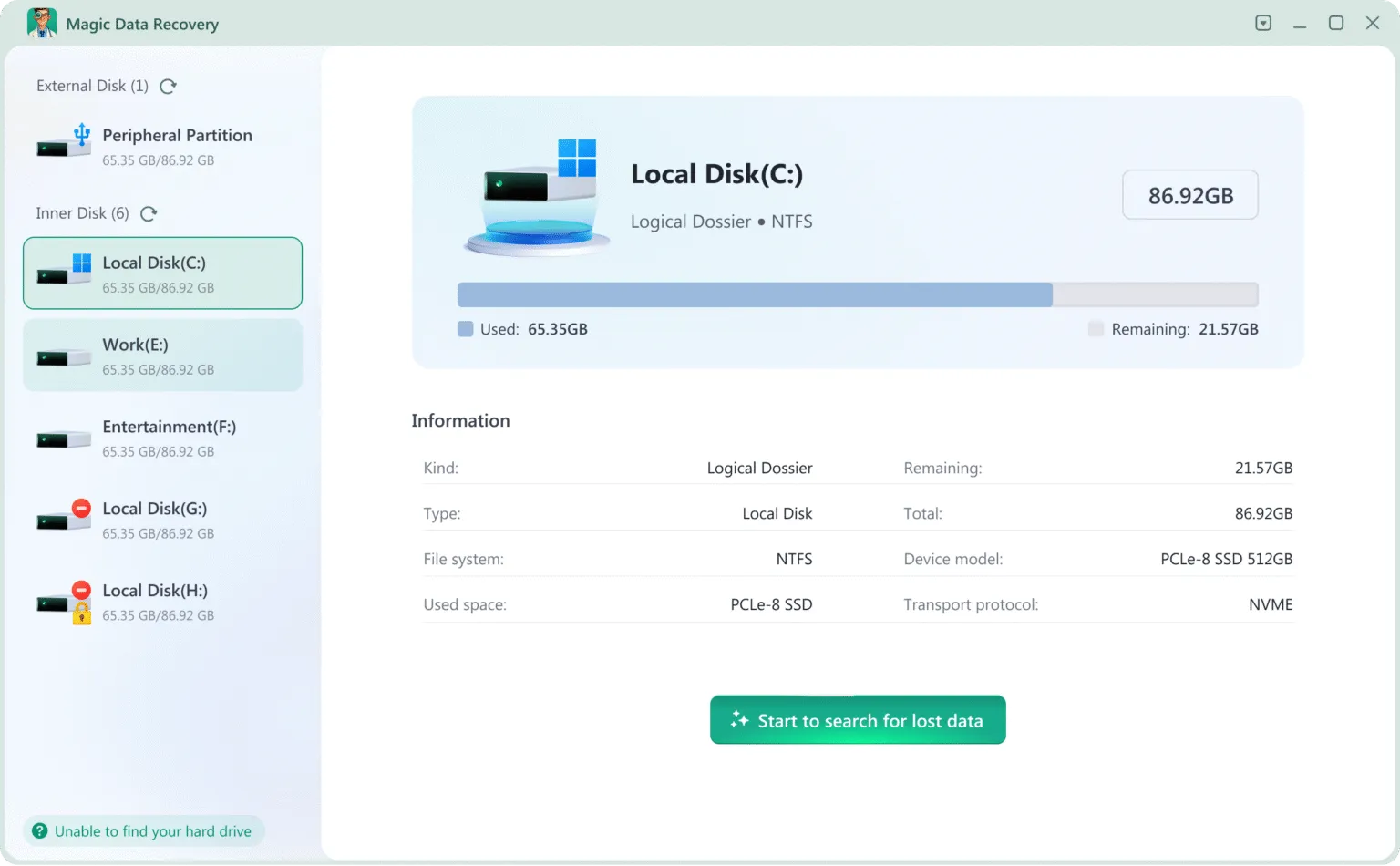
3. Start a Scan
Click the “Search for lost data” button to search for your lost files.
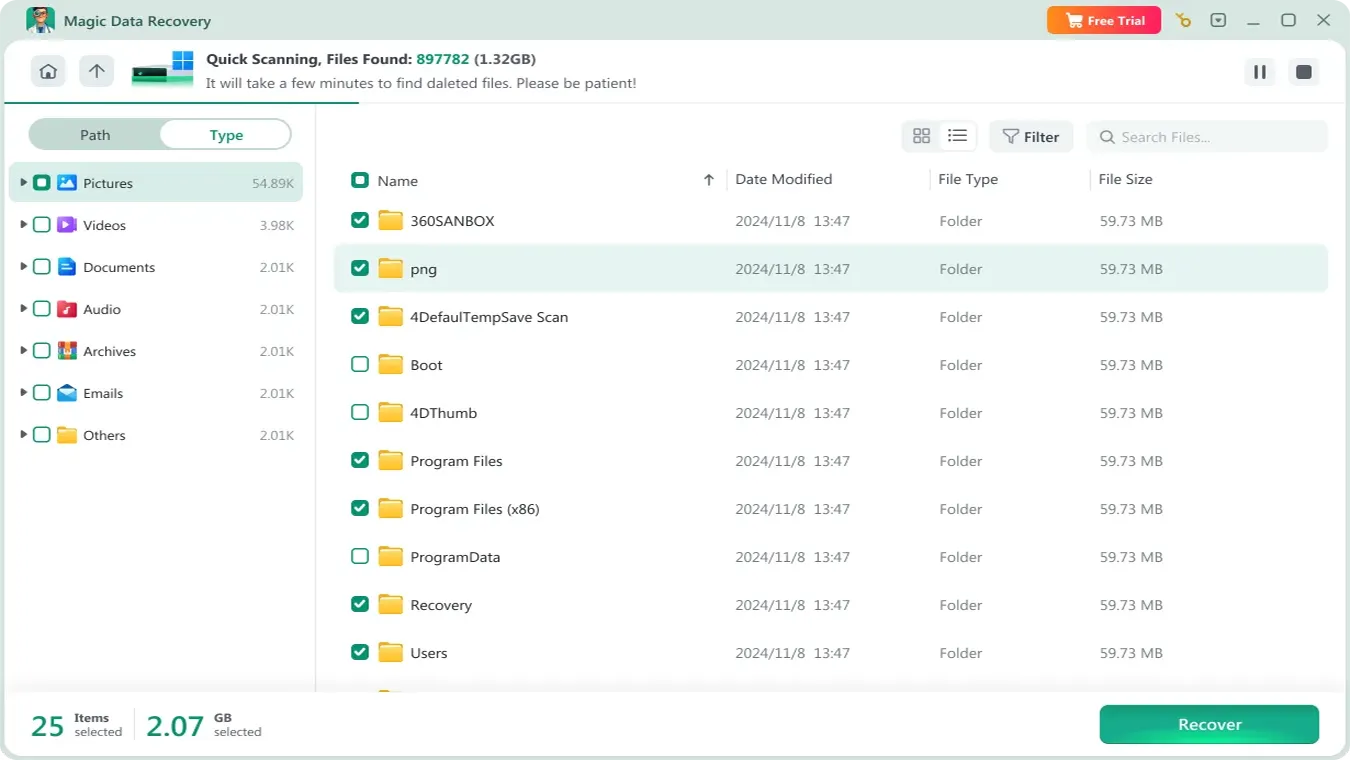
4. Preview Recoverable Files
Filter by file type and preview before recovery.

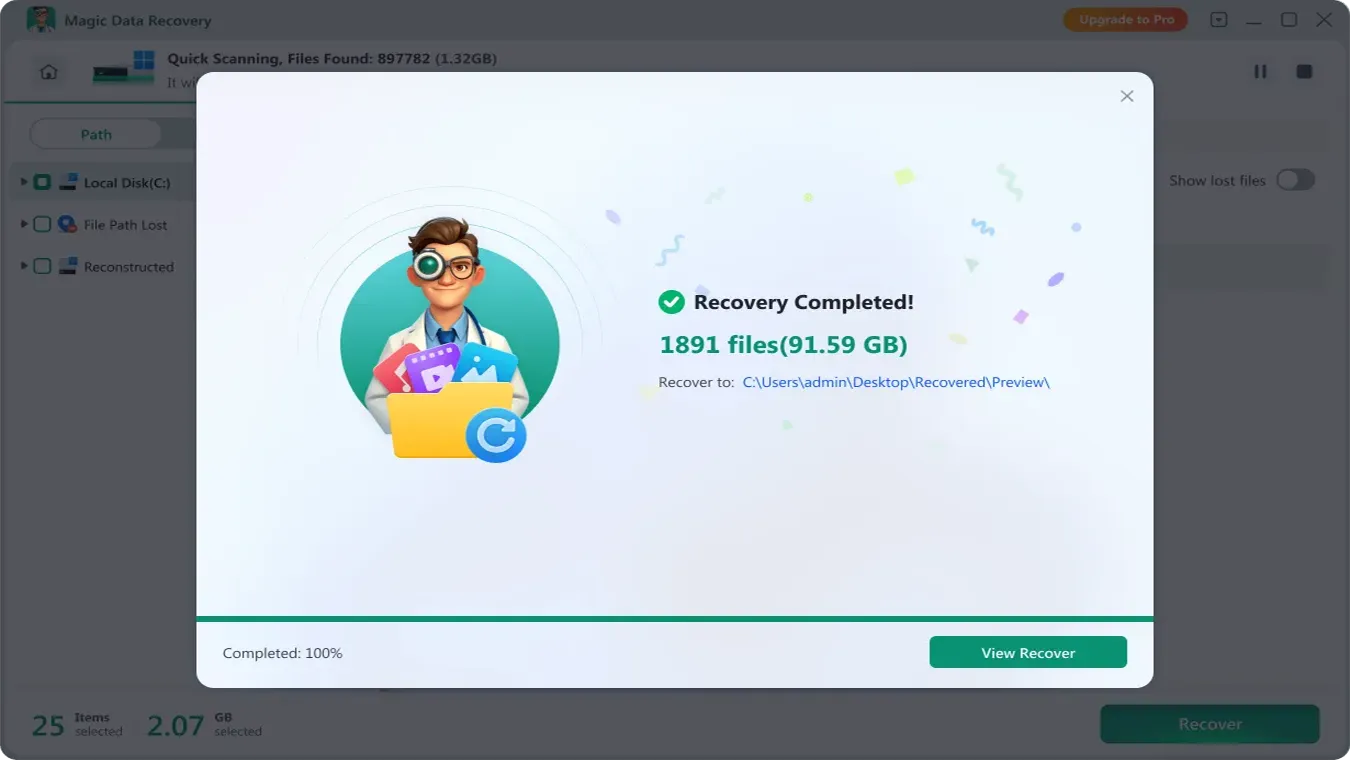
5. Recover Files Safely
Save recovered files to a different storage device.
Phase 2: How to Repair a Corrupted USB Drive (Manual Methods)
Once your data is safely backed up via Magic Data Recovery, you can proceed to fix the hardware. These methods address logical errors and driver conflicts.
Method 1: Change the Drive Letter
Sometimes, a USB drive isn’t actually corrupted; Windows simply has a conflict with the assigned drive letter.
- Right-click the Start button and select Disk Management.
- Locate your USB drive, right-click it, and select Change Drive Letter and Paths.
- Click Change and assign a new letter (e.g., from E: to M:).
- Check if the drive is now accessible in File Explorer.
Method 2: Use CHKDSK Command (The Systematic Fix)
The Check Disk (CHKDSK) utility can repair many file system errors. However, use this only after you have completed the corrupted USB drive recovery process.
- Type
cmdin the Windows search bar and Run as Administrator. - Type
chkdsk X: /f(replace X with your actual USB drive letter) and press Enter. - Windows will attempt to fix the directory metadata and link the files correctly.
Method 3: Reinstall Drivers via Device Manager
If the USB is “Not Recognized,” the fault might lie with the driver rather than the hardware.
- Open Device Manager and expand the Universal Serial Bus controllers section.
- Right-click your USB Mass Storage Device and select Uninstall device.
- Unplug the USB and restart your computer. When you plug the USB back in, Windows will automatically reinstall the fresh drivers.
Pro Tips: How to Prevent USB Corruption in the Future
While knowing how to perform corrupted USB drive recovery is vital, prevention is always more efficient. Most corruption occurs due to improper handling or electrical interruptions.
- Always Eject Safely: Never pull a USB drive out while the “busy” light is flashing. Windows uses “write caching,” meaning a file might look finished but is still being written in the background.
- Avoid Direct Editing: Instead of editing a large Excel or Word file directly on the USB, copy it to your desktop, edit it, and move it back. This reduces the number of read/write cycles.
- Regular Backups: A USB drive is a transfer medium, not a long-term storage solution. Always keep a secondary copy of important files on a cloud service or a physical hard drive.
Conclusion
Facing a storage failure is frustrating, but corrupted USB drive recovery is a highly successful process if you follow the right order of operations. Remember to prioritize your data integrity by using a dedicated tool like Magic Data Recovery before attempting any manual Windows repairs. This ensures that even if the hardware fix fails, you can still recover files from the USB drive.
Magic Data Recovery stands out because it combines professional-grade scanning algorithms with an interface that anyone can navigate. It provides a level of certainty that manual command-line tools cannot offer.
Supports Windows 7/8/10/11 and Windows Server
FAQs
Can a corrupted USB drive be recovered?
How to repair a damaged USB flash drive?
How to uncorrupt a USB hard drive?
How to undo partition in USB?
What causes a USB drive to corrupt?
How much does Best Buy charge for data recovery?
How to fix a USB flash drive that is corrupted and unreadable?
How much does it cost to fix a USB drive?

Jason is a data recovery and technical support specialist with over 15 years of hands-on experience. He has worked extensively with frontline users, troubleshooting difficult data loss cases and providing practical recovery solutions for accidental deletion, formatted drives, damaged file systems, lost partitions, system failures, and other recovery emergencies. His expertise also includes backup and restoration, file repair, and disaster recovery, with a strong emphasis on safe, reliable, and technically accurate guidance.