
How to Recover a Deleted File: Quick & Easy Solutions
Accidentally deleting important data is far more common than most people expect. Work documents, personal photos, or system files can disappear in seconds, which often leads users to ask the same question: how to recover a deleted file safely and without causing further damage.
Fortunately, in many real-world situations, deleted data is still recoverable. By understanding how file deletion works and by choosing the correct recovery method, users can significantly improve their chances of success. This guide explains how do you recover a deleted file, outlines practical recovery options, and introduces a proven solution—Magic Data Recovery—that helps users recover deleted files efficiently.
Supports Windows 7/8/10/11 and Windows Server
Wondering if your files can be recovered? Find out in seconds with our quick check below.
Data Recovery Assessment
Answer 3 quick questions to estimate your recovery chances
Table of Contents
What Happens When a File Is Deleted
To understand how to recover a file that was deleted, it is important to know what actually happens when you remove a file from your device.
When you delete a file:
- The system removes its reference, not the actual data.
- The storage space becomes available for reuse.
- The original data remains until it is overwritten.
Because of this process, file recovery is often possible. However, continued use of the affected device increases the risk of permanent data loss, which is why timely action is essential.
Common Scenarios Where Files Get Deleted
Users often need to recover deleted files due to:
- Accidental deletion
- Emptying the Recycle Bin
- Formatting a drive or USB device
- System crashes or power failures
- Virus or malware attacks
Each file deletion scenario affects recovery success differently, but the core principle remains the same: act quickly and avoid writing new data.
Basic Methods to Recover Deleted Files Quickly
Before using third-party software, it’s worth trying these built-in options.
Check the Recycle Bin or Trash
The Recycle Bin is the first place to look.
Steps:
1. Open Recycle Bin.
2. Locate the deleted file.
3. Right-click and select Restore.
This is the fastest way to recover files that were recently deleted.
Use Undo Delete (Ctrl + Z)
If you just deleted the file and didn’t make any other operation, press Ctrl + Z.
This simple action can instantly reverse the deletion.
How to Recover Permanently Deleted Files Safely
If the file is no longer in the Recycle Bin, you need more advanced solutions.
Restore from Backup
If you use backup tools such as:
- Windows File History
- Cloud backups
You may be able to restore previous versions of your files.
However, backups are not always available or up to date, which is why many users turn to data recovery software.
Why Data Recovery Software Is Often the Best Way to Recover Deleted Files
For permanently deleted files, professional recovery software provides:
- Deep scanning of storage devices
- Support for multiple file types
- Recovery from formatted or corrupted drives
Among available options, Magic Data Recovery stands out as a practical and reliable solution.
Recommended Solution for How to Recover Deleted Files: Magic Data Recovery
When users ask how to recover a deleted file safely, the answer often depends on using the right tool. Magic Data Recovery can address common recovery challenges without unnecessary complexity.
Problems It Solves
- Recovers permanently deleted files
- Works after users emptied Recycle Bin
- Supports recovery from hard drives, USB drives, SD cards, and external storage
- Handles accidental deletion and formatting
Key Advantages
- Clean, user-friendly interface
- Deep scan and quick scan options
- Preview files before recovery
- Supports documents, photos, videos, and more
Real-World Use Case
Imagine accidentally deleting a project folder from your external drive. Built-in tools fail, and no backup exists. With Magic Data Recovery, you can scan the device, preview recoverable files, and restore only what you need—minimizing time and effort.
Why It’s More Reliable Than Other Options
Compared to manual methods or limited free tools, Magic Data Recovery:
- Reduces the risk of overwriting data
- Requires no advanced technical skills
- Provides consistent results across devices
If you are looking for a practical solution, Magic Data Recovery offers a balanced approach between effectiveness and ease of use.
Step-by-Step Guide: How to Recover Deleted Files Using Magic Data Recovery
Below is a practical walkthrough based on real recovery scenarios. The steps are simple, safe, and suitable for everyday users who want to recover deleted files without technical complexity.
Step 1: Download and Install Magic Data Recovery
First, download Magic Data Recovery from the official website and complete the installation. To reduce the risk of overwriting deleted data, avoid installing the software on the same location where the lost files located.
Supports Windows 7/8/10/11 and Windows Server
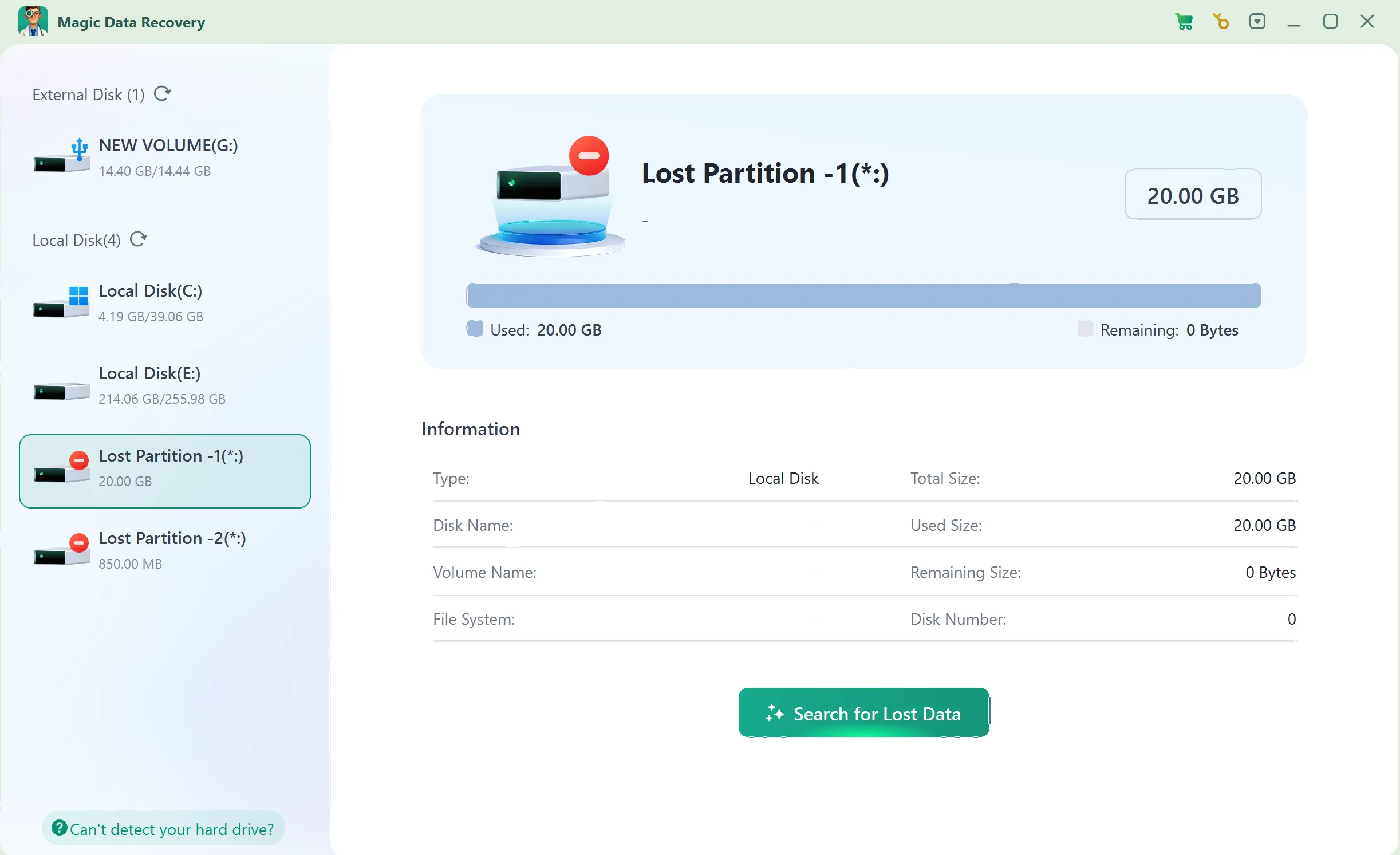
Step 2: Select the Drive or Location to Scan
After launching the program, you will see a list of available drives and storage locations. Choose the drive where you deleted the files, then start the scan to search for recoverable data.
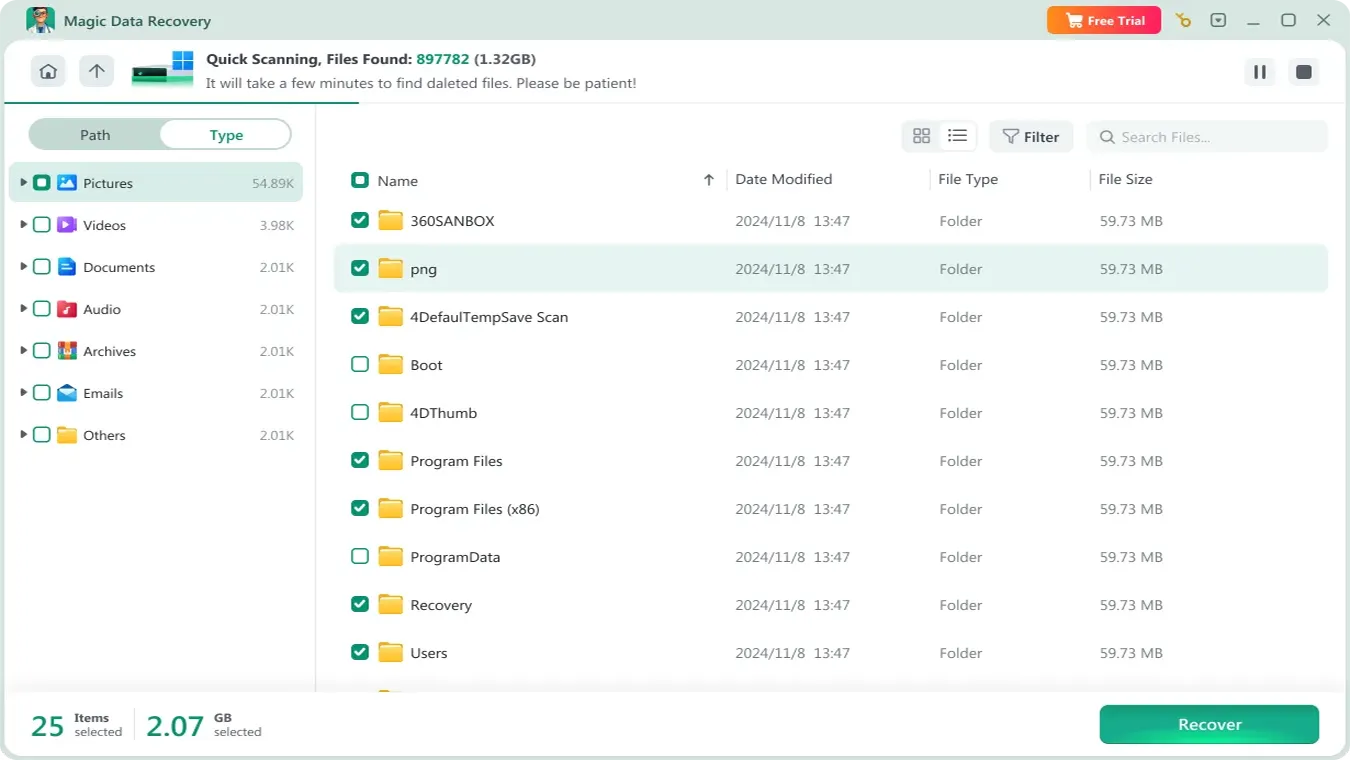
Step 3: Scan for Deleted Files
Magic Data Recovery automatically performs a deep scan to locate deleted files. During the scanning process, recoverable files appear in real time, allowing you to browse results while the scan continues.
Step 4: Preview Files Before Recovery
Once the scan identifies deleted files, use the built-in preview feature to check file content. This step helps confirm file quality and ensures that only the correct files are selected for recovery.

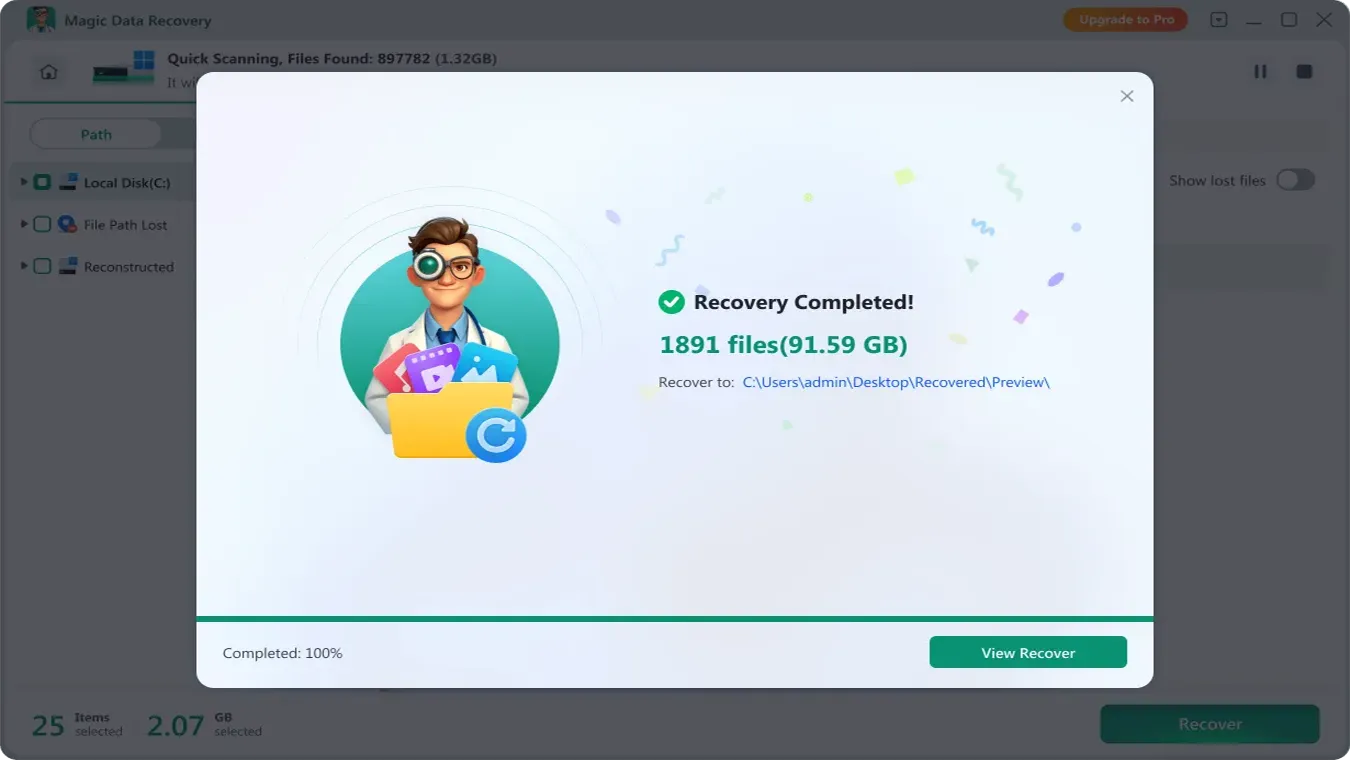
Step 5: Recover Files to a Safe Location
Finally, select the files you want to restore and save them to a different storage location. Restoring files to a separate location helps protect data integrity and reduces the risk of recovery failure.
Tips to Improve File Recovery Success
To maximize recovery chances:
- Stop using the affected device immediately
- Avoid installing recovery software on the same drive
- Recover files as soon as possible
- Use preview features to verify file integrity
These best practices significantly increase success rates.
Conclusion
Knowing how to recover a deleted files can prevent unnecessary stress and data loss. While simple recovery methods may work for recently deleted items, permanently deleted files usually require a more reliable approach.
Based on hands-on experience, industry best practices, and common recovery scenarios, Magic Data Recovery stands out as a dependable solution. It balances ease of use with professional-grade recovery capabilities, making it suitable for both everyday users and more demanding situations. If you need a safe and effective way to recover deleted files, this solution is worth considering.
Supports Windows 7/8/10/11 and Windows Server
FAQ – How to Recover a Deleted File
How soon should I try to recover deleted files?
Can I recover files after emptying the Recycle Bin?
Is it safe to use data recovery software?
How do you recover a deleted file from a USB drive?
Can permanently deleted files be restored?
Does recovery software work on formatted drives?
Why doesn’t manual recovery always work?

Vasilii is a data recovery specialist with around 10 years of hands-on experience in the field. Throughout his career, he has successfully solved thousands of complex cases involving deleted files, formatted drives, lost partitions, and RAW file systems. His expertise covers both manual recovery methods using professional tools like hex editors and advanced automated solutions with recovery software. Vasilii's mission is to make reliable data recovery knowledge accessible to both IT professionals and everyday users, helping them safeguard their valuable digital assets.