
The System File Cannot Be Specified: Causes & Fixes
Table of Contents
Introduction
Encountering the the system file cannot be specified error in Windows can be frustrating, especially when it blocks access to files, folders, or essential system functions. Many users first see this message while opening programs, running command-line tools, installing software, or accessing external drives.
In real-world scenarios, this error often appears without warning. More importantly, it may indicate deeper issues such as file system corruption, missing system files, or incorrect file paths. If handled incorrectly, it can even lead to unexpected data loss.
This guide explains what the system file cannot be specified error actually means, why it happens, and how to fix it step by step. You will also learn what to do if files become inaccessible or disappear during the troubleshooting process.
What Does “The System File Cannot Be Specified” Mean?
The the system file cannot be specified error means that Windows cannot locate or access a required file at the specified path. This usually happens when:
- The file no longer exists
- The file path is incorrect or broken
- The file system contains logical errors
- System files are corrupted or missing
Unlike simple “file not found” messages, this error often appears at the system or application level. As a result, it can affect core operations such as updates, backups, or command-line tasks.
Common Scenarios Where This Error Occurs
The the system file cannot be specified error does not appear randomly. In most cases, it occurs during common, everyday Windows operations. Understanding these scenarios helps users quickly identify what triggered the issue and avoid repeating the same mistake.
Below are the most frequent and practical situations where this error appears.
Accessing Files or Folders That Were Moved or Deleted
One of the most common scenarios occurs when users try to open files or folders that no longer exist at the original location. This often happens after:
- Moving folders to another drive
- Renaming directories manually
- Deleting files that are still referenced by shortcuts or applications
For example, if a program still points to an old file path, Windows attempts to access a location that no longer exists. As a result, the system reports that the file cannot be specified.
This situation is especially common with desktop shortcuts, startup items, and scheduled tasks that rely on fixed file paths.
Running Commands in Command Prompt or PowerShell
Many users encounter the system file cannot be specified while running command-line tools such as:
chkdsksfcrobocopyxcopy- Backup or synchronization commands
In these cases, the error usually appears because the command references:
- A drive letter that is no longer available
- A folder that was not created beforehand
- A path that contains unsupported characters
Even a small typo or missing quotation mark can cause Windows to fail when resolving the file location.
Installing or Updating Software and Drivers
This error frequently occurs during software installation, driver updates, or Windows component setup. Common triggers include:
- Incomplete previous installations
- Missing installer files
- Corrupted setup packages
- Incorrect installation paths
For instance, if an installer expects a system file that was removed during cleanup or antivirus scanning, the process fails and produces this error message.
Hardware drivers are particularly sensitive to missing system files, which explains why the issue often appears during printer, scanner, or network driver installation.
Application-Specific Failures
Certain applications rely heavily on fixed file paths and system components. When these dependencies break, the error may appear repeatedly.
Examples include:
- uTorrent failing to locate a download directory
- Microsoft Teams encountering file system errors during startup
- Backup software unable to access configuration files
In these situations, the problem may not be the application itself, but the underlying system files or directories it depends on.
Accessing External Drives or Secondary Partitions
Users often report this error when accessing external hard drives, USB flash drives, or secondary internal disks. Typical causes include:
- Improper device removal
- File system corruption
- Drive letter changes
- Unsupported or damaged file systems
When Windows cannot properly interpret the file system structure, it fails to locate files even though the data may still exist physically on the drive.
System Startup or Boot-Related Operations
In more serious cases, the system file cannot be specified may appear during startup, system repair, or recovery operations. This usually indicates:
- Missing boot-related files
- Corrupted system directories
- Failed Windows updates
At this stage, the error suggests deeper system integrity issues rather than simple file path problems.
Root Causes of the System File Cannot Be Specified Error
Behind every occurrence of the system file cannot be specified lies one or more underlying causes. Identifying the root cause is critical because applying the wrong fix can worsen the situation or even cause data loss.
Below are the most common and meaningful causes explained in detail.
Incorrect or Invalid File Paths
Windows relies on exact file paths to locate resources. If a path is incorrect, incomplete, or outdated, the system cannot resolve it.
Common reasons include:
- Typographical errors in paths
- Missing folders in the directory structure
- Use of unsupported characters
- Paths exceeding Windows length limitations
This issue often occurs in scripts, command-line operations, and older applications that assume fixed directory structures.
Missing, Deleted, or Renamed Files
Files may disappear due to:
- Accidental deletion
- Disk cleanup utilities
- Antivirus or security software
- Failed software uninstallation
Even if the file was removed intentionally, applications or system services may still attempt to access it. When Windows cannot locate the file, it triggers the error.
This cause is particularly common after aggressive system cleaning or manual deletion of unfamiliar files.
File System Corruption
File system corruption is a major cause of this error, especially on external or frequently used drives.
Corruption can occur due to:
- Sudden power loss
- Unsafe device removal
- Disk write interruptions
- Bad sectors
When the file system structure becomes inconsistent, Windows loses the ability to correctly map file locations, even if the data still exists.
Permission and Access Restrictions
Windows enforces strict access controls. If a user or system process lacks permission to read a file, Windows may fail to access it properly.
This can happen when:
- Files belong to another user account
- Permissions were changed manually
- System policies restrict access
Although the file exists, Windows behaves as if it cannot be specified because access is denied at a lower level.
Corrupted System Components or Windows Updates
System files may become corrupted during:
- Interrupted Windows updates
- Malware infections
- Improper system shutdowns
When essential components fail, Windows services and applications cannot locate required files, leading to recurring errors across multiple programs.
Disk-Level Problems and Bad Sectors
Physical or logical disk problems can prevent Windows from reading certain file locations.
These issues include:
- Bad sectors
- Aging storage devices
- Controller errors
In such cases, the file path is correct, but the disk cannot physically retrieve the data, triggering the error message.
Why Understanding the Root Cause Matters
Each cause requires a different solution. Fixing a path error is simple, while addressing file system corruption or disk issues requires caution.
Misdiagnosing the cause often leads to unnecessary repairs or accidental data loss, which is why understanding these root factors is essential before taking action.
How to Fix the System File Cannot Be Specified Error
Before attempting advanced solutions, always verify basic settings. This approach minimizes the risk of further system damage.
Quick Checks You Should Try First
- Confirm the file or folder still exists
- Verify the full file path is correct
- Check user permissions
- Restart the affected application
If the issue persists, proceed with system-level fixes.
How to Fix System Files with CMD
Command Prompt tools remain one of the most effective ways to resolve the system file cannot be specified error.
Run System File Checker (SFC)
- Open Command Prompt as Administrator
- Enter:
sfc /scannow
- Wait for the scan to complete
This process repairs corrupted or missing system files automatically.
Use DISM to Repair Windows Images
If SFC fails, run:
DISM /Online /Cleanup-Image /RestoreHealth
DISM repairs the Windows image itself, which often resolves deeper file-related issues.
How to Fix File System Errors Safely
File system errors often trigger this problem, especially on external or secondary drives.
Run CHKDSK
- Open Command Prompt as Administrator
- Enter:
chkdsk X: /f /r
(Replace X with the drive letter)
This command checks and fixes logical errors while marking bad sectors.
Important: CHKDSK can cause data loss if the file system is severely damaged. Backups are strongly recommended.
How to Fix “System Cannot Find the Path Specified”
This variation usually indicates path-level issues rather than file corruption.
Try these steps:
- Avoid using relative paths in CMD
- Enclose paths in quotation marks
- Verify mapped network drives are connected
- Recreate missing directories manually
These checks often resolve path-related errors quickly.
Application-Specific Fixes
How to Fix uTorrent Error: The System Cannot Find the File Specified
- Remove broken torrents from the list
- Verify download directories still exist
- Reset default download paths
- Reinstall uTorrent if needed
How to Fix File System Error (-2147219196) in Teams
- Clear Microsoft Teams cache
- Check Windows update status
- Repair or reinstall the Teams application
- Run SFC and DISM to repair system files
What If Files Become Missing or Inaccessible?
In many real cases, users attempt repairs only to discover that important files are gone. File system fixes, especially on damaged drives, can make data inaccessible.
This situation requires a recovery-focused approach rather than further repairs.
How Magic Data Recovery Helps After System File Errors
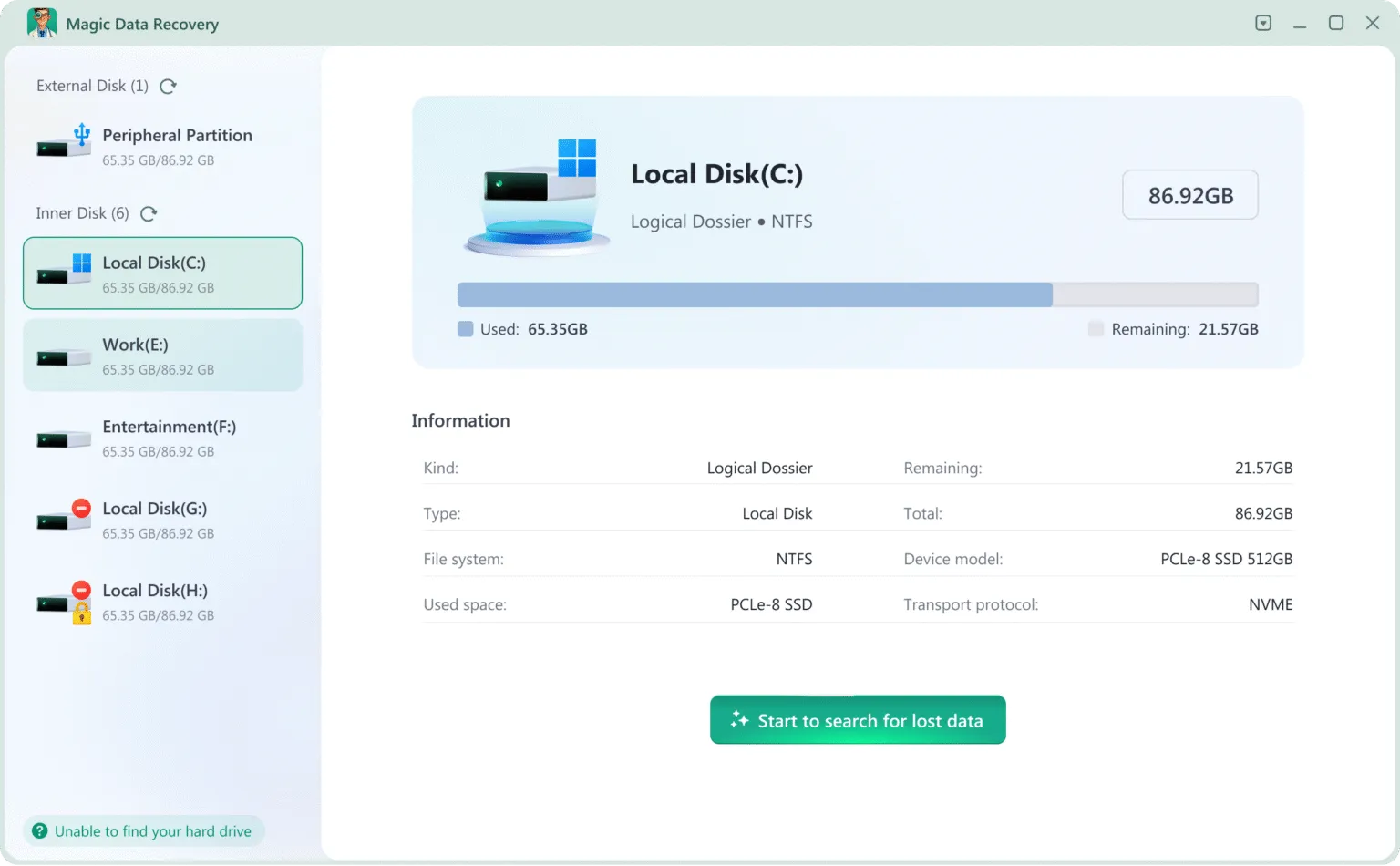
Supports Windows 7/8/10/11 and Windows Server
Core Problems It Solves
- Files deleted during system repairs
- Data lost after formatting or CHKDSK
- Missing files due to file system corruption
Why Magic Data Recovery Is Reliable
- Supports recovery from NTFS, exFAT, and FAT32
- Works even when Windows cannot access the drive
- Read-only scanning prevents further damage
- Designed for real-world recovery scenarios
Practical Use Cases
- Recovering files after failed system repairs
- Restoring data from corrupted external drives
- Retrieving lost files after accidental formatting
Unlike manual recovery attempts, Magic Data Recovery focuses on safe scanning and precise file reconstruction.
If you are looking for a more dependable way to recover lost files, Magic Data Recovery offers a practical and user-friendly solution.
Conclusion
The the system file cannot be specified error often signals deeper system or file structure problems. While basic fixes solve many cases, improper handling can make data loss worse.
When files become inaccessible due to system or file system errors, recovery-focused tools provide a safer path forward. Magic Data Recovery stands out because it addresses real recovery scenarios without risking further damage.
If your priority is fixing the error while protecting valuable data, choosing a solution designed for recovery makes a measurable difference.
Supports Windows 7/8/10/11 and Windows Server
FAQs
What is the meaning of the system cannot find the file specified?
How to fix file cannot be found?
How to fix system cannot find path specified?
How to fix system files with cmd?
How to fix filesystem error?
How to fix uTorrent error the system cannot find the file specified?
How to fix file system error (-2147219196) in Teams?

Jason is a data recovery and technical support specialist with over 15 years of hands-on experience. He has worked extensively with frontline users, troubleshooting difficult data loss cases and providing practical recovery solutions for accidental deletion, formatted drives, damaged file systems, lost partitions, system failures, and other recovery emergencies. His expertise also includes backup and restoration, file repair, and disaster recovery, with a strong emphasis on safe, reliable, and technically accurate guidance.