
How to Retrieve Recently Deleted Files

Accidentally deleting important files is a situation almost every computer user experiences. A wrong click, an emptied Recycle Bin, or a sudden system error can instantly make valuable documents, photos, or videos disappear. At that moment, the most common question is simple but urgent: how to retrieve recently deleted files safely and effectively.
The good news is that in many cases, deleted files do not disappear immediately. With the right approach and tools, users can often recover recently deleted files—even after permanent deletion or formatting. This guide explains how file deletion works, which deleted file recovery methods actually work, and when professional data recovery software becomes necessary. It also introduces Magic Data Recovery as a reliable solution for complex recovery scenarios.
Supports Windows 7/8/10/11 and Windows Server
Table of Contents
How File Deletion Really Works
Before attempting recovery, it helps to understand what happens when a file is deleted.
When you delete a file on Windows or macOS, the operating system usually removes only the file’s reference, not the actual data. The operating system marks the storage space as “available,” but the data remains intact until new data overwrites it. Because of this behavior, recovering recently deleted files is often possible if you act quickly.
However, recovery success depends on several factors:
- Whether the file was permanently deleted
- The type of storage device (HDD vs SSD)
- Continued use of the device after deletion
- Whether TRIM is enabled on SSDs
This explains why timing and correct recovery steps matter.
Quick Ways to Retrieve Recently Deleted Files
Check the Recycle Bin or Trash First
For most users, the easiest way to retrieve files is still the Recycle Bin (Windows) or Trash (macOS).
Steps:
- Open Recycle Bin or Trash.
- Locate the deleted file.
- Right-click and select Restore.
This method works best for files deleted recently and not removed permanently.
Restore from Backup or File History
If you regularly back up your data, recovery becomes much easier.
Common backup options include:
- Windows File History
- macOS Time Machine
- Cloud backups such as OneDrive, Google Drive, or Dropbox
These tools allow you to restore previous versions without scanning your drive, which reduces risk.
Recovering Recently Deleted Files After Permanent Deletion
If the Recycle Bin has been emptied or files were removed using Shift + Delete, backups may not be available. At this stage, recovery software becomes the most practical option.
Why Data Recovery Software Works
Even after permanent deletion, the data often remains on disk until overwritten. Specialized recovery tools scan storage sectors directly and reconstruct deleted files based on file system records.
Many data recovery experts recognize this method as the most effective approach for recovering recently deleted files when standard options fail.
Using Magic Data Recovery to Retrieve Deleted Files
Why Choose Magic Data Recovery
Magic Data Recovery handles real-world data loss scenarios, not just simple deletions. It addresses several core pain points users commonly face:
- Files deleted permanently
- Data lost after disk formatting
- File system corruption or errors
- Lost partitions and inaccessible drives
Unlike basic recovery tools, Magic Data Recovery supports both quick scans and deep scans, increasing recovery success across different storage devices.
Supports Windows 7/8/10/11 and Windows Server
Key Advantages of Magic Data Recovery
- Supports recovery from HDDs, SSDs, USB drives, memory cards, and external disks
- Recovers files lost due to deletion, formatting, and file system errors
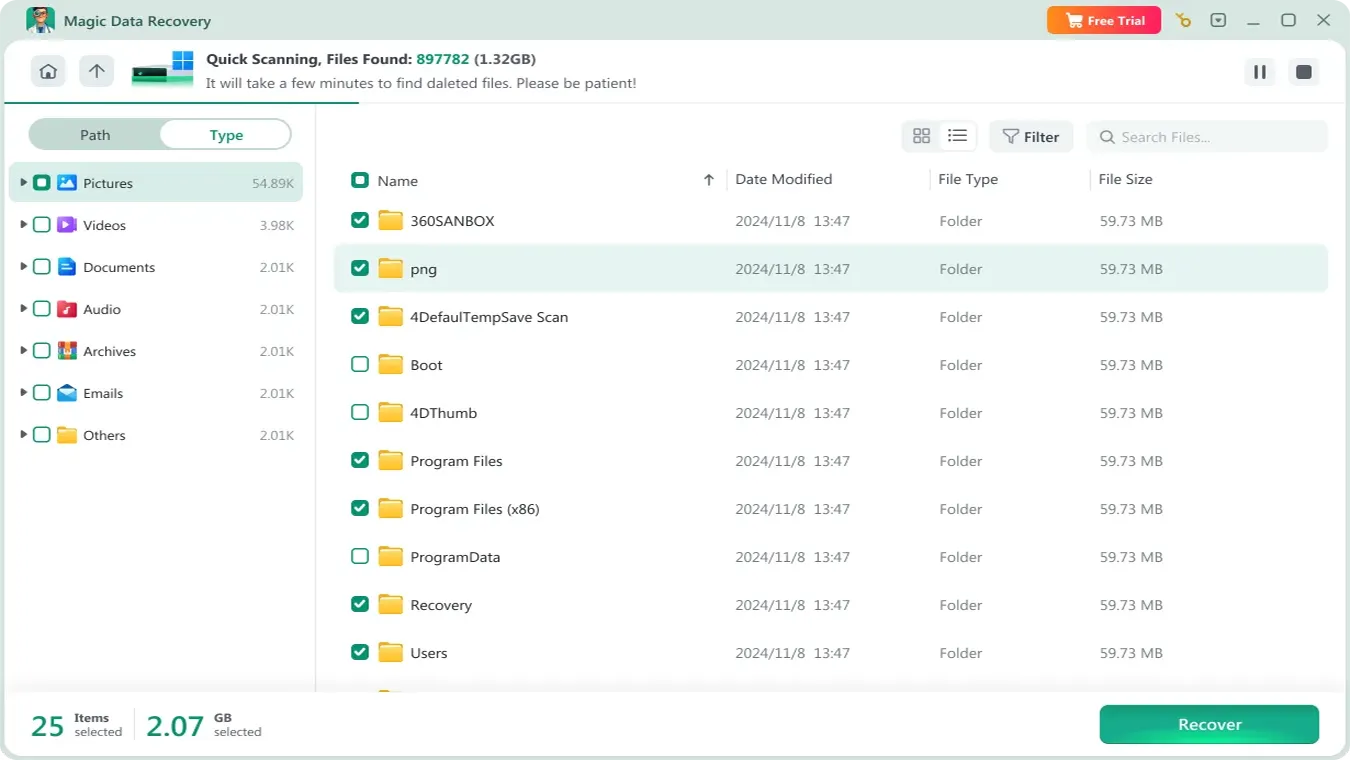
- Allows file preview before recovery, reducing guesswork
- Uses read-only scanning to avoid further data damage
These features make it a dependable choice for users who need a safer way to retrieve critical files.
Step-by-Step: How to Recover Files with Magic Data Recovery
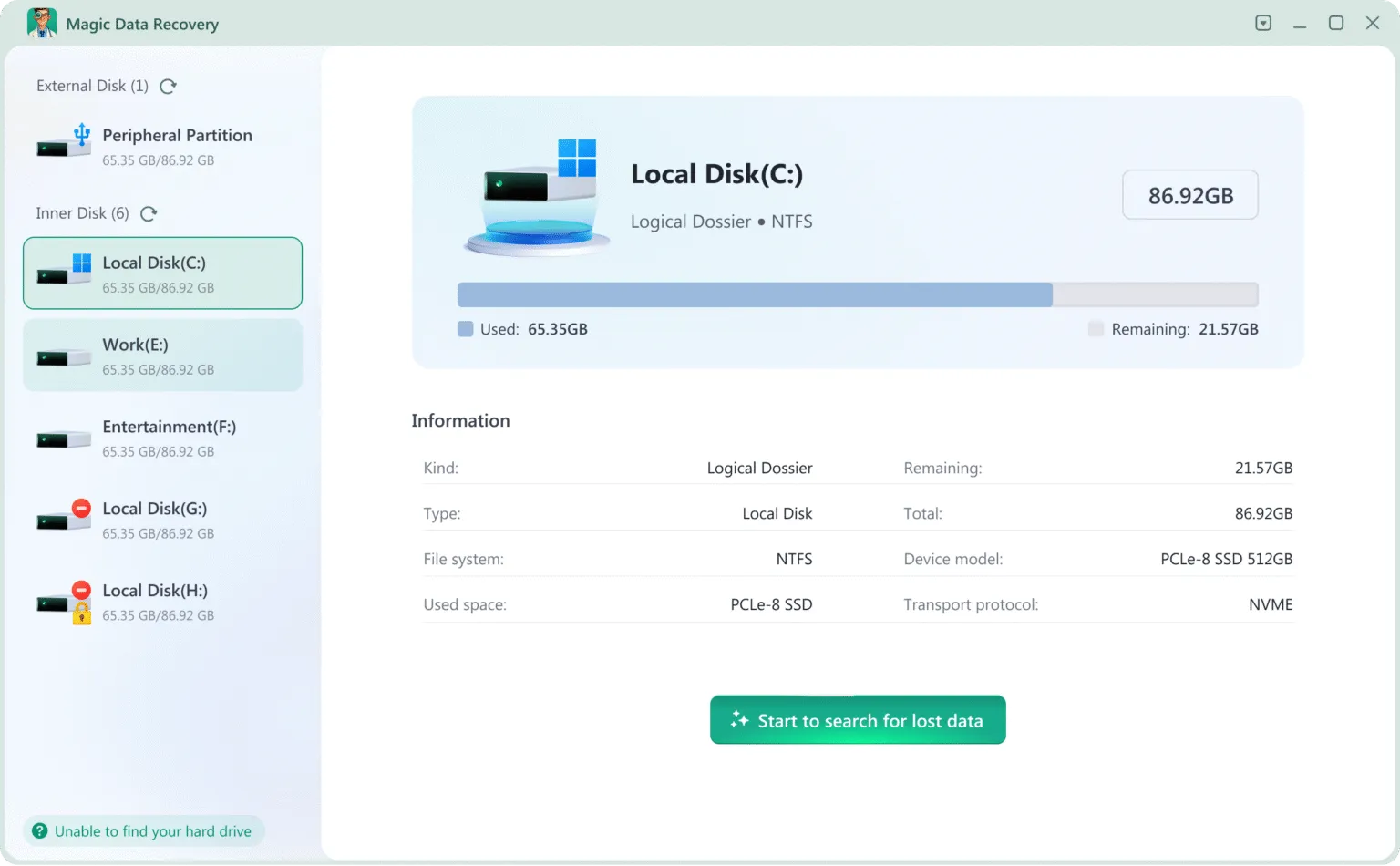
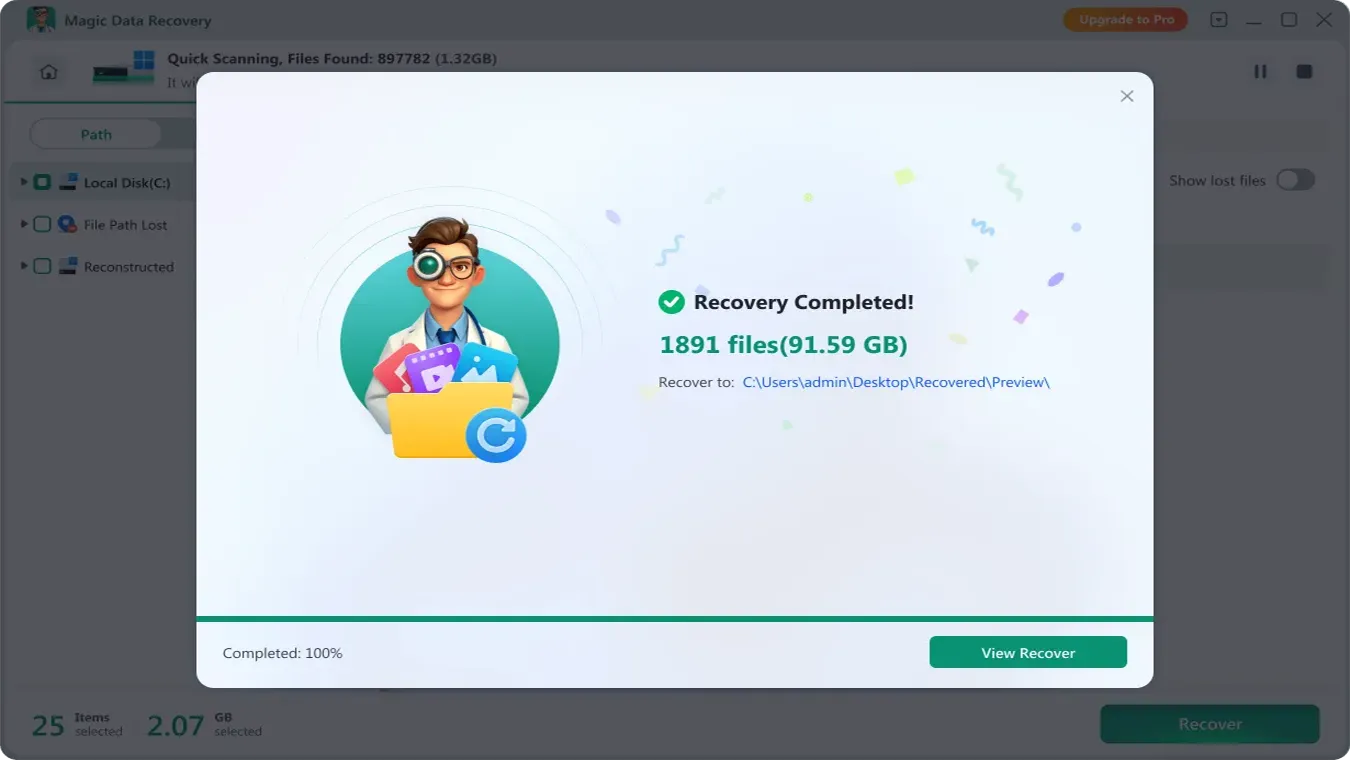
1. Install Magic Data Recovery on a different drive than the one where data was lost.
2. Launch the software and select the affected disk or partition.

Common Mistakes That Reduce Recovery Success
Many users unintentionally make recovery harder. Avoid these mistakes:
- Continuing to use the affected drive after deletion
- Installing recovery software on the same disk
- Running multiple recovery tools simultaneously
- Saving recovered files back to the original location
Following best practices significantly improves the chances of recovering recently deleted files.
Can Permanently Deleted Files Really Be Recovered?
Permanent deletion does not always mean permanent loss. Recovery remains possible if:
- The storage space has not been overwritten
- TRIM has not cleared data blocks on SSDs
- The file system metadata remains intact
That said, no recovery method guarantees success. This is why early action and reliable tools matter.
Conclusion
Understanding how to retrieve recently deleted files gives you a clear advantage when data loss occurs. While simple cases can be resolved using the Recycle Bin or backups, more complex situations require a professional solution.
Magic Data Recovery stands out because it addresses real recovery challenges—permanent deletion, formatting, and file system errors—without unnecessary complexity. Its safe scanning approach, preview feature, and broad device support make it a dependable option for users who value their data.
If you are looking for a practical and trustworthy solution to recover deleted files, Magic Data Recovery is worth considering.
Supports Windows 7/8/10/11 and Windows Server
FAQs: Recently and Permanently Deleted Files
Is it possible to recover recently deleted files?
Are things deleted from Recently Deleted gone forever?
How to restore recently deleted history?
Can deleted files really be recovered?
How can I recover permanently deleted files?
Are permanently deleted files really gone?
Is it really possible to recover permanently deleted photos?
Is anything ever truly deleted?

Jason is a data recovery and technical support specialist with over 15 years of hands-on experience. He has worked extensively with frontline users, troubleshooting difficult data loss cases and providing practical recovery solutions for accidental deletion, formatted drives, damaged file systems, lost partitions, system failures, and other recovery emergencies. His expertise also includes backup and restoration, file repair, and disaster recovery, with a strong emphasis on safe, reliable, and technically accurate guidance.