
Windows 11 KB5063878 SSD Issue: What Happened, Affected Drives, and Data Recovery Tips

The Windows 11 24H2 security update KB5063878 drew attention after some users reported SSD detection problems, RAW partitions, and possible data corruption during large file write operations. Early reports suggested that the issue could appear when writing around 50GB or more of data to an SSDs that was already more than 60% full.
However, later investigations from Microsoft and SSD controller vendors, including Phison, did not confirm a direct link between KB5063878 and widespread SSD or HDD hardware failure. This guide explains what was reported, what has been confirmed so far, how to check or uninstall KB5063878, and how to recover data if your SSD becomes inaccessible, RAW, or corrupted.
Update: Early reports linked KB5063878 to SSD disappearance, RAW partitions, and data corruption under heavy write workloads. Later testing by Microsoft and Phison did not confirm a widespread SSD failure issue caused by this Windows update. If your drive is still detected by Windows, the problem may be related to file system corruption, firmware behavior, or other storage conditions rather than confirmed physical SSD damage.
Supports Windows 7/8/10/11 and Windows Server
Table of Contents
What Was Reported About the KB5063878 SSD Issue?
According to early user reports, some Windows 11 24H2 systems experienced SSD detection problems after prolonged or heavy data transfer sessions. Reported symptoms included the SSD disappearing from File Explorer, the partition showing as RAW, I/O errors, or the drive becoming temporarily inaccessible after a reboot.
These reports did not affect every SSD, and later vendor testing did not confirm a broad hardware failure pattern. The following SSDs or controller combinations were mentioned in early user tests and community discussions, but they should be treated as reported cases rather than a confirmed official affected-device list:
- Corsair Force MP600 – Phison E16 controller
- SSDs equipped with Phison E12 controllers
- SanDisk Extreme Pro M.2 NVMe SSD – Triton MP28 controller
- Fikwot FN955 – Maxio MAP1602 + WDS X3 9070 controller
- Kioxia Exceria Plus G4 1TB + Phison E31T controller
Based on current reports, SSDs using Phison controllers appear more prone to issues. Some SSDs may become temporarily inaccessible but recover after a reboot. These include:
- WD Blue SN5000 2TB – Polaris 3 controller
- WD Red SA500 2TB SATA – Marvell 88SS1074 controller
- Crucial P3 Plus – Phison E21T controller
- Corsair MP510 960GB – Phison E12 controller
Important note: This list is based on user reports and community testing, not an official compatibility or failure list from Microsoft or SSD manufacturers. Phison later stated that extensive testing did not reproduce the reported failures on consumer drives with normal firmware. Therefore, users should not assume that a listed SSD model is defective or guaranteed to fail after installing KB5063878.
How to Pause or Manage Windows Updates Safely
Because KB5063878 is a security update, completely disabling Windows Update for a long time is not recommended. If you are concerned about reported SSD issues or need time to back up important files, you can temporarily pause or manage updates instead of permanently disabling all update services.
Method 1: Group Policy Editor (Enterprise-Level Control)
Steps:
1. Press Win + R, type gpedit.msc, and press Enter.
2. Navigate to: Computer Configuration > Administrative Templates > Windows Components > Windows Update.
3. Double-click “Configure Automatic Updates” and select “Disabled.”
4. Enable “Remove access to all Windows Update features.”
Advantages: Microsoft’s recommended enterprise-level solution.
Risks: Requires a restart to take effect and may be overridden by future updates
Method 2: Services Manager (Disable Core Services)
Steps:
1. Press Win + R, type services.msc, and press Enter.
2. Locate the “Windows Update” service, set its startup type to “Disabled.”
3. Repeat for the “Update Orchestrator Service.”
4. Restart the computer.
Risks: Some security software may depend on update services.
Method 3: Registry Policy Setting for Advanced Users
Steps:
1. Press Win + R, type regedit, and press Enter.
2. Navigate to: HKEY_LOCAL_MACHINE\SOFTWARE\Policies\Microsoft\Windows.
3. Create a new key named “WindowsUpdate.”
4. Under this key, create a subkey named “AU.”
5. Create a new DWORD value named “NoAutoUpdate” and set its value to 1.
6. Create a new string value named “TargetReleaseVersion” and set its value to 21H2 (to lock the older version).
Effects:
Advanced users and IT administrators can use registry-based Windows Update policies to control update behavior. This method should be used carefully, because incorrect registry changes may affect system stability or prevent important security updates from being installed.
Method 4: Task Scheduler (Block Update Triggers)
Steps:
1. Press Win + R, type taskschd.msc, and press Enter.
2. Navigate to: Task Scheduler Library > Microsoft > Windows > WindowsUpdate.
3. Disable the following tasks:
- Scheduled Start
- Usoclient
- Reboot
Principle: Cuts off the background task chain that automatically triggers updates.
What to Do Before Uninstalling KB5063878
Before uninstalling KB5063878 or changing Windows Update settings, take a few precautions to reduce the risk of further data loss:
1. Stop writing new data to the affected SSD.
2. Do not format, initialize, or repartition the drive if Windows asks you to do so.
3. If the SSD is still readable, copy important files to another storage device first.
4. Check whether the SSD appears in Disk Management and whether the partition is shown as RAW.
5. Update SSD firmware from the official manufacturer tool if your system remains stable enough to do so.
6. If the SSD is not detected in BIOS or Disk Management, software recovery may not work and professional hardware recovery may be required.
How to Uninstall KB5063878
If your SSD becomes inaccessible, shows a RAW partition, or starts reporting I/O errors shortly after installing KB5063878, you may consider uninstalling the update as a troubleshooting step. However, do not uninstall security updates unnecessarily. Before making changes, back up important files if the drive is still accessible.
1. Run PowerShell as an administrator.
2. Enter the following command to uninstall the update:
wusa /uninstall /kb:5063878 /quiet /norestart
wmic qfe list | find "5063878"
How to Recover Data from an Inaccessible or RAW SSD
Supports Windows 7/8/10/11 and Windows Server
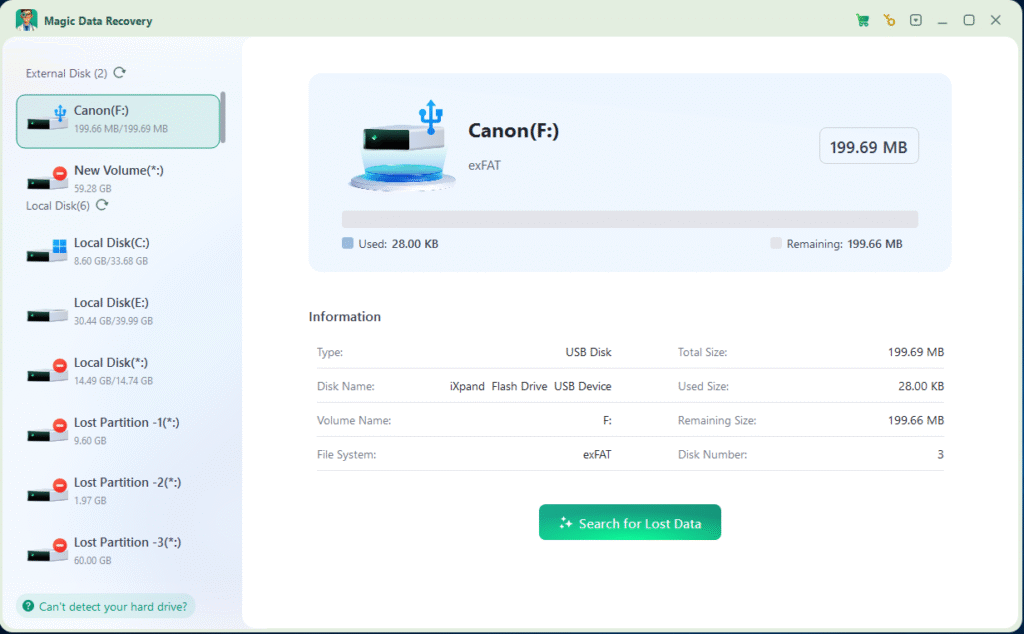
3. After the scan completes, review the listed files and select the ones you wish to recover.
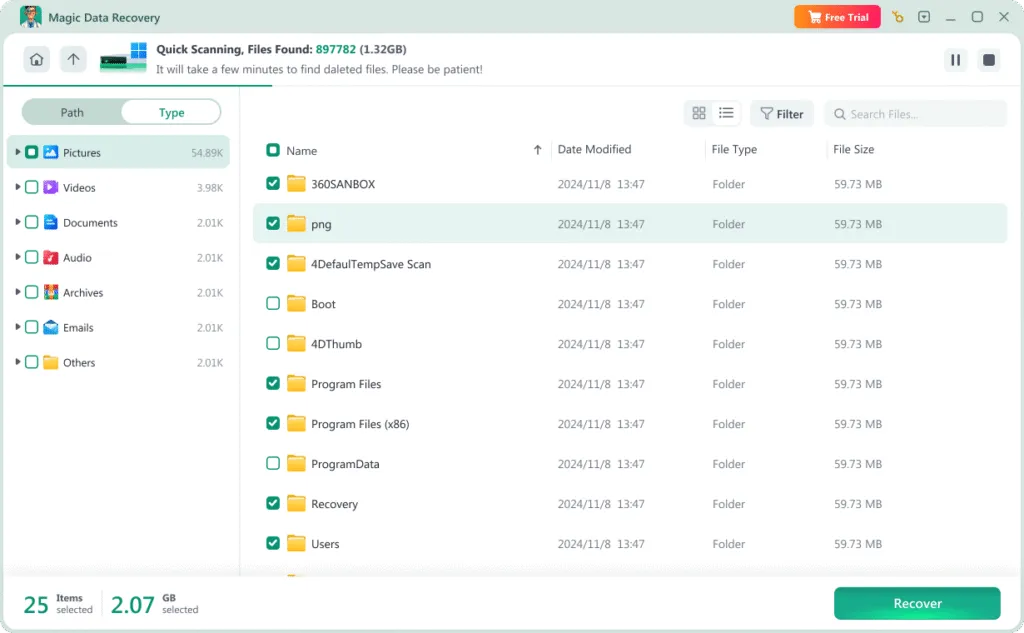
4. Use the preview feature to confirm the files are recoverable.

5. Once the recovery process is complete, check the saved directory for the restored data.

When Data Recovery Software May Not Work
Data recovery software is designed for logical data loss, such as deleted files, formatted partitions, RAW file systems, lost partitions, or inaccessible volumes. It may not work if the SSD has a physical failure, controller damage, severe firmware failure, or cannot be detected by BIOS or Windows Disk Management.
If the SSD is completely missing from BIOS, makes the system freeze repeatedly, or cannot maintain a stable connection, avoid repeated power cycles and contact a professional data recovery service. Continuing to test a physically failing SSD may reduce the chance of successful recovery.
Conclusion
The Windows 11 24H2 update KB5063878 was widely discussed after users reported SSD disappearance, RAW partitions, and possible data corruption under heavy write workloads. However, later investigations from Microsoft and SSD vendors did not confirm a widespread SSD or HDD failure issue directly caused by the update.
If you are not experiencing storage problems, avoid making unnecessary system changes and keep regular backups. If your SSD becomes inaccessible, shows as RAW, or asks to be formatted, stop writing new data to the drive and try SSD data recovery only if the SSD is still detected by Windows. Magic Data Recovery can help recover files from logically damaged, formatted, RAW, or inaccessible SSD partitions, but physically failed SSDs may require professional recovery services.
Supports Windows 7/8/10/11 and Windows Server
FAQs
What is the KB5063878 update?
Can I prevent the KB5063878 update from installing?
How do I uninstall the KB5063878 update?
Can KB5063878 permanently damage an SSD?
Does this issue affect both NVMe and SATA SSDs?
Will future Windows updates fix the SSD data corruption problem?
How can I reduce the risk of SSD data corruption after installing KB5063878?
Is this problem limited to Windows 11 version 24H2?

Erin Smith is recognized as one of the most professional writers at Amagicsoft. She has continually honed her writing skills over the past 10 years and helped millions of readers solve their tech problems.