
How to Recover Recently Deleted Photos

Accidentally deleting an important picture can cause immediate panic, especially when it records a family event, work project, trip, or personal memory. Fortunately, you may still be able to recover recently deleted photos if you act quickly and choose the right photo recovery method for the device where the pictures were stored.
The correct solution depends on the original storage location. Photos deleted from an iPhone may remain in the Recently Deleted album. Google Photos keeps removed images in Trash for a limited period. Windows users can check the Recycle Bin or available backups. Meanwhile, photos deleted from an SD card, USB drive, or computer disk may require a dedicated recovery tool such as Magic Data Recovery.
This guide explains how to restore deleted pictures safely across common devices. It also shows when built-in recovery options work, when they do not, and how to avoid overwriting recoverable files.
Supports Windows 7/8/10/11 and Windows Server
Table of Contents
How to Recover Recently Deleted Photos: Quick Guide
The best way to recover recently deleted photos is to start with the built-in recovery location for your device. Avoid installing software or saving new files to the affected storage device until you understand where the deleted photos were stored.
Use the following table to choose the correct recovery method.
Original photo location | First method to try | Alternative solution |
iPhone or iPad | Recently Deleted album | iCloud Photos or backup |
Android phone | Gallery Recycle Bin | Google Photos Trash or cloud backup |
Google Photos | Trash | Check another Google account or synced device |
Windows computer | Recycle Bin | File History, backup, or recovery software |
Mac | Recently Deleted or Trash | Time Machine backup |
SD card or camera card | Stop using the card | Scan it with photo recovery software |
USB or external drive | Check Recycle Bin | Use data recovery software |
If the deleted photos still appear in a temporary deletion folder, recovery is usually straightforward. However, once that folder has been emptied, the next step depends on backups, storage type, encryption, and whether new data has overwritten the deleted files.
What Happens When You Delete a Photo?
Understanding what happens after deletion can help you choose a safer recovery method.
In many cases, deleting a photo does not immediately erase all of its data. Instead, the operating system removes the file entry or marks its storage space as available. The photo may remain recoverable until another file uses the same space.
However, this principle does not apply equally to every device.
Cloud services manage deletion through their own servers and retention policies. Modern phones often use encryption and tightly controlled internal storage. SSDs may also use TRIM, which allows the system to clear unused data blocks more efficiently.
Therefore, the chance to recover recently deleted photos depends on several factors:
- Whether the photos remain in Recently Deleted, Trash, or Recycle Bin
- Whether a cloud or local backup exists
- How much the device has been used since deletion
- Whether the storage device is an HDD, SSD, SD card, or phone
- Whether the device has physical or logical damage
- Whether new photos or files have overwritten the deleted data
For the best recovery chance, stop using the affected storage location as soon as you notice the loss.
How to Recover Recently Deleted Photos on iPhone or iPad
Apple devices provide a Recently Deleted album inside the Photos app. Deleted pictures normally remain there for a limited period before the system removes them permanently.
To recover recently deleted photos on an iPhone or iPad:
- Open the Photos app.
- Scroll to the Utilities section.
- Tap Recently Deleted.
- Unlock the album with Face ID, Touch ID, or your passcode.
- Tap Select.
- Choose the photos you want to restore.
- Tap Recover and confirm the action.
The recovered photos should return to the main photo library.
Check iCloud Photos
If you use iCloud Photos, visit your iCloud photo library and check the Recently Deleted section. Make sure you sign in with the same Apple Account that stored the missing pictures.
You should also verify whether the photo appears on another synced Apple device. Occasionally, sync delays or account confusion make a photo appear deleted when it still exists elsewhere.
What If the Photos Are No Longer in Recently Deleted?
Once an iPhone removes a photo from Recently Deleted, recovery becomes more difficult. Check whether you created an iCloud backup or computer backup before the deletion.
Restoring a full backup may replace newer information on the device. Therefore, review the backup date and contents before proceeding.
Magic Data Recovery does not directly scan encrypted iPhone internal storage. It is better suited to Windows drives, removable memory cards, USB drives, and other storage devices that Windows can detect.
How to Recover Deleted Photos from Google Photos
Google Photos moves deleted pictures to Trash before removing them permanently. The exact retention period may depend on the photo’s backup status and the service settings shown in your account.
To recover recently deleted photos from Google Photos:
- Open the Google Photos app or website.
- Sign in to the correct Google account.
- Open Collections or Library.
- Select Trash.
- Choose the photos you need.
- Tap or click Restore.
The restored images should return to the original album, phone gallery, or Google Photos library.
If the photos do not appear, check other Google accounts that you commonly use. Many users unknowingly back up images to a different account.
You can also check:
- The Archive folder
- Locked Folder
- Shared albums
- Another synced phone or tablet
- The device’s local Gallery Recycle Bin
Once Google Photos permanently removes an image from its servers, ordinary disk recovery software cannot scan the cloud to retrieve it.
How to Recover Recently Deleted Photos on Android
Android recovery steps vary because Samsung, Xiaomi, OnePlus, Oppo, Vivo, and other manufacturers use different Gallery applications.
Start by opening the Gallery app and looking for one of these options:
- Recycle Bin
- Trash
- Recently Deleted
- Deleted Items
Select the missing pictures and tap Restore.
Next, check Google Photos Trash if the phone used Google Photos for backup. You should also review the manufacturer’s cloud service if cloud synchronization was enabled.
Recover Photos from an Android SD Card
Some Android phones store camera photos on a removable microSD card. In that case, stop taking photos and remove the card from the phone.
Connect the card to a Windows computer with a reliable card reader. You can then scan the card with a recovery program.
This situation offers a better chance to recover recently deleted photos than attempting to scan encrypted Android internal storage.
How to Recover Recently Deleted Photos on Windows
Windows provides several built-in recovery options. Start with the simplest method before using additional software.
Method 1: Restore Photos from the Recycle Bin
When you delete photos from an internal Windows drive, the system may move them to the Recycle Bin.
Follow these steps:
- Double-click Recycle Bin on the desktop.
- Search for the deleted photos by name, date, or file type.
- Select the files you want to recover.
- Right-click the selected files.
- Choose Restore.
Windows returns each photo to its original folder.
However, files deleted with Shift + Delete may bypass the Recycle Bin. The same often applies to photos deleted from SD cards, USB drives, and some network locations.
Method 2: Recover Photos with File History
File History can restore previous copies if you enabled it before the photos were deleted.
- Open the folder that originally contained the photos.
- Right-click inside the folder.
- Select Properties.
- Open the Previous Versions tab.
- Choose an available version.
- Preview or restore the files.
You can also search for “Restore your files with File History” in the Windows search box.
This method only works when File History or another compatible backup system already contains the missing files.
Method 3: Check Cloud Backups
Before scanning the drive, review any cloud services connected to the computer, including:
- OneDrive
- Google Drive
- Dropbox
- Adobe Creative Cloud
- A company backup platform
Check both the normal folders and the online recycle bin. Cloud services may retain deleted files independently from the Windows Recycle Bin.
Method 4: Use Photo Recovery Software
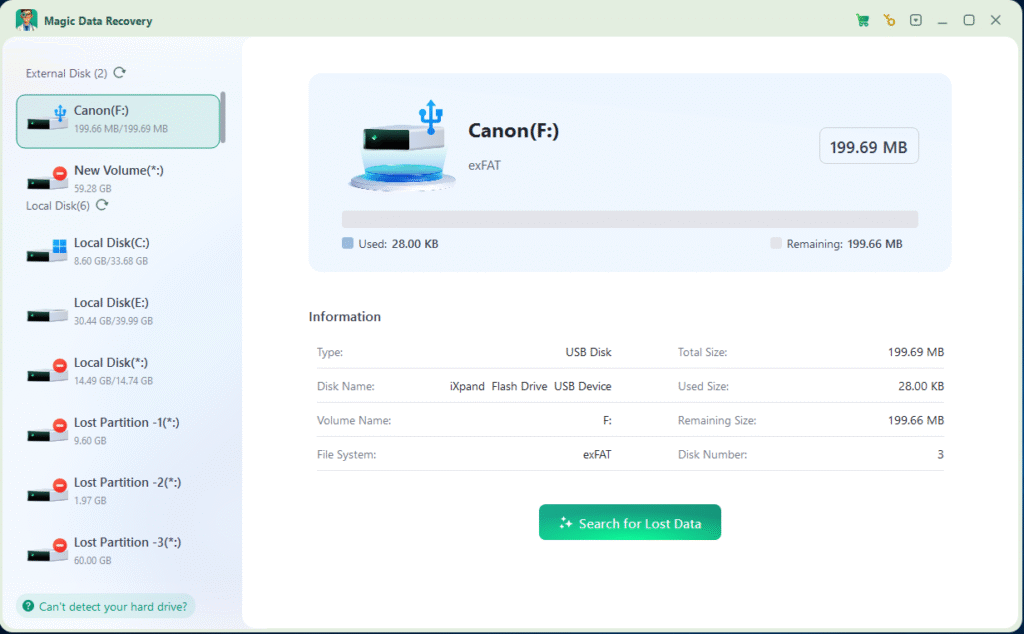
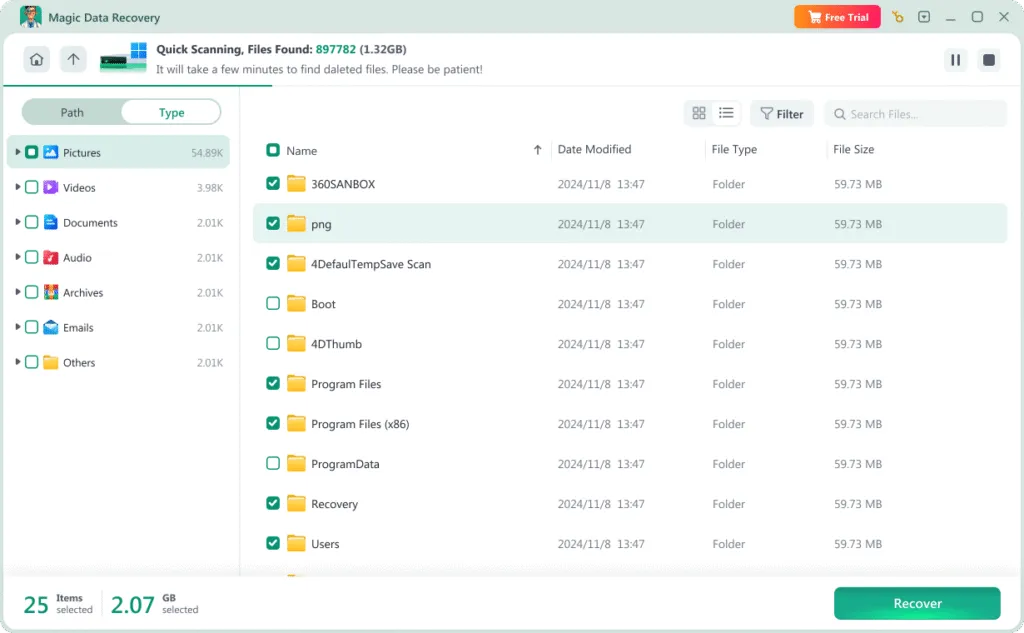
If the Recycle Bin and backups do not contain the pictures, recovery software may help recover recently deleted photos from a Windows disk, external drive, USB drive, or memory card.
Magic Data Recovery scans accessible storage devices for deleted file records and recoverable photo data. It can help in situations such as:
- Photos deleted with Shift + Delete
- An emptied Recycle Bin
- Pictures removed from an SD card
- A USB drive deleted by mistake
- Photos lost after quick formatting
- Missing files from a readable but damaged partition
Recovery results still depend on overwriting, disk condition, encryption, and the original file structure. No responsible recovery tool can guarantee every deleted photo.
Step Guide: Recover Recently Deleted Photos on Windows
Supports Windows 7/8/10/11 and Windows Server


Tips to Prevent Future Photo Loss
After you recover recently deleted photos, create a stronger backup routine.
Consider the following best practices:
- Keep at least two copies of important photos.
- Store one backup on a separate device.
- Enable automatic cloud synchronization.
- Check backup folders regularly.
- Eject SD cards and USB drives safely.
- Replace storage devices that disconnect or report errors.
- Avoid using one SD card for years without backup.
- Confirm successful transfers before deleting camera photos.
- Test whether you can restore files from your backup.
A backup only protects your data when it contains a readable copy and you know how to restore it.
Conclusion
The safest way to recover recently deleted photos is to begin with the recovery tools already available on your device. Check Recently Deleted on iPhone, Trash in Google Photos, the Android Gallery Recycle Bin, Windows Recycle Bin, File History, Time Machine, and cloud backups.
When those options do not contain the missing pictures, consider where the photos were originally stored. Magic Data Recovery provides a practical solution for Windows disks, SD cards, USB drives, and external storage devices. It helps users scan accessible drives, filter photo results, preview files, and save recovered images to another location.
We recommend Magic Data Recovery for these scenarios because it addresses the limitations of the Recycle Bin and backup methods without making unrealistic recovery promises. The earlier you stop using the affected device and begin the correct photo recovery process, the better your chance of restoring usable photos.
Supports Windows 7/8/10/11 and Windows Server
FAQs
Can I recover permanently deleted photos from recently deleted?
Are permanently deleted files actually deleted?
Is it possible to recover 10 years deleted photos?
How do police recover permanently deleted photos?
Can someone access your permanently deleted photos?
Is there any free method to recover deleted photos from PC?

Erin Smith is recognized as one of the most professional writers at Amagicsoft. She has continually honed her writing skills over the past 10 years and helped millions of readers solve their tech problems.