
A Practical Guide to Recovering Deleted Files
Accidentally deleting important data can cause immediate anxiety, especially when you are unsure whether recovering deleted files is still realistic. Many people assume deletion means permanent loss, yet that assumption is often incorrect.
This guide explains how file deletion actually works, what determines the success of recovering a deleted file, and which deleted file recovery methods are safest in everyday situations. It also shows when built-in Windows options are enough and when a dedicated solution like Magic Data Recovery becomes a practical choice.
Supports Windows 7/8/10/11 and Windows Server
Wondering if your files can be recovered? Find out in seconds with our quick check below.
Data Recovery Assessment
Answer 3 quick questions to estimate your recovery chances
Table of Contents
Is Recovering Deleted Files Really Possible?
In many situations, recovering deleted files is possible because deletion usually removes file references rather than erasing the actual data immediately. The file system marks the occupied storage space as available for reuse, but the original content may remain intact until new data overwrites it.
However, recovery success depends heavily on what happens after deletion. Continued use of the same drive increases the risk of overwriting deleted data and reduces the chance of successful recovery.
Therefore, if an important file disappears, stop unnecessary activity on the affected drive as soon as possible. Avoid downloading files, installing programs, or copying new data to it until you determine the best recovery method.
What Happens When a File Is Deleted?
When a file is deleted, the file system updates its file table instead of wiping the file contents immediately. As a result:
- The file entry disappears from normal view.
- The data blocks may remain on the disk.
- The occupied space becomes available for reuse by the system.
This mechanism explains why recovering a deleted file can still succeed if no new data has replaced the original content.
The situation can be different on SSDs. Features such as TRIM may allow deleted blocks to be cleared more quickly, which can significantly reduce the recovery window.
Key Factors That Affect Recovering a Deleted File
Several factors influence whether recovery succeeds:
- Time elapsed since deletion: Recently deleted files generally have a better chance of recovery.
- Disk usage after deletion: New files may overwrite the storage space previously occupied by deleted data.
- Storage device type: HDDs, SSDs, USB drives, and SD cards do not always handle deleted data in the same way.
- Deletion method: Using Shift + Delete or emptying Recycle Bin bypasses normal Recycle Bin restoration.
- Available backups: File History or another backup can provide a safer recovery path.
- System features: TRIM on SSDs may make permanently deleted data much harder to recover.
Understanding these variables helps set realistic expectations before recovering deleted files.
Common Situations Where Files Are Deleted
Files are commonly lost due to:
- Accidental deletion
- Using Shift + Delete
- Emptying the Recycle Bin
- File system errors or logical issues
- Malware activity
- Formatting the wrong drive
Each situation affects recovery difficulty differently.
For example, a recently deleted file may still be available in the Recycle Bin, while a file removed with Shift + Delete requires a different approach. Similarly, formatted or logically damaged storage may require scanning rather than simple file restoration.
How to Recover Deleted Files Without Software
Before using recovery software, check whether built-in Windows options still apply. These methods are usually the safest starting point because they do not require scanning deleted disk space.
Undo a Recent Deletion
If you accidentally deleted a file only moments ago, try pressing Ctrl + Z in the folder where the file was stored.
Windows may reverse the most recent deletion and return the file to its original location. This option works best immediately after accidental deletion and before performing many other file operations.
Restore from Recycle Bin
If the file remains in the Recycle Bin, restoration takes only seconds.
- Open Recycle Bin.
- Find the deleted file or folder.
- Right-click it and select Restore.
Windows will return the file to its original location.
If you used Shift + Delete or already emptied the Recycle Bin, this method will not be available.
Recover from Backup or File History
If you enabled backups before the file was deleted, an earlier version may still exist.
In Windows, open:
Control Panel > System and Security > File History
Then select Restore personal files and check whether an earlier copy of the missing file is available.
You can also right-click the folder that originally contained the file, select Properties, and check Previous Versions if that feature was available on your system.
If Recycle Bin and backup-based methods cannot locate the file, a disk-scanning recovery solution may be the next option.
How to Recover Deleted Files Using Magic Data Recovery
When manual solutions no longer work, Magic Data Recovery offers a practical approach to recovering deleted files while minimizing changes to the original storage device.
This can be useful when files were permanently deleted, the Recycle Bin was emptied, or no usable backup exists.
Why Magic Data Recovery Works Well
Magic Data Recovery focuses on read-only scanning, which helps minimize unnecessary changes to the source drive. It also allows users to preview results before recovery, reducing unnecessary file restoration.
Key benefits include:
- Non-destructive scan mode
- Support for common Windows file systems such as NTFS, FAT32, and exFAT
- Preview before recovery
- Support for HDDs, SSDs, USB drives, SD cards, and other storage media
- Simple interface for everyday users
Step-by-Step: Recovering a Deleted File with Magic Data Recovery
Step 1: Download and Install Magic Data Recovery
Download Magic Data Recovery and install it on a drive different from the affected one whenever possible.
This precaution helps reduce the risk of overwriting the deleted data you are trying to recover.
Supports Windows 7/8/10/11 and Windows Server
Step 2: Select the Drive to Scan
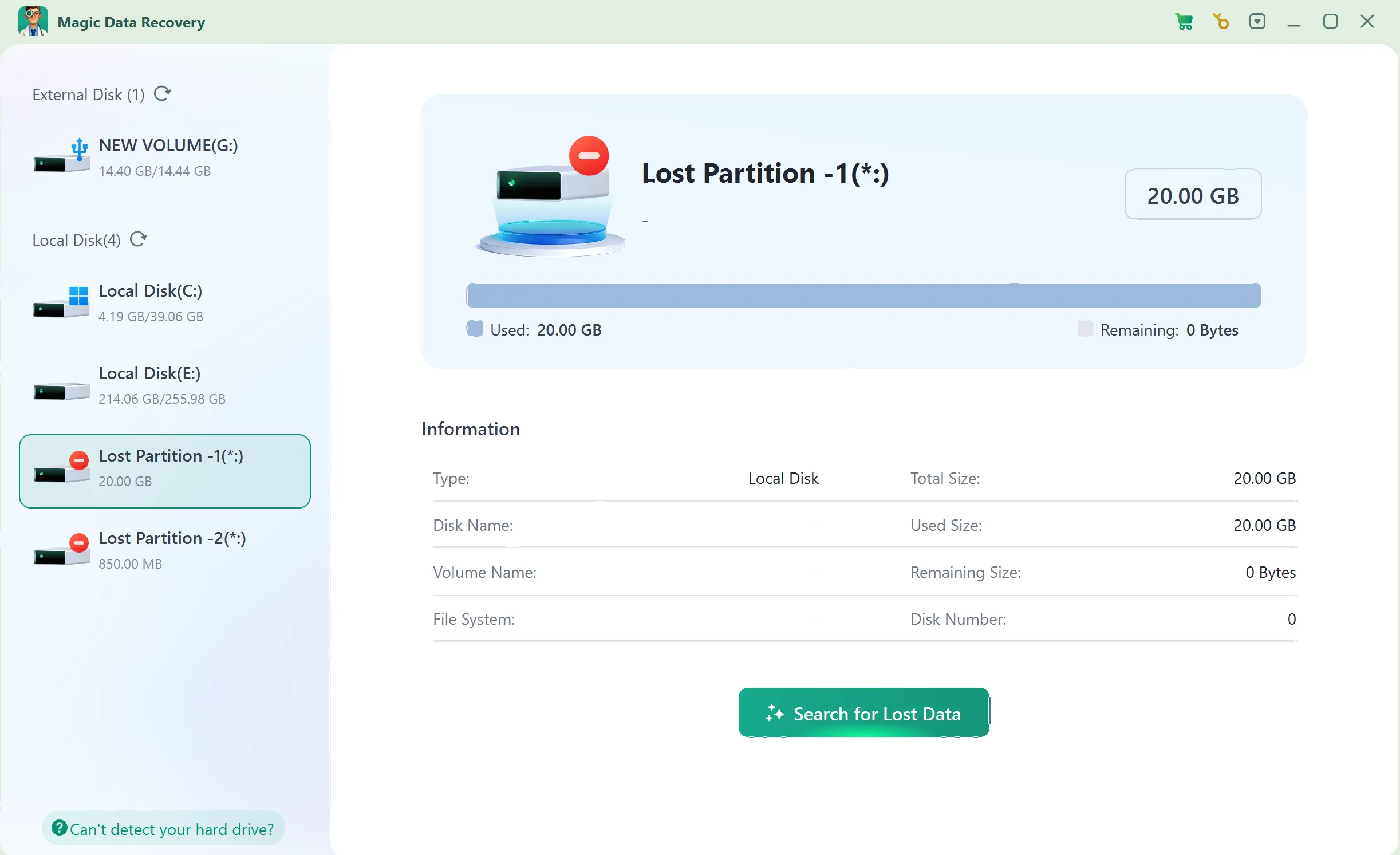
Open the software and choose the drive or storage device where the files were deleted. Then start the scan from the main interface.
Step 3: Scan the Drive for Deleted Files
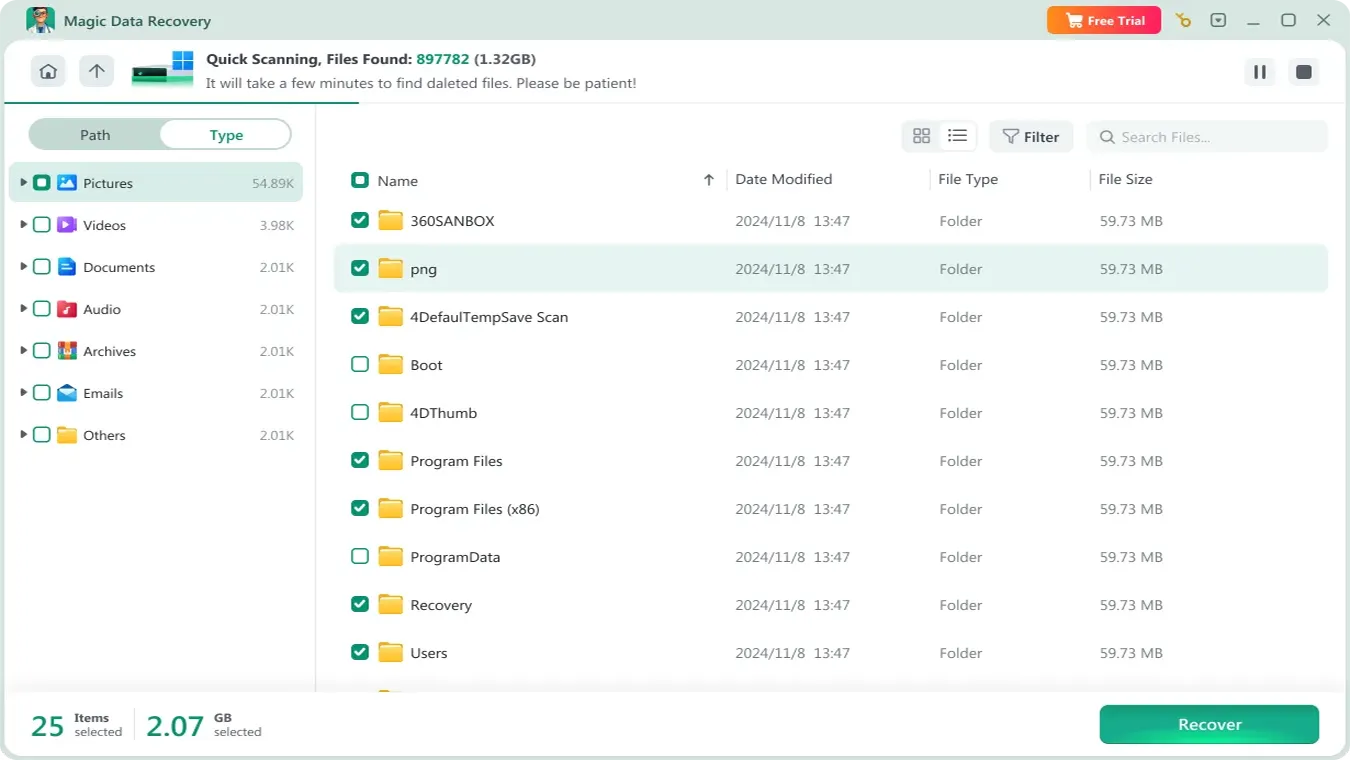
The program scans the selected drive automatically. As scanning continues, recoverable files appear progressively in the results list.
You can browse the available results during the scan or wait for it to finish for a more complete view.
Step 4: Preview Deleted Files Before Recovery
Use the preview feature to confirm the content of files before restoring them.
Previewing helps you identify the files you actually need and check whether their contents appear usable before completing the recovery.

Step 5: Recover Files to a Safe Location
Select the files you need and save them to a different drive or storage device.
Avoid restoring data to the same location from which it was deleted because doing so may overwrite other files that are still recoverable.

Best Practices to Avoid Permanent Loss
To improve recovery success:
- Stop using the affected drive immediately.
- Avoid installing recovery tools on the same disk.
- Do not save new files to the affected drive.
- Recover files to a separate location.
- Avoid formatting or repairing the drive before important files are recovered.
- Limit unnecessary repeated scans.
These steps can significantly improve the effectiveness of recovering deleted files, particularly on HDDs, USB drives, and memory cards where deleted data may remain until overwritten.
However, SSD recovery can be less predictable because TRIM and garbage collection may clear deleted blocks even when you have not intentionally written new files.
When Recovering Deleted Files May Not Work
Although many deleted files can be recovered, no recovery method can guarantee success in every situation.
Recovery may no longer be possible if:
- The original data has already been overwritten.
- SSD TRIM has cleared the deleted blocks.
- Secure erase or data-wiping software was used.
- The storage device has serious physical damage.
- Parts of the deleted file have already been replaced by new data.
This is why stopping further use of the affected drive is one of the most important actions after discovering data loss.
Conclusion
Choosing the right approach for deleted files matters when data loss occurs. Start with built-in options such as Undo Delete, Recycle Bin, File History, or Previous Versions whenever they are available.
If the files were permanently deleted and no backup exists, stop using the affected storage device before attempting further recovery.
Magic Data Recovery provides a practical option for scanning the affected drive, previewing recoverable files, and restoring selected data to a safe location. For users who need another method for recovering deleted files, it offers an accessible option when built-in Windows solutions are no longer enough.
Supports Windows 7/8/10/11 and Windows Server
FAQ About Recovering Deleted Files
How do I recover permanently deleted files?
How do I recover a file I accidentally deleted?
How do I recover permanently deleted files from Recycle Bin?
Can deleted files really be recovered?
Are permanently deleted files really gone?
Where do permanently deleted files go?
How to recover deleted files if not in Recycle Bin?
Which tool is used to recover deleted files?

Vasilii is a data recovery specialist with around 10 years of hands-on experience in the field. Throughout his career, he has successfully solved thousands of complex cases involving deleted files, formatted drives, lost partitions, and RAW file systems. His expertise covers both manual recovery methods using professional tools like hex editors and advanced automated solutions with recovery software. Vasilii's mission is to make reliable data recovery knowledge accessible to both IT professionals and everyday users, helping them safeguard their valuable digital assets.