
Data Recovery Software Market Trends: Insights & Future
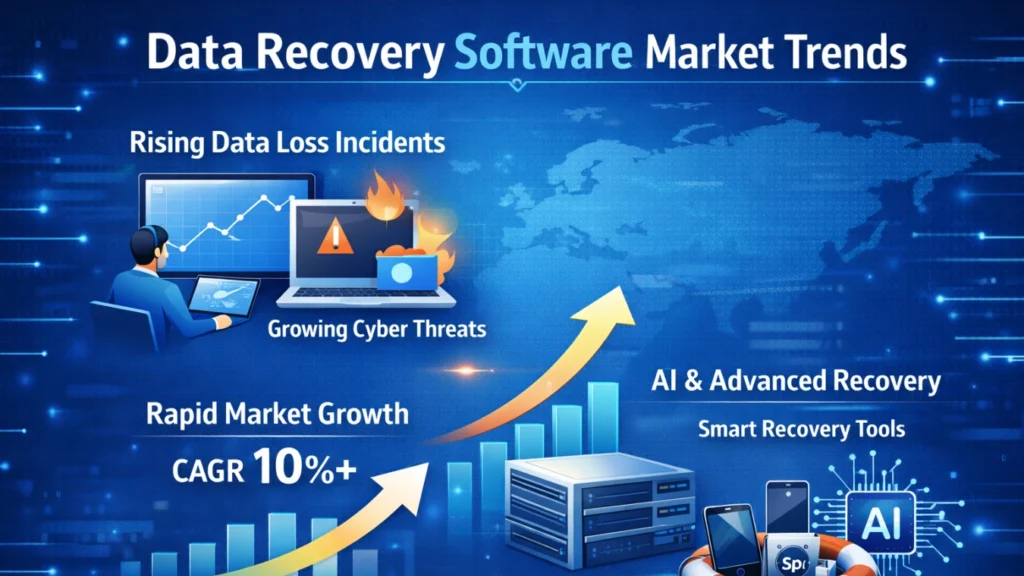
Data loss is no longer an occasional technical issue. Instead, it has become a routine risk for individuals and organizations alike. Files disappear due to accidental deletion, formatting errors, system crashes, or power interruptions. Because of this reality, interest in data recovery software market trends continues to grow.
Understanding these trends helps users identify reliable recovery solutions and avoid tools that fail to meet modern expectations. This article examines how the market is evolving and what truly defines effective data recovery software today.
Table of Contents
The Current Landscape of the Data Recovery Software Market
The data recovery software market has expanded beyond its original technical niche. Today, recovery tools serve a wide range of users and usage scenarios. This broader adoption has directly influenced product design, usability standards, and feature priorities.
Expanding User Base and Practical Demand
One clear pattern within data recovery software market trends is the rapid expansion of the user base. Recovery tools are no longer built exclusively for IT professionals. Instead, they increasingly target:
- Home users managing personal data
- Small businesses without dedicated IT teams
- Professionals working with external storage devices
As this audience grows, practical usability becomes just as important as technical capability.
Core Factors Driving Data Recovery Software Market Trends
Several underlying factors explain why the market continues to evolve. These drivers reflect changes in how data is stored, accessed, and lost in everyday environments.
Growth of Data Volume and Storage Diversity
Modern users store data across many environments, including internal system drives, external hard drives, SSDs, USB devices, and memory cards. This diversity has a direct impact on data recovery software market trends, pushing developers to support multiple file systems and storage formats.
Common and Predictable Data Loss Scenarios
Industry observations consistently show that most data loss results from routine events rather than rare hardware failures. Common causes include:
- Accidental file deletion
- Disk formatting mistakes
- Operating system errors
- Unexpected power interruptions
Because these scenarios affect everyday users, demand for accessible file recovery software remains strong.
Shift Toward Simplicity and Accessibility
As the user base expands, recovery software design priorities continue to change. Simplicity has become a defining factor in market competition.
User Experience as a Competitive Standard
Earlier recovery tools often relied on complex configuration and technical terminology. However, current data recovery software market trends show a clear move toward simplicity. Users now expect:
- Guided recovery steps
- Clear scan progress indicators
- File previews before recovery
These expectations reflect real-world behavior, where users value clarity and speed over advanced customization.
Technological Improvements in Modern Recovery Software
While usability improves, recovery technology itself also continues to evolve. Modern tools aim to balance efficiency and accuracy without increasing complexity.
Smarter Scanning Without Added Complexity
Most current recovery solutions combine fast scan methods with deeper analysis techniques. This layered approach improves recovery accuracy while keeping the process intuitive. As a result, data recovery software market trends increasingly reward efficiency rather than excessive technical control.
Trust, Safety, and Transparency in Recovery Tools
As competition increases, trust has emerged as a key differentiator. Users are more cautious about tools that may overwrite data or exaggerate recovery results.
Why Reliability Defines Market Leaders
Reliable recovery software typically follows established best practices, such as:
- Read-only scanning to prevent data overwrite
- Honest explanations of recovery limitations
- Preview features that allow users to verify files
These practices align closely with modern data recovery software market trends and help users make informed decisions.
Best Practices for Evaluating Data Recovery Software

When choosing a solution, experts recommend paying attention to:
- Supported file systems and storage devices
- Clear and logical recovery workflows
- Transparent communication of limitations
- Consistent performance across common scenarios
These factors reflect widely accepted data recovery software market trends and industry standards.
Future Data Recovery Software Market Trends
Looking ahead, the market is expected to continue refining existing capabilities rather than introducing disruptive changes. Automation, broader compatibility, and usability improvements will likely remain central themes.
Rather than becoming more complex, future recovery tools are expected to become more intuitive while maintaining reliable performance.
Conclusion
Understanding data recovery software market trends enables users to assess recovery tools more critically and realistically. The market has shifted toward solutions that balance functionality, safety, and ease of use.
Some tools, such as Magic Data Recovery, reflect these principles by focusing on practical recovery scenarios and transparent processes. For users seeking a dependable option aligned with current market expectations, it can be considered as part of an informed recovery strategy.
Supports Windows 7/8/10/11 and Windows Server
FAQs
What are data recovery software market trends today?
Why is demand for data recovery software increasing?
What features define modern data recovery software?
How do data recovery software market trends affect everyday users?
What are the most common data loss scenarios today?
How can users evaluate reliable data recovery software?
Why is transparency important in data recovery software?
Is data recovery software suitable for non-technical users?

Jason is a data recovery and technical support specialist with over 15 years of hands-on experience. He has worked extensively with frontline users, troubleshooting difficult data loss cases and providing practical recovery solutions for accidental deletion, formatted drives, damaged file systems, lost partitions, system failures, and other recovery emergencies. His expertise also includes backup and restoration, file repair, and disaster recovery, with a strong emphasis on safe, reliable, and technically accurate guidance.