
Data Loss Prevention Statistics (2026 Guide)
Data loss prevention statistics clearly show that data loss is no longer a rare IT issue. It affects businesses of every size through human error, insider risks, cloud misconfigurations, and cyberattacks. In many cases, one small mistake—such as sharing the wrong file link or deleting a critical folder—can lead to serious downtime and compliance concerns.
This guide explains the most important data loss prevention statistics, what they reveal about today’s security trends, and how organizations can reduce real-world data loss risks. Since prevention does not always stop accidental deletion or storage failure, we will also briefly introduce a practical solution when files are already missing.
Table of Contents
What Do Data Loss Prevention Statistics Actually Measure?
Before reviewing data loss prevention statistics, you need to understand what “data loss” includes. Many people assume data loss only refers to hacking. In reality, data loss covers several different scenarios.
In most industry reports, data loss often includes:
- accidental deletion or formatting
- unauthorized sharing through email or cloud platforms
- insider misuse or careless handling
- cyberattacks, including ransomware incidents
Because these categories overlap, different reports may show different numbers. Still, the overall trend remains consistent: data loss continues to rise.
Key Data Loss Prevention Statistics and What They Reveal
Modern statistics strongly suggest one clear message: businesses face data risk from multiple directions. In other words, organizations cannot focus only on external attacks.
For example, cloud misconfiguration has become a major cause of exposure. Meanwhile, remote work has increased the number of endpoints storing sensitive information. As a result, IT teams must monitor more devices and more file-sharing channels than ever before.
In addition, ransomware remains a major concern. Even if attackers do not steal files, they can still encrypt them. Consequently, many organizations suffer downtime even without a traditional “data leak.”
Overall, these patterns show why DLP has become a standard requirement in cybersecurity planning.
Why Data Loss Still Happens
Many data loss prevention statistics point to the same underlying problem: business workflows often move faster than security policies. Therefore, risk increases naturally.
Human Error Remains a Major Risk
Human error continues to trigger many incidents. Employees may send the wrong attachment, upload confidential documents to the wrong folder, or delete shared files by mistake.
In addition, many employees do not understand what counts as sensitive information. Because of that, they often treat internal documents like ordinary files. As a result, accidental exposure becomes more common.
Moreover, remote work makes this risk worse. People work across multiple devices, and they also multitask more often. Consequently, small mistakes happen faster.
Cloud Collaboration Increases Exposure
Cloud platforms improve productivity. However, they also increase the number of exposure points.
For example, one public sharing link can expose an entire folder. Similarly, a user may set “anyone with the link” access just to save time. Because of this, sensitive files can become public without any hacking.
At the same time, many teams rely on auto-sync tools. Therefore, once a file is exposed, it can spread across multiple devices quickly.
Endpoint Devices Still Create Risk
Endpoints such as laptops, external drives, and USB sticks remain common. Unfortunately, these devices fail.
For instance, a sudden power outage can corrupt a file system. Likewise, a system crash can cause partition errors. As a result, users may lose access to important data instantly.
In contrast, DLP focuses on preventing leaks, not restoring files. That is why endpoint protection must include recovery planning.
Data Loss Prevention Statistics by Data Channel
To reduce risk, organizations must focus on the most common channels. That is exactly why many data loss prevention statistics categorize incidents by channel.
Email Data Loss Trends
Email is still one of the most dangerous channels.
Employees may attach the wrong document, forward confidential files, or reply to phishing messages. In addition, they often reuse old email threads, which increases mistakes. As a result, sensitive data may reach unintended recipients.
Although email DLP tools can detect keywords and patterns, they cannot prevent every error. Therefore, training and clear policies remain essential.
Cloud Storage and Sharing Risks
Cloud sharing has become normal. However, convenience creates risk.
Common cloud-related problems include:
- public sharing links
- incorrect permission settings
- syncing company folders to personal accounts
- deleting shared documents accidentally
Because cloud platforms sync instantly, mistakes can affect many users at once. Consequently, governance and monitoring matter more than ever.
Endpoint and Removable Storage Risks
USB drives and external disks remain common tools. Still, they also cause frequent loss.
For example, users may format the wrong drive during a Windows reinstall. Similarly, they may delete a partition while managing disk space. As a result, files disappear without warning.
In addition, some organizations still allow employees to store sensitive files on personal devices. Therefore, endpoint data loss becomes harder to control.
Industry Benchmarks Based on Data Loss Prevention Statistics
Many data loss prevention statistics show that risk varies by industry. In other words, one-size-fits-all security policies rarely work.
Healthcare
Healthcare organizations store medical records and patient identity data. Therefore, they face strong compliance pressure. In addition, staff members often work under stress, which increases human error. As a result, accidental exposure becomes common.
Finance
Finance companies handle transaction data and personal identity records. Because of that, even small leaks can trigger audits and fines. Consequently, financial institutions invest heavily in monitoring, encryption, and access control.
Education
Schools and universities often have open networks and many unmanaged devices. Moreover, they have high staff and student turnover. As a result, access permissions often remain active longer than they should.
Manufacturing and Engineering
Manufacturing companies store intellectual property such as CAD designs. Therefore, insider risk becomes a major concern. In addition, these firms often rely on external contractors. Consequently, access control and file tracking become critical.
Common Failures Despite Data Loss Prevention Statistics
Even though data loss prevention statistics are widely available, many organizations still repeat the same mistakes. Usually, the problem comes from weak processes rather than weak technology.
No Data Classification Policy
Without classification, employees cannot identify sensitive content quickly. Therefore, they share files without thinking.
In addition, DLP tools rely on classification to reduce false positives. As a result, weak classification makes DLP less effective.
Over-Permissioning and Weak Access Reviews
Many companies grant broad access to avoid delays. However, this creates unnecessary exposure.
If too many users can access sensitive folders, accidental sharing becomes more likely. Moreover, insider misuse becomes harder to detect. Consequently, regular access reviews are essential.
Over-Reliance on Prevention Tools
Some companies assume DLP alone solves everything. In reality, DLP cannot stop hardware failure.
For example, DLP does not prevent drive corruption or accidental formatting. Therefore, businesses still need backups and recovery planning.
How to Improve Security Using Data Loss Prevention Statistics
The best way to use data loss prevention statistics is to turn them into clear priorities. Instead of trying to protect everything equally, organizations should focus on the highest-risk areas first.
First, identify where sensitive files are stored. Next, map how those files move between email, cloud platforms, and endpoints. Then, apply controls such as encryption, monitoring, and permission restrictions.
Meanwhile, employee training should support technical controls. Otherwise, users may bypass policies to save time. As a result, DLP systems generate more alerts but prevent fewer incidents.
In addition, teams should test incident response workflows. Many organizations create plans but never practice them. Consequently, they lose time during real incidents.
Overall, consistent review and testing improves DLP effectiveness.
Real-World Scenarios Behind Data Loss Prevention Statistics
To understand data loss prevention statistics, it helps to look at real situations. Many incidents happen during normal work routines.
For example, an employee may delete a project folder and empty the recycle bin. Later, the employee realizes the folder contained contracts or client documents. In that case, prevention policies cannot reverse the deletion.
Another common scenario happens during system upgrades. A technician may reinstall Windows and format the wrong drive. As a result, the company loses archives, financial documents, or media files.
Similarly, external hard drives may fail suddenly. Because of power issues or physical damage, the drive may become unreadable. Consequently, teams lose access to critical data even if they followed DLP policies.
These examples prove an important point: prevention reduces risk, but recovery reduces damage.
Magic Data Recovery as a Practical Recovery Option
Even with strong DLP systems, files can still disappear due to deletion, formatting, corrupted partitions, or system crashes. Therefore, many users rely on recovery tools as a second layer of protection.
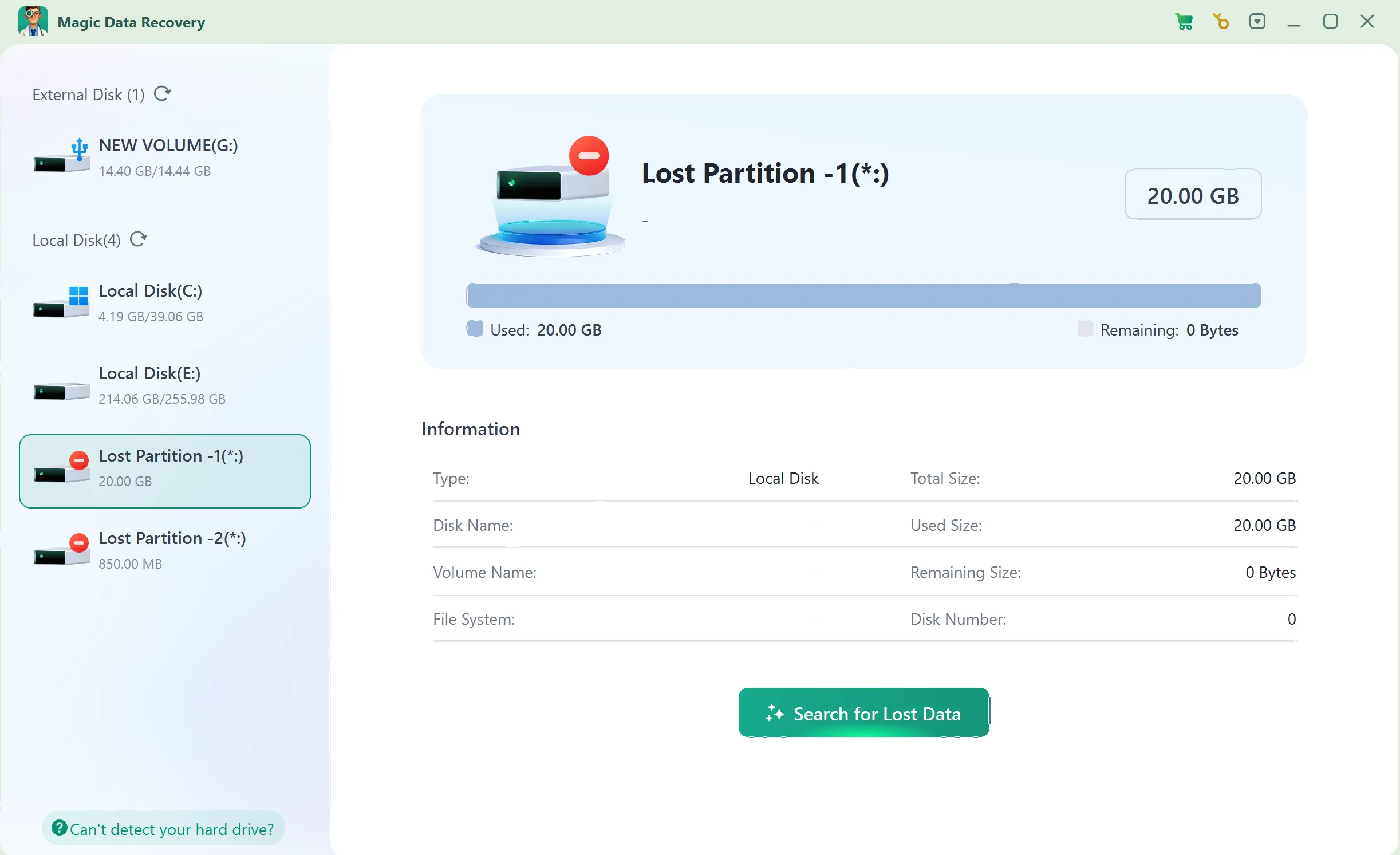
Magic Data Recovery provides a practical way to recover lost files from common storage devices such as internal hard drives, external drives, and USB disks. In addition, it can help in situations where a backup is missing or incomplete.
Conclusion
Modern data loss prevention statistics show that data loss happens through everyday mistakes as often as it happens through cyberattacks. Cloud collaboration, email workflows, and endpoint devices have increased exposure risks, while remote work has made control more difficult. Therefore, DLP strategies remain essential for reducing leaks and improving compliance.
However, prevention cannot stop every incident. Hardware failure, accidental deletion, and formatting errors still happen in real environments. Because of this, a complete security plan should include a recovery option that helps restore missing files quickly. That is why Magic Data Recovery is a practical recommendation for users who want a reliable way to recover important data when prevention measures cannot reverse the damage.
Supports Windows 7/8/10/11 and Windows Server
FAQ About Data Loss Prevention Statistics
How big is the DLP market?
What is responsible for 90% of data loss?
What causes 95% of all cybersecurity breaches?
How common is data leakage?
Who are the big 5 hyperscalers?
Where do 90% of all cyber incidents begin?
What is the number one cause of data loss?

Vasilii is a data recovery specialist with around 10 years of hands-on experience in the field. Throughout his career, he has successfully solved thousands of complex cases involving deleted files, formatted drives, lost partitions, and RAW file systems. His expertise covers both manual recovery methods using professional tools like hex editors and advanced automated solutions with recovery software. Vasilii's mission is to make reliable data recovery knowledge accessible to both IT professionals and everyday users, helping them safeguard their valuable digital assets.