
How to Recover Deleted Folder in Windows 10

Accidentally deleting an important folder on Windows 10 happens more often than many users expect. For example, a single wrong click, a system cleanup task, or pressing Shift + Delete can remove a folder instantly and bypass the Recycle Bin. As a result, most users immediately ask the same question: can you still recover deleted folders in Windows 10?
Fortunately, recovery often remains possible if you act early. However, careless actions can reduce the success rate or even cause permanent data loss. Therefore, this guide explains how folder deletion works in Windows 10, what you should check first, and how a reliable solution like Magic Data Recovery helps when built-in options no longer work.
Supports Windows 7/8/10/11 and Windows Server
Wondering if your files can be recovered? Find out in seconds with our quick check below.
Data Recovery Assessment
Answer 3 quick questions to estimate your recovery chances
Table of Contents
What Happens When a Folder Is Deleted in Windows 10
When you delete a folder in Windows 10, the operating system does not erase the data immediately. Instead, Windows marks the storage space as available and removes the folder reference from the file system (usually NTFS). Meanwhile, the actual data remains on the drive until new data overwrites it.
Because of this behavior, searches for “recover deleted folder Windows 10” are very common. More importantly, continued use of the affected drive increases the risk of overwriting the deleted folder’s data blocks. Therefore, once you notice a folder is missing, you should stop writing new data to the same drive immediately.
Check These Options First Before Using Recovery Software
Not every deleted folder requires specialized recovery software. Windows 10 includes several built-in mechanisms that may solve the problem quickly.
Restore Deleted Folder from Recycle Bin
If the folder was deleted normally:
1. Open the Recycle Bin.
2. Locate the deleted folder.
3. Right-click and select Restore.
The folder will return to its original location. This is the fastest and safest method.
Recover Folder Using File History (If Enabled)
If File History was enabled before deletion:
- Open Settings > Update & Security > Backup.
- Choose Restore files from a current backup.
- Browse through previous versions and restore the folder.
This method works well for users who regularly back up personal files.
Search for a Moved or Hidden Folder
Sometimes a folder is not deleted but accidentally moved:
- Use Windows Search with the folder name.
- Enable Show hidden files in File Explorer.
If none of these options work, the folder may be permanently deleted.
How to Recover Permanently Deleted Folder in Windows 10
When a folder is deleted using Shift + Delete, or after the Recycle Bin is emptied, Windows no longer provides a built-in undo option. At this stage, data recovery software becomes necessary.
This is where Magic Data Recovery can help recover data that Windows itself can no longer access. It is a Windows-based undelete exe designed to help users recover deleted files safely and efficiently. Below is a practical recovery workflow that aligns with real-world recovery scenarios.
Step 1: Download and Install Magic Data Recovery
Download Magic Data Recovery and install it on a drive different from the affected drive. This precaution prevents accidental overwriting and preserves recoverable data.
Supports Windows 7/8/10/11 and Windows Server
Step 2: Select the Drive to Scan
Launch the program. From the main interface, select the hard drive or partition where the deleted folder was originally stored, then start the scan.
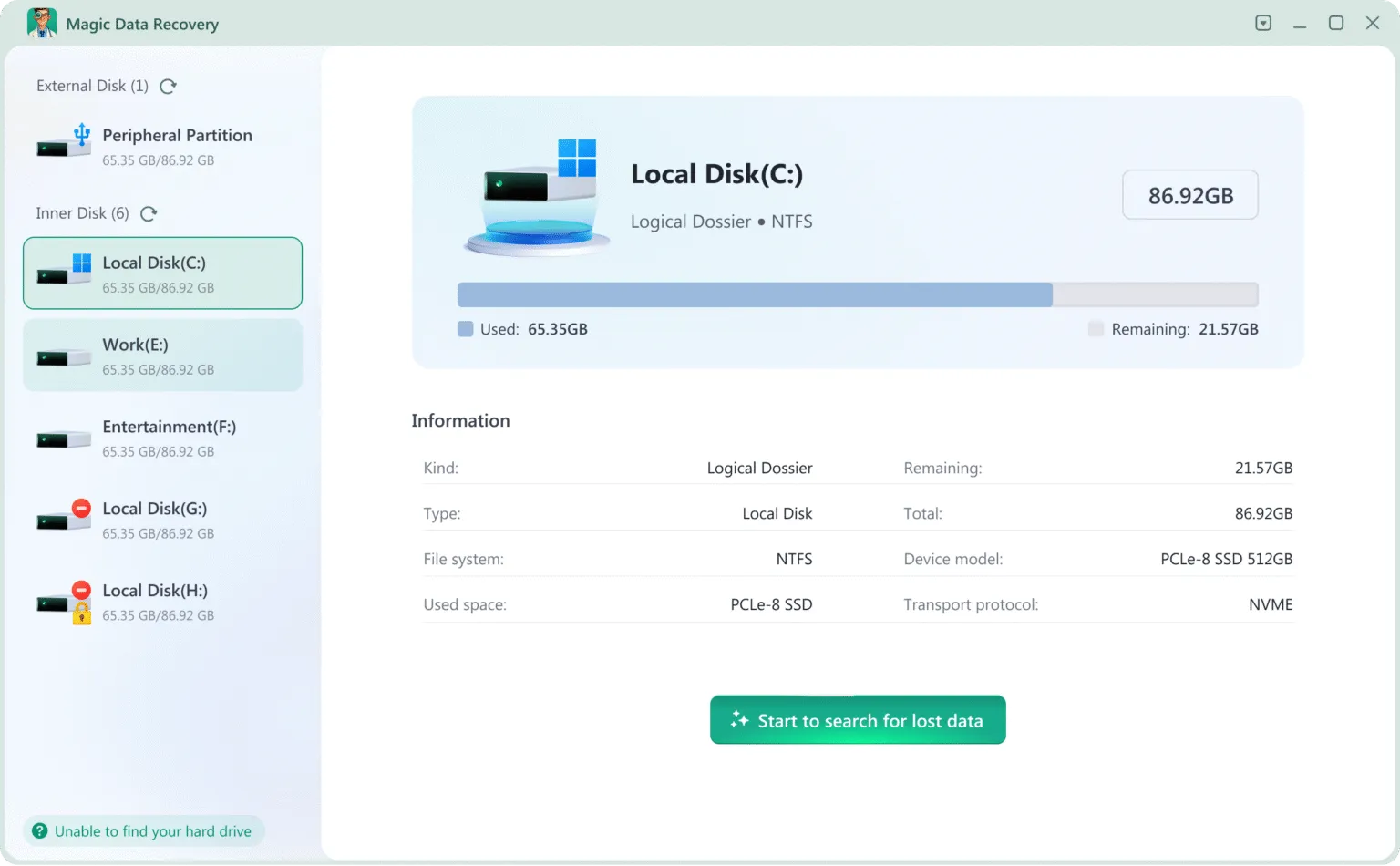
Step 3: Wait Till the Scan Completes
Magic Data Recovery automatically performs an Advanced Scan. When the scan progresses, recoverable files and folders will appear in the software.
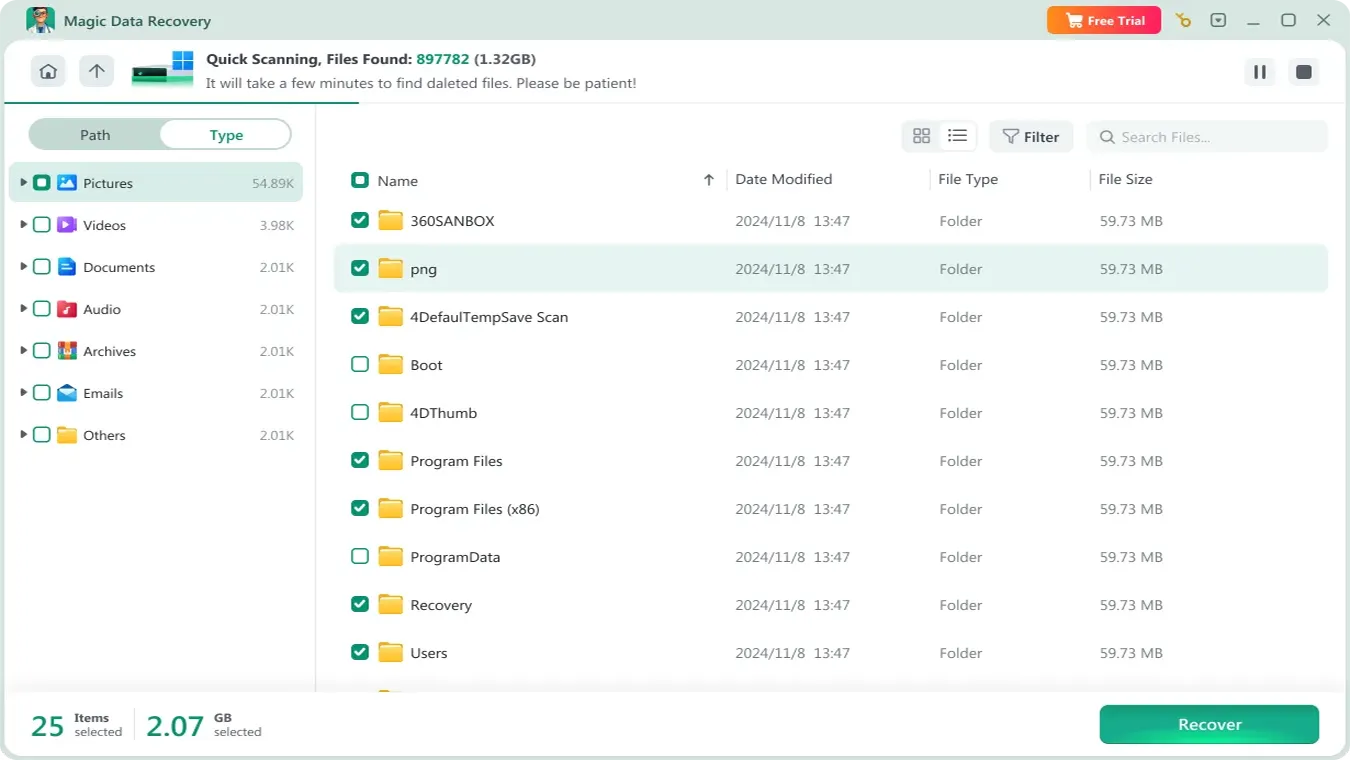
Step 4: Preview Deleted Files Before Recovery
Previewing ensures the files inside the deleted folder are readable and relevant before recovery.

Step 5: Recover Files to a Safe Location
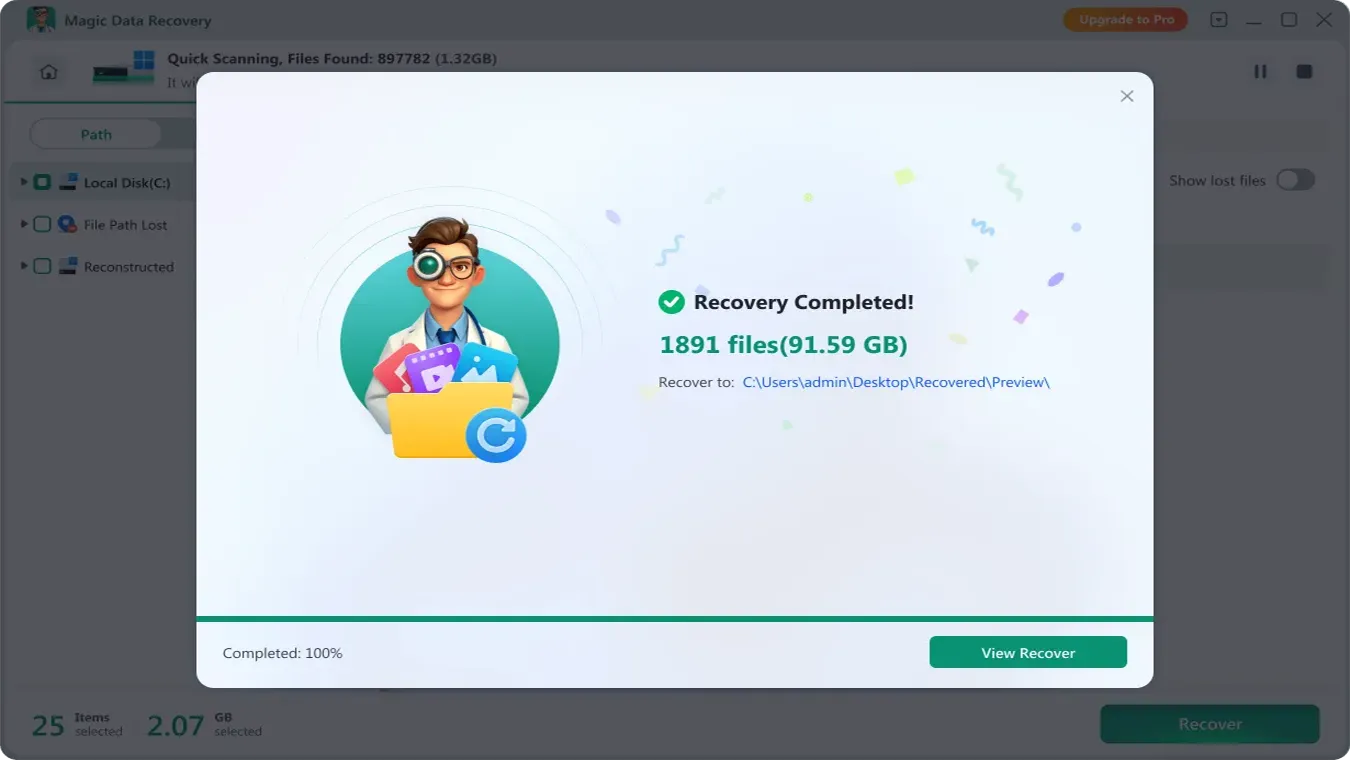
Select the folders and files you need and recover them to a different drive or external storage device. Restoring data to the same drive increases the risk of corruption.
Why Magic Data Recovery Is a Reliable Choice
Magic Data Recovery addresses common recovery pain points:
- Safe scanning: Read-only operations minimize risk.
- Folder structure recovery: Preserves original hierarchy.
- Windows 10 compatibility: Optimized for Windows systems, like NTFS, exFAT and FAT32.
For users facing permanently deleted folders, it provides a balanced solution that prioritizes data safety over aggressive recovery claims. If you are looking for efficient and cautious deleted file recovery solutions, Magic Data Recovery is worth considering.
Common Reasons Folder Recovery May Fail
Even with proper tools, recovery is not always guaranteed. Common reasons include:
- The deleted folder’s data blocks were overwritten.
- SSD TRIM commands permanently cleared the data.
- Excessive delay before attempting recovery.
Understanding these limitations sets realistic expectations and builds trust in the recovery process.
Conclusion
Losing a folder does not automatically mean permanent data loss. By understanding how deletion works and choosing the right recovery approach, many users can successfully recover deleted folder Windows 10 without making the situation worse. When built-in options are no longer available, Magic Data Recovery offers a careful, structured solution designed to restore lost folders while minimizing additional risk.
Supports Windows 7/8/10/11 and Windows Server
Recover Deleted Folder in Windows 10 – FAQs
How do I recover a deleted folder?
How do I recover a deleted folder not in the Recycle Bin?
How to retrieve permanently deleted folders from desktop?
Can I still recover permanently deleted files?
How to recover deleted files and folders in Windows 10?
Where do permanently deleted files actually go?
How do I find a deleted file on my computer?
How to recover permanently deleted files without backup?

Vasilii is a data recovery specialist with around 10 years of hands-on experience in the field. Throughout his career, he has successfully solved thousands of complex cases involving deleted files, formatted drives, lost partitions, and RAW file systems. His expertise covers both manual recovery methods using professional tools like hex editors and advanced automated solutions with recovery software. Vasilii's mission is to make reliable data recovery knowledge accessible to both IT professionals and everyday users, helping them safeguard their valuable digital assets.