
Recuva Photo Recovery Review

Losing photos can feel stressful, especially when they come from a family trip, a client shoot, a camera SD card, or a formatted USB drive. Many Windows users search for recuva photo recovery because Recuva is familiar, free to try, and simple enough for basic deleted photo recovery. However, photo loss does not always happen in simple ways. Sometimes files disappear after formatting, file system errors, system reinstallation, virus damage, or partition problems. In this guide, we explain how recuva photo recovery works, where it helps, where it may fall short, and why Magic Data Recovery can be a more reliable solution for users who need a smoother recovery experience.
Supports Windows 7/8/10/11 and Windows Server
Table of Contents
What Is Recuva Photo Recovery?
Recuva photo recovery refers to using Recuva, a Windows data recovery tool, to scan storage devices and recover deleted image files. It can help restore common photo formats from hard drives, memory cards, USB drives, and other rewriteable storage devices.
For simple cases, Recuva may work well. For example, you deleted JPG photos from a folder, emptied the Recycle Bin, and did not save new files to the same drive. In that situation, the deleted photo data may still exist on the disk until new data overwrites it.
However, photo recovery depends on more than one button click. The result often depends on:
- How long ago the photos were deleted
- Whether the drive has been used after deletion
- Whether the storage device was formatted
- Whether the file system has errors
- Whether the photos are fragmented or corrupted
- Whether the drive is an HDD, SSD, USB drive, or SD card
Therefore, recuva photo recovery is useful, but it is not always enough for complex data loss.
How Recuva Photo Recovery Works
When you delete a photo, Windows usually removes the file reference instead of immediately destroying the photo content. Recovery software scans the storage device, looks for remaining file records or raw image signatures, and tries to rebuild recoverable files.
Standard Scan vs Deep Scan
Recuva usually offers a normal scan and a deep scan. A normal scan checks file records quickly. A deep scan searches more deeply for file signatures, which may help when photos no longer appear in regular file indexes.
The deep scan takes longer, but it can find more results in some cases. Still, deep scanning does not guarantee that every photo will open correctly. If new data has overwritten part of the original image, the recovered file may become incomplete or corrupted.
Why You Should Stop Using the Drive First
Before trying recuva photo recovery, stop using the affected device. Do not copy new files to it. Do not install recovery software on the same drive. Do not save recovered photos back to the original location.
This matters because every new write operation may overwrite deleted photo data. For better results, install the recovery tool on another drive and restore photos to a different storage device.
When Recuva Photo Recovery Can Help
Recuva photo recovery can be a practical option in simple situations. It is especially helpful for users who need a free or lightweight tool for basic recovery.
Common use cases include:
- Recovering photos deleted from a Windows folder
- Restoring images after emptying the Recycle Bin
- Scanning a USB flash drive for missing pictures
- Recovering photos from a camera SD card after accidental deletion
- Checking whether lost JPG, PNG, or RAW files still appear
For these basic tasks, Recuva gives users a quick starting point. Its wizard-style workflow also helps beginners select file types and scan locations without learning technical recovery terms.
Limits of Recuva Photo Recovery
Although recuva photo recovery is popular, it has clear limits. These limits become more obvious when the data loss case involves formatting, file system damage, virus attacks, or system-level problems.
1. It Works Best for Simple Deletion
Recuva often performs better when photos were recently deleted and the file system remains healthy. If the device was formatted, became RAW, suffered file system errors, or lost partitions, results may become less predictable.
2. Advanced Recovery Scenarios May Need More Power
Many users do not lose photos through simple deletion. They lose them after:
- Formatting an SD card by mistake
- Reinstalling Windows
- A drive showing “You need to format the disk”
- Virus or malware damage
- Partition loss
- File system corruption
- Sudden power failure during transfer
In these cases, a stronger photo recovery software solution may provide a better experience.
3. The Interface Can Feel Dated
Recuva is easy enough for basic use, but its interface may feel limited when you need to filter many scan results, preview files clearly, or recover data from more complex storage conditions. Beginners may also feel unsure about which files are truly recoverable.
4. Recovery Success Depends on File Condition
No data recovery tool can promise perfect results. If photo data has been overwritten, physically damaged, or heavily corrupted, recovery becomes harder. This applies to recuva photo recovery, Magic Data Recovery, and any other recovery tool.
That said, a tool with clearer scanning, better filtering, and broader recovery scenario support can reduce user error and improve practical recovery chances.
Recuva Photo Recovery vs Magic Data Recovery
If your photo loss case is simple, recuva photo recovery may be worth trying. However, if you want a cleaner workflow and stronger support for real-world data loss scenarios, Magic Data Recovery is a better choice.
Feature | Recuva Photo Recovery | Magic Data Recovery |
Best for | Basic deleted photo recovery | Deleted, formatted, corrupted, and lost data recovery |
User experience | Simple but dated | Clean, guided, beginner-friendly |
Recovery scenarios | Mainly deletion and basic scans | Deletion, formatting, file system errors, system reinstallation, virus damage |
Storage support | Common rewriteable media | HDDs, SSDs, USB drives, SD cards, memory cards, and more |
Preview and selection | Basic | Clearer result browsing and file selection |
Ideal user | Casual users with simple deletion | Users who need a more complete recovery solution |
Why Magic Data Recovery Is a Better Recuva Alternative
A good Recuva alternative should not only scan for deleted files. It should help users understand what happened, locate lost photos faster, and recover files from more complex situations. That is where Magic Data Recovery stands out.
Solves More Data Loss Problems
Magic Data Recovery supports many common recovery scenarios, including deleted files, formatted drives, file system errors, system reinstallation, virus damage, inaccessible partitions, and storage device problems. This makes it more useful when the issue goes beyond accidental deletion.
For example, a photographer may format an SD card before copying all images. A student may reinstall Windows and lose desktop photos. A business user may find that a USB drive asks to be formatted before opening. In these cases, Magic Data Recovery gives users a more suitable path than relying only on recuva photo recovery.
Easier for Non-Technical Users
Many people who search for recuva photo recovery are not data recovery experts. They simply want their photos back. Magic Data Recovery keeps the process straightforward:
- Select the lost photo location.
- Scan the drive or storage device.
- Preview recoverable files.
- Choose the photos you need.
- Recover them to a safe location.
This workflow helps users avoid common mistakes, such as saving recovered files back to the same drive.
Better Fit for Formatted and Corrupted Storage
Recuva can help with some basic cases, but formatted drives and file system errors often require deeper analysis. Magic Data Recovery targets these situations more directly. It can scan storage devices where files no longer appear normally, helping users recover photos and other files from difficult data loss cases.
More Reliable for Mixed File Recovery
Photo loss rarely happens alone. A formatted SD card may also contain videos. A USB drive may include documents, archives, and project files. Magic Data Recovery supports broader data recovery needs, so users can recover photos, videos, documents, audio files, and more in one workflow.
Supports Windows 7/8/10/11 and Windows Server
How to Recover Deleted Photos with Magic Data Recovery
If you want a more efficient solution than recuva photo recovery, follow these steps with Magic Data Recovery.
Step 1: Stop Using the Affected Device
First, stop saving, copying, or editing files on the affected drive. If the lost photos were on an SD card, remove the card from the camera. If they were on a USB drive, avoid writing new files to it.
Step 2: Install Magic Data Recovery on Another Drive
Install the software on a safe drive, not the one that lost photos. This reduces the risk of overwriting recoverable data.
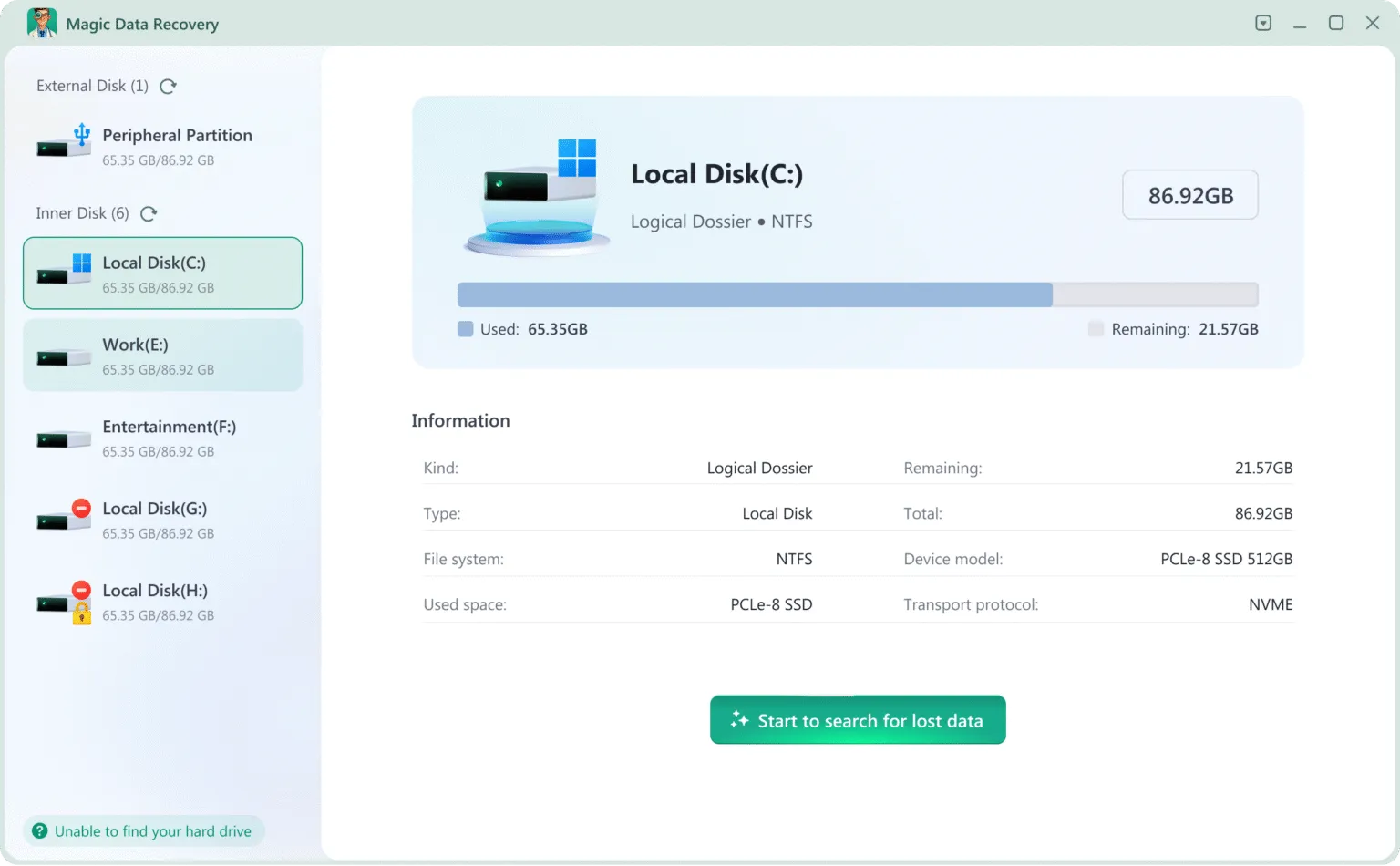
Step 3: Choose the Drive or Location
Open Magic Data Recovery and select the drive, partition, USB device, memory card, or folder where your photos disappeared.
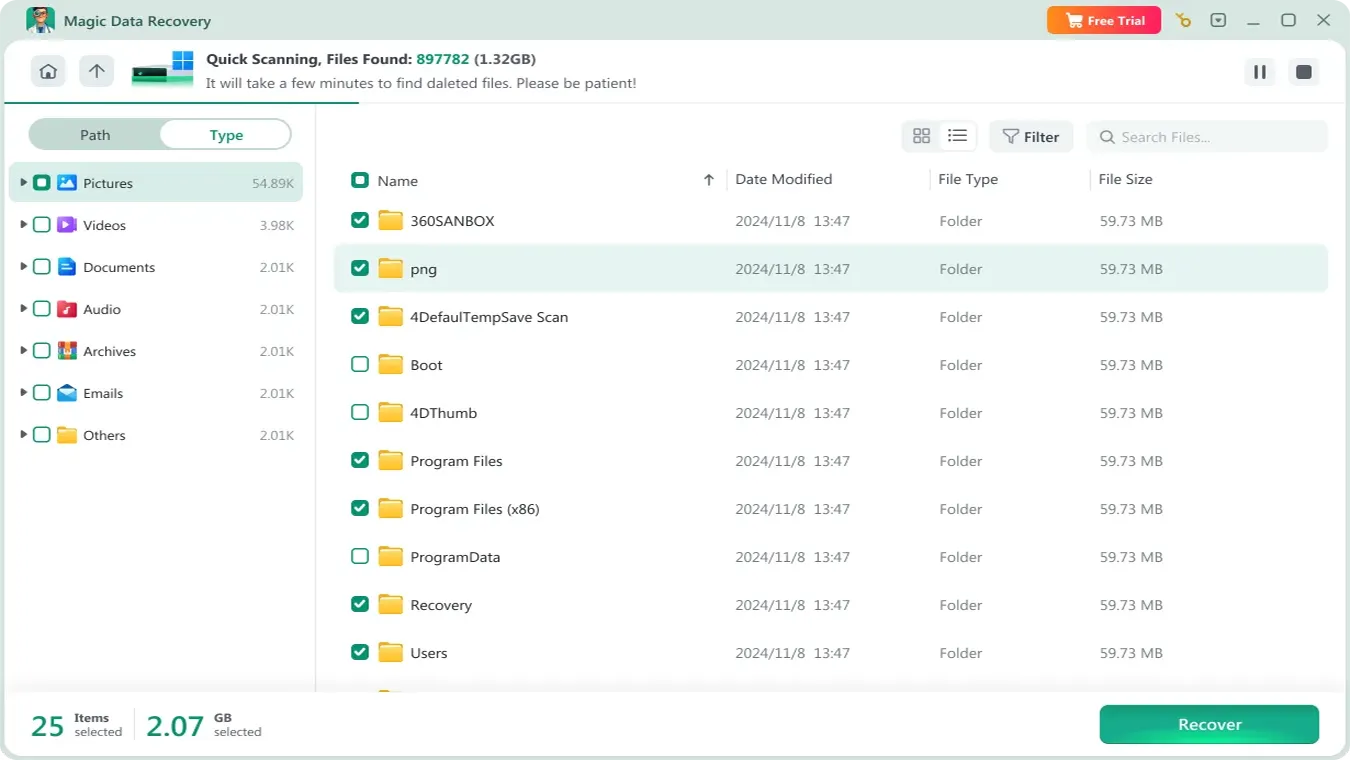
Step 4: Scan for Lost Photos
Start the scan. The software will search for deleted, lost, formatted, or inaccessible files. You can review scan results and filter by file type to find images faster.
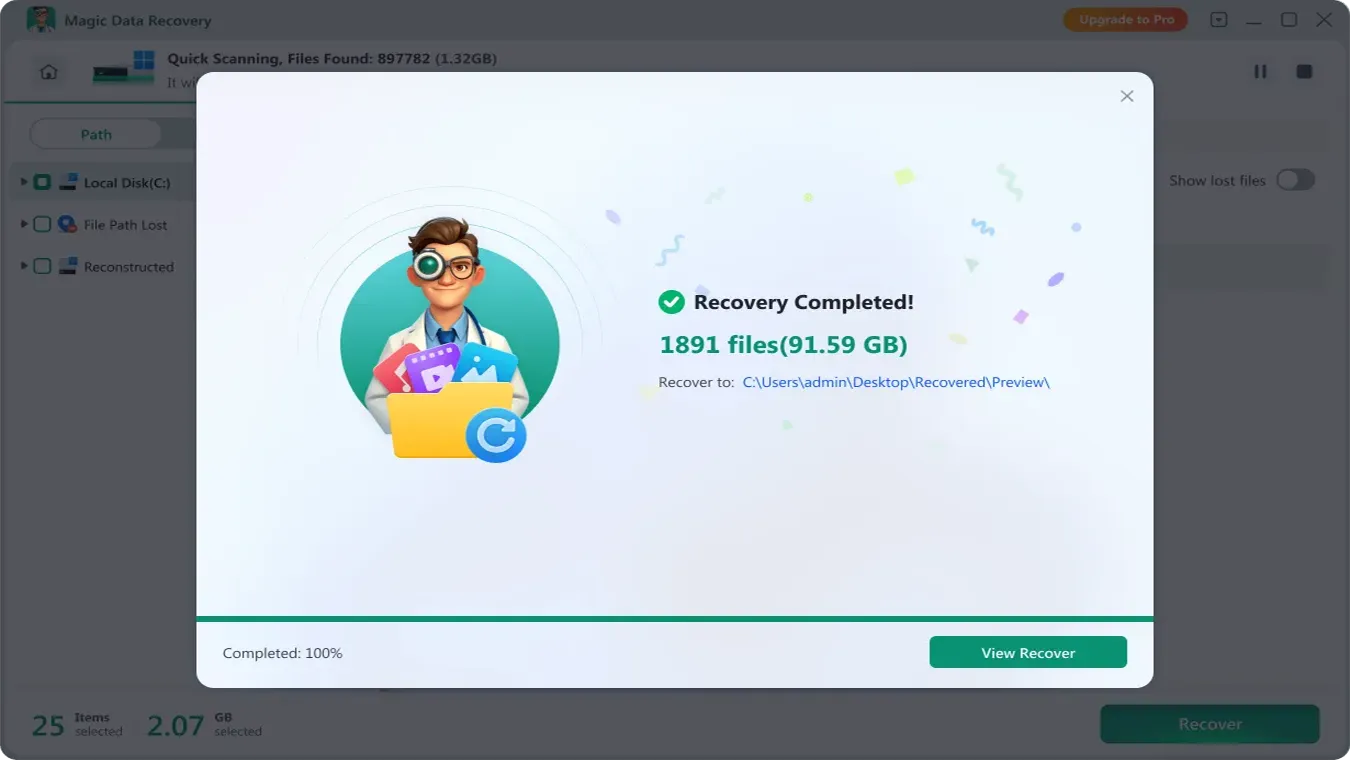
Step 5: Preview and Recover
Preview the photos when available. Then select the files you want and recover them to another safe storage device. Do not restore them to the original drive until you confirm that the recovery succeeded.
Best Practices Before Using Any Photo Recovery Tool
Whether you use recuva photo recovery or Magic Data Recovery, good recovery habits matter.
- Stop using the device immediately.
- Do not format the drive again.
- Do not run disk repair tools before recovery.
- Do not save recovered photos to the original drive.
- Use a reliable recovery tool before trying risky manual fixes.
- Back up recovered photos to cloud storage or another external drive.
These steps improve your chances and prevent avoidable data loss.
Recuva Photo Recovery: Final Verdict
Recuva photo recovery is a useful starting point for basic deleted photo recovery. It is simple, familiar, and suitable for users who deleted photos recently from a healthy Windows drive. However, it may not be the best option when the problem involves formatting, file system errors, system reinstallation, virus damage, or inaccessible storage devices.
For users who want a clearer interface, broader recovery support, and a smoother experience, Magic Data Recovery is the better recommendation. It handles more real-world data loss scenarios and helps users recover deleted, formatted, and corrupted data with less confusion.
If you are looking for a more efficient solution than recuva photo recovery, Magic Data Recovery is worth trying.
Supports Windows 7/8/10/11 and Windows Server
FAQs
Is Recuva photo recovery free to use?
Yes, Recuva offers a free version that can help recover deleted photos in basic situations. It is often enough for simple deletion cases. However, free tools may have limits in advanced recovery scenarios, such as formatted drives, file system errors, or corrupted partitions. For complex cases, Magic Data Recovery may provide a smoother and more complete solution.
Can Recuva recover photos from a formatted SD card?
Recuva photo recovery may find some photos from a formatted SD card, especially after a quick format. However, results depend on whether the original data has been overwritten. If the card has file system errors or has been reused after formatting, Magic Data Recovery is usually a better choice for deeper scanning and clearer recovery results.
Why are recovered photos corrupted or unable to open?
Recovered photos may become corrupted when part of the original file data has been overwritten, fragmented, or damaged. A recovery tool may rebuild the file name and size, but the image content still needs intact data blocks. To reduce this risk, stop using the device immediately and recover files to a different drive.
What is the best Recuva alternative for photo recovery?
Magic Data Recovery is a strong Recuva alternative for users who need more than basic deleted photo recovery. It supports deleted files, formatted drives, file system errors, system reinstallation, virus damage, and other common data loss situations. Its simple interface also makes it easier for non-technical users to find and recover lost photos.
Can Magic Data Recovery recover files other than photos?
Yes. Magic Data Recovery can recover photos, videos, documents, audio files, archives, and other file types. This is helpful when a formatted USB drive, SD card, or hard drive contains mixed data. Instead of running separate tools for different files, users can scan the device once and select the recoverable items they need.
Should I install recovery software on the drive with lost photos?
No. You should avoid installing any recovery software on the drive where your photos were lost. Installation may write new data to the same storage space and overwrite deleted files. Install Magic Data Recovery or any other recovery tool on another drive, then save recovered photos to a separate safe location.
Does photo recovery always work?
No photo recovery software can guarantee perfect results. Recovery depends on the device condition, file system status, overwrite level, and how quickly you act after data loss. However, using a reliable tool, stopping device usage, and recovering files to another drive can improve your chances and help avoid additional damage.
When should I choose Magic Data Recovery over Recuva?
Choose Magic Data Recovery when your photos were lost after formatting, file system errors, system reinstallation, virus damage, or partition problems. You should also choose it if Recuva finds too many confusing results or fails to recover usable files. Magic Data Recovery offers a clearer workflow and broader recovery support for real-world data loss.

Jason is a data recovery and technical support specialist with over 15 years of hands-on experience. He has worked extensively with frontline users, troubleshooting difficult data loss cases and providing practical recovery solutions for accidental deletion, formatted drives, damaged file systems, lost partitions, system failures, and other recovery emergencies. His expertise also includes backup and restoration, file repair, and disaster recovery, with a strong emphasis on safe, reliable, and technically accurate guidance.