
Recover Files from Hard Drive Windows 10
Losing files from a hard drive can feel serious, especially when the missing data includes work documents, family photos, videos, project folders, or business records. The good news is that many files are still recoverable if you act quickly and avoid writing new data to the same drive. This guide explains how to recover files from hard drive step by step, including built-in Windows methods, backup options, and professional recovery software.
If your data loss happened on an internal HDD, external drive, old laptop disk, or Windows 10 computer, you can also learn more from Amagicsoft’s complete hard drive recovery guide. In this article, we will cover what to do first, how to recover files from hard drive Windows 10, and when a dedicated tool like Magic Data Recovery becomes the safer choice.
Supports Windows 7/8/10/11 and Windows Server
Table of Contents
Can You Recover Files from a Hard Drive?
Yes, in many cases, you can recover files from hard drive if the lost data has not been overwritten. When Windows deletes a file, it usually removes the file record or marks the storage space as available. The actual data may remain on the drive until new files occupy that space.
That is why timing matters. The more you use the affected hard drive, the higher the risk that Windows, apps, downloads, or system updates will overwrite the deleted data.
Common recoverable scenarios include:
- Accidentally deleted files
- Files removed from the Recycle Bin
- Files lost after formatting
- Missing folders after system errors
- Data loss caused by file system corruption
- Files lost from an external hard drive
- Documents, photos, videos, archives, and other file types that disappeared unexpectedly
However, no recovery method can promise success in every case. If the hard drive has severe physical damage, clicking noises, burning smell, or repeated disconnects, stop using it and consider a professional data recovery lab.
What to Do Before Hard Drive File Recovery
Before you try to recover files from hard drive Windows 10, take a few protective steps. These actions improve recovery chances and reduce the risk of permanent data loss.
Stop Using the Affected Hard Drive
Do not save new files, install software, download updates, or copy data to the same drive. If the missing files were on the C: drive, avoid using the computer as much as possible. If the files were on an external hard drive, unplug it safely until you are ready to scan it.
Do Not Format or Repair the Drive First
Windows may ask you to format a drive before using it. Do not click Format if the drive contains important files. Also, avoid running CHKDSK before recovery when the file system is corrupted. Repair commands may change file records and make recovery harder.
Prepare Another Storage Location
Always restore recovered files to another drive. For example, if you want to recover files from hard drive D:, save the recovered files to C:, an external drive, or another safe location. Restoring files to the same drive can overwrite other recoverable data.
Method 1: Recover Files from Recycle Bin
If you recently deleted files from an internal hard drive, the Recycle Bin should be your first stop. This method is fast, free, and safe.
Steps:
- Open Recycle Bin on the desktop.
- Search for the deleted file or folder.
- Right-click the item.
- Choose Restore.
- Check the original folder.
This method works only when the deleted file still exists in the Recycle Bin. It will not help if you used Shift + Delete, emptied the Recycle Bin, deleted files from some external drives, or lost data after formatting.
Method 2: Recover Files from Hard Drive Windows 10 with File History
File History is a Windows backup feature. If it was enabled before data loss, it can help you restore older versions of files or folders.
Steps:
- Open File Explorer.
- Go to the folder where the file was stored.
- Right-click the folder.
- Select Restore previous versions.
- Choose a version from the list.
- Click Restore or Open to check the files first.
This method is useful when you need to recover files from hard drive Windows 10 after accidental deletion, unwanted edits, or folder replacement. However, it only works if File History or previous versions were already available before the files disappeared.
Method 3: Restore Files from Backup or Cloud Sync
Before using recovery software, check whether your files exist in a backup or cloud account. Many users forget that Windows folders may sync with OneDrive, Google Drive, Dropbox, or another backup tool.
Check these locations:
- Windows Backup
- OneDrive Recycle Bin
- External backup drives
- NAS backup folders
- Old laptop or desktop drives
- Email attachments
- USB copies
- Project export folders
This method is often the cleanest solution because it restores complete files with original names and folder structures. However, if no backup exists, you will need a deeper scan of the hard drive.
Method 4: Use Windows File Recovery
Windows File Recovery is a Microsoft command-line tool for Windows 10 version 2004 and later. It can recover deleted files from local storage devices, including internal drives, external hard drives, and USB devices.
This option may help advanced users, but it has limitations. It requires commands, correct recovery syntax, and a separate destination drive. For ordinary users, the command-line workflow can feel confusing.
A basic example may look like this:
winfr C: D: /regular /n \Users\YourName\Documents\
In this example, the tool scans C: and saves recovered files to D:. You should never recover files back to the same source drive.
Windows File Recovery can be helpful when you know the file path or file type. Still, it may not be ideal for users who want a visual interface, file preview, folder browsing, or easier filtering.
Method 5: Recover Files from Hard Drive with Magic Data Recovery
When files are not in the Recycle Bin, File History is unavailable, or the drive was formatted or corrupted, dedicated recovery software becomes more practical. Magic Data Recovery is designed for users who need a clear and efficient way to recover files from hard drive without complex commands.
You can download it from the official Magic Data Recovery page.
Supports Windows 7/8/10/11 and Windows Server
Magic Data Recovery helps in common hard drive data loss scenarios, including:
- Deleted files
- Formatted hard drives
- Lost folders
- File system errors
- RAW or inaccessible partitions
- External hard drive data loss
- Files missing after accidental operations
- Documents, photos, videos, archives, and other file types
Unlike basic Windows recovery options, Magic Data Recovery scans the selected drive and shows recoverable files in a visual interface. You can preview files before recovery, filter results, and restore the data to a safe location.
Why Magic Data Recovery Is Useful for Hard Drive Recovery
Magic Data Recovery is useful because it focuses on the actual recovery problem: finding lost data before it gets overwritten. It supports many file loss situations and provides a straightforward workflow for Windows users.
Key advantages include:
- Deep scan for deleted, formatted, and corrupted data
- Preview before recovery
- Support for internal and external hard drives
- Clear file filtering and search options
- Recovery for many file types
- Simple workflow for non-technical users
- Safe recovery to another location
For users who want a deeper hard disk solution, Amagicsoft also provides a dedicated article on hard disk drive recovery software.
How to Recover Files from Hard Drive with Magic Data Recovery
Follow these steps:
1. Download and install Magic Data Recovery to your computer.
Please download it from Amagicsoft website or the following download button to get the software.
Supports Windows 7/8/10/11 and Windows Server
2. Connect the Hard Drive and Launch Magic Data Recovery
Connect the hard drive to your computer, then run the software to select the hard drive from the device list.
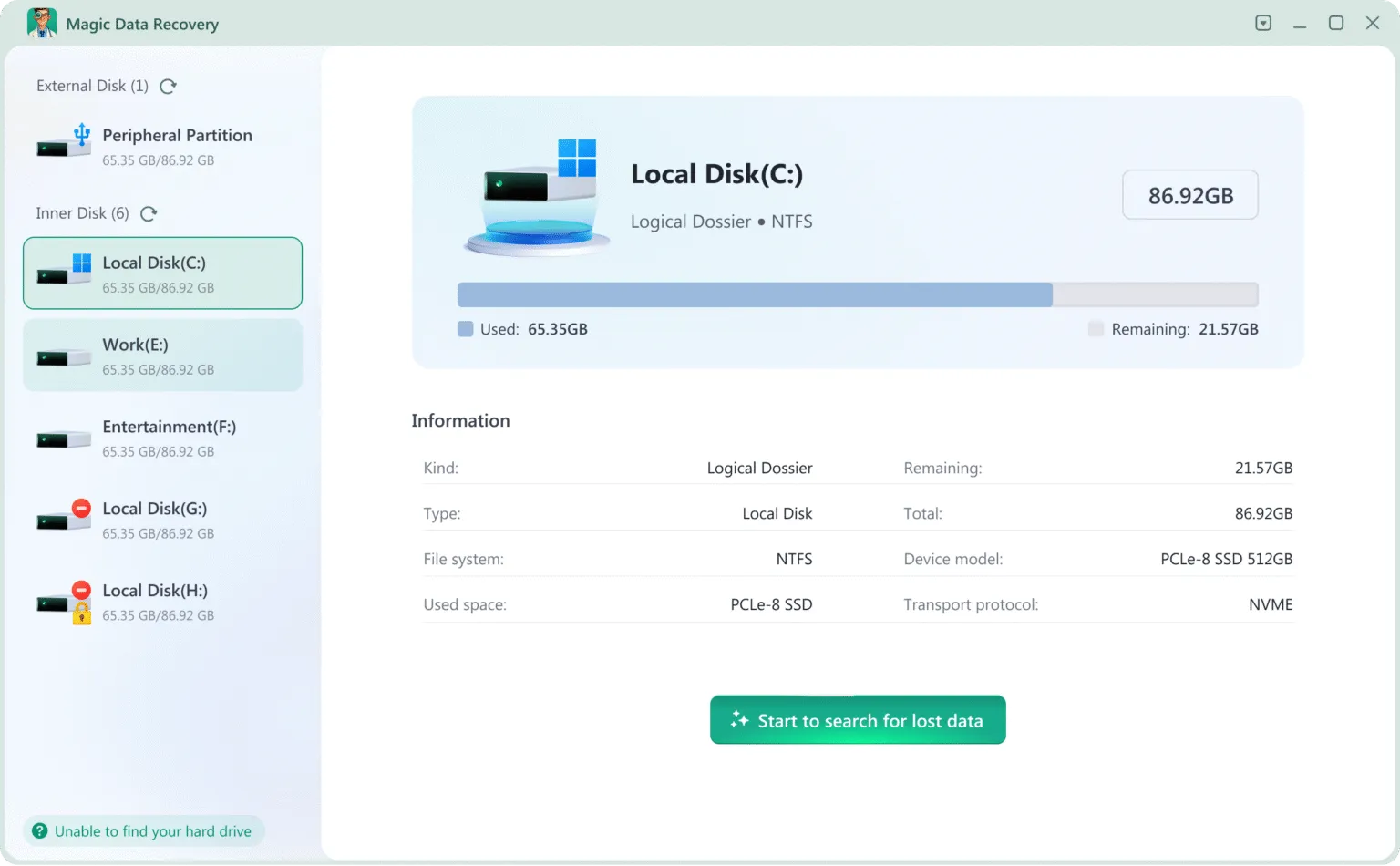
3. Start a Scan
Click the “Search for lost data” button to search for your lost files.
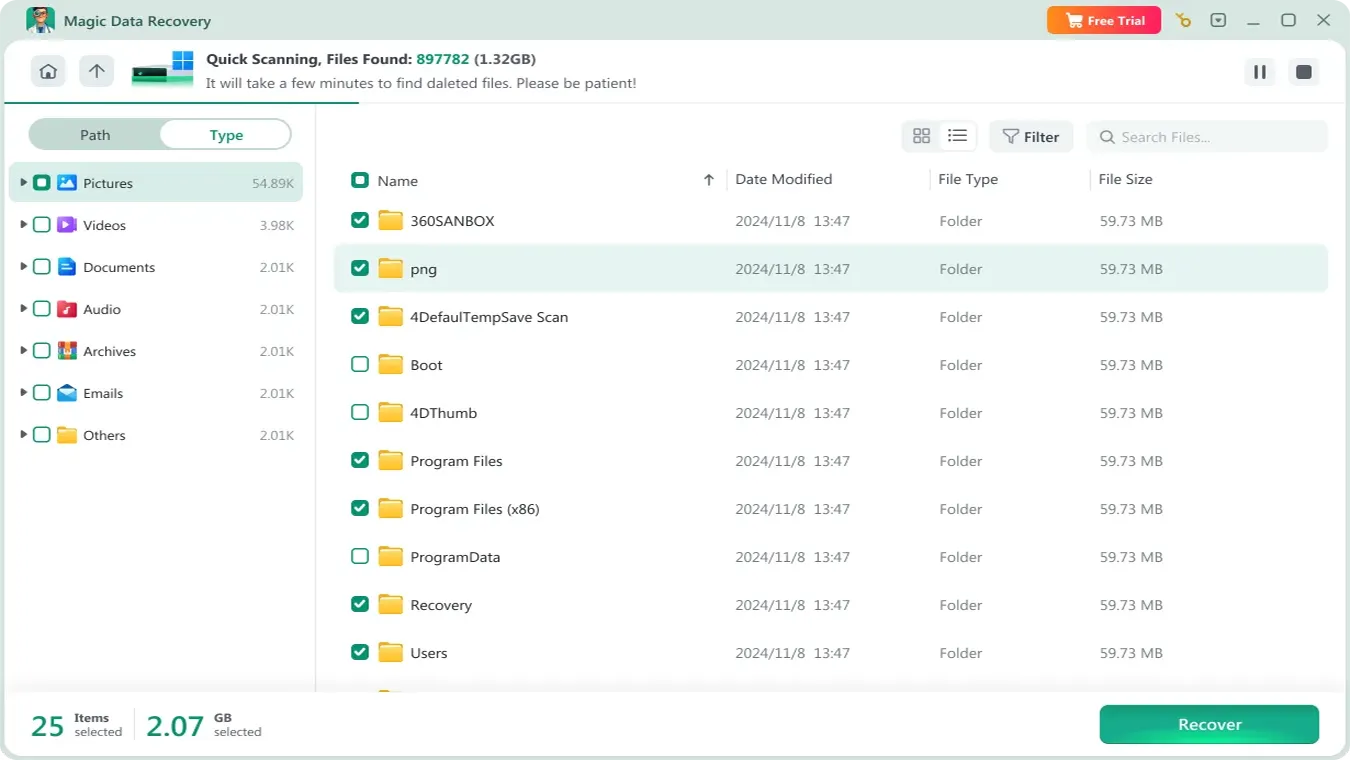
4. Preview Recoverable Files
Filter by file type and preview before recovery.

5. Recover Files Safely
Save recovered files to a different storage device.
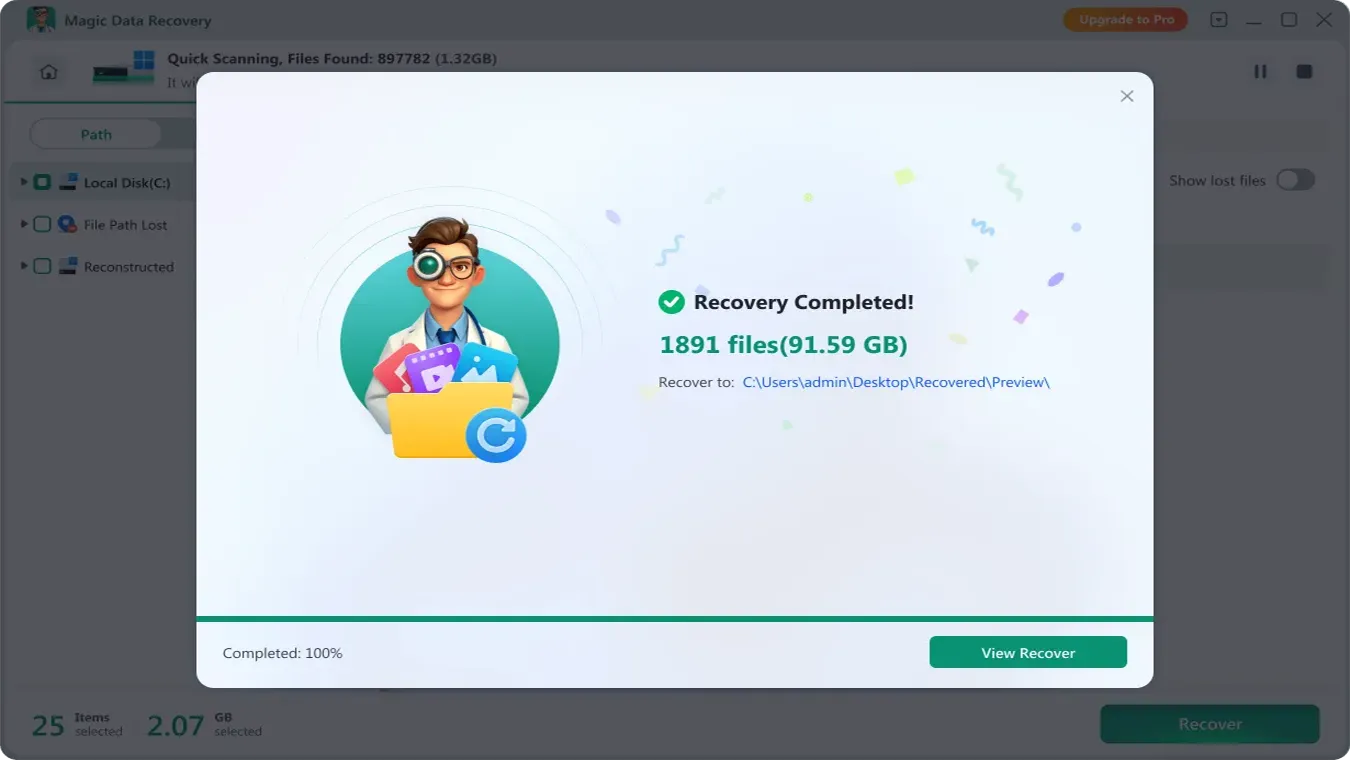
For example, if your deleted files were on an external hard drive, install Magic Data Recovery on your computer’s internal drive. Then scan the external drive and save recovered files to your computer or another external disk.
If you need a more specific deleted file scenario, you can read this guide on how to recover hard drive deleted files.
Free Methods vs Recovery Software: Which Should You Try First?
The best method depends on how the files were lost. A simple deleted file may only need Recycle Bin recovery. A formatted drive, RAW partition, or corrupted file system usually needs a deeper scan.
Use Free Windows Methods When:
- The file was recently deleted
- The file is still in the Recycle Bin
- File History was enabled
- A backup exists
- The folder has previous versions
- You know the exact file path and can use commands
Use Magic Data Recovery When:
- The Recycle Bin is empty
- The hard drive was formatted
- Windows asks you to format the drive
- Files disappeared after a file system error
- The partition became RAW or inaccessible
- You need to preview files before recovery
- Windows File Recovery feels too complex
- You want a guided recovery workflow
If you are comparing different free options, this Amagicsoft article about data recovery freeware may help you understand the strengths and limits of free tools.
Common Hard Drive Recovery Mistakes to Avoid
Many users reduce their recovery chances by taking the wrong steps too early. Avoid these mistakes before you recover files from hard drive Windows 10.
Installing Recovery Software on the Same Drive
If the lost files were on C:, do not install the recovery software on C: unless you have no other choice. Installation creates new data and may overwrite deleted files.
Saving Recovered Files to the Same Hard Drive
Always save recovered files to a different location. Saving files back to the source drive can damage other recoverable data.
Formatting the Drive When Windows Prompts You
A format may make the drive accessible again, but it also changes file system structures. Recover your files first, then repair or format the drive later.
Running Disk Repair Before Data Recovery
Tools like CHKDSK can fix file system problems, but they may also modify metadata. If your files matter, scan and recover data first.
If the problem involves damaged file system records, you may find this guide about Master File Table recovery useful.
How to Improve Your Hard Drive Recovery Success Rate
You can improve your chances with a careful workflow.
First, identify where the files were lost. Next, stop using that drive. Then, check simple recovery options like Recycle Bin, File History, and backups. If those methods fail, use a dedicated scan tool. Finally, save recovered files to another disk.
Practical tips:
- Act as soon as possible.
- Avoid downloading files to the affected drive.
- Use another computer if the system drive lost data.
- Scan the full partition, not just one folder.
- Preview important files before recovery.
- Recover the most important files first.
- Replace a failing hard drive after recovery.
This sequence keeps the process safe and logical. It also prevents common mistakes that make recovery harder.
When Software Cannot Recover Files from a Hard Drive
Software can solve many logical data loss problems, but it cannot fix every case. You may need a professional recovery service if the hard drive has physical damage.
Signs of possible physical failure include:
- Clicking or grinding sounds
- Drive not spinning
- Burning smell
- Severe drop or water damage
- Frequent disconnects
- BIOS cannot detect the drive
- Computer freezes when the drive connects
In these cases, do not keep trying repeated scans. Power off the drive and seek professional help. Continued use may cause more damage.
Conclusion: The Best Way to Recover Files from Hard Drive
The best way to recover files from hard drive is to start with the safest method and move step by step. Check the Recycle Bin first. Then try File History, backups, cloud storage, or Windows File Recovery. If those options do not work, scan the drive with a dedicated tool.
For Windows users, Magic Data Recovery is a practical choice because it supports deleted files, formatted drives, file system errors, and other common hard drive data loss scenarios. It offers a visual workflow, file preview, deep scanning, and recovery to a safe location. If you are looking for a more efficient solution to recover files from hard drive Windows 10, you can try Magic Data Recovery and check whether your lost files can be found before restoring them.
You can also return to Amagicsoft’s hard drive recovery guide for more hard drive recovery solutions, troubleshooting tips, and related recovery guides. If the scan finds your files and preview works correctly, you can continue with recovery or visit the Magic Data Recovery purchase page to unlock full recovery.
Supports Windows 7/8/10/11 and Windows Server
FAQs About Recovering Files from Hard Drive
Can I recover files from hard drive after deleting them?
Yes, you can often recover deleted files from a hard drive if the data has not been overwritten. Start with the Recycle Bin and File History. If those methods fail, use recovery software to scan the drive. Stop using the affected drive immediately to improve your chance of recovery.
How do I recover files from hard drive Windows 10 for free?
You can try Recycle Bin, File History, previous versions, backups, cloud storage, and Windows File Recovery. These methods work best when files were recently deleted or backed up before loss. If the drive was formatted or corrupted, free methods may not be enough, and a deeper scan may be needed.
Can I recover files from a formatted hard drive?
Yes, formatted hard drive recovery may be possible if new data has not been overwritten. Do not save anything to the formatted drive. Use a recovery tool that supports deep scanning and restore found files to another disk. A quick format usually has a better recovery chance than a full overwrite.
Why should I not save recovered files to the same hard drive?
Saving recovered files to the same hard drive can overwrite other lost data that still exists on the disk. This may reduce recovery success for remaining files. Always use another partition, external drive, or separate storage device as the recovery destination to keep the original drive unchanged.
Is Windows File Recovery good for hard drive recovery?
Windows File Recovery can help recover deleted files from local drives on supported Windows 10 versions, but it uses command-line instructions. It suits advanced users who know the source drive, destination drive, and file paths. For ordinary users, visual recovery software with preview and filters is usually easier.
Can Magic Data Recovery recover files from an external hard drive?
Yes, Magic Data Recovery can scan external hard drives connected to a Windows computer. It can help recover deleted, formatted, inaccessible, or missing files when the drive still appears in Windows or disk management. For best results, avoid formatting the external drive before scanning it.
What should I do if my hard drive makes clicking sounds?
Stop using the drive immediately. Clicking, grinding, or repeated disconnecting may indicate physical failure. Software recovery is not the safest option for severe hardware damage. Power off the drive and consider a professional data recovery service, especially if the files are valuable and no backup exists.
Is hard drive recovery always successful?
No, hard drive recovery is not always successful. Recovery depends on whether the lost data has been overwritten, whether the drive has physical damage, and how the file system was affected. Acting quickly, avoiding new writes, and using the right recovery method can greatly improve the chance of success.

Jason has over 15 years of hands-on experience in the computer data security industry. He specializes in data recovery, backup and restoration, and file repair technologies, and has helped millions of users worldwide resolve complex data loss and security issues.