
Data Recovery Freeware vs Undelete Freeware
Deleting the wrong file can feel final, especially after you empty the Recycle Bin, format a USB drive, or lose access to a partition. The good news is that data recovery freeware and undelete freeware can often help you scan the device, preview lost files, and recover important data before it gets overwritten.
However, not every free tool works the same way. Some tools only recover recently deleted files. Some limit the amount of data you can restore. Others require command-line skills, which can confuse regular users. Therefore, this guide explains how data recovery freeware works, when undelete freeware is enough, and when a stronger solution like Magic Data Recovery makes more sense.
Supports Windows 7/8/10/11 and Windows Server
Table of Contents
What about Data Recovery Freeware?
Data recovery freeware refers to software that helps users restore lost files from hard drives, SSDs, USB flash drives, SD cards, memory cards, and other storage devices. It usually scans storage media for deleted, formatted, corrupted, or inaccessible data.
In most cases, deleted files do not disappear immediately. Instead, the operating system marks their storage space as available for new data. Until new files overwrite that space, recovery software may still find the original file structure or file signatures. Disk Drill explains this same principle: deleted data may remain recoverable until the physical storage location gets overwritten.
For that reason, you should stop using the affected drive as soon as possible. Do not download software, copy files, install apps, or save recovered files back to the same device.
What Is Undelete Freeware?
Undelete freeware usually focuses on recently deleted files. It works best when you deleted files by mistake, emptied the Recycle Bin, or lost files from a removable drive.
The main difference is scope. Undelete freeware often handles simple deletion cases, while data recovery freeware may support deeper scans for formatted partitions, file system errors, RAW drives, or lost partitions.
For example, Recuva promotes recovery from Windows computers, Recycle Bin, camera cards, and rewriteable media. It also offers a deep scan mode for harder-to-find deleted files. That makes it useful for basic undelete tasks, although complex cases may need a broader recovery engine.
When Can Freeware Recover Deleted Files?
Data recovery freeware can help in many everyday situations, including:
- You deleted photos, videos, documents, or archives by mistake.
- You emptied the Recycle Bin before checking the files.
- A USB drive or SD card asks to be formatted.
- A partition disappears after a system crash.
- A file system error makes a drive inaccessible.
- You formatted a drive quickly and have not saved new data to it.
Still, recovery depends on drive condition, file overwrite status, file system type, and whether the storage device has hardware damage. For SSDs, TRIM may reduce recovery chances because the system can clear deleted data blocks quickly. Therefore, fast action matters.
Freeware Limits You Should Know Before Scanning
Many users search for data recovery freeware because they want a free solution. That makes sense, but “free” can mean different things.
Some tools allow free scanning but require payment before recovery. Some tools recover only a limited amount of data. EaseUS states that its free edition can recover up to 2GB of data, while MiniTool says its free version can recover up to 1GB. Microsoft Windows File Recovery is free, but Microsoft describes it as a command-line app, so beginners may find it less convenient.
Before choosing undelete freeware, check these points:
- Can it preview files before recovery?
- Does it recover data for free or only scan for free?
- Does it support your file system?
- Can it handle formatted or corrupted drives?
- Does it save recovered files to a different drive?
- Does it offer a beginner-friendly interface?
This step prevents wasted time, especially when the lost files are urgent.
Best Way to Use Data Recovery Freeware Safely
Follow this workflow before you try any data recovery freeware:
1. Stop using the affected device
Every new file can overwrite deleted data. If you lost files from the C: drive, avoid installing recovery software on that same drive. Use another computer or install the tool on a different disk.
2. Check the Recycle Bin and backups first
Start with simple fixes. Check the Recycle Bin, File History, OneDrive, external backups, or cloud sync folders. If a backup contains the file, you do not need recovery software.
3. Scan the correct drive
Choose the exact drive, partition, USB device, SD card, or external disk where the data was lost. If the partition is missing, choose the whole disk instead.
4. Preview files before recovery
A preview feature helps confirm whether the file is complete and usable. This matters for photos, PDFs, Word documents, videos, and spreadsheets.
5. Recover files to another location
Never restore files to the same drive you are scanning. Use another hard drive, external disk, or USB drive to avoid overwriting other recoverable files.
Data Recovery Freeware vs Paid Recovery Software
Free tools can solve small or simple cases. However, paid tools often provide better convenience, broader file system support, deeper scanning, and clearer previews.
Comparison Point | Undelete Freeware | Advanced Recovery Software |
Best for | Recently deleted files | Deleted, formatted, corrupted, or lost data |
Ease of use | Varies by tool | Usually more guided |
Preview support | Not always complete | Often built in |
File system support | May be limited | Usually broader |
Recovery limit | Often restricted | Depends on license |
Complex cases | Limited | Stronger scan modes |
If you only deleted a few files and the drive still works normally, undelete freeware may be enough. However, if the drive was formatted, the file system shows errors, or you need to check files before restoring them, a more complete tool can save time.
Why Magic Data Recovery Is a Practical Choice
Magic Data Recovery fits users who want more than basic undelete freeware but still want to test recovery before committing. It supports recovery from deletion, formatting, file system errors, and other common data loss scenarios. It also supports major file systems, including FAT/FAT32, NTFS, EXFAT, and EXT2/3.
The most important advantage is the preview-first workflow. You can scan the drive, preview recoverable files, and confirm whether the files look usable before recovery. This reduces guesswork and helps you avoid paying for results you cannot verify.
Magic Data Recovery also allows users to recover 500MB for free. That free recovery amount gives you a practical way to test real results on your own device, not just read a promise on a product page.
Supports Windows 7/8/10/11 and Windows Server
Core pain points it solves
Magic Data Recovery helps when:
- Free tools find too few files.
- A drive was formatted by mistake.
- A USB drive or SD card reports a file system error.
- You need to preview documents, photos, or videos first.
- You want a guided Windows recovery process.
- You need support for common Windows and external drive file systems.
Why it can be more reliable than basic freeware
Basic undelete freeware often focuses on simple deletion. Magic Data Recovery handles a wider range of cases, including deleted files, formatted drives, and file system errors. It also gives users a clearer path: scan, preview, select, and recover.
That workflow works well for ordinary users because it avoids command-line complexity. It also works well for content creators, office users, students, photographers, and small businesses that need to recover files quickly without sending a drive to a lab.
If you are looking for a more efficient solution, try Magic Data Recovery and use the free 500MB recovery option to test whether your lost files can be restored.
How to Recover Deleted Files with Magic Data Recovery
Step 1: Install Magic Data Recovery on a safe drive
Install the software on a different drive from the one that lost data. For example, if files were deleted from an external USB drive, install the software on your Windows computer’s internal disk.
Step 2: Select the lost-data location
Open the software and choose the disk, partition, USB drive, memory card, or other device where the files disappeared.
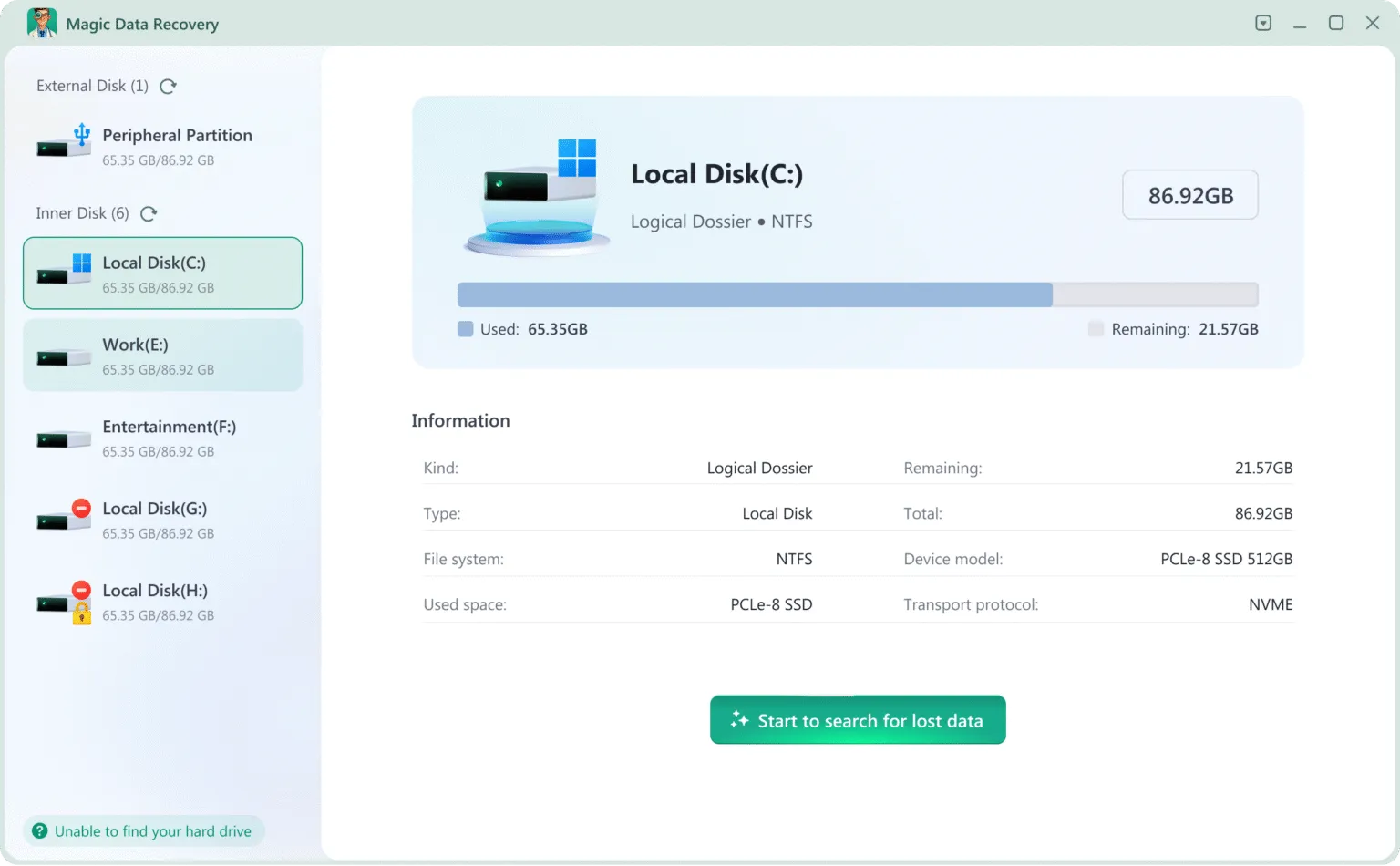
Step 3: Start scanning
Run a scan to search for deleted, lost, formatted, or inaccessible files. Let the scan finish if you need the most complete results.
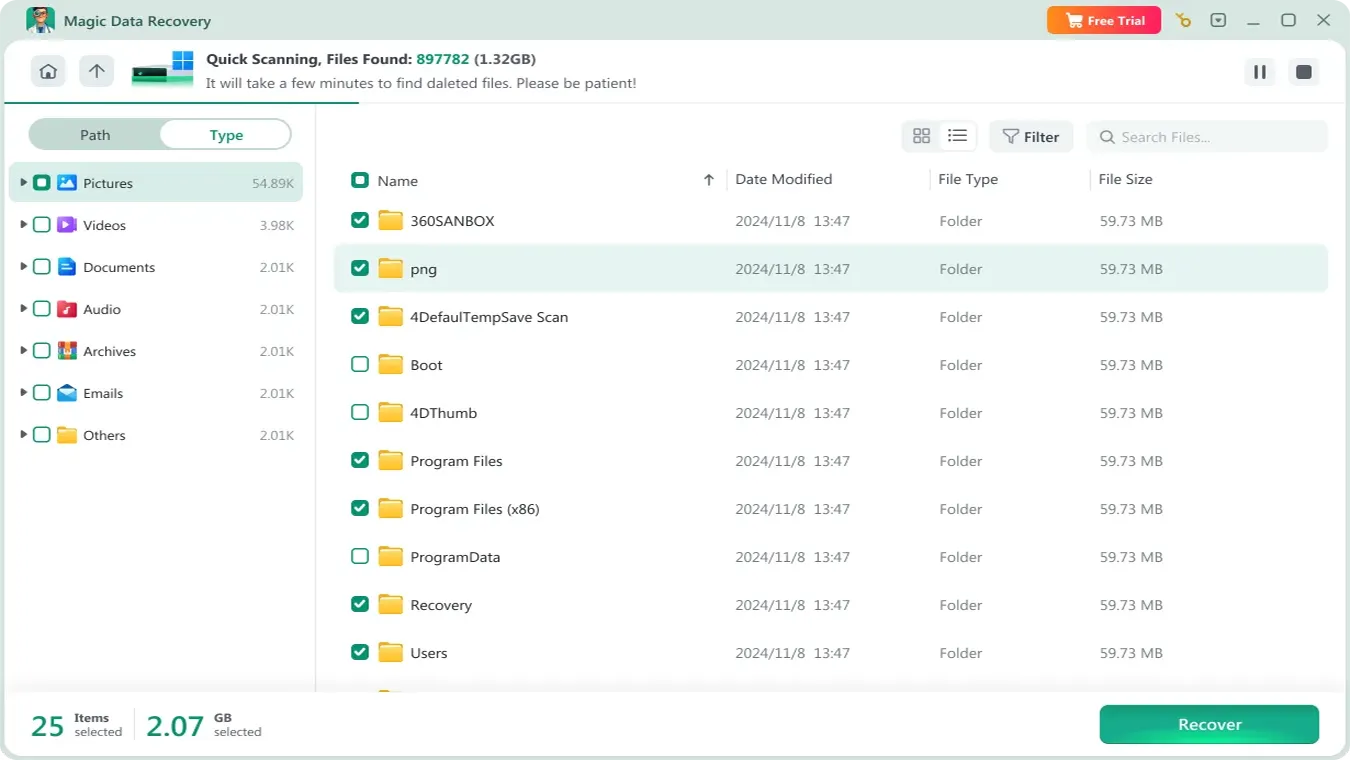
Step 4: Preview recoverable files
Use the preview feature to check whether your photos, documents, videos, or other files are recoverable. This step helps you choose the right files and avoid restoring unnecessary data.

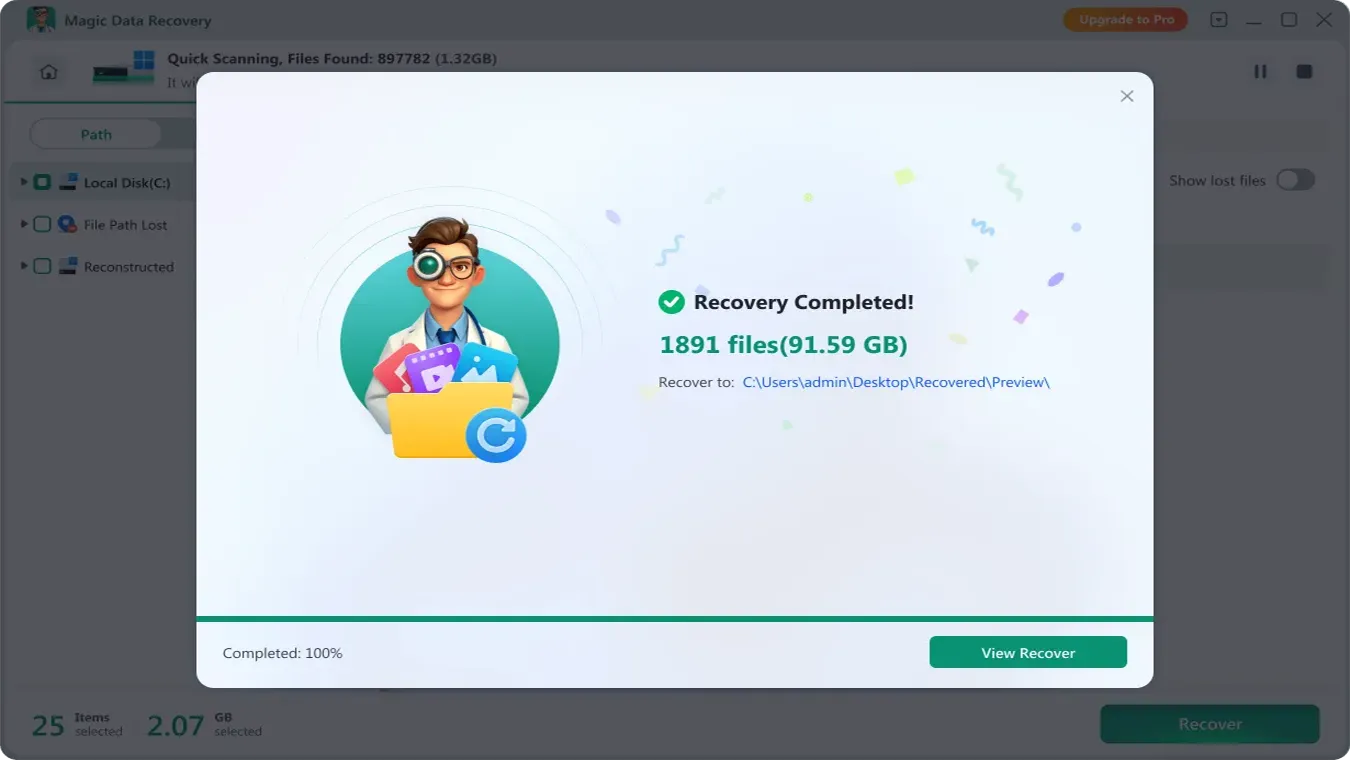
Step 5: Recover to another drive
Select the files you want and save them to a different storage device. This protects remaining recoverable data from accidental overwrite.
Tips to Improve Recovery Success
To get the best result from data recovery freeware or Magic Data Recovery, follow these practical tips:
- Stop using the affected drive immediately.
- Do not format the drive again, even if Windows asks.
- Do not run disk repair tools before recovery.
- Do not save recovered files to the same drive.
- Use preview to confirm file quality.
- Try deep scan when quick scan does not find enough files.
- For physically damaged drives, contact a professional recovery lab.
These steps follow common industry best practices. They also reduce the risk of turning a recoverable case into a permanent data loss case.
Common Mistakes When Using Undelete Freeware
Many failed recovery attempts happen because users act too quickly. Avoid these mistakes:
Installing software on the same drive
If your deleted file was on the C: drive, installing recovery software on C: can overwrite the deleted data.
Recovering files back to the source drive
This can damage other lost files that still remain recoverable.
Trusting scan results without preview
A file name does not always mean the file content is intact. Preview helps verify quality before recovery.
Using the wrong tool for formatted drives
Simple undelete freeware may miss files after formatting or file system corruption. In that case, choose data recovery freeware with deep scan and file system support.
Conclusion: Which Recovery Option Should You Choose?
If you recently deleted a few files, basic undelete freeware may solve the problem. Start with the Recycle Bin and backups, then try a simple scan if needed.
However, if your files disappeared after formatting, file system errors, partition loss, or a failed storage device, you need a stronger recovery workflow. Magic Data Recovery is worth recommending because it supports deletion, formatting, and file system error recovery; works with FAT/FAT32, NTFS, EXFAT, and EXT2/3; lets users preview files before recovery; and allows 500MB of free recovery for testing.
For users who want practical data recovery freeware with a clear upgrade path, Magic Data Recovery offers a balanced solution: test first, preview results, and recover only what matters.
Supports Windows 7/8/10/11 and Windows Server
FAQs
What is the best data recovery freeware for deleted files?
The best data recovery freeware depends on your case. For simple deletion, a basic undelete tool may work. For formatted drives, file system errors, or lost partitions, choose software with deep scan, preview, and broad file system support. Magic Data Recovery is useful because it lets you scan, preview, and recover 500MB for free.
Is undelete freeware safe to use?
Yes, undelete freeware can be safe if you download it from a trusted source and avoid writing new data to the affected drive. The safest approach is to install the tool on another drive, scan the lost-data device, preview files, and recover them to a separate storage location.
Can data recovery freeware recover files after formatting?
Some data recovery freeware can recover files after a quick format, especially if you have not saved new data to the drive. However, success depends on overwrite status, file system condition, and scan quality. Magic Data Recovery supports formatted data recovery and lets you preview files before restoring them.
Why can deleted files still be recovered?
When you delete a file, the system often marks its storage space as available instead of removing the file content immediately. Recovery software scans that space and tries to rebuild the file. Once new data overwrites the same area, recovery becomes much harder or impossible.
Can I recover files from an SD card with undelete freeware?
Yes, many undelete freeware tools can scan SD cards, especially when files were deleted from cameras, phones, or card readers. Stop using the card immediately, connect it to a computer, run a scan, preview the results, and recover files to your computer or another external drive.
Does Magic Data Recovery work for file system errors?
Yes. Magic Data Recovery supports recovery from file system errors, accidental deletion, formatting, and other common data loss cases. It supports FAT/FAT32, NTFS, EXFAT, and EXT2/3 file systems, making it helpful for many internal drives, external drives, USB devices, and memory cards.
Is free recovery enough for large video files?
Free recovery may not be enough for large videos because many free tools limit recovery size. Magic Data Recovery allows 500MB free recovery, which helps test smaller files or verify recovery quality. For large video projects, you may need a paid license after confirming that previews look usable.
What should I do if data recovery freeware finds no files?
Stop scanning repeatedly if the drive sounds abnormal or disconnects often. Try a deeper scan with a more capable tool, check whether the drive appears with the correct capacity, and avoid formatting it. If the device has physical damage, a professional recovery lab is safer than software recovery.

Jason is a data recovery and technical support specialist with over 15 years of hands-on experience. He has worked extensively with frontline users, troubleshooting difficult data loss cases and providing practical recovery solutions for accidental deletion, formatted drives, damaged file systems, lost partitions, system failures, and other recovery emergencies. His expertise also includes backup and restoration, file repair, and disaster recovery, with a strong emphasis on safe, reliable, and technically accurate guidance.