
Recover Files Emptied from Recycle Bin

Accidentally emptying the Recycle Bin can feel final, especially when it contains important documents, photos, videos, or project files. Fortunately, you may still be able to recover files emptied from recycle bin if new data has not overwritten the original content.
This guide explains how to recover files emptied from recycle bin on Windows 11/10, what happens after deletion, and which deleted file recovery method fits your situation. It also shows when Magic Data Recovery can help if you have no backup and prefer a visual workflow.
Important: Stop using the affected drive as much as possible. New writes can overwrite storage space that still contains deleted data.
Supports Windows 7/8/10/11 and Windows Server
Table of Contents
Can You Recover Files Emptied from Recycle Bin?
Yes, you can often try to recover files emptied from recycle bin, although no method can guarantee success. After you empty the Recycle Bin, Windows removes the normal file reference and makes the occupied space available for reuse. Therefore, the underlying data may remain until the system writes new information over it.
Several factors affect the result:
Situation | Recovery Outlook |
HDD, recently deleted, little drive activity | Better |
HDD, heavy use after deletion | Lower |
SSD with TRIM enabled | More difficult |
File History or cloud backup available | Strong first option |
Data already overwritten | Very low |
For that reason, act quickly and avoid unnecessary downloads, installations, or large file transfers before recovery.
What Happens After You Empty the Recycle Bin?
Logical Deletion vs. Physical Erasure
After you empty the Recycle Bin, Windows no longer shows those files in File Explorer. However, their underlying data may remain until Windows reuses the space. That is why deleted file recovery software can sometimes locate files that appear permanently gone.
Why Overwriting Matters
Suppose you delete a large video and then install a game on the same drive. As a result, Windows may reuse the space that previously held the video. Your chance to recover files emptied from recycle bin can then drop sharply.
Therefore, minimize drive activity until you finish recovery.
Why SSD TRIM Matters
SSDs handle deleted data differently from HDDs. TRIM tells an SSD which blocks the operating system no longer needs. Consequently, recover deleted files from SSD tasks can be harder than HDD recovery.
Still, results vary by device, file system, timing, and later activity.
What to Do Before You Recover Files Emptied from Recycle Bin
Before you start, protect the data that may still exist. These precautions can improve your chance to recover files emptied from recycle bin:
- Stop saving new files to the affected drive.
- Avoid installing recovery software on that drive when possible.
- Prepare another drive or partition for recovered files.
- Check OneDrive, File History, or another backup first.
- Avoid unnecessary repair utilities that may write new data.
In addition, every new write can reduce the amount of recoverable information, so these steps matter.
Best Ways to Recover Files Emptied from Recycle Bin
Different situations need different solutions. Therefore, start with the least invasive method and move to deeper recovery only when necessary.
Method | Best For | Difficulty | Backup Needed |
OneDrive / File History | Existing backups | Easy | Yes |
Magic Data Recovery | No backup, visual recovery | Easy | No |
Windows File Recovery | Command-line users | Medium | No |
Professional recovery service | Physically damaged drives | High | No |
Method 1: Restore Files from OneDrive or File History
If you have a backup, restoring files from it should be your first choice. For recover deleted files Windows 11 and recover deleted files Windows 10 cases, File History can help restore previous versions of files if you enabled it before deletion.
To restore files with File History:
- Open Control Panel.
- Go to System and Security > File History.
- Click Restore personal files.
- Browse available backup versions, select the deleted files or folders, and click the green Restore button.

You can also restore files from a previous folder version:
- Open the folder where the deleted file was originally stored.
- Right-click the folder and select Restore previous versions.
- Choose an available version and click Restore.
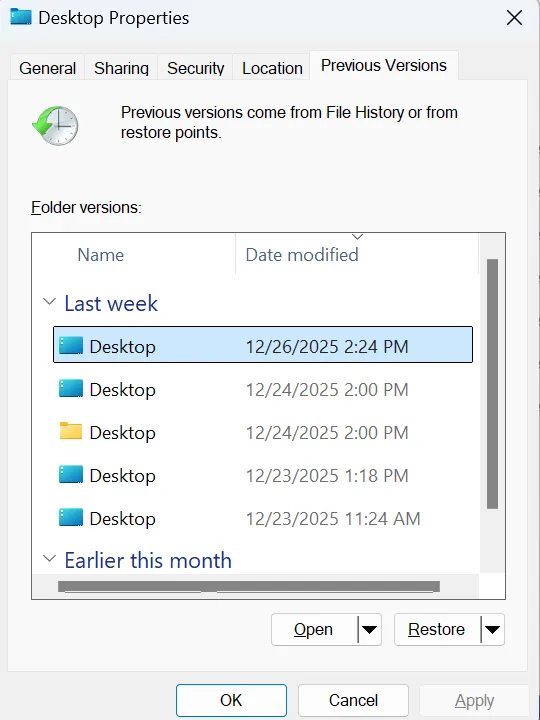
If your files were synced with OneDrive, open OneDrive on the web and check the Recycle Bin or Version History to find an earlier copy.
Therefore, backup recovery should always be attempted before using recovery software because it restores an existing copy instead of searching for deleted data on the drive.
Method 2: Recover Files Emptied from Recycle Bin with Magic Data Recovery
When no usable backup exists, Magic Data Recovery provides a straightforward way to recover files emptied from recycle bin without requiring command-line knowledge.
Moreover, the software can scan HDDs, SSDs, USB drives, memory cards, and internal partitions. In addition, its visual workflow lets you select a drive, scan for deleted data, preview supported files, and recover only what you need.
For example, suppose you deleted a folder of JPG photos and DOCX files, then emptied the Recycle Bin. With no backup available, Magic Data Recovery can scan the original drive, show the results, and restore selected files to a safe location.
Why Choose Magic Data Recovery?
The main challenge after permanent deletion is uncertainty. You may not know whether the files still exist, where to search, or which results are usable.
Magic Data Recovery addresses these problems with a simple scan-preview-recover workflow. It offers several practical advantages:
- A graphical interface for users who do not want command-line tools.
- Support for common storage devices and file types.
- File preview before recovery.
- Selective recovery instead of restoring everything.
- A clear workflow for users without an existing backup.
Therefore, it works particularly well when you need to recover files emptied from recycle bin but want a more accessible alternative to command-line recovery.
How to Use Magic Data Recovery
Step 1: Download and Install Magic Data Recovery
Download and install Magic Data Recovery. Whenever possible, choose a drive other than the one where the deleted files were originally stored. This approach reduces new writes to the affected area and lowers the risk of overwriting recoverable data.
Supports Windows 7/8/10/11 and Windows Server
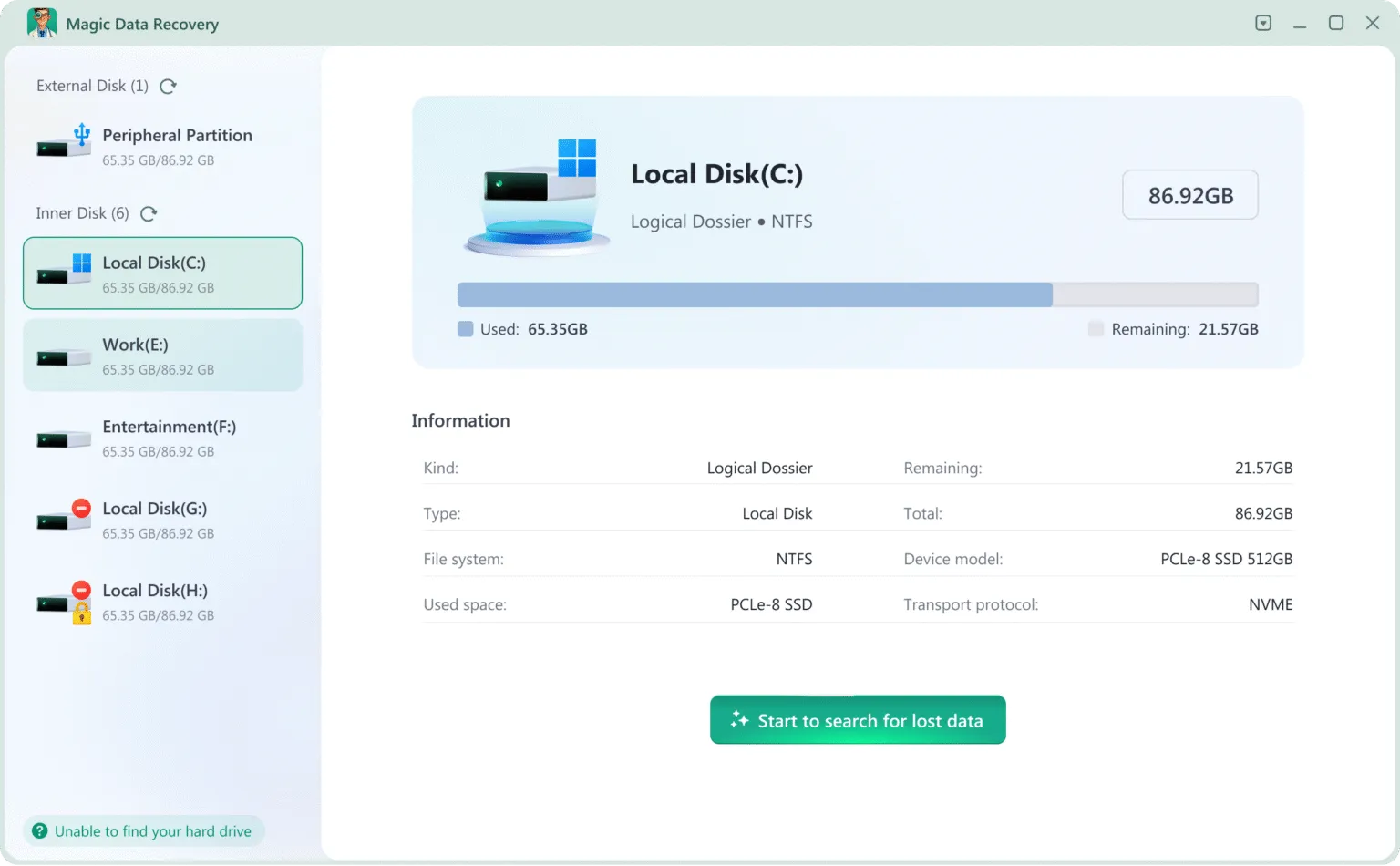
Step 2: Select the Drive Where the Files Were Deleted
Launch Magic Data Recovery. Then locate the drive or partition that originally contained the files before you emptied the Recycle Bin. Select the correct location from the main interface and start the scan.
Step 3: Scan the Drive for Deleted Files
Then, Magic Data Recovery automatically starts an Advanced Scan. Meanwhile, recoverable files appear in the results as scanning continues.
For the best chance to recover files emptied from recycle bin, avoid writing new data to the affected drive and let the scan finish when possible.
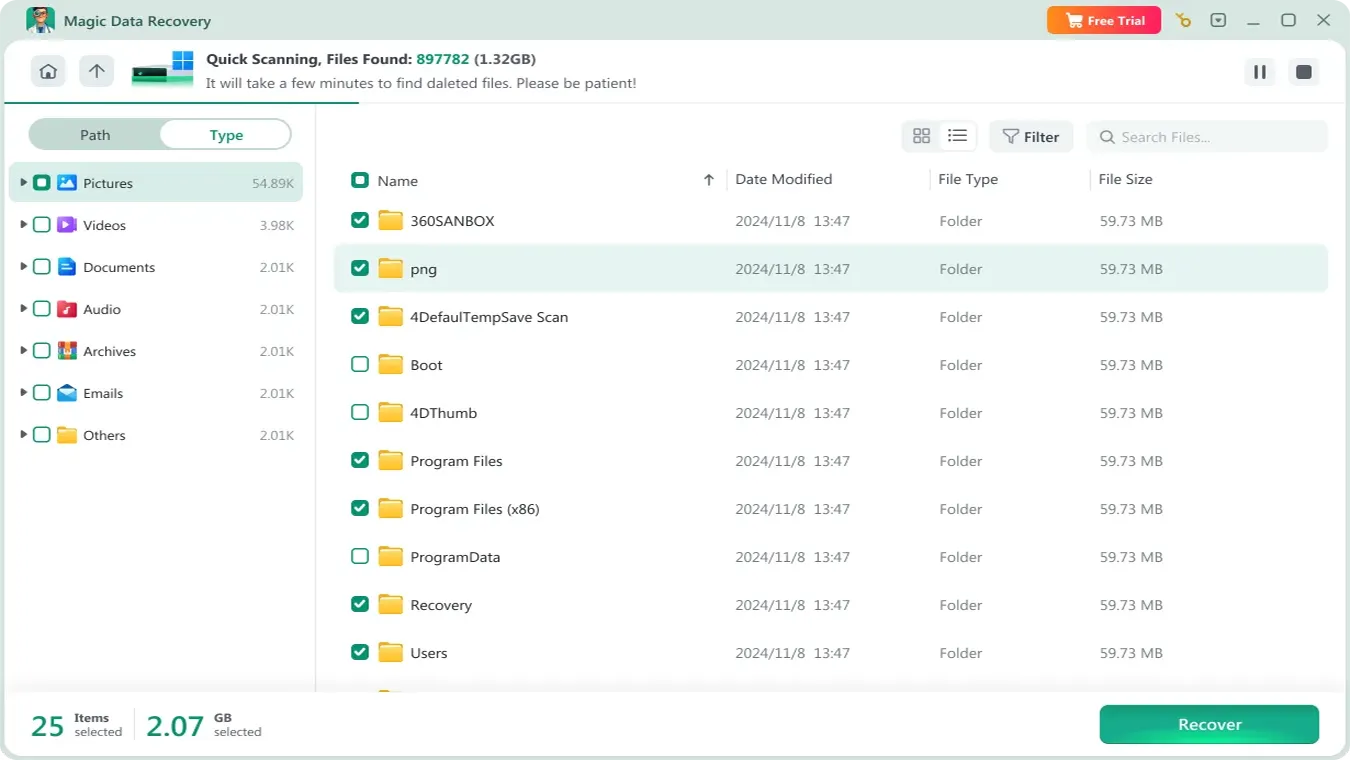
Step 4: Preview Deleted Files Before Recovery
Next, preview files before recovery to confirm their content and select only what you need. In addition, use file names, paths, file types, or available filters to narrow the results.
Previewing is especially useful when many deleted files have similar names or when you only need a few important documents, photos, or videos.

Step 5: Recover Files to a Safe Location
Finally, select the files you want and save them to a different drive or partition. Do not use the original location because new writes could overwrite other deleted files.
Afterward, open several important files and confirm that they work correctly.
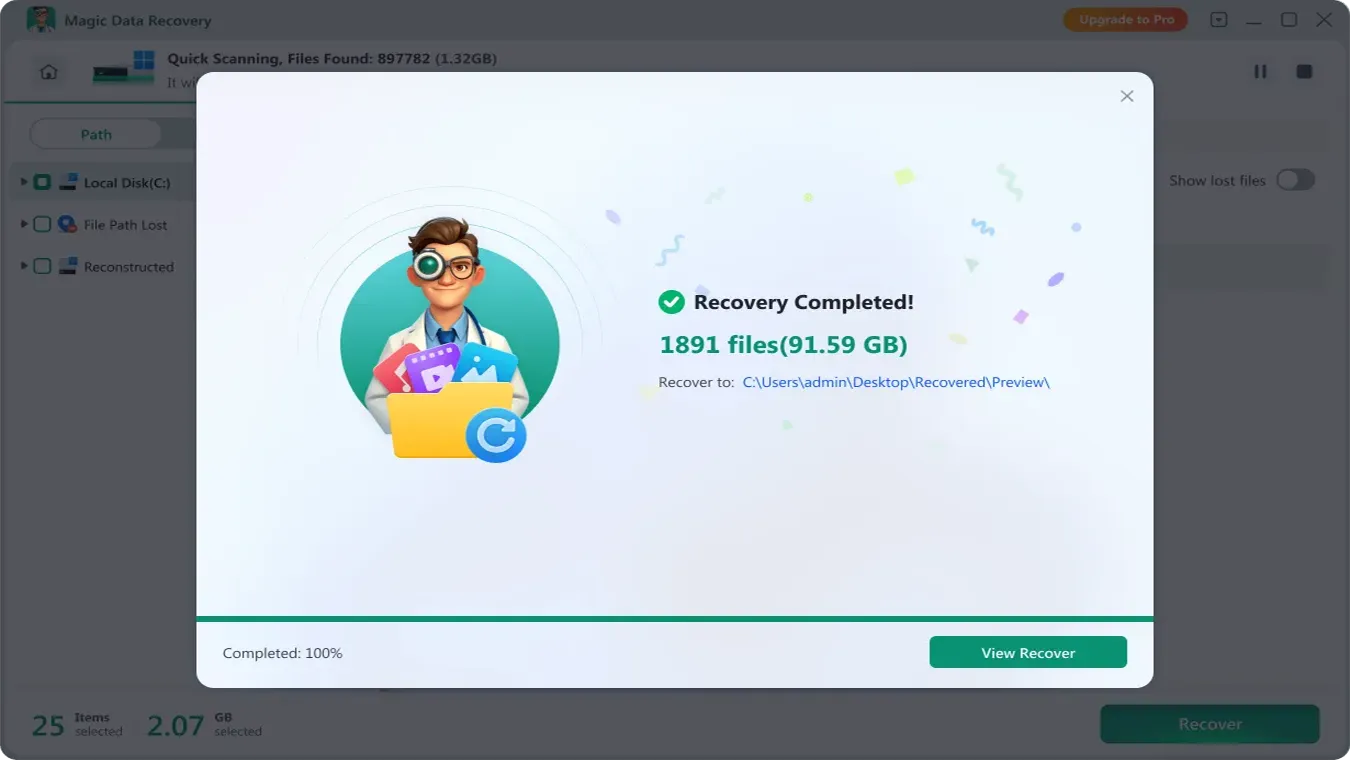
For users who want a graphical emptied recycle bin recovery solution, this workflow is easier to follow than command-line recovery. However, no software can restore data that new content has already overwritten.
Method 3: Use Windows File Recovery
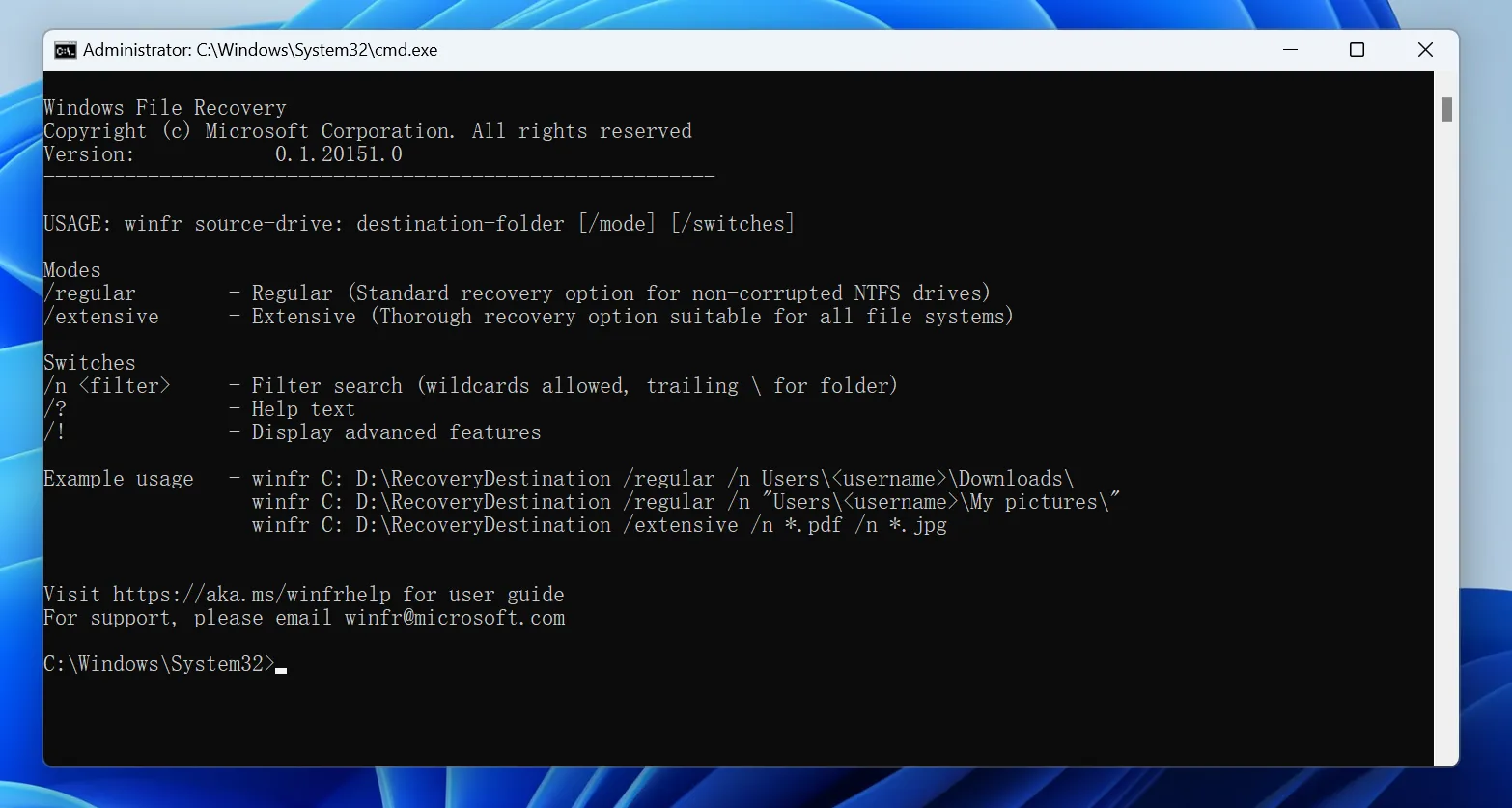
Windows File Recovery offers another way to recover files emptied from recycle bin without a backup. Microsoft provides this command-line tool for local storage recovery.
The basic syntax looks like this:
winfr source-drive: destination-drive: [/mode] [/switches]
The source and destination must use different drives. Windows File Recovery suits command-line users. On the other hand, beginners may prefer Magic Data Recovery because it offers a graphical interface and file preview.
Therefore, the better option depends largely on your experience level. Windows File Recovery gives advanced users more direct command-line control, while Magic Data Recovery focuses on a simpler visual process.
HDD vs. SSD: Can You Recover Files Emptied from Recycle Bin?
In addition, drive type can strongly affect the result when you try to recover files emptied from recycle bin.
Factor | HDD | SSD |
Main risk | Overwriting | TRIM plus overwriting |
Continued use | Reduces recovery chance | Can reduce it quickly |
Recovery tools | Often worth trying | Worth trying, results vary |
On an HDD, deleted data may remain until new data replaces it. Therefore, a lightly used HDD may offer a better recovery opportunity.
On an SSD, however, TRIM can make recovery harder. For this reason, results can differ even when users follow the same recovery steps.
The key lesson remains the same: start recovery quickly and minimize unnecessary writes.
When You Cannot Recover Files Emptied from Recycle Bin
Sometimes, you cannot recover files emptied from recycle bin with software. Common reasons include overwriting, SSD TRIM, severe file-system damage, or physical drive failure.
Therefore, no legitimate tool can promise a fixed recovery rate or guarantee that every deleted file will return.
Moreover, if a hard drive clicks, disconnects repeatedly, or shows other signs of physical failure, stop repeated DIY attempts. For irreplaceable data, a professional data recovery service may offer a safer option.
Common Mistakes That Reduce Recovery Chances
Many users reduce their recovery chances without realizing it. Therefore, avoid these common mistakes:
- Installing large applications on the affected drive.
- Downloading or copying new files to the same drive.
- Saving recovered files back to the original partition.
- Running unrelated repair tools before recovery.
- Assuming every detected file will open correctly.
Instead, preview important files when possible and verify them afterward. These habits make it safer to recover files emptied from recycle bin.
Conclusion: The Best Way to Recover Files Emptied from Recycle Bin
The best way to recover files emptied from recycle bin depends on your backup status, drive type, and what happened after deletion. First, check OneDrive, File History, or another backup. Next, consider Windows File Recovery if you prefer an official command-line option.
However, when no backup exists and you want a simpler visual process, Magic Data Recovery offers a practical deleted file recovery solution. It lets you scan the original drive, preview supported files, and recover selected data without command-line knowledge.
For that reason, we recommend Magic Data Recovery for users who need to recover files emptied from recycle bin through a clear scan-preview-recover workflow. Most importantly, act quickly, minimize new writes, and save recovered files elsewhere.
Supports Windows 7/8/10/11 and Windows Server
FAQs About Recovering Files Emptied from Recycle Bin
Can you recover files after emptying the Recycle Bin?
Yes, you can sometimes recover files emptied from recycle bin if new data has not overwritten the original content. Recovery depends on drive type, later disk activity, SSD TRIM behavior, and backup availability. Therefore, stop using the affected drive, check backups first, and begin recovery as soon as possible.
Where do files go after emptying the Recycle Bin?
Windows removes the normal file reference and makes the occupied storage space available for reuse. However, the original data may remain until another write replaces it. That is why tools designed to recover permanently deleted files can sometimes find content that no longer appears in File Explorer or the Recycle Bin.
How long do deleted files remain recoverable?
There is no fixed recovery window. A lightly used HDD may keep deleted data for some time, while heavy activity can overwrite it quickly. SSD TRIM can shorten the practical recovery opportunity. Therefore, do not wait for a certain number of days. Reduce drive use and begin recovery promptly.
Can I recover emptied Recycle Bin files without software?
Yes, if a backup exists. First, check OneDrive, File History, another synchronized copy, or another backup. If no backup exists, Windows File Recovery provides a command-line option. Otherwise, recovery software can scan local storage and help locate deleted data that Windows no longer shows.
Can Windows File Recovery restore permanently deleted files?
Windows File Recovery can attempt to restore files that are no longer available in the Recycle Bin. It works from the command line and requires different source and destination drives. However, success still depends on whether recoverable data remains and whether later writes or SSD TRIM have removed useful content.
Can deleted files be recovered from an SSD?
Sometimes. You can try to recover deleted files from SSD, but TRIM can reduce the chance of success because it tells the drive which blocks the operating system no longer needs. Results vary by device, file system, timing, and later activity. Therefore, minimize writes and start recovery quickly.
Can overwritten files still be recovered?
Usually, normal recovery software cannot reconstruct file content after new data fully overwrites it. Partial recovery may remain possible if only part of the file changed. For that reason, minimizing new writes is one of the most important steps when you try to recover files emptied from recycle bin.

Vasilii is a data recovery specialist with around 10 years of hands-on experience in the field. Throughout his career, he has successfully solved thousands of complex cases involving deleted files, formatted drives, lost partitions, and RAW file systems. His expertise covers both manual recovery methods using professional tools like hex editors and advanced automated solutions with recovery software. Vasilii's mission is to make reliable data recovery knowledge accessible to both IT professionals and everyday users, helping them safeguard their valuable digital assets.