
How to Recover Deleted Files: A Complete Step-by-Step Guide

Accidentally deleting important files can happen to anyone. A wrong click, an emptied Recycle Bin, or a formatted drive may instantly make valuable documents disappear. Fortunately, in many cases, it is still possible to recover deleted files, even when they seem permanently gone.
In fact, most data loss happens due to common file deletion scenarios, such as accidental deletion, formatting, or system errors. Therefore, understanding how file recovery works helps you avoid permanent loss and choose the right solution. In more complex situations, using a reliable tool like Magic Data Recovery can further improve your chances by scanning storage sectors and locating recoverable data efficiently.
Supports Windows 7/8/10/11 and Windows Server
Table of Contents
What Happens When You Delete a File?
When users delete files, the system removes the file’s reference rather than the data itself. This distinction explains why you can often recover deleted files successfully.
Key Technical Explanation (Simplified)
- The file system removes the file index
- The actual data stays on the drive temporarily
- New data may overwrite the same sectors later
Because of this process, immediate action significantly improves recovery success. Continuing to use the affected drive increases the risk of permanent data loss.
Common Scenarios Where Files Are Deleted
Understanding the situation helps determine the best recovery approach.
Typical Data Loss Cases
- Accidental deletion
- Emptying the Recycle Bin
- Drive formatting
- File system corruption
- System crashes or power interruptions
- External device errors (USB, SD cards)
Each scenario affects how you should recover deleted files, but the underlying recovery principle remains the same.
How to Recover Deleted Files Using Different Methods
Different situations require different solutions. Therefore, choosing the right approach is essential if you want to recover deleted files successfully.
Method 1: Restore Files from Recycle Bin
If the files were recently removed, this is the simplest option.
First, open the Recycle Bin. Then, locate the files. Finally, restore them.
However, this only works if the files are still stored in the system bin.
Method 2: Recover Data from Backup
If backups exist, recovery becomes much easier.
For example, you can use File History or cloud storage. First, locate the correct version. Then, restore it.
As a result, you can retrieve lost data without scanning the disk. However, this depends on prior backup setup.
Method 3: Recover Permanently Deleted Files
When files are permanently removed, basic methods no longer work. Therefore, a deeper approach is required.
At this stage, professional tools scan storage sectors directly. Unlike standard methods, they detect remaining data fragments and help you recover deleted files more effectively.
Why Magic Data Recovery Is a Reliable Solution
Supports Windows 7/8/10/11 and Windows Server
Core Problems It Solves
- Recover permanently deleted files
- Restore data after formatting
- Fix file loss caused by file system errors
- Recover data from external devices
Key Advantages
- Supports HDDs, SSDs, USB drives, SD cards
- Works with NTFS, FAT32, exFAT, and more
- Allows preview before recovery
- User-friendly interface for non-technical users
Real Usage Example
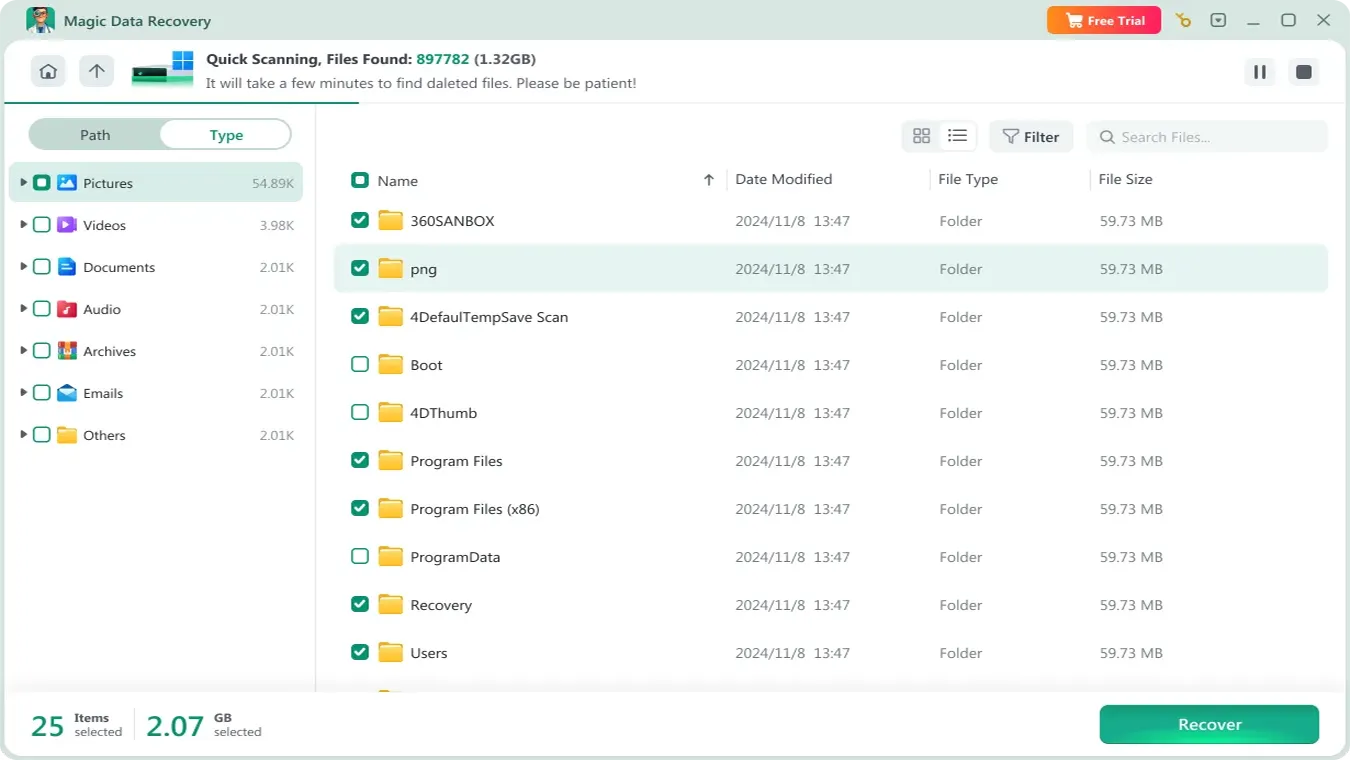
A user formats a USB drive by mistake. Standard system tools fail. Magic Data Recovery scans the drive, detects recoverable files, and restores them without modifying the original data.
Compared to command-line tools or limited free utilities, Magic Data Recovery provides clearer results and reduces user error.
If you need a practical way to recover a deleted file efficiently, this solution offers a balanced approach between simplicity and reliability.
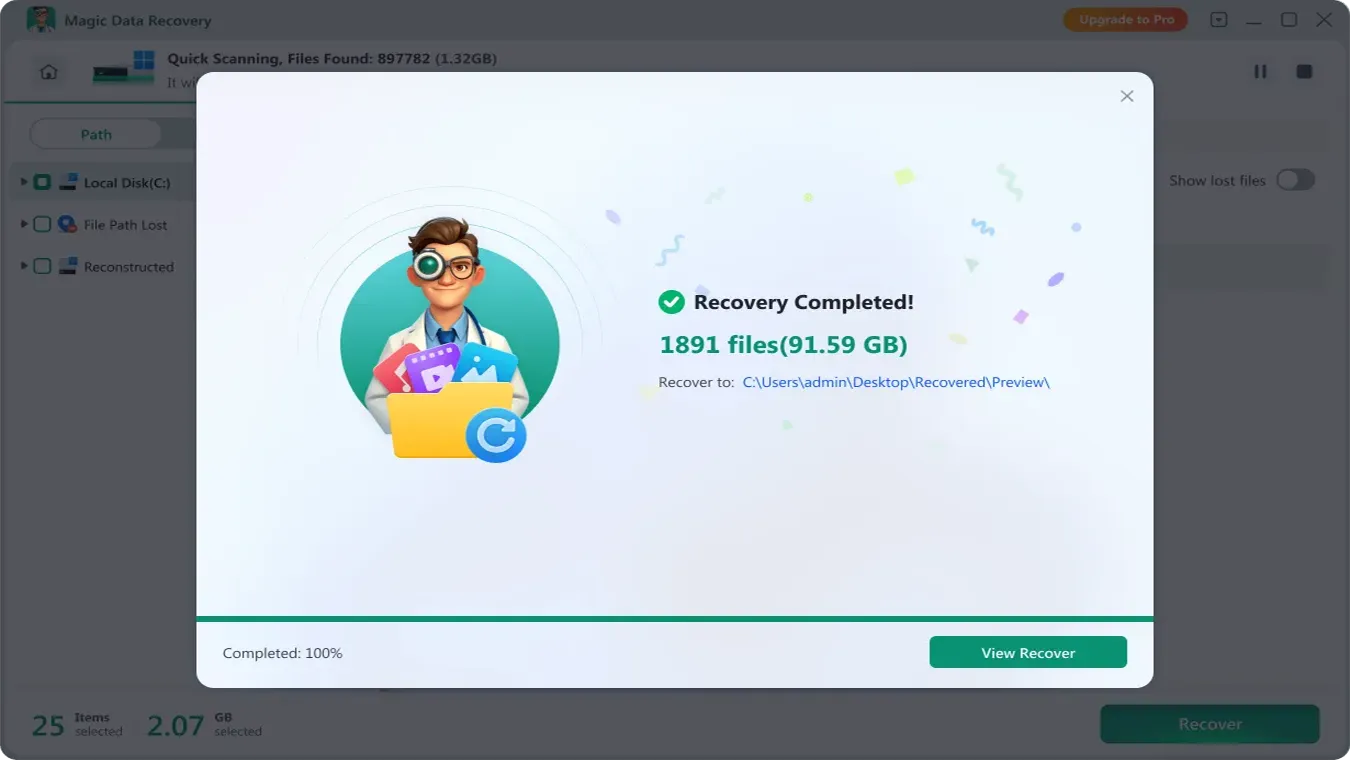
Step-by-Step: How to Recover Files with Magic Data Recovery
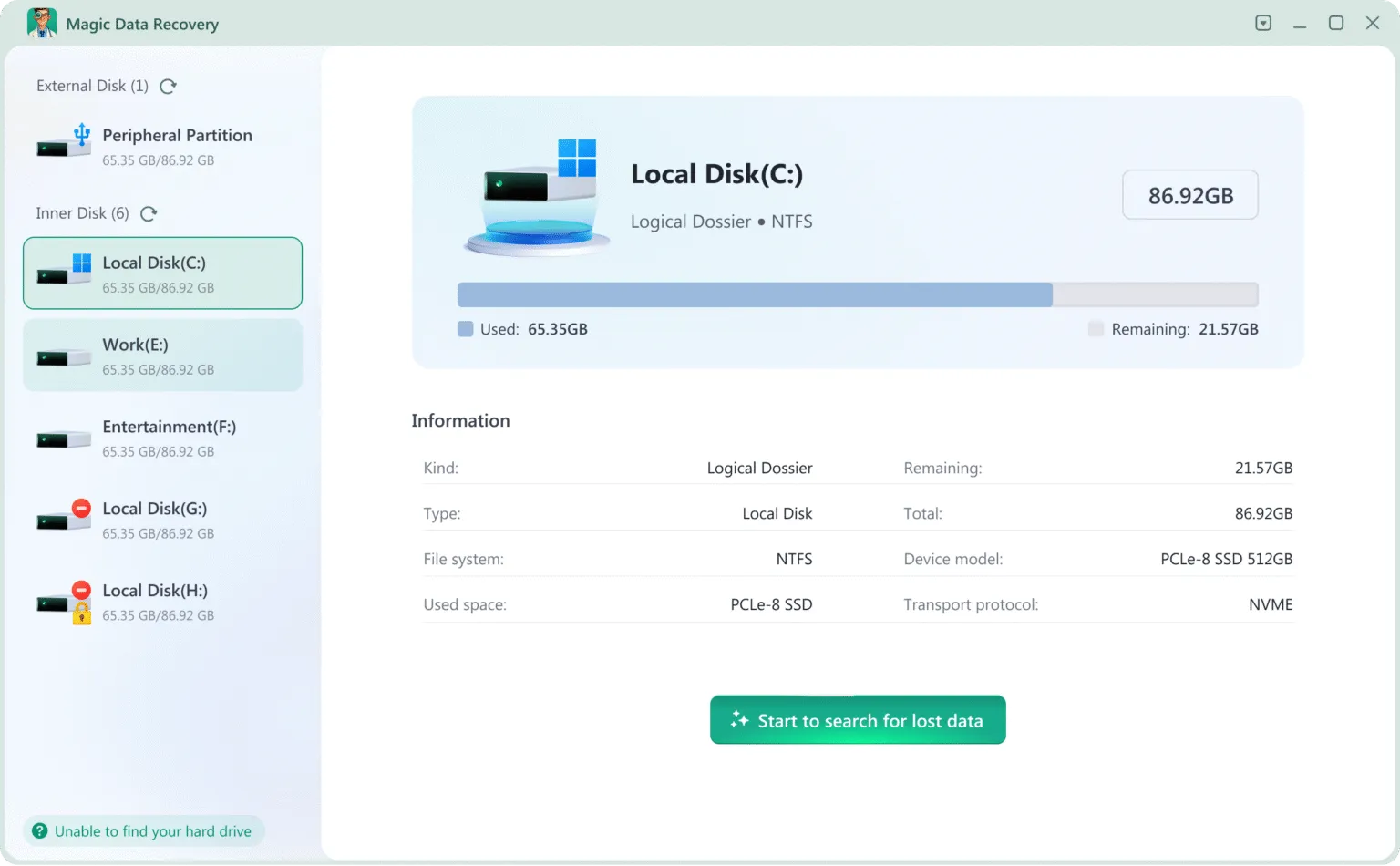
1. Install Magic Data Recovery on a different drive than the one where data was lost.
2. Launch the software and select the affected disk or partition.

Recover Data from Different Storage Devices
The recovery process varies depending on the device type. However, the principle remains the same.
HDD Recovery
Traditional hard drives store data magnetically. Therefore, deleted data often remains recoverable until overwritten.
SSD Recovery
SSDs may clear deleted data faster due to TRIM. However, recovery is still possible if the process has not completed.
USB Drive Recovery
USB drives behave similarly to HDDs. Therefore, scanning tools can restore lost data effectively.
SD Card Recovery
SD cards commonly store photos and videos. In many cases, recovery remains possible unless the card has been reused.
Best Practices to Improve Recovery Success
Following these tips increases the chance to recover deleted files successfully:
- Stop using the affected drive immediately
- Avoid installing recovery software on the same drive
- Use trusted recovery tools
- Act as soon as possible
Small actions often determine whether recovery succeeds or fails.
Conclusion
Recovering lost data does not need to be complicated. Understanding how file deletion works allows users to take effective action instead of panicking. While built-in tools help in simple cases, advanced situations require a more capable solution.
Magic Data Recovery stands out because it addresses real user problems—deleted files, formatted drives, and file system errors—without overcomplicating the process. Its balanced design makes it suitable for both beginners and experienced users.
If you are searching for a dependable way to recover deleted files safely and efficiently, Magic Data Recovery offers a practical deleted data recovery solution worth considering.
Supports Windows 7/8/10/11 and Windows Server
FAQs
How to recover permanently deleted files?
How to recover deleted files on PC?
Are permanently deleted files really gone?
How to recover specific deleted files?
Where do permanently deleted files go in computers?
Can DiskDigger recover permanently deleted files?
What tools recover deleted files?
Is it possible to recover permanently deleted files in Windows 11?

Jason is a data recovery and technical support specialist with over 15 years of hands-on experience. He has worked extensively with frontline users, troubleshooting difficult data loss cases and providing practical recovery solutions for accidental deletion, formatted drives, damaged file systems, lost partitions, system failures, and other recovery emergencies. His expertise also includes backup and restoration, file repair, and disaster recovery, with a strong emphasis on safe, reliable, and technically accurate guidance.