
How to Recover Deleted Files in SD Memory Card
Imagine this: you’re back from an incredible vacation, or you’ve just wrapped up a crucial client photoshoot. You insert your SD card into your computer, only to find a folder empty or a prompt asking you to format the drive. That sinking feeling is all too familiar. Fortunately, learning how to recover deleted files in sd memory card is possible in most scenarios. This common data loss has a solution. The urgent goal is to recover deleted files in sd memory card safely and effectively without causing further damage.
This comprehensive guide is your definitive resource. We’ll move beyond simple lists to explain why SD card data recovery works, help you diagnose your specific problem, and walk you through a proven recovery method. Whether you’re dealing with accidental deletion, formatting, or corruption, this article provides the clarity and actionable steps you need to get your precious files back using Magic Data Recovery.
Supports Windows 7/8/10/11 and Windows Server
Table of Contents
Quick answer: Can you recover deleted files from an SD card?
Yes, deleted files can often be recovered from an SD card if the card remains readable and the deleted data has not been overwritten.
Take these steps immediately:
1. Stop using the SD card.
2. Remove it from the camera, phone, drone, or other device.
3. Do not take new photos, record videos, or copy files to the card.
4. Do not format the card or run CHKDSK before recovering the data.
5. Connect the card to a Windows computer with a reliable card reader.
6. Check available backups or scan the card with recovery software.
7. Save recovered files to another drive, never to the affected SD card.
The sooner you stop writing new data to the card, the better the remaining recovery opportunity.
Understanding Data Recovery: It’s Not Magic, It’s Science
When files are deleted from an SD card, they usually do not disappear immediately. On common SD card file systems such as FAT32 and exFAT, deletion normally removes the file entry or marks the space as available. The actual file data may remain on the card until new photos, videos, or documents overwrite it.
That is why you should not continue using the card after deletion. Even one new video or a burst of photos can overwrite the storage space that contained the deleted files.
How Deleted Files Can Still Exist
When you delete a file from your sd memory card, or even format it, the data isn’t immediately erased from the physical memory chips. Instead, the operating system simply removes the pointer to that file’s location—like deleting a chapter’s entry from a book’s table of contents. The chapter’s pages (your data) remain on the shelf until new information overwrites them. This fundamental principle is what makes recovering deleted files possible.
The Golden Rule: Stop Using the Card Immediately
This leads us to the single most important rule in data recovery: the moment you realize data is lost, stop using that SD card entirely. Every new photo saved, every file downloaded, or even system read/write processes can overwrite the sectors containing your “deleted” data, making recovery impossible. Remove the card from your camera or reader and set it aside until you are ready to perform the recovery.
What Happened to Your SD Card? Identifying Your Recovery Scenario
Not all data loss is the same. Identifying your specific situation helps choose the right approach. Here’s a quick diagnostic table:
Symptom | Likely Cause | Immediate Action & Outlook |
User error, “Delete” or “Shift+Delete” command. | High success rate. Stop using card. Use recovery software. | |
Card was intentionally or accidentally formatted. | Very good success rate. Do NOT format it again. Use recovery software. | |
Card Shows “Not Formatted” / “RAW” | File system corruption, improper ejection, virus attack. | Good success rate with deep scan. This is a core strength of tools like Magic Data Recovery. |
Card Not Recognized | Physical damage, severe logical errors, bad reader. | Professional service may be needed. Avoid repeated insertion attempts. |
Files Hidden by Virus | Malware infection. | Recover files in a safe environment, then run antivirus. |
For scenarios involving logical errors (like corruption or formatting), a robust software solution is your best first line of defense. This is where understanding your tool’s capabilities becomes key.
Can You Recover Deleted Files from an SD Card for Free?
Yes, but only in limited situations. Try these free options first.
1. Check the Recycle Bin
If you copied files from the SD card to your computer and then deleted them from the computer, they may still be in the Recycle Bin. However, files deleted directly from a camera, phone, or SD card usually do not go to the Recycle Bin.
2. Check cloud or device backups
Look for copies in Google Photos, OneDrive, iCloud Photos, camera import folders, or your computer’s backup drive.
3. Use Windows File History
If File History was enabled before the files were deleted, you may be able to restore earlier versions from backup.
4. Try Windows File Recovery
Windows File Recovery is a free Microsoft command-line tool. It may help advanced users recover deleted files from removable storage, but it is less beginner-friendly than visual recovery software.
If these free methods do not work, use SD card recovery software to scan the card directly.
Choosing the Right Tool: What to Look for in Recovery Software
The market is flooded with recovery utilities. To effectively recover deleted files in sd memory card, your software should excel in these areas:
- High Recovery Success Rate: The core algorithm must be able to thoroughly scan and reconstruct file structures.
- Broad File System Support: Must handle FAT32, exFAT, NTFS (common for SD cards) and recognize differences.
- Deep Scan Functionality: Essential for formatted or corrupted cards, as it performs a sector-by-sector analysis.
- Preview Before Recovery: Allows you to verify file integrity (like seeing a thumbnail) before purchasing.
- User-Friendly Interface: The process should be straightforward, even for non-technical users.
- Safety: The tool should be read-only during scanning, posing no risk of overwriting your data.
Choose SD card recovery software based on practical recovery needs, not only marketing claims. For SD cards, the tool should support FAT32, exFAT, deep scan, file preview, deleted photo recovery, deleted video recovery, formatted card recovery, and safe recovery to another drive.
Magic Data Recovery is recommended here because it focuses on common logical SD card data loss scenarios, including accidental deletion, quick formatting, RAW file system errors, and corrupted file directories. It also lets you preview recoverable files before restoring them, which helps confirm whether your photos, videos, or documents are still intact.
Step-by-Step Guide: Recovering Your Files with Magic Data Recovery
This tutorial is based on hands-on testing and reflects the actual user experience. Follow these steps carefully.
Step 1: Install and Launch the Software
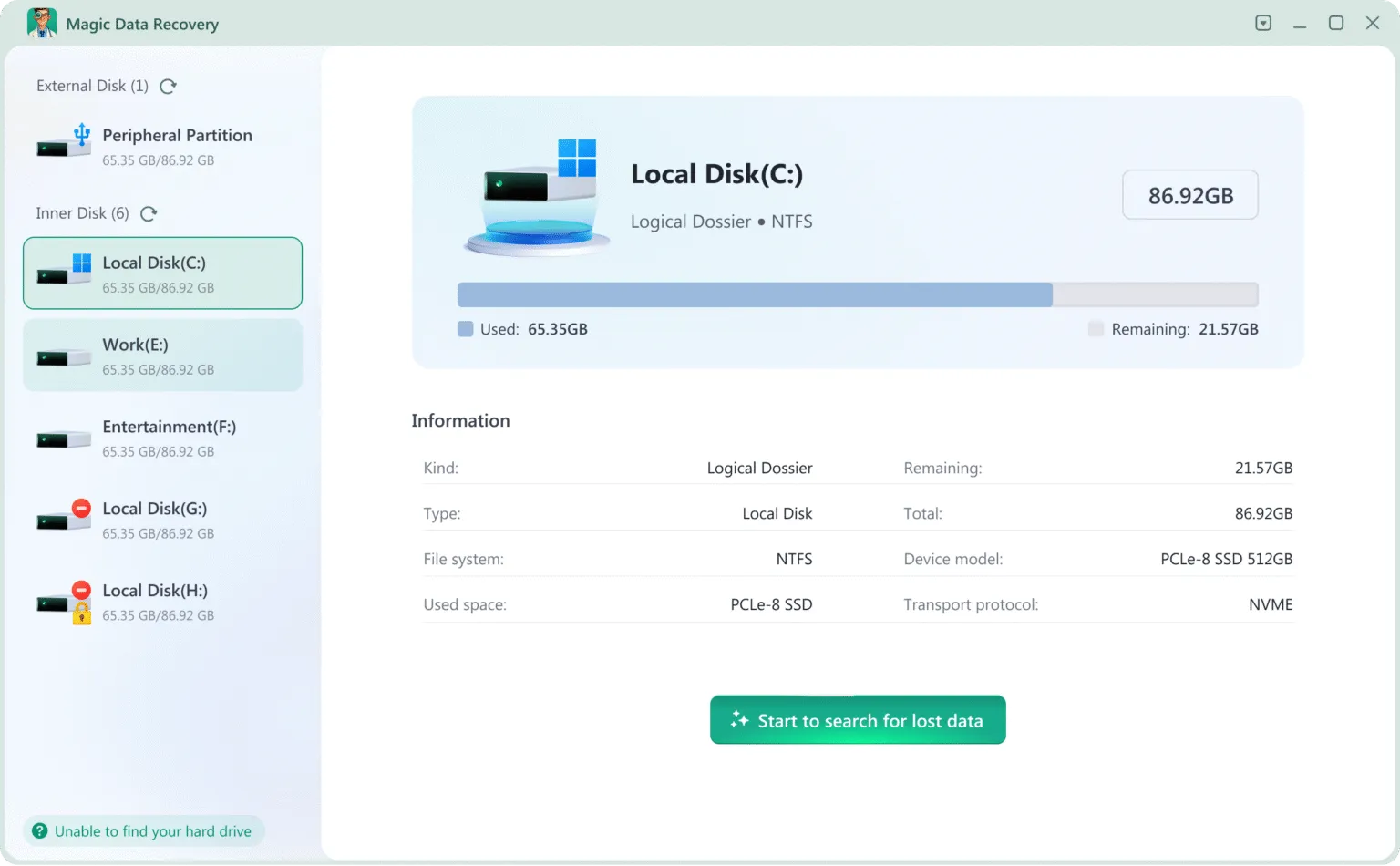
Download Magic Data Recovery only from the official Amagicsoft website to ensure security. Install it on your computer’s internal drive—not on the affected SD card. Launch the program. You’ll see a clean interface listing all available drives.
Supports Windows 7/8/10/11 and Windows Server
Step 2: Select Your SD Card and Scan Mode
Insert your SD card using a reliable card reader. In the software, select the correct removable disk representing your SD card.
- Quick Scan: Choose this first for simple deletion cases. It’s fast and often sufficient.
- Deep Scan: Deep Scan will start automatically after the quick scan. If Quick Scan doesn’t find your files, or if your card is formatted/corrupted, run this. It takes longer but searches every sector for recoverable data patterns.
Step 3: Preview and Select Your Files
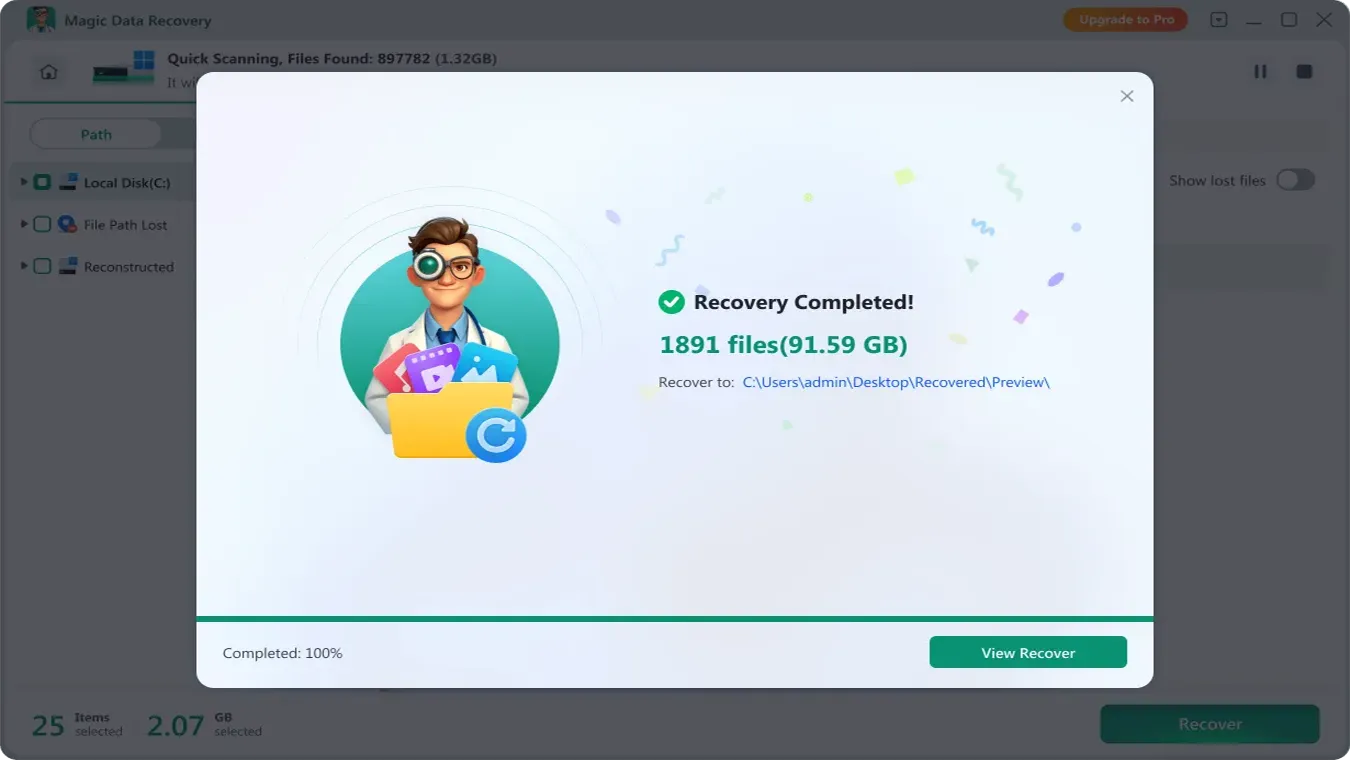
Once the scan completes, the software will display found files in a folder structure or by file type (Photos, Documents, Audio, etc.). This is a critical trust-building feature. You can click on photos to preview thumbnails or view document text. This confirms the files are recoverable. Check the boxes next to the files and folders you need.

Step 4: Recover to a Secure Location
Click “Recover.” You will be prompted to choose a save destination. THIS IS VITAL: Save the recovered files to a different drive, such as your computer’s hard disk or an external USB drive. Never save them back to the same SD card you are recovering from, as this will overwrite the very data you’re trying to save.
Why Magic Data Recovery is a Recommended Solution
While there are free options available, they often come with limitations—like recovery caps, lack of deep scan, or no preview—that can hinder success in real-world scenarios. Magic Data Recovery provides a more reliable and comprehensive solution for several concrete reasons:
- Solves Core Pain Points: It is specifically engineered to handle the multiple failure scenarios SD cards face: deletion, formatting, corruption (partition error), and virus attacks. Its unified approach means you don’t need different tools for different problems.
- Proven Technical Advantages: Its deep scanning algorithm can reconstruct data based on file signatures, which is why it often succeeds where others fail, especially with formatted media. The clear preview functionality eliminates the guesswork and builds confidence before purchase.
- Balanced for All Users: It maintains technical depth where it counts (in the scan engine) while offering an intuitive, guided workflow. This balance makes the process to recover deleted files accessible without sacrificing power.
- A Reliable Choice: Compared to unknown freeware, it comes from a established software developer (Amagicsoft) with a clear reputation, reducing security risks. Compared to other premium tools, it often provides better value through its effective feature set and straightforward licensing.
If you are facing a challenging data loss situation and need a tool that combines a high success rate with a clear user interface, Magic Data Recovery is a solution worth considering. [You can learn more or download it from the official Amagicsoft website here.]
Supports Windows 7/8/10/11 and Windows Server
How to Prevent SD Card Data Loss
After recovering and verifying your files, use the following practices to reduce future SD card data loss:
1. Keep multiple backups. Store important files on your computer, an external drive, and an offsite or cloud location.
2. Import files regularly. Do not leave the only copy of important photos or videos on an SD card.
3. Eject the card safely. Finish all transfers and use the operating system’s eject function before disconnecting the card reader.
4. Avoid interrupted writes. Do not remove the card or turn off the camera while files are being saved.
5. Protect the card physically. Keep it away from moisture, extreme heat, static electricity, bent contacts, and excessive pressure.
6. Use reliable cards and readers. Counterfeit cards and unstable card readers can cause corruption, failed transfers, and incorrect capacity reporting.
7. Replace unreliable cards. Stop using a card that repeatedly disconnects, becomes RAW, reports read/write errors, or asks to be formatted.
8. Recover before repairing. If files are missing, copy or recover the data before formatting the card or running file-system repair tools.
Conclusion
Successfully learning how to recover deleted files in sd memory card involves understanding the cause, acting quickly to preserve data, and using the right tool for the job. While the process is grounded in technical principles, it doesn’t have to be overwhelmingly complex.
We recommend Magic Data Recovery in this guide because it effectively bridges the gap between advanced data reconstruction capabilities and a user-friendly experience. It is designed to address the full spectrum of logical data loss scenarios—from simple mistakes to complex corruptions—giving you the best possible chance of retrieving your valuable photos, work documents, and personal files. By following the SD card recovery steps and best practices outlined here, you can navigate a stressful data loss event with confidence and a clear action plan.
Supports Windows 7/8/10/11 and Windows Server
FAQs
Can I recover deleted files from an SD card?
Do deleted files from an SD card go to the Recycle Bin?
How do I recover deleted photos from an SD card?
Can I recover files from a formatted SD card?
Can I recover deleted files from a microSD card?
Can I recover deleted SD card files for free?
What should I avoid after deleting files from an SD card?
When is SD card recovery impossible?

Jason has over 15 years of hands-on experience in the computer data security industry. He specializes in data recovery, backup and restoration, and file repair technologies, and has helped millions of users worldwide resolve complex data loss and security issues.