
How to Recover Deleted Files on Windows 10

Supports Windows 7/8/10/11 and Windows Server
Table of Contents
Immediate Steps to Prevent Data Overwriting
Method 1: The Quick Fix via Recycle Bin
The simplest way to recover deleted files on windows 10 involves checking the Recycle Bin. Most people often overlook this step, but it remains the most effective “undo” button for basic deletions.
- First, double-click the Recycle Bin icon on your desktop.
- Next, search for the filenames you accidentally removed.
- Finally, right-click the file and select “Restore.”
Furthermore, if the deletion occurred just moments ago, you can press Ctrl + Z on your keyboard. This shortcut instantly reverses your last action in File Explorer.
Method 2: Restore from Windows 10 Built-in Backups
Windows 10 includes several “safety net” features. Although these require prior configuration, they provide a reliable way to recover deleted files on windows 10 without backup if you had system protection enabled.
Utilizing File History
If you enabled File History, your PC automatically saved copies of your folders.
- To start, type “Restore your files” in the Windows search box.
- Browse the available snapshots to find the version you need.
- After finding the file, click the green “Restore” button.
Using Restore Previous Versions
Alternatively, you can right-click a folder and select “Restore previous versions.” This method works effectively when you need to roll back an entire directory to a previous state.
Method 3: Using Magic Data Recovery for Advanced Scenarios
Sometimes, built-in tools are insufficient, especially when dealing with permanently deleted files or corrupted partitions. In these critical moments, Magic Data Recovery serves as a professional-grade solution. This software excels in scenarios involving formatted drives, file system errors, and even data loss after a Windows reinstallation.
Why Magic Data Recovery is the Best Choice
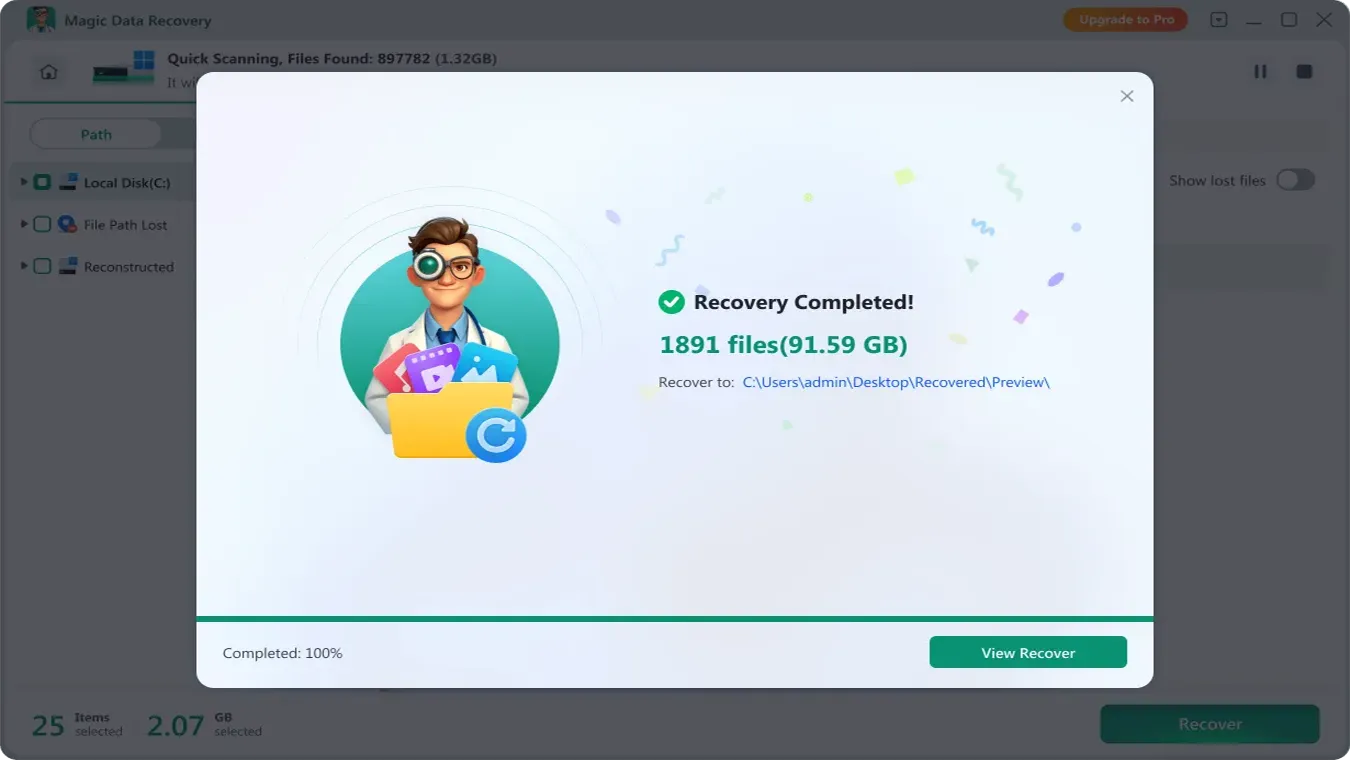
Unlike standard utilities, Magic Data Recovery utilizes deep-scan technology to bypass operating system limitations. Specifically, it can reconstruct data from RAW partitions where Windows sees nothing. Moreover, the tool provides a clear preview of files before you commit to the final recovery.
Supports Windows 7/8/10/11 and Windows Server
Step-by-Step Guide with Magic Data Recovery
The following steps show how easily you can regain access to your data:
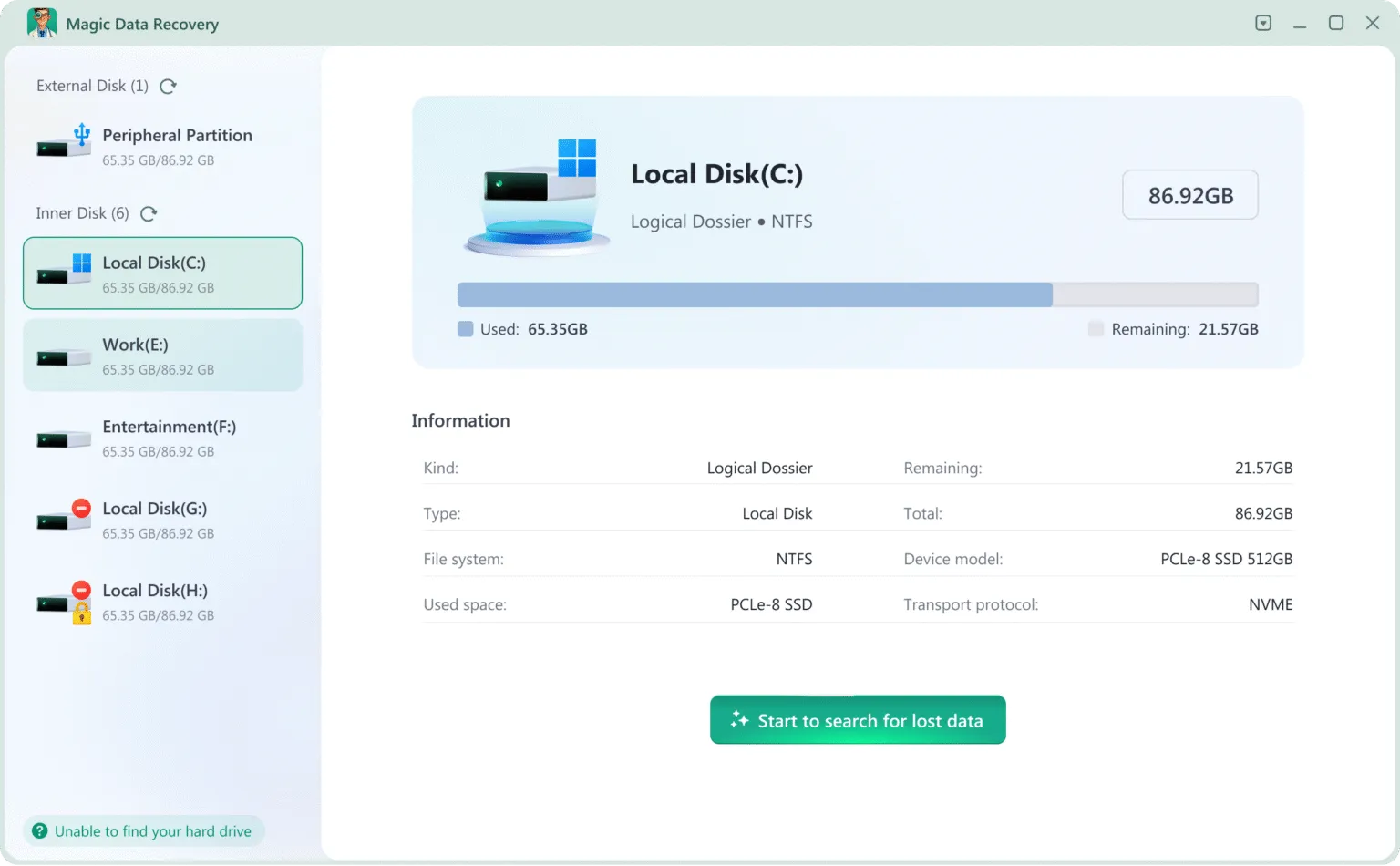
Step 1: Select the Source Drive Launch the software and pick the specific partition or external drive that contained your files.


Before trying advanced fixes, recover deleted files is a solid starting point for typical recovery paths to understand what works in most cases.
Conclusion: Why We Recommend a Professional Solution
To recover deleted files on windows 10 successfully, you need the right tool to recover deleted files. While the Recycle Bin handles minor mistakes, it cannot fix a formatted drive or a corrupted file system.
Consequently, we recommend Magic Data Recovery for users who need a trusted and efficient result. The software handles the technical complexity for you, ensuring that even beginners can perform expert-level data retrieval. If you want to protect your digital life, download Magic Data Recovery today and start a free scan to see what you can save.
Supports Windows 7/8/10/11 and Windows Server
FAQs
How do I recover permanently deleted files from Windows 10?
How to recover files you accidentally deleted?
Where do permanently deleted files go in Windows 10?
Are permanently deleted files can be recovered?
Are permanently deleted files really gone?
How to recover permanently deleted files not in the Recycle Bin?
How to recover deleted files in Windows 10 without backup?
Are things deleted from recently deleted gone forever?

Jason is a data recovery and technical support specialist with over 15 years of hands-on experience. He has worked extensively with frontline users, troubleshooting difficult data loss cases and providing practical recovery solutions for accidental deletion, formatted drives, damaged file systems, lost partitions, system failures, and other recovery emergencies. His expertise also includes backup and restoration, file repair, and disaster recovery, with a strong emphasis on safe, reliable, and technically accurate guidance.