
How to Recover Files Deleted from Recycle Bin
Accidentally deleted important files from the Recycle Bin or emptied it by mistake? Don’t panic. In many cases, files deleted from the Recycle Bin can still be recovered if they have not been overwritten by new data.
If you are searching for how to recover files that deleted from Recycle Bin, you probably mean how to recover files that were deleted from the Recycle Bin or lost after the Recycle Bin was emptied. This guide explains several practical methods, including Recycle Bin restore, File History, Previous Versions, Windows File Recovery, and data recovery software.
Supports Windows 7/8/10/11 and Windows Server
Important: Stop using the drive immediately after deleting files from the Recycle Bin. Do not download, install, or save new files to the same drive, because new data may overwrite the deleted files and reduce the chance of recovery.
Table of Contents
Can You Recover Deleted Files from Recycle Bin?
Yes, you can often recover files deleted from the Recycle Bin, especially if you act quickly and avoid writing new data to the same drive. When Windows deletes a file from the Recycle Bin, it usually removes the file reference from the file system instead of erasing the actual data immediately. The deleted file may remain recoverable until the storage space is overwritten.
However, recovery is not always guaranteed. The result depends on how long ago the files were deleted, whether the drive is an HDD or SSD, whether TRIM is enabled, and whether new files have been saved to the same drive.
What Affects the Chance of Recovering Files Deleted from Recycle Bin?
Several factors determine whether files deleted from the Recycle Bin can be recovered:
- Time since deletion: The sooner you start recovery, the better the chance of finding recoverable files.
- New data written to the drive: Installing programs, downloading files, or saving new documents may overwrite deleted data.
- Drive type: Recovery is usually more difficult on SSDs, especially when TRIM is enabled.
- Backup availability: If File History, Previous Versions, or cloud backup is enabled, recovery may be easier.
- Deletion method: Files removed with Shift + Delete or after emptying the Recycle Bin usually require backup or recovery software.
How to Recover Files Deleted from Recycle Bin: 5 Step-by-Step Methods
Before trying a recovery method, check which situation matches your case:
Situation | Recommended Method |
Files are still in the Recycle Bin | Restore directly from Recycle Bin |
Recycle Bin was emptied | Try File History, Previous Versions, or recovery software |
Files were deleted with Shift + Delete | Use Windows File Recovery or data recovery software |
Files were stored on an external drive | Scan the external drive directly |
Files were deleted from an SSD | Stop using the drive and try recovery as soon as possible |
No backup is available | Use data recovery software to scan the original drive |
Method 1. Restore Files Directly from Recycle Bin
If the Recycle Bin has not been emptied, this is the easiest way to recover deleted files.
- Double-click the Recycle Bin icon on your desktop.
- Search for the deleted file by name, file type, or original location.
- Right-click the file you want to recover.
- Select Restore.
Windows will restore the file to its original folder.
Note: This method only works when the deleted files are still inside the Recycle Bin. If you have emptied the Recycle Bin, move to the next methods.
Method 2. Recover Files Deleted from Recycle Bin with File History
If you enabled File History before the files were deleted, you may be able to restore an earlier version of the folder.
- Open Control Panel.
- Go to System and Security > File History.
- Click Restore personal files.
- Browse to the folder where the deleted files were stored.
- Select the files you want to recover and click the green Restore button.
File History works best when it was enabled before the deletion happened.
Method 3. Restore Previous Versions of the Deleted File Folder
Windows may keep previous versions of folders if restore points or backup features were enabled.
- Open File Explorer.
- Go to the folder where the deleted files were originally stored.
- Right-click the folder and choose Properties.
- Open the Previous Versions tab.
- Select a version created before the files were deleted.
- Click Restore or Open to check the files first.
This method is useful if you want to recover files deleted from the Recycle Bin without installing third-party software.
Method 4. Recover Files Deleted from Recycle Bin Using Windows File Recovery
Windows File Recovery is Microsoft’s command-line recovery tool. It can help recover deleted files from local drives, external drives, and USB devices, but it may be difficult for beginners because it requires commands.
Basic steps:
- Install Windows File Recovery from the Microsoft Store.
- Connect another drive to save the recovered files.
- Run Windows File Recovery as administrator.
- Scan the original drive where the files were deleted.
- Save recovered files to a different drive.
Important: Do not save recovered files back to the same drive where they were deleted, because this may overwrite lost data.
Method 5. Recover Files Deleted from Recycle Bin with Magic Data Recovery
If the Recycle Bin has been emptied, File History is not enabled, or Windows File Recovery is too complicated, data recovery software can be a more practical option. Magic Data Recovery can scan the original drive and look for files deleted from the Recycle Bin.
It is suitable for situations such as:
- Files deleted after emptying the Recycle Bin
- Files removed with Shift + Delete
- Lost files from HDDs, SSDs, USB drives, memory cards, or external hard drives
- Deleted files from NTFS, FAT, exFAT, and other common file systems
- Data loss caused by accidental deletion, formatting, or partition errors
Why Use Magic Data Recovery?
- Easy for beginners: The interface guides users through drive selection, scanning, previewing, and recovery.
- Preview before recovery: You can check whether the deleted files are recoverable before saving them.
- Multiple scan modes: It can search for recently deleted files as well as files lost after deeper data loss scenarios.
- Broad device support: It supports HDDs, SSDs, USB flash drives, SD cards, memory cards, and external hard drives.
- Read-only scanning: The scan process does not modify existing files on the selected drive.
How to Recover Using Magic Data Recovery
1. Download and install Magic Data Recovery on your computer.
Supports Windows 7/8/10/11 and Windows Server
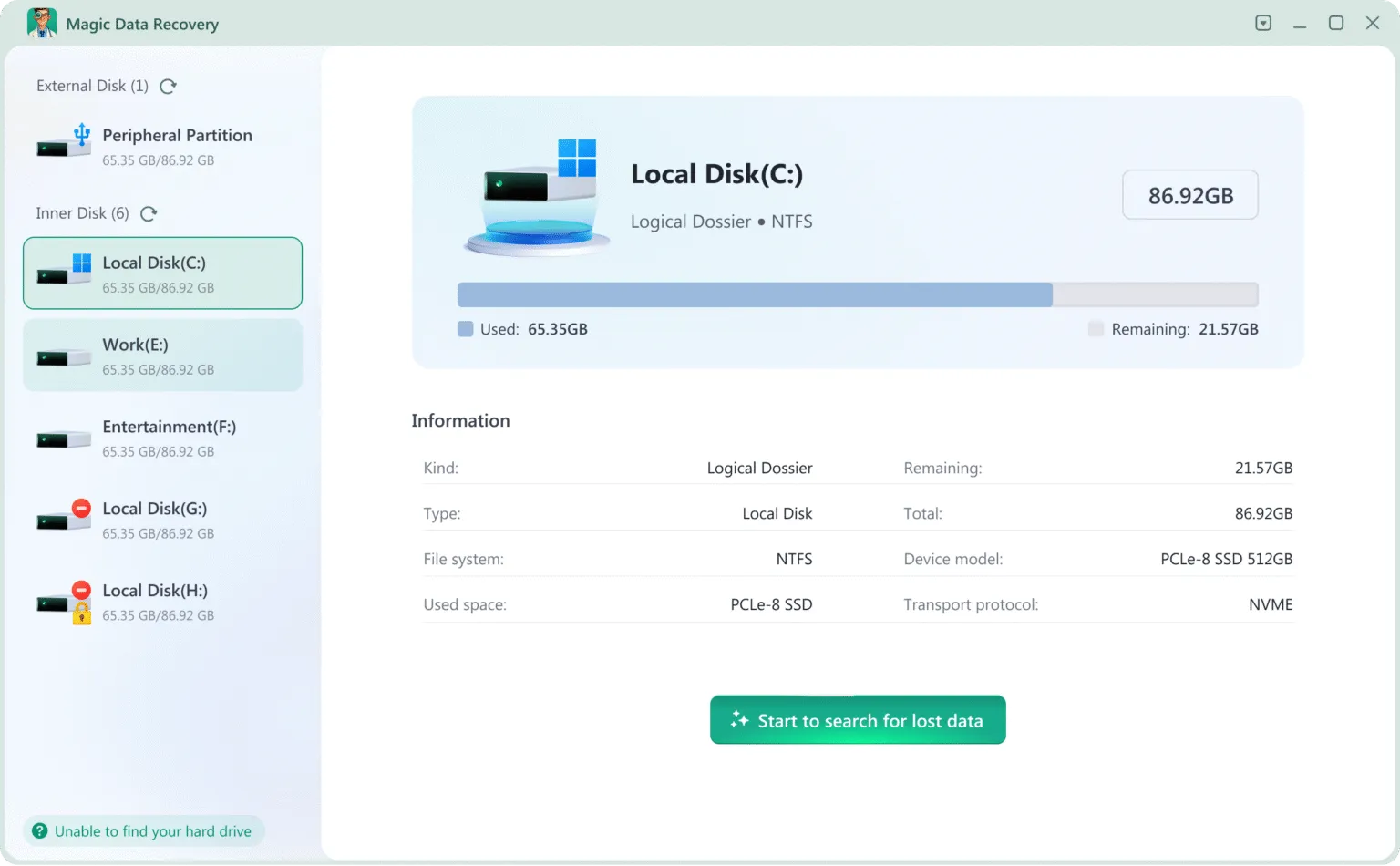
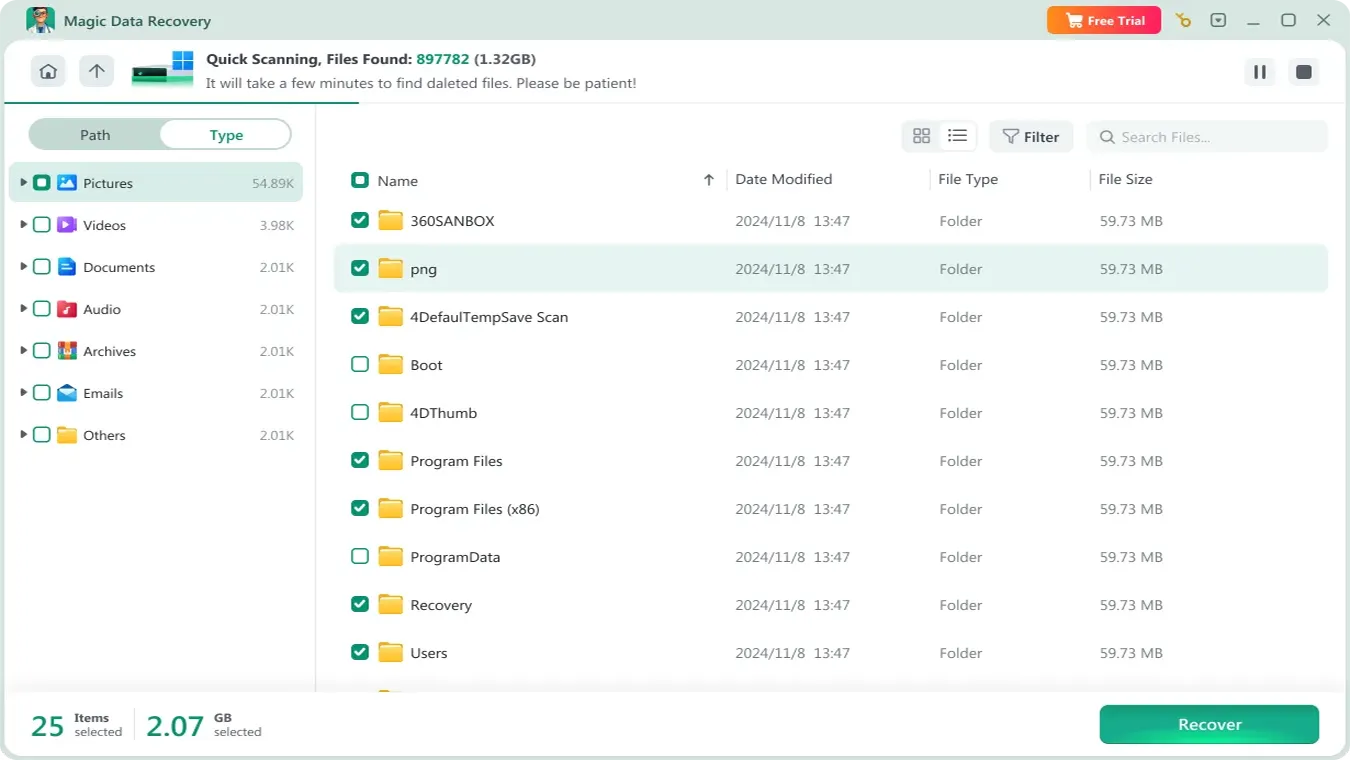

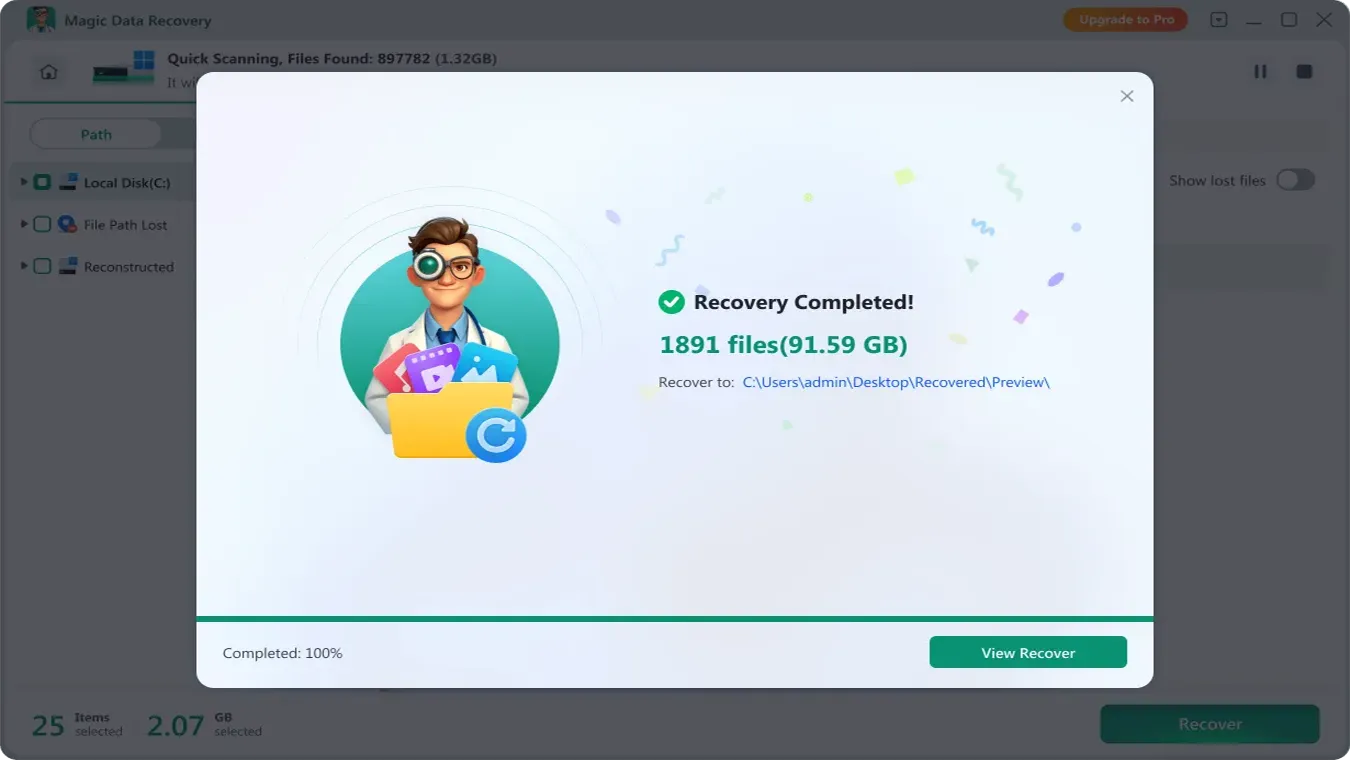
Example: If you accidentally emptied the Recycle Bin and lost important project documents, Magic Data Recovery can scan the original drive and list files that may still be recoverable. You can preview the results before restoring them to another safe location.
Compared with Windows built-in options, data recovery software is often easier for beginners and can handle more recovery scenarios, especially when no backup is available.
When Files Deleted from Recycle Bin May Not Be Recoverable
Although it is often possible to recover files deleted from the Recycle Bin, some situations can reduce or eliminate the chance of recovery:
- The data has been overwritten: If new files were saved to the same drive, the deleted data may be replaced permanently.
- SSD TRIM has cleared the deleted data: On some SSDs, TRIM may make deleted files much harder or impossible to recover.
- The drive has physical damage: If the drive is clicking, not detected, or physically damaged, stop using it and contact a professional recovery service.
- The file was deleted a long time ago: The longer the drive has been used after deletion, the lower the chance of recovery.
To improve your chances, stop using the affected drive and try recovery as soon as possible.
Conclusion
Recovering files deleted from the Recycle Bin is possible in most cases, even after emptying it. While Windows offers basic recovery tools, they have limitations. Magic Data Recovery stands out by providing reliable, versatile, and user-friendly recovery solutions for various scenarios, including accidental deletion, formatting, or corrupted partitions.
If you are looking for an efficient and dependable recycle bin recovery method, Magic Data Recovery is a practical choice that combines ease of use with professional-grade recovery capabilities.
Supports Windows 7/8/10/11 and Windows Server
FAQs
How to recover files that deleted from Recycle Bin?
Can I recover files after emptying the Recycle Bin?
Where do files go after being deleted from Recycle Bin?
Can I recover files deleted from Recycle Bin without software?
How long do I have to recover files deleted from Recycle Bin?
Can I recover files deleted with Shift + Delete?
Are files deleted from SSDs harder to recover?
Can I recover files deleted from an external drive or USB drive?

Jason is a data recovery and technical support specialist with over 15 years of hands-on experience. He has worked extensively with frontline users, troubleshooting difficult data loss cases and providing practical recovery solutions for accidental deletion, formatted drives, damaged file systems, lost partitions, system failures, and other recovery emergencies. His expertise also includes backup and restoration, file repair, and disaster recovery, with a strong emphasis on safe, reliable, and technically accurate guidance.